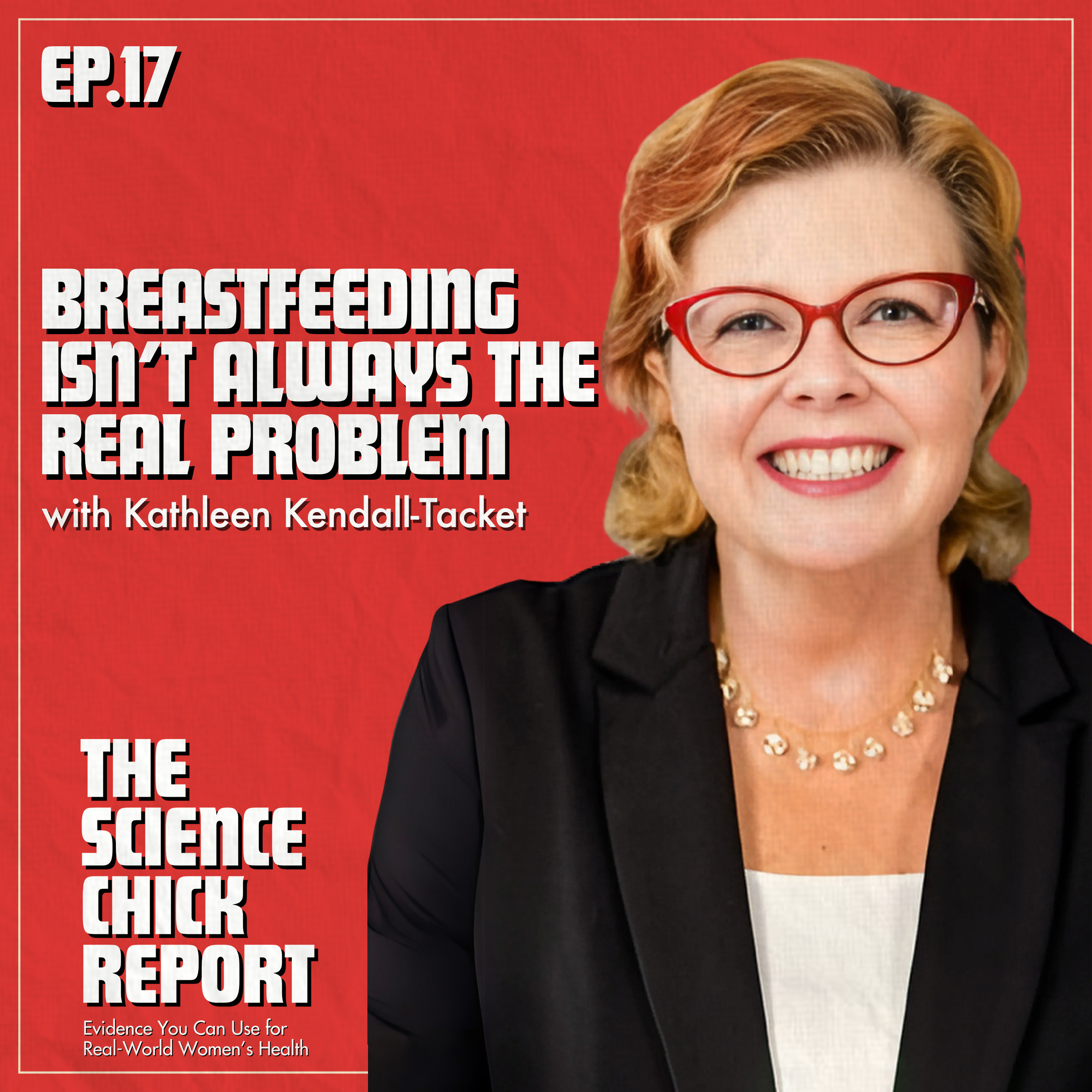
Breastfeeding Isn’t Always the Real Problem episode artwork

EPISODE · Jun 10, 2026 · 42 MIN

Breastfeeding Isn’t Always the Real Problem

from The Science Chick Report: Evidence You Can Use for Real-World Women's Health · host Kathleen Kendall-Tackett

Did you know that some of the hardest parts of early motherhood may have nothing to do with breastfeeding itself?In this episode of The Science Chick Report, Dr. Kathleen Kendall-Tackett explores what she calls the “Five I’s of New Motherhood”: idleness, isolation, incompetence, identity, and intensity. These are the hidden emotional and psychological barriers that can quietly derail new mothers, even when breastfeeding is technically going well.Drawing from her book Breastfeeding Doesn’t Need to Suck, Dr. Kendall-Tackett explains why the early postpartum period can feel so disorienting. A mother may be recovering physically, establishing milk supply, caring for a newborn around the clock, and still feeling like she is “not doing anything.” Add isolation, shifting identity, sleep disruption, and the pressure to “enjoy every minute,” and it is easy to see why this stage can feel overwhelming.Dr. Kendall-Tackett also discusses how formula marketing often speaks directly to these vulnerable feelings by promising mothers a return to freedom, identity, and control. Instead of shaming mothers for struggling, she encourages providers, partners, and support groups to talk openly about these experiences and help mothers reframe them with compassion and realism.This episode is a grounded reminder that new mothers are not lazy, incompetent, or losing themselves. They are recovering, learning, bonding, and helping their babies transition from womb to world. And with structure, support, short breaks, outside time, and realistic expectations, this intense season can become more manageable.In This Episode:[00:00] Introduction[00:49] A new format focused on support for mothers[01:21] Introducing the Five I’s of New Motherhood[02:36] How formula companies target new mothers’ fears[04:19] Amy Brown’s insight on motherhood and disempowerment[06:02] Why breastfeeding struggles are not always about breastfeeding[07:06] The first “I”: idleness[09:42] Postpartum brain shifts and losing track of time[12:21] Reframing idleness as recovery and bonding[14:16] Why structure helps new mothers cope[15:01] The second “I”: isolation[18:27] Feeling disconnected from friends after birth[20:12] Why mothers should not tough out isolation[21:35] Finding a tribe and building support[22:55] The third “I”: incompetence[24:41] Reframing incompetence as learning[27:21] Using time markers to stay grounded[29:28] The fourth “I”: identity[31:08] Why the old self has not disappeared[32:15] The fifth “I”: intensity[34:00] Helping babies transition from womb to world[35:30] Taking short breaks without undermining breastfeeding[36:19] Practical coping tools for the newborn stage[39:38] Limiting phone time and staying present[41:25] Final thoughts and next topicNotable Quotes:[04:22] “Mothering is the most powerful of all biological capacities and among the most disempowering of social experiences.” – Amy Brown, quoted by Dr. Kathleen Kendall-Tackett[06:30] “This is something that can absolutely derail mothers, and to remember that we have a multi-billion dollar industry preying on these very fears.” – Dr. Kathleen Kendall-Tackett[13:35] “You’re not being lazy. You’re resting. You’re recovering. It’s smart.” – Dr. Kathleen Kendall-Tackett[15:17] “When we isolate a prisoner, that’s considered cruel and unusual punishment.” – Dr. Kathleen Kendall-Tackett[24:43] “They’re not incompetent. That’s the truth. They’re learning.” – Dr. Kathleen Kendall-Tackett[31:35] “The old me has not gone away. Buying a product is not going to bring that back.” – Dr. Kathleen Kendall-TackettResources and Links:PodcastThe Science Chick ReportDr. Kathleen Kendall-TackettWebsiteLinkedInXFacebookResearchGateMentioned ResourcesBreastfeeding Doesn’t Need to SuckBreastfeeding Made SimpleAmy BrownBrooke Shields’ postpartum depression memoirSuzanne CoulsonEd Tronick’s Still Face Mother studies

Did you know that some of the hardest parts of early motherhood may have nothing to do with breastfeeding itself?In this episode of The Science Chick Report, Dr. Kathleen Kendall-Tackett explores what she calls the “Five I’s of New Motherhood”: idleness, isolation, incompetence, identity, and intensity. These are the hidden emotional and psychological barriers that can quietly derail new mothers, even when breastfeeding is technically going well.Drawing from her book Breastfeeding Doesn’t Need to Suck, Dr. Kendall-Tackett explains why the early postpartum period can feel so disorienting. A mother may be recovering physically, establishing milk supply, caring for a newborn around the clock, and still feeling like she is “not doing anything.” Add isolation, shifting identity, sleep disruption, and the pressure to “enjoy every minute,” and it is easy to see why this stage can feel overwhelming.Dr. Kendall-Tackett also discusses how formula marketing often speaks directly to these vulnerable feelings by promising mothers a return to freedom, identity, and control. Instead of shaming mothers for struggling, she encourages providers, partners, and support groups to talk openly about these experiences and help mothers reframe them with compassion and realism.This episode is a grounded reminder that new mothers are not lazy, incompetent, or losing themselves. They are recovering, learning, bonding, and helping their babies transition from womb to world. And with structure, support, short breaks, outside time, and realistic expectations, this intense season can become more manageable.In This Episode:[00:00] Introduction[00:49] A new format focused on support for mothers[01:21] Introducing the Five I’s of New Motherhood[02:36] How formula companies target new mothers’ fears[04:19] Amy Brown’s insight on motherhood and disempowerment[06:02] Why breastfeeding struggles are not always about breastfeeding[07:06] The first “I”: idleness[09:42] Postpartum brain shifts and losing track of time[12:21] Reframing idleness as recovery and bonding[14:16] Why structure helps new mothers cope[15:01] The second “I”: isolation[18:27] Feeling disconnected from friends after birth[20:12] Why mothers should not tough out isolation[21:35] Finding a tribe and building support[22:55] The third “I”: incompetence[24:41] Reframing incompetence as learning[27:21] Using time markers to stay grounded[29:28] The fourth “I”: identity[31:08] Why the old self has not disappeared[32:15] The fifth “I”: intensity[34:00] Helping babies transition from womb to world[35:30] Taking short breaks without undermining breastfeeding[36:19] Practical coping tools for the newborn stage[39:38] Limiting phone time and staying present[41:25] Final thoughts and next topicNotable Quotes:[04:22] “Mothering is the most powerful of all biological capacities and among the most disempowering of social experiences.” – Amy Brown, quoted by Dr. Kathleen Kendall-Tackett[06:30] “This is something that can absolutely derail mothers, and to remember that we have a multi-billion dollar industry preying on these very fears.” – Dr. Kathleen Kendall-Tackett[13:35] “You’re not being lazy. You’re resting. You’re recovering. It’s smart.” – Dr. Kathleen Kendall-Tackett[15:17] “When we isolate a prisoner, that’s considered cruel and unusual punishment.” – Dr. Kathleen Kendall-Tackett[24:43] “They’re not incompetent. That’s the truth. They’re learning.” – Dr. Kathleen Kendall-Tackett[31:35] “The old me has not gone away. Buying a product is not going to bring that back.” – Dr. Kathleen Kendall-TackettResources and Links:PodcastThe Science Chick ReportDr. Kathleen Kendall-TackettWebsiteLinkedInXFacebookResearchGateMentioned ResourcesBreastfeeding Doesn’t Need to SuckBreastfeeding Made SimpleAmy BrownBrooke Shields’ postpartum depression memoirSuzanne CoulsonEd Tronick’s Still Face Mother studies

NOW PLAYING

Breastfeeding Isn’t Always the Real Problem

0:00 42:31

No transcript for this episode yet

We transcribe on demand. Request one and we'll notify you when it's ready — usually under 10 minutes.

Frequently Asked Questions

How long is this episode of The Science Chick Report: Evidence You Can Use for Real-World Women's Health?

This episode is 42 minutes long.

When was this The Science Chick Report: Evidence You Can Use for Real-World Women's Health episode published?

This episode was published on June 10, 2026.

What is this episode about?

Did you know that some of the hardest parts of early motherhood may have nothing to do with breastfeeding itself?In this episode of The Science Chick Report, Dr. Kathleen Kendall-Tackett explores what she calls the “Five I’s of New Motherhood”:...

Can I download this The Science Chick Report: Evidence You Can Use for Real-World Women's Health episode?

Yes, you can download this episode by clicking the download button on the episode player, or subscribe to the podcast in your preferred podcast app for automatic downloads.
URL copied to clipboard!