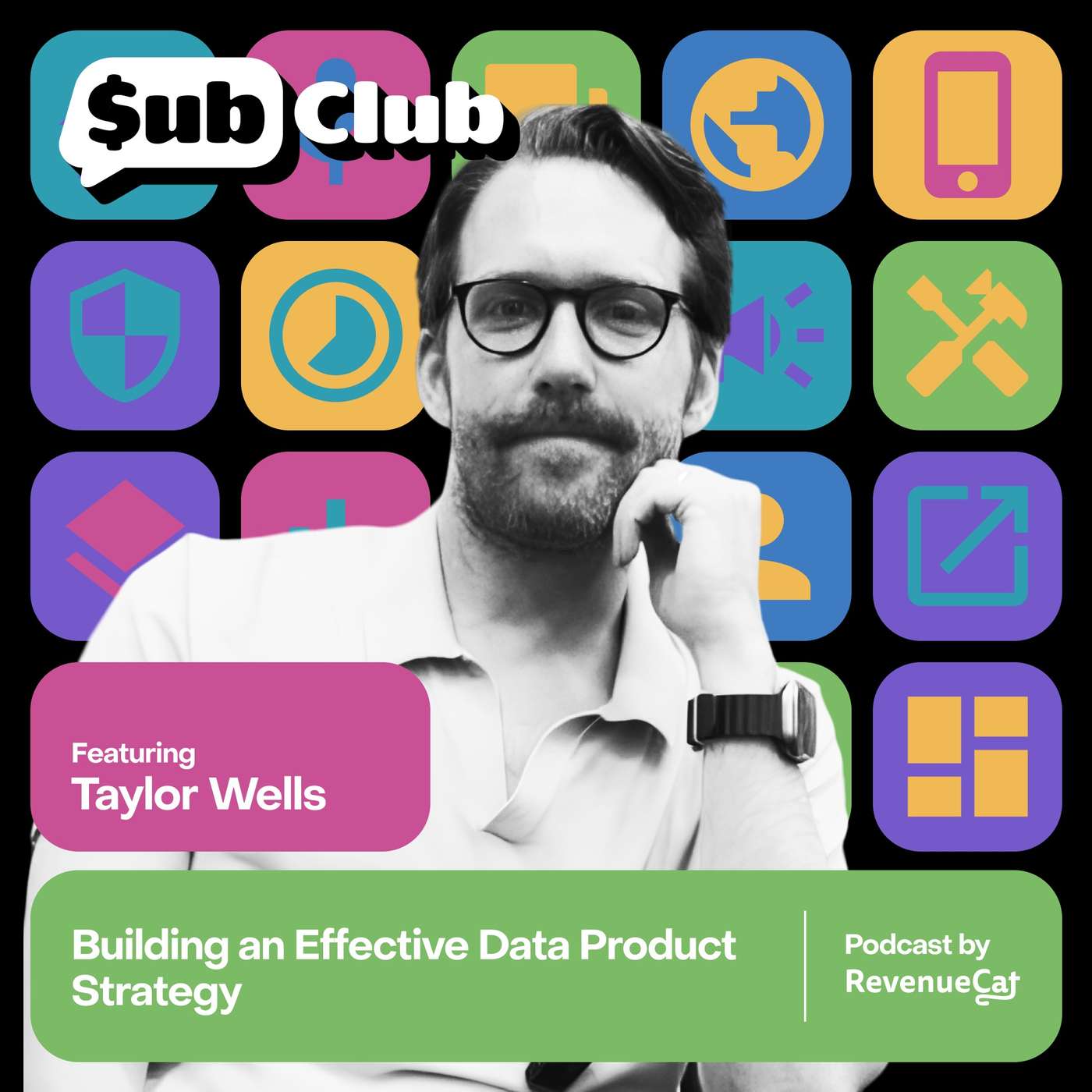
Building an Effective Data Product Strategy — Taylor Wells, News Corp episode artwork

EPISODE · Jul 24, 2024 · 1H 4M

Building an Effective Data Product Strategy — Taylor Wells, News Corp

from Sub Club by RevenueCat · host David Barnard, Jacob Eiting

On the podcast: How to make better decisions with data, the many pitfalls of collecting and interpreting data, and why the best executive dashboard is probably a hand-written weekly email.Key Takeaways:📝Balance data collection with business goals. Collecting all possible data can drown teams in noise and lead to compliance risks. Focus on collecting semantically important data that aligns with business goals and use cases to avoid unnecessary complexity and costs.💡Prevent exponential cost increases by structuring data early. Establishing a well-structured data collection and management process early on prevents costly modifications and adjustments later. Early alignment and thoughtful planning are crucial.🔒 Maintain control over data collection to simplify compliance. Managing your own data collection processes can reduce legal and compliance challenges associated with third-party data processors. This is especially crucial for adhering to regulations like GDPR.🔧Opt for off-the-shelf data solutions early on. Leveraging open-source or ready-made solutions can save time and resources. Maintain a clear evaluation structure for transitioning to custom solutions when needed, and accept changes in data collection methods to avoid outdated systems.📊Simplified insights over complex dashboards. Dashboards can overwhelm executives with too much data. Instead, providing a succinct, focused summary of key insights through something as simple as a weekly email can be more effective for decision-making.About Guest 📈 Director of Data Products at News Corp.💡With over 15 years of experience, Taylor is an expert in building and implementing effective data collection and analytics strategies — helping organizations like Disney+, Business Insider, and Deloitte collect the right data and turn it into actionable insights.👋 LinkedInFollow us on X:David BarnardJacob EitingRevenueCatSub ClubEpisode Highlights[3:44] Laying a foundation: Data collection is a lot like constructing a building — setting up the right framework from the beginning can save you a lot of time, effort, and money later.[7:30] The Goldilocks zone: Collecting either too much or too little data is costly and can potentially have ramifications for data regulation and privacy laws.[16:58] Information overload: Data is only helpful if you derive actionable information from it.[20:33] Distilling data: What is a “data product” team? (And why might you need one?)[26:13] Build vs. buy: Most companies should start with an off-the-shelf data collection solution instead of building something internally — then consider a switch later when the scale and financials make sense.[33:45] What’s in a name? What you call specific data points and even your data collection system can be very important.[42:11] Ditch the dashboard: Fancy data analytics dashboards need to be interpreted to be valuable — and without context, they can be misleading.[51:27] Trix are for… kids?: How Taylor’s experience promoting the television show “Bluey” on Disney+ illustrates the incredible power of data analytics.

On the podcast: How to make better decisions with data, the many pitfalls of collecting and interpreting data, and why the best executive dashboard is probably a hand-written weekly email.Key Takeaways:📝Balance data collection with business goals. Collecting all possible data can drown teams in noise and lead to compliance risks. Focus on collecting semantically important data that aligns with business goals and use cases to avoid unnecessary complexity and costs.💡Prevent exponential cost increases by structuring data early. Establishing a well-structured data collection and management process early on prevents costly modifications and adjustments later. Early alignment and thoughtful planning are crucial.🔒 Maintain control over data collection to simplify compliance. Managing your own data collection processes can reduce legal and compliance challenges associated with third-party data processors. This is especially crucial for adhering to regulations like GDPR.🔧Opt for off-the-shelf data solutions early on. Leveraging open-source or ready-made solutions can save time and resources. Maintain a clear evaluation structure for transitioning to custom solutions when needed, and accept changes in data collection methods to avoid outdated systems.📊Simplified insights over complex dashboards. Dashboards can overwhelm executives with too much data. Instead, providing a succinct, focused summary of key insights through something as simple as a weekly email can be more effective for decision-making.About Guest 📈 Director of Data Products at News Corp.💡With over 15 years of experience, Taylor is an expert in building and implementing effective data collection and analytics strategies — helping organizations like Disney+, Business Insider, and Deloitte collect the right data and turn it into actionable insights.👋 LinkedInFollow us on X:David BarnardJacob EitingRevenueCatSub ClubEpisode Highlights[3:44] Laying a foundation: Data collection is a lot like constructing a building — setting up the right framework from the beginning can save you a lot of time, effort, and money later.[7:30] The Goldilocks zone: Collecting either too much or too little data is costly and can potentially have ramifications for data regulation and privacy laws.[16:58] Information overload: Data is only helpful if you derive actionable information from it.[20:33] Distilling data: What is a “data product” team? (And why might you need one?)[26:13] Build vs. buy: Most companies should start with an off-the-shelf data collection solution instead of building something internally — then consider a switch later when the scale and financials make sense.[33:45] What’s in a name? What you call specific data points and even your data collection system can be very important.[42:11] Ditch the dashboard: Fancy data analytics dashboards need to be interpreted to be valuable — and without context, they can be misleading.[51:27] Trix are for… kids?: How Taylor’s experience promoting the television show “Bluey” on Disney+ illustrates the incredible power of data analytics.

NOW PLAYING

Building an Effective Data Product Strategy — Taylor Wells, News Corp

0:00 1:04:55

No transcript for this episode yet

We transcribe on demand. Request one and we'll notify you when it's ready — usually under 10 minutes.

MG Show MG Show The MG Show, hosted by Jeffrey Pedersen and Shannon Townsend, is a leading alternative media platform dedicated to uncovering the truth behind today’s most pressing political issues. Launched in 2019, the show has grown exponentially, offering unfiltered insights, comprehensive research, and real-time analysis. With a commitment to independent journalism and factual integrity, the MG Show empowers its audience with knowledge and encourages active participation in the political discourse. That Hoarder: Overcome Compulsive Hoarding That Hoarder Hoarding disorder is stigmatised and people who hoard feel vast amounts of shame. This podcast began life as an audio diary, an anonymous outlet for somebody with this weird condition. That Hoarder speaks about her experiences living with compulsive hoarding, she interviews therapists, academics, researchers, children of hoarders, professional organisers and influencers, and she shares insight and tips for others with the problem. Listened to by people who hoard as well as those who love them and those who work with them, Overcome Compulsive Hoarding with That Hoarder aims to shatter the stigma, share the truth and speak openly and honestly to improve lives. Flottengeflüster ALD Automotive Österreich | LeasePlan Beim Flottengeflüster powered by ALD Automotive | LeasePlan präsentieren Jörg Janik und Peter Gutenbrunner alle zwei Wochen spannende Informationen rund um das Thema nachhaltige Mobilität. Beide beschäftigen sich schon lange mit der Thematik und bringen umfangreiches Fachwissen mit. Sollten sie aber doch einmal nicht weiter wissen, werden unsere Expert*innen hinzugezogen, die ihnen gerne mit Rat und Tat zur Seite stehen. The Small Business Startup School – Business Notes | Financial Literacy | Retail Psychology – For Professionals & Entrepreneurs The Small Business Startup School Inc. Starting or buying a small business? While personal circumstances may vary, business patterns remain timeless. On The Small Business Startup School, we explore strategies, insights, and practical solutions to help entrepreneurs confidently navigate their journey.Hosted by Ola Williams—a retail entrepreneur, fintech founder, and financial coach with over two decades of experience—this podcast marries financial awareness and retail psychology with optimism to deliver actionable takeaways.Join us to learn, grow, and connect as we uncover the keys to business success.Let’s continue to learn together and be encouraged to keep on connecting!

Frequently Asked Questions

How long is this episode of Sub Club by RevenueCat?

This episode is 1 hour and 4 minutes long.

When was this Sub Club by RevenueCat episode published?

This episode was published on July 24, 2024.

What is this episode about?

On the podcast: How to make better decisions with data, the many pitfalls of collecting and interpreting data, and why the best executive dashboard is probably a hand-written weekly email.Key Takeaways:📝Balance data collection with business goals....

Can I download this Sub Club by RevenueCat episode?

Yes, you can download this episode by clicking the download button on the episode player, or subscribe to the podcast in your preferred podcast app for automatic downloads.
URL copied to clipboard!