
EPISODE · May 27, 2026 · 12 MIN
Busan as a wartime capital: How the city remembers the sacrifices and solidarity born from war
from Korea JoongAng Daily - Daily News from Korea · host WOO JI-WON, JIN EUN-SOO
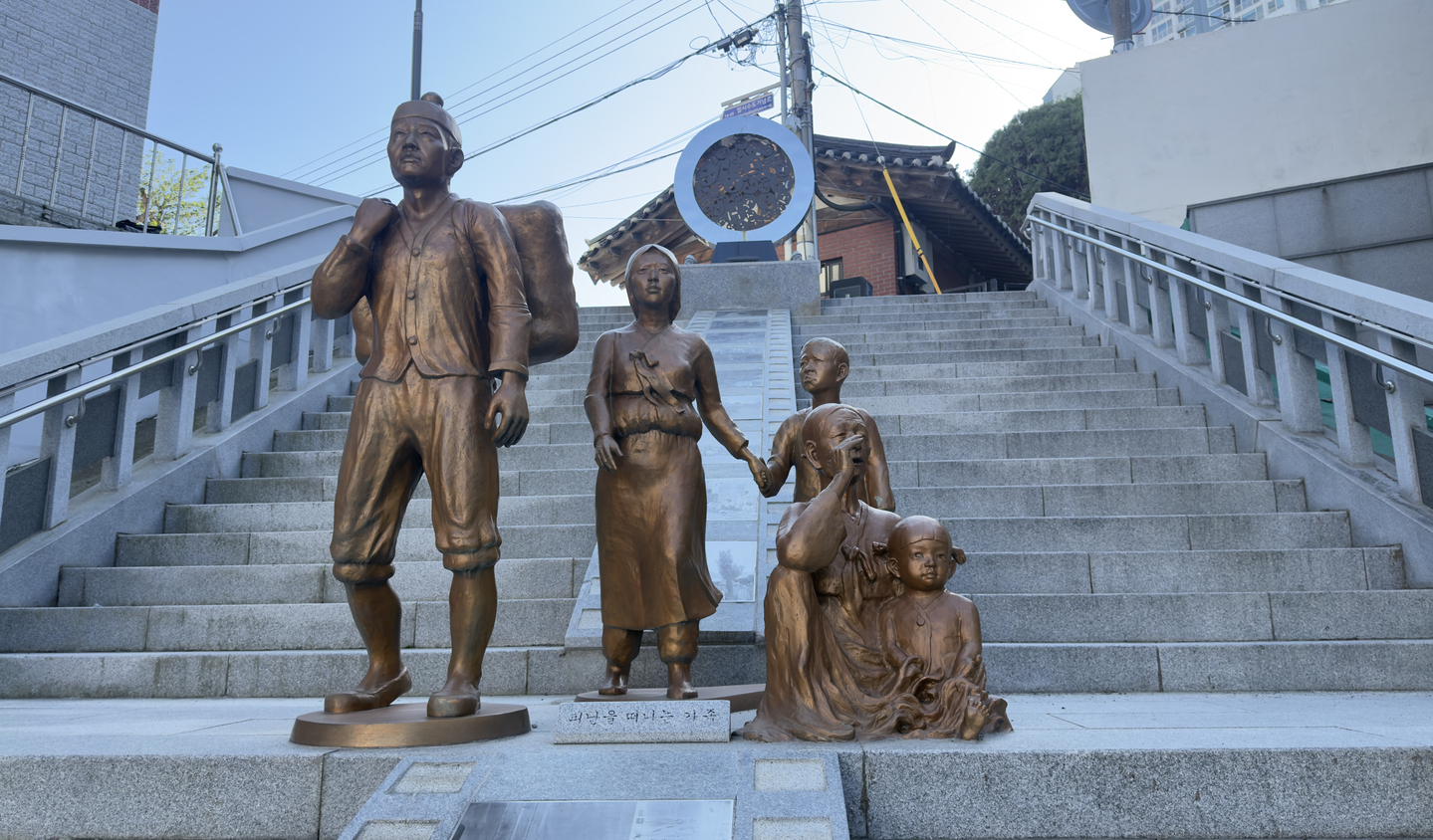
This article is by Woo Ji-won, Jin Eun-soo and read by an artificial voice. BUSAN — On June 25, 1950, the sound of gunfire from the North shattered the dawn, forcing the South Korean government and civilians away from the battlefront. Many of those who fled Seoul eventually reached Busan, located at the southern tip of the Korean Peninsula, and the city ultimately became their refuge. Thus began Busan's 1,023 days as South Korea's provincial capital. Beginning on Aug. 18, 1950, the city transformed into the nation's political, economic and cultural hub and sheltered public officials and intellectuals, as well as many other displaced men, women and children from across the peninsula. By 1951, the city's population had swelled to more than 840,000, nearly double its prewar population of around 470,000. "Busan, as a wartime capital, maintained state functions while protecting civilians and communities. It also practiced global cooperation and solidarity," said Ahn Young-shin, the director of the Cultural Heritage Division of the Busan metropolitan government, at the former U.S. Embassy building — now serving as an annex of the Busan Modern & Contemporary History Museum — on Tuesday. "It also speaks to the present day's humanity, as the world struggles with various conflicts, such as the Russian invasion of Ukraine, military clashes in the Middle East, refugees displaced by environmental problems and so on. In that sense, [...] Busan is not just a war heritage but an example of how a city and a community operated and maintained themselves in the event of war." The government is now seeking to preserve that legacy by pursuing Unesco World Heritage status for a collection of 11 historic sites tied to Busan's role as the temporary capital during the 1950-53 Korean War. Together, the sites show how Busan continued to function as a city while embracing global solidarity, even under harsh and dire circumstances. Moreover, they offer a timely reflection on today's world, which is still marked by conflict, hatred and violence. Pier 1 of Busan Port Quiet neighborhoods near present-day Seoul suddenly descended into chaos in June 1950, when North Korea launched a surprise invasion across the 38th parallel, forcing civilians and soldiers alike to flee. Some crossed rivers or hopped on carts and freight trains to escape. Others boarded ships or walked for months until they arrived in Busan. As a result, Pier 1 of Busan Port eventually became a landing point for displaced Koreans, as well as for United Nations soldiers, military supplies and humanitarian aid. The port also served as a key source of employment during the war, providing refugees with much-needed income. Pier 1 is preparing for another transformation: The site of its old warehouses is set to become "Global Startup Hub Busan," an innovation center for startups, investors and research institutions, scheduled to open sometime next year. Temporary government complex Following the fall of Seoul, the temporary government complex in Busan, originally the government office of Seo District in South Gyeongsang, became the government's final refuge after brief stops in Daejeon and Daegu. It was here that the country began to regroup and rebuild itself. Ministries and government agencies made key political and economic decisions inside this building, which served as the heart of a machine that would bring the nation back to life. Today, the building is used as a museum operated by Dong-A University. Temporary presidential residence Until the Korean War Armistice Agreement was signed in July 1953, then-South Korean President Syngman Rhee stayed and worked at a two-story redbrick building, originally the residence of the governor of South Gyeongsang. Diplomatic, policy and UN meetings took place at this temporary presidential residence, and Rhee also made decisions here that would alter the fate of the country at a time when the nation was as fragile as a candle flame. After opening its ...
Embed this episode
Ready to play
Busan as a wartime capital: How the city remembers the sacrifices and solidarity born from war
No transcript for this episode yet
Similar Episodes
No similar episodes found.
Similar Podcasts
No similar podcasts found.