
EPISODE · Jul 19, 2026 · 1H 10M
Cancer Care for Nurses: Treatments, Toxicities, and Red Flags
from Healthy Skin Life · host Brooke Wallace
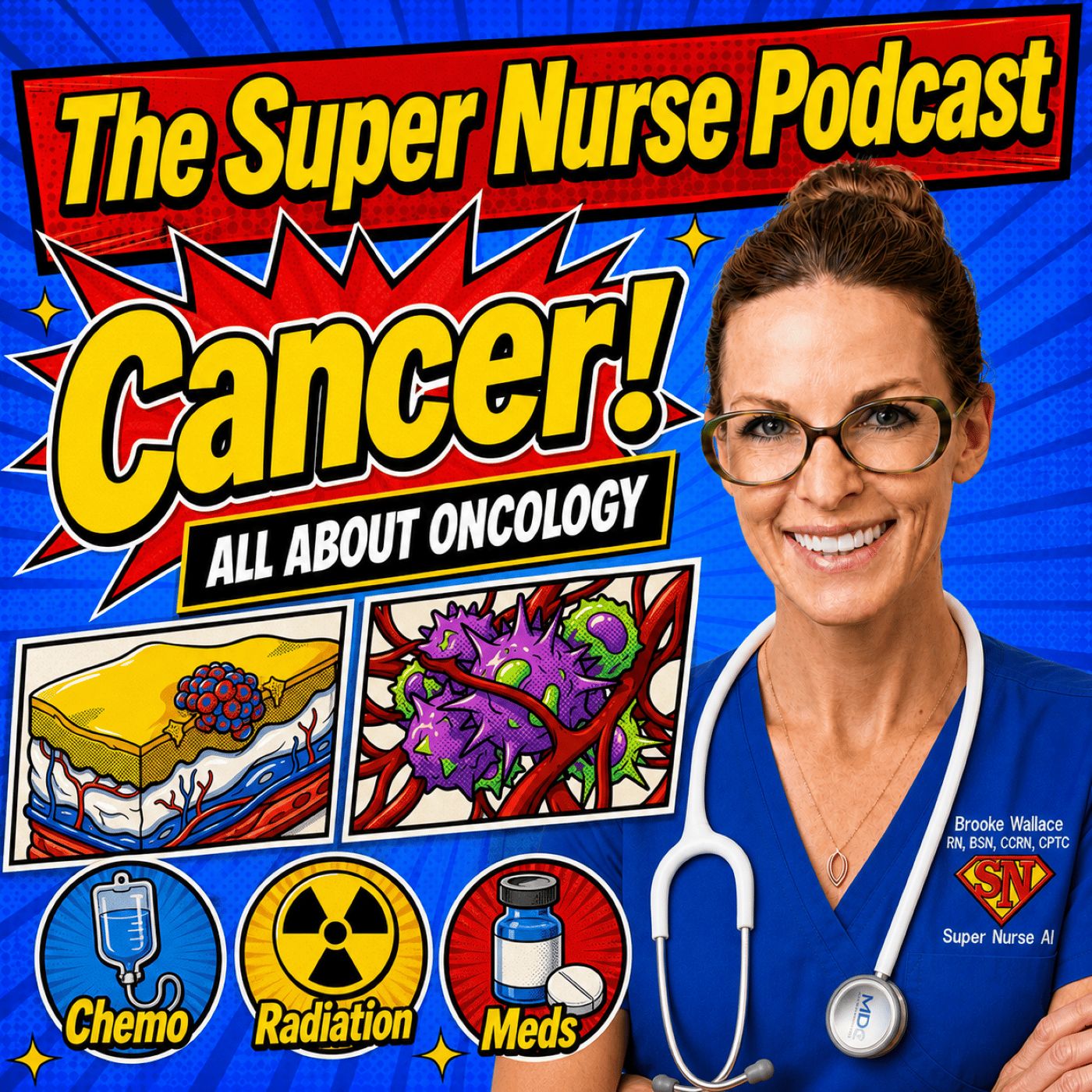
Cancer care becomes less intimidating when you understand why each treatment produces the complications nurses encounter at the bedside. In this comprehensive oncology nursing review, we connect cancer pathophysiology with practical patient care—from abnormal cell growth and TNM staging to chemotherapy, radiation, targeted therapy, immunotherapy, and the warning signs that demand immediate nursing action. 👉 Visual Learner? Watch the video @ Super Nurse Comics You’ll learn: How cancer develops, grows, and metastasizes How to interpret the basics of TNM staging The differences between local and systemic cancer treatments Why chemotherapy causes anemia, thrombocytopenia, and neutropenia Why fever in a neutropenic patient requires immediate escalation Essential precautions for external and internal radiation How nurses anticipate nausea, stomatitis, bleeding, and infection Chemotherapy safety for nurses, patients, and caregivers How cancer affects fatigue, body image, pain, and emotional health Why palliative care can—and should—accompany active treatment Episode chapters Chapter times are approximate. 00:00 The overwhelming oncology nursing report 03:34 How a normal cell becomes a rogue cancer cell 06:26 Cancer initiation, promotion, and progression 13:41 Carcinomas, sarcomas, leukemias, lymphomas, and myelomas 16:42 TNM cancer staging made clear 20:56 Understanding tumor-marker trends 23:55 Local versus systemic cancer treatment 25:28 Targeted therapy and immunotherapy 28:45 Why combination cancer treatments are used 30:13 External radiation and radiation dermatitis 33:17 Internal radiation and implant safety 37:20 Why chemotherapy damages healthy cells 39:42 Anemia and impaired oxygen delivery 41:34 Thrombocytopenia and bleeding precautions 43:20 Neutropenia and the danger of infection 46:35 Preventing chemotherapy-related nausea 49:15 Stomatitis, oral care, and nutrition 52:17 Chemotherapy as an occupational hazard 53:45 The 48-hour bodily-fluid safety window 56:38 Handling chemotherapy leaks and spills 59:06 The human side of cancer care 59:46 Alopecia, body image, and patient control 61:30 Cancer-related fatigue and pain 63:14 Palliative care is not the same as hospice 65:28 Key oncology nursing takeaways 68:10 The changing future of cancer treatment 70:08 End The central takeaway: oncology nursing is not about memorizing disconnected rules. When you understand the biology behind each intervention, assessment findings begin to form a logical clinical picture—and you become better prepared to recognize danger, establish priorities, and protect your patient. Watch the comic-book video version on Super Nurse Comics, subscribe for more visual nursing education, and visit supernurse.ai for evidence-based resources created to help nurses connect pathophysiology with bedside practice. This episode is intended for educational purposes only. Always follow current clinical guidelines, institutional policies, medication instructions, and guidance from the patient’s healthcare team. The content presented in The Super Nurse Podcast is for educational purposes only and should not be considered medical advice. The host and creators are not responsible for any clinical decisions made based on this content. Always adhere to your institution’s policies and consult appropriate healthcare professionals when making patient care decisions.
Embed this episode
What this episode covers
Cancer care becomes less intimidating when you understand why each treatment produces the complications nurses encounter at the bedside. In this comprehensive oncology nursing review, we connect cancer pathophysiology with practical patient care—from a...
NOW PLAYING
Cancer Care for Nurses: Treatments, Toxicities, and Red Flags
No transcript for this episode yet
Similar Episodes
No similar episodes found.
Similar Podcasts
No similar podcasts found.