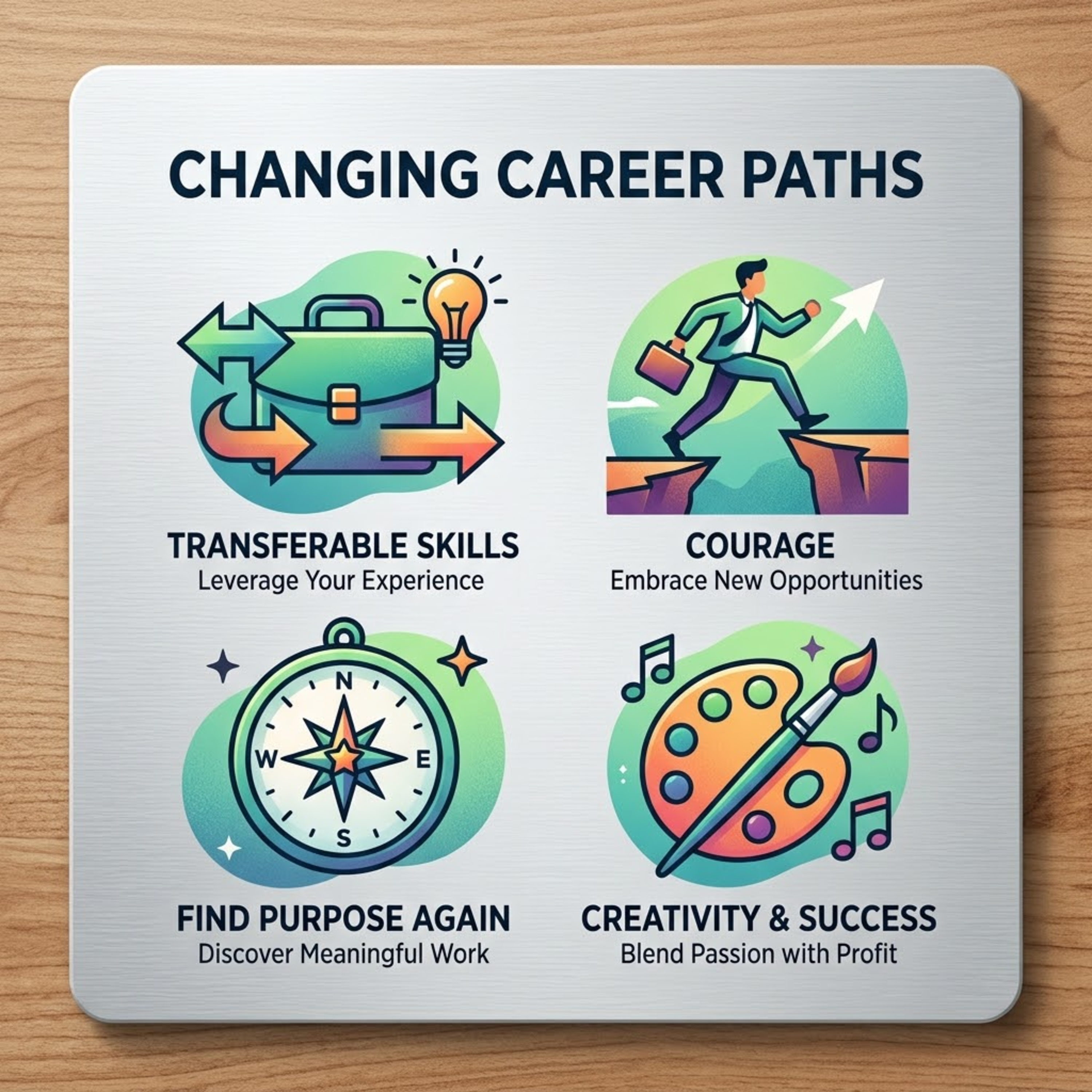
Changing Career Paths: Skills, Courage, Purpose, and Creativity
from Still Alchemy Hosted by Still Alchemy
Changing careers can feel risky, especially when it means leaving behind a familiar job, steady income, or professional identity. But a career change does not always mean starting from zero. Often, the skills developed in one career can become the foundation for an entirely new path. 1. The Teacher Who Became a Designer Maria spent ten years teaching before realizing that she was more passionate about creating visual materials than being in the classroom. She recognized that communication, organization, presentation, and creativity were transferable skills. While teaching part-time, she studied graphic design and built a portfolio. Eventually, she turned her creative ability into a new career. 2. The Accountant Who Opened a Bakery James had a successful accounting career but dreamed of becoming a baker. Rather than quitting immediately, he developed his business gradually. His accounting background became an advantage because he understood budgets, expenses, pricing, and profitability. His story shows that creativity can become a business when paired with practical financial skills. 3. The Journalist Who Moved Into Marketing Sarah enjoyed storytelling but became uncertain about her future in traditional journalism. Instead of abandoning her experience, she identified her transferable skills: writing, research, interviewing, and communication. She used those abilities to move into content marketing, where she could continue telling stories while building a more sustainable career. 4. The Engineer Who Became a Furniture Maker David worked as an engineer but spent his free time designing and building furniture. He eventually realized that his technical knowledge, problem-solving ability, and attention to detail could support a creative business. He started slowly, reducing his engineering hours as his furniture business grew. His journey shows that a hobby can become a career when passion is combined with planning. 5. The Healthcare Professional Who Became a Creator Emily enjoyed helping people as a physical therapist but wanted more flexibility and creative freedom. She began creating educational health and exercise content online. Her professional knowledge gave her credibility, while creativity helped her build an audience. Over time, she developed income through courses, sponsorships, and digital content. These examples show that career change is not simply about finding a different job. It is about discovering what still matters to you, recognizing the skills you already possess, and having the courage to use them differently. A new career can provide financial opportunity without sacrificing creativity or purpose. Sometimes, the next chapter is not about becoming someone completely different—it is about finally permitting yourself to become more of who you already are.
Embed this episode
No transcript yet.