
EPISODE · Jan 26, 2026 · 11 MIN
CHAPTER 10: THE ALCAICERÍA - SILK AND SPICE MARKET
from Judería medieval Zaragoza/Jewish quarter Zaragoza
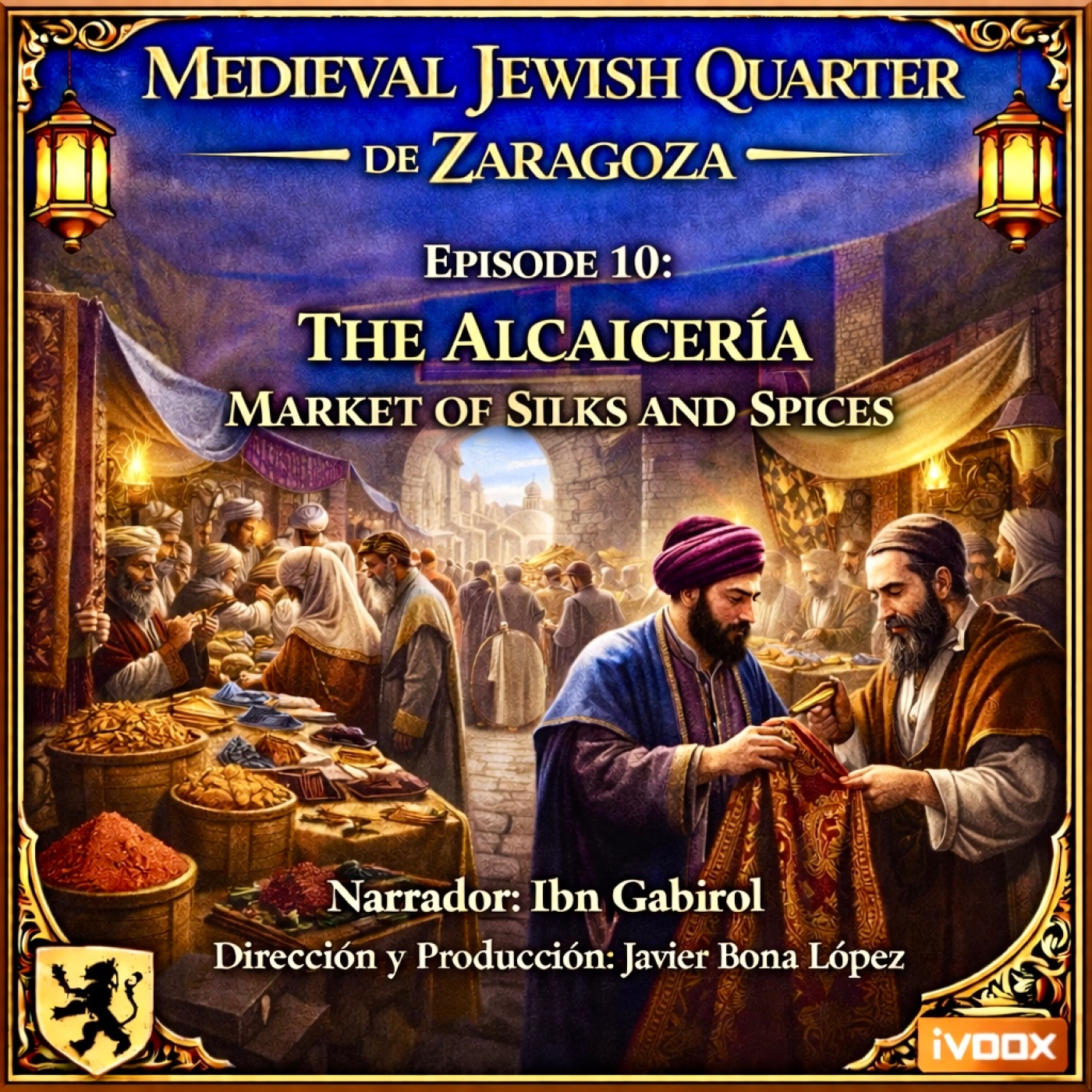
CHAPTER 10: THE ALCAICERÍA - SILK AND SPICE MARKET Series: Medieval Jewish Quarter of Zaragoza Narrator: Ibn Gabirol (Shelomó ibn Gabirol, 1021-1058/70) Direction and Production: Javier Bona López Documentation and Advisory: Miguel Ángel Motis Dolader (Universidad San Jorge de Zaragoza) Episode Description In this tenth chapter of our series on the medieval Jewish Quarter of Zaragoza, Ibn Gabirol transports us to the beating heart of the aljama's economic life: the Alcaicería. It was not a simple market but the great bazaar of Saraqusta, the epicenter of luxury trade where the senses were intoxicated and fortunes were woven. Located at the confluence of today's Verónica and Pedro Joaquín Soler streets, near the Roman Theater, the Alcaicería was a hive of activity, a microcosm where the entire world seemed to gather. You will discover: • A symphony of senses: The aroma of cinnamon, cloves, saffron, and pepper; the perfume of silks and brocades; the colors of indigo, cochineal, and weld • The Jewish soul of commerce: Jewish merchants as the main importers of luxury textiles (Damascus silks, Genoese velvets, Byzantine brocades) • The artisans: Silversmiths, silk weavers, dyers, and furriers who worked with unmatched mastery • Haggling as ritual: The verbal dance in Aragonese Romance, Hebrew, and Arabic that filled the market • Information center: Where the pulse of the kingdom's economy and international politics was taken • Complex social structure: The contrast between great merchants and small artisans • Economic coexistence: The Christian presence as customers and business partners • Vulnerability: The wealth that aroused envy and turned Jews into scapegoats • The end: The decline after the expulsion of 1492 and the loss of cosmopolitan spirit The Alcaicería was the economic engine of the aljama and one of the main sources of income for the Crown. A mirror of Jewish identity: a people of merchants and artisans who, through commerce, built bridges with other cultures without ever renouncing their faith or law. FINAL NOTE If you enjoyed this chapter, I invite you to share and spread it. You can also listen to our other series about the medieval Jewish quarters of Calatayud, Tarazona, and Híjar on the three main podcast platforms. Zakhor. Remember. Shalom. CREDITS AND SOURCES Narrator: Ibn Gabirol (Shelomó ibn Gabirol, 1021–1058/70) Direction and Production: Javier Bona López Research and Advisory: Miguel Ángel Motis Dolader (San Jorge University of Zaragoza) Main Sources: • Asunción Blasco Martínez. La Judería de Zaragoza en el siglo XIV. Instituto Fernando el Católico (IFC), 1988. • Miguel Ángel Motis Dolader. La judería de Zaragoza: Centro de la vida económica y social. Rolde de Estudios Aragoneses. • Miguel Ángel Motis-Dolader, Ana Ruiz-Varona, Lourdes Pérez-López. Urban Morphology and Functional Hierarchy of the Jewish Quarter of Zaragoza (Spain) at the End of the Fifteenth Century. Journal of Urban History, 2023. • Ángel Canellas López. La Judería Zaragozana. Cuadernos de Zaragoza, no. 2, 1974. • Asunción Blasco Martínez & Susana Lozano Gracia. La Judería de Zaragoza - Paso a Paso. Ayuntamiento de Zaragoza, 2023. • Sefarad Aragón. La desaparecida judería de Zaragoza. Self-published, 2010. • Leopoldo Torres Balbás. Trabajos sobre la judería de Zaragoza y sus baños. • Patrimonio Cultural de Aragón. Institutional records. • Guía de la Judería de Zaragoza. Ayuntamiento de Zaragoza. • Zaragoza Municipal Archive (AMZ). Historical maps. © Series: Medieval Jewish Quarter of Zaragoza Production: Javier Bona López
Embed this episode
NOW PLAYING
CHAPTER 10: THE ALCAICERÍA - SILK AND SPICE MARKET
No transcript for this episode yet
Similar Episodes
No similar episodes found.
Similar Podcasts
No similar podcasts found.