
EPISODE · Jul 20, 2026 · 19 MIN
Chemotherapy Side Effects and Nursing Care
from Healthy Skin Life · host Brooke Wallace
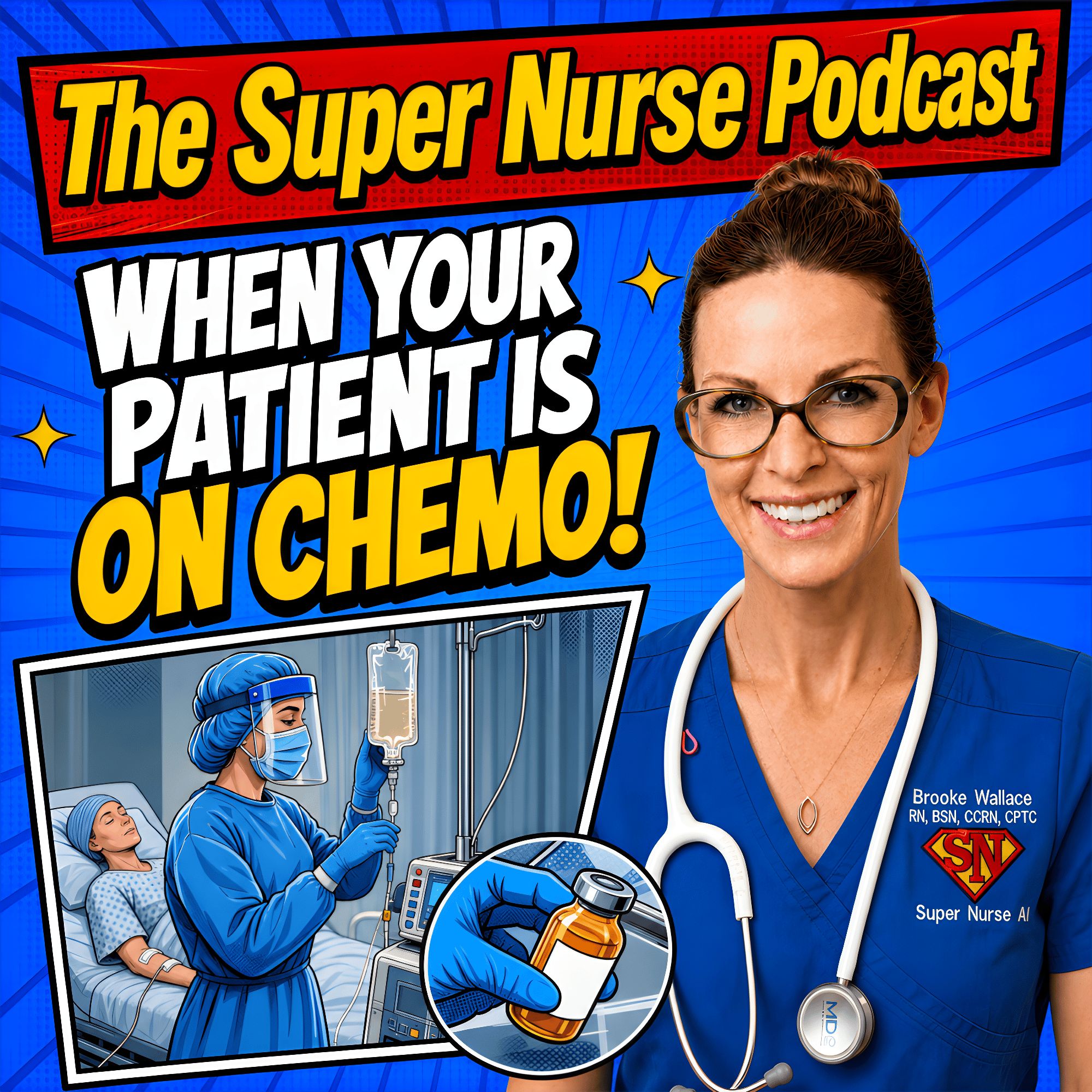
Chemotherapy side effects make more sense when you understand what these medications do at the cellular level. Learn how to connect the biology of cancer treatment to safer assessments, smarter interventions, and the bedside clues nurses cannot afford to miss. 👉 Watch the video on Super Nurse Comics In this episode, we break down why traditional chemotherapy damages healthy fast-dividing cells along with cancer cells—and how that “collateral damage” explains many of the complications nurses see in practice. You'll learn: - Why chemotherapy can cause neutropenia, anemia, thrombocytopenia, alopecia, nausea, and mucositis - Why fever in a neutropenic patient demands immediate action according to the treatment plan and facility protocol - How proactive antiemetics and supportive mouth care can help patients tolerate treatment - Which renal trends matter when a medication carries a risk of nephrotoxicity - Why chemotherapy precautions continue after administration and how nurses can reduce exposure to hazardous waste - What nurses should know about vesicants, central access, implanted ports, and non-coring Huber needles - How external-beam radiation precautions differ from internal radiation safety - How targeted therapy, immunotherapy, and CAR T-cell therapy are changing cancer care - Why preserving dignity and sitting with a patient's fear are essential parts of oncology nursing The goal is not to memorize another intimidating list. It is to understand the biological “why” so your assessments and nursing priorities become logical, practical, and easier to remember. Timestamps 0:00 Why Chemotherapy Feels So Intimidating1:11 What Nurses Will Learn2:21 How Cancer Cells Grow3:42 Cancer Warning Signs and Cachexia5:14 TNM Staging and Bedside Assessment6:12 Why Chemotherapy Causes Side Effects6:52 Bone Marrow Suppression and Neutropenia8:47 Nausea, Vomiting, and Mucositis10:31 Cisplatin and Kidney Damage11:24 The 48-Hour Chemotherapy Safety Rule13:31 Vesicants, Central Lines, and Ports14:44 External vs Internal Radiation15:45 Targeted Therapy, Immunotherapy, and CAR T16:50 Supporting the Patient Beyond the Infusion18:22 Final Nursing Takeaways Watch the comic-book video version on the Super Nurse Comics YouTube channel, and visit SuperNurse.ai for more resources created for nursing students, new graduates, and bedside nurses. Subscribe to The Super Nurse Podcast so you never miss an episode. This content is for educational purposes only and is not a substitute for clinical judgment, institutional policy, medication-specific guidance, or consultation with the appropriate healthcare team. The content presented in The Super Nurse Podcast is for educational purposes only and should not be considered medical advice. The host and creators are not responsible for any clinical decisions made based on this content. Always adhere to your institution’s policies and consult appropriate healthcare professionals when making patient care decisions.
Embed this episode
What this episode covers
Chemotherapy side effects make more sense when you understand what these medications do at the cellular level. Learn how to connect the biology of cancer treatment to safer assessments, smarter interventions, and the bedside clues nurses cannot afford ...
NOW PLAYING
Chemotherapy Side Effects and Nursing Care
No transcript for this episode yet
Similar Episodes
No similar episodes found.
Similar Podcasts
No similar podcasts found.