
EPISODE · Jun 29, 2026 · 23 MIN
Cirrhosis Isn’t Just a Liver Problem: Bedside Signs of Liver Failure
from Healthy Skin Life · host Brooke Wallace
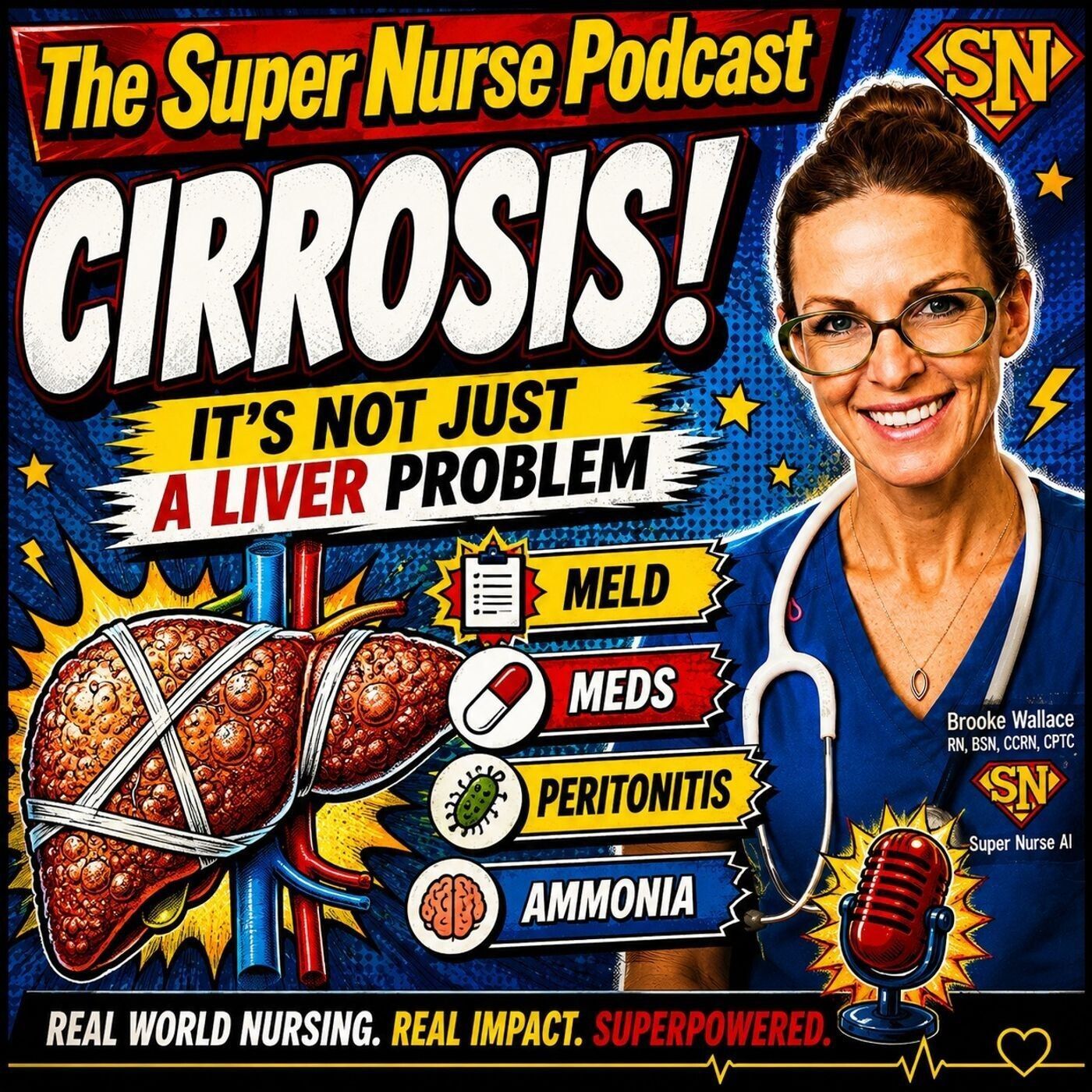
Cirrhosis is not just a liver problem. Once the liver becomes stiff, scarred, and unable to function normally, the effects show up throughout the entire body — in the brain, kidneys, blood, abdomen, lungs, and vascular system. This episode breaks down how nurses can connect the pathophysiology of cirrhosis to what they actually see at the bedside. The episode begins by comparing the liver to the body’s “chemical factory.” A healthy liver filters toxins, makes important proteins, supports metabolism, and helps the body maintain balance. But with chronic injury from alcohol-related liver disease, fatty liver disease, hepatitis, autoimmune disease, or genetic conditions, the liver tries to repair itself over and over again. Eventually, that healing process becomes scarring, fibrosis, and permanent architectural damage. Visual Learner? 👉 Watch the video A key teaching point in this episode is that cirrhosis creates two major problems: loss of blood flow and loss of factory function. The scarred liver becomes like “wet concrete in the plumbing system,” making it hard for blood to pass through. This causes portal hypertension, where pressure backs up in the portal venous system and forces fluid out of the blood vessels. That fluid buildup leads to ascites, one of the most important bedside findings nurses need to understand. A patient with ascites may look extremely fluid overloaded, with a tight, shiny, distended abdomen and swollen legs. But inside the bloodstream, they may actually be intravascularly depleted, meaning their organs — especially the kidneys — are struggling to get enough blood flow. This is why cirrhosis patients can appear “swollen but dry.” The episode also explains why ascites can become a respiratory issue. When several liters of fluid collect in the abdomen, that pressure pushes upward on the diaphragm and limits lung expansion. Nurses should watch for shallow breathing, rapid respirations, difficulty lying flat, and patients needing to sit upright to breathe. Portal hypertension can also cause blood to detour into fragile veins in the esophagus and stomach, creating varices. These veins are swollen, fragile, and at risk of rupture. Because the failing liver also cannot make clotting factors properly, patients with cirrhosis may have elevated INR, low platelets, and a high risk for catastrophic bleeding. The episode reviews common nursing interventions and orders, including diuretics like spironolactone and furosemide, daily weights, strict intake and output, abdominal girth measurements, and non-selective beta blockers such as propranolol to reduce portal pressure. These interventions are not just routine tasks — they are directly connected to preventing worsening ascites, respiratory distress, and variceal bleeding. A major concept covered is paracentesis, especially large-volume paracentesis. When a patient has severe ascites and cannot breathe comfortably, fluid may be drained from the abdomen. However, the episode explains why albumin is often given afterward: without albumin helping hold fluid inside the vascular space, the patient can become severely hypotensive and go into circulatory collapse. The episode then shifts into the liver’s loss of filtering function. When the liver cannot clear waste products, bilirubin and ammonia can build up in the blood. Bilirubin buildup leads to jaundice, yellowing of the skin and sclera, dark urine, pale or clay-colored stools, and severe itching known as pruritus. Ammonia buildup is especially dangerous because it can cross the blood-brain barrier and cause hepatic encephalopathy. This is where nursing assessment becomes critical. Early signs can be subtle, including sleep-wake reversal, worsening handwriting, reduced attention span, slight confusion, or personality changes. If these signs are missed, the patient may progress to severe confusion, agitation, paranoia, combativeness, or hepatic coma. The episode highlights classic findings such as asterixis, also called a flapping tremor, and fetor hepaticus, a sweet, musty, fecal-like breath odor associated with severe liver dysfunction. These are important bedside clues that ammonia levels and neurological status may be worsening. Lactulose is presented as one of the most important medications for cirrhosis patients with hepatic encephalopathy. It works by trapping ammonia in the gut and helping the body remove it through bowel movements. Although it can be messy and unpleasant, the episode emphasizes that lactulose is not “just a stool softener” — it is a brain-saving, life-saving medication. Rifaximin may also be used to reduce ammonia production by targeting gut bacteria. Together, lactulose and rifaximin help lower ammonia levels and improve mental status. Nurses should understand the goal of therapy, which is often two to four soft bowel movements per day, depending on the patient’s plan of care. A major warning in this episode is the danger of sedating an agitated cirrhosis patient without understanding the cause of the agitation. A confused patient with hepatic encephalopathy may seem like they need a sedative, especially if they are climbing out of bed or pulling at lines. But benzodiazepines such as Ativan or Versed can be dangerous because the failing liver may not clear them properly, leading to prolonged sedation, respiratory depression, and masking of worsening neurological decline. The episode also discusses acute decompensation, when a patient with chronic cirrhosis suddenly deteriorates and may require ICU care. One example is hepatorenal syndrome, where the kidneys stop making urine even though the kidneys themselves may not be structurally damaged. This happens because severe circulatory changes from liver failure reduce effective blood flow to the kidneys. Another ICU-level complication discussed is spontaneous bacterial peritonitis, or SBP. This occurs when bacteria move from the gut into the ascitic fluid, creating a serious infection. Nurses should recognize that SBP can be subtle at first but can rapidly progress to sepsis and shock if not identified and treated quickly. The episode also introduces the MELD score, which helps determine the severity of end-stage liver disease and transplant priority. The MELD score reflects key problems seen in cirrhosis, including bilirubin elevation, INR changes, and kidney dysfunction through creatinine. Patient teaching is another major part of cirrhosis nursing care. Nurses should teach patients to avoid hepatotoxins, including alcohol, NSAIDs, and unsafe doses of acetaminophen. Patients may also need education on low-sodium diets, daily weights, infection warning signs, medication adherence, and when to seek help. Family education is especially important because loved ones may notice subtle neurological changes before the patient does. Family members should watch for personality changes, forgetfulness, sleep pattern changes, increasing confusion, sudden weight gain, fever, or signs of infection. The final takeaway is that cirrhosis is a multi-system disease. It affects the brain through hepatic encephalopathy, the abdomen through ascites, the blood through coagulopathy, the kidneys through hepatorenal syndrome, and the vascular system through portal hypertension and varices. For nurses, understanding the “why” behind the symptoms makes it easier to anticipate complications before the patient crashes. 00:00 – Why the liver is the body’s ultimate multitasker01:12 – What cirrhosis really means in plain English02:35 – The “wet concrete in the plumbing system” analogy03:50 – Portal hypertension and why blood backs up05:10 – Ascites: why the patient looks swollen but is intravascularly depleted06:35 – Respiratory distress, abdominal girth, daily weights, and I&O07:45 – Esophageal varices and catastrophic bleeding risk09:05 – Paracentesis and why albumin is given afterward10:55 – Bilirubin, jaundice, clay-colored stools, dark urine, and pruritus12:20 – Ammonia buildup and hepatic encephalopathy13:35 – Subtle early signs nurses should not miss14:40 – Asterixis, fetor hepaticus, agitation, and confusion15:55 – Lactulose, rifaximin, and “pooping out” ammonia17:05 – Why benzodiazepines can be dangerous in cirrhosis patients18:35 – Acute decompensation and ICU admission red flags19:35 – Hepatorenal syndrome: why healthy kidneys stop making urine20:45 – Spontaneous bacterial peritonitis and silent infection risk21:40 – MELD score, transplant, and long-term patient teaching22:45 – Final bedside takeaway: cirrhosis is multi-system failure23:43 – End Want to reach out? Send an email to [email protected] or visit SuperNurse.ai The content presented in The Super Nurse Podcast is for educational purposes only and should not be considered medical advice. The host and creators are not responsible for any clinical decisions made based on this content. Always adhere to your institution’s policies and consult appropriate healthcare professionals when making patient care decisions. The content presented in The Super Nurse Podcast is for educational purposes only and should not be considered medical advice. The host and creators are not responsible for any clinical decisions made based on this content. Always adhere to your institution’s policies and consult appropriate healthcare professionals when making patient care decisions.
Embed this episode
What this episode covers
Cirrhosis is not just a liver problem. Once the liver becomes stiff, scarred, and unable to function normally, the effects show up throughout the entire body — in the brain, kidneys, blood, abdomen, lungs, and vascular system. This episode breaks down ...
NOW PLAYING
Cirrhosis Isn’t Just a Liver Problem: Bedside Signs of Liver Failure
No transcript for this episode yet
Similar Episodes
No similar episodes found.
Similar Podcasts
No similar podcasts found.