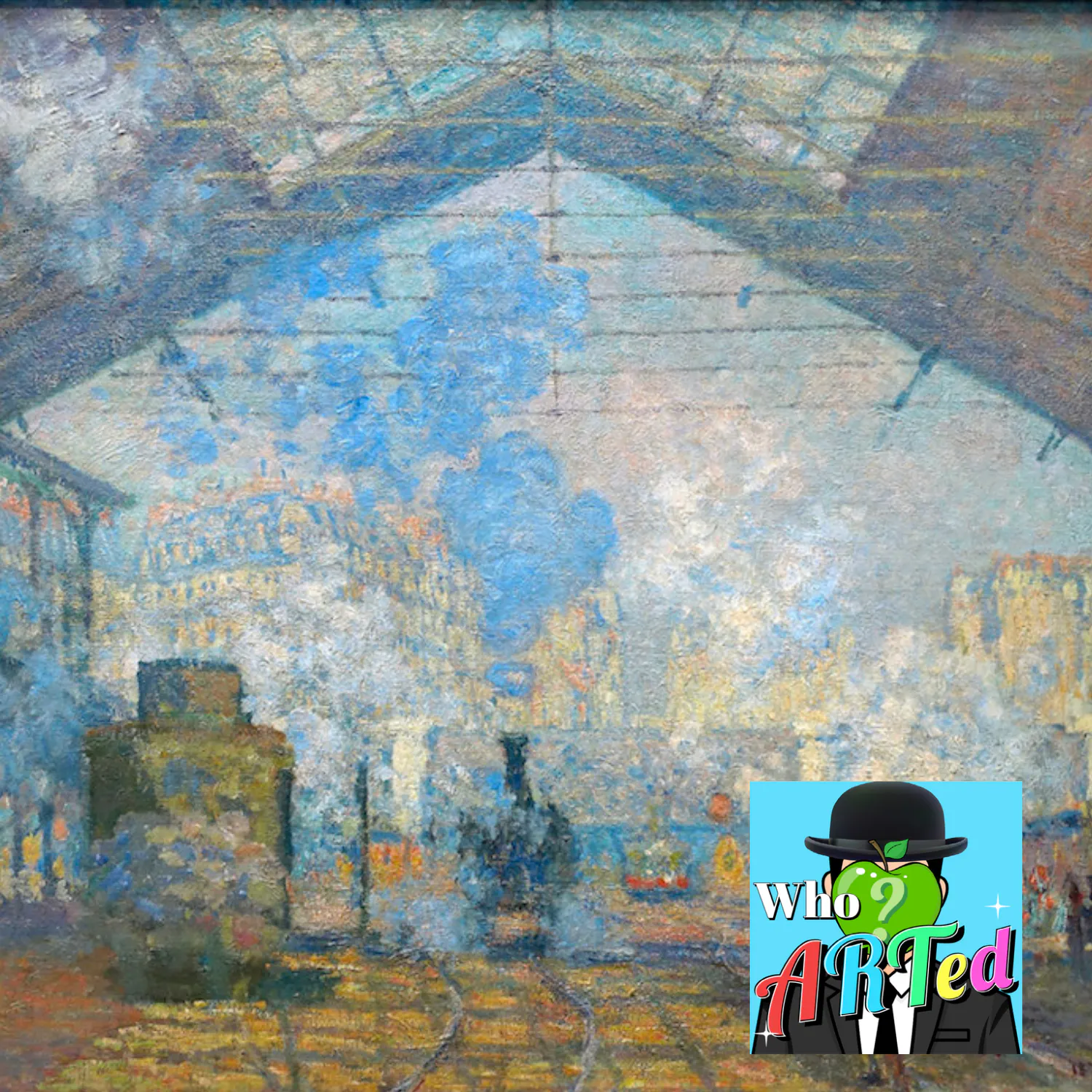
Claude Monet | The Gare Saint-Lazare episode artwork

EPISODE · Jan 4, 2023 · 8 MIN

Claude Monet | The Gare Saint-Lazare

from Who Arted: Weekly Art History for All Ages · host Kyle Wood

Claude Monet loved his garden and made about 250 paintings of water lilies. He and his Impressionist contemporaries were focused on color, light, and how our eyes perceive the world, but I would say technology was also central to the development. In his paintings of the train station, The Gare Saint Lazare, Monet gives us a glimpse of iron and glass station filled with the smoke of the steam engines. One critic wrote, “Unfortunately thick smoke escaping from the canvas prevented our seeing the six paintings dedicated to this study.” While the Impressionists were overtly apolitical, there is always a statement made by what is shown and what is not shown. Even if the artist himself or herself strives to be objective simply holding a mirror to their world, which way they aim that mirror matters. Monet shows the steam engine in its element as the subject of the work not merely something in the background. Technology of course drives change in our world. In the middle of the 19th century, painters suddenly had to compete with the camera. As photographs could quickly and easily capture the lines, shapes and proportions of a subject, painters shifted their focus to the color, an element cameras could not capture at that time. The tube of paint and numerous synthetic pigments also came about in the 19th century giving artists easy access to a wider range of colors. As I look at Monet’s use of so many colors, the pinks and blues of the cloud rising from the steam engine, I think of the critics the defenders of the status quo feeling threatened by change. They feel overwhelmed by the subject and begin to choke at the sight of roaring engines filling the space with smoke and they want to look away. They want the grand facades buildings and well-dressed elites walking city streets, not the workers and machines that powered the advancements. Monet though was unwavering. He meticulously studied his subjects at different times and in different seasons to find the beauty of even the smoke and engines in the industrial space. While the critics wanted grand visions of mythology, Monet showed what he and countless others experienced in the real world. Other episodes to listen to: Claude Monet | Water Lilies Art Smart: Impressionism & Post Impressionism Arts Madness Tournament links: Check out the Brackets Tell me which artist you think will win this year's tournament Give a shoutout to your favorite teacher (I'll send a $50 Amazon gift card to the teacher who gets the most shoutouts on this form by Feb 27) Who ARTed is an Airwave Media Podcast. Connect with me: Website | Twitter | Instagram | Tiktok Support the show: Merch from TeePublic | Make a Donation As always you can find images of the work being discussed at www.WhoARTedPodcast.com and of course, please leave a rating or review on your favorite podcast app. You might hear it read out on the show. Learn more about your ad choices. Visit megaphone.fm/adchoices

Claude Monet loved his garden and made about 250 paintings of water lilies. He and his Impressionist contemporaries were focused on color, light, and how our eyes perceive the world, but I would say technology was also central to the development. In his paintings of the train station, The Gare Saint Lazare, Monet gives us a glimpse of iron and glass station filled with the smoke of the steam engines. One critic wrote, “Unfortunately thick smoke escaping from the canvas prevented our seeing the six paintings dedicated to this study.” While the Impressionists were overtly apolitical, there is always a statement made by what is shown and what is not shown. Even if the artist himself or herself strives to be objective simply holding a mirror to their world, which way they aim that mirror matters. Monet shows the steam engine in its element as the subject of the work not merely something in the background. Technology of course drives change in our world. In the middle of the 19th century, painters suddenly had to compete with the camera. As photographs could quickly and easily capture the lines, shapes and proportions of a subject, painters shifted their focus to the color, an element cameras could not capture at that time. The tube of paint and numerous synthetic pigments also came about in the 19th century giving artists easy access to a wider range of colors. As I look at Monet’s use of so many colors, the pinks and blues of the cloud rising from the steam engine, I think of the critics the defenders of the status quo feeling threatened by change. They feel overwhelmed by the subject and begin to choke at the sight of roaring engines filling the space with smoke and they want to look away. They want the grand facades buildings and well-dressed elites walking city streets, not the workers and machines that powered the advancements. Monet though was unwavering. He meticulously studied his subjects at different times and in different seasons to find the beauty of even the smoke and engines in the industrial space. While the critics wanted grand visions of mythology, Monet showed what he and countless others experienced in the real world. Other episodes to listen to: Claude Monet | Water Lilies Art Smart: Impressionism & Post Impressionism Arts Madness Tournament links: Check out the Brackets Tell me which artist you think will win this year's tournament Give a shoutout to your favorite teacher (I'll send a $50 Amazon gift card to the teacher who gets the most shoutouts on this form by Feb 27) Who ARTed is an Airwave Media Podcast. Connect with me: Website | Twitter | Instagram | Tiktok Support the show: Merch from TeePublic | Make a Donation As always you can find images of the work being discussed at www.WhoARTedPodcast.com and of course, please leave a rating or review on your favorite podcast app. You might hear it read out on the show. Learn more about your ad choices. Visit megaphone.fm/adchoices

NOW PLAYING

Claude Monet | The Gare Saint-Lazare

0:00 8:35

No transcript for this episode yet

We transcribe on demand. Request one and we'll notify you when it's ready — usually under 10 minutes.

French Your Way Jessica: Native French teacher founder of French Your Way Boost your French listening skills and test your comprehension with this one of a kind series of podcasts. Get the chance to listen to a real conversation between native speakers talking at normal speed AND customise your learning experience through carefully designed sets of questions (2 levels of difficulty) available for download at www.frenchvoicespodcast.com. All interviews also come with the transcript. French teacher Jessica interviews native speakers of French from around the world who share a bit of their life and passion. Where else would you meet in one same place a French yoga teacher based in Melbourne, a soap manufacturer from Provence, or a couple cycling around the world? That Hoarder: Overcome Compulsive Hoarding That Hoarder Hoarding disorder is stigmatised and people who hoard feel vast amounts of shame. This podcast began life as an audio diary, an anonymous outlet for somebody with this weird condition. That Hoarder speaks about her experiences living with compulsive hoarding, she interviews therapists, academics, researchers, children of hoarders, professional organisers and influencers, and she shares insight and tips for others with the problem. Listened to by people who hoard as well as those who love them and those who work with them, Overcome Compulsive Hoarding with That Hoarder aims to shatter the stigma, share the truth and speak openly and honestly to improve lives. The Small Business Startup School – Business Notes | Financial Literacy | Retail Psychology – For Professionals & Entrepreneurs The Small Business Startup School Inc. Starting or buying a small business? While personal circumstances may vary, business patterns remain timeless. On The Small Business Startup School, we explore strategies, insights, and practical solutions to help entrepreneurs confidently navigate their journey.Hosted by Ola Williams—a retail entrepreneur, fintech founder, and financial coach with over two decades of experience—this podcast marries financial awareness and retail psychology with optimism to deliver actionable takeaways.Join us to learn, grow, and connect as we uncover the keys to business success.Let’s continue to learn together and be encouraged to keep on connecting! HOMELAND HOMELAND The Church is a body not a building. It's the bride of Jesus Christ! Jesus is coming back for a mature bride. That means it's time for the church of Jesus Christ to move from milk to meat. This is the hour of maturity!HOMELAND is an announcement that the church is being set free. Only the church has the ability to transform the world. The kingdom's of this world will become the kingdoms of our Lord and Savior!All of creation has been waiting for this moment! Sons and daughters of God are rising up and taking their seat!

Frequently Asked Questions

How long is this episode of Who Arted: Weekly Art History for All Ages?

This episode is 8 minutes long.

When was this Who Arted: Weekly Art History for All Ages episode published?

This episode was published on January 4, 2023.

What is this episode about?

Claude Monet loved his garden and made about 250 paintings of water lilies. He and his Impressionist contemporaries were focused on color, light, and how our eyes perceive the world, but I would say technology was also central to the development. In...

Can I download this Who Arted: Weekly Art History for All Ages episode?

Yes, you can download this episode by clicking the download button on the episode player, or subscribe to the podcast in your preferred podcast app for automatic downloads.
URL copied to clipboard!