
EPISODE · Jul 16, 2026 · 19 MIN
CO₂ Emissions and the ocean's limits
from Written in the Ocean
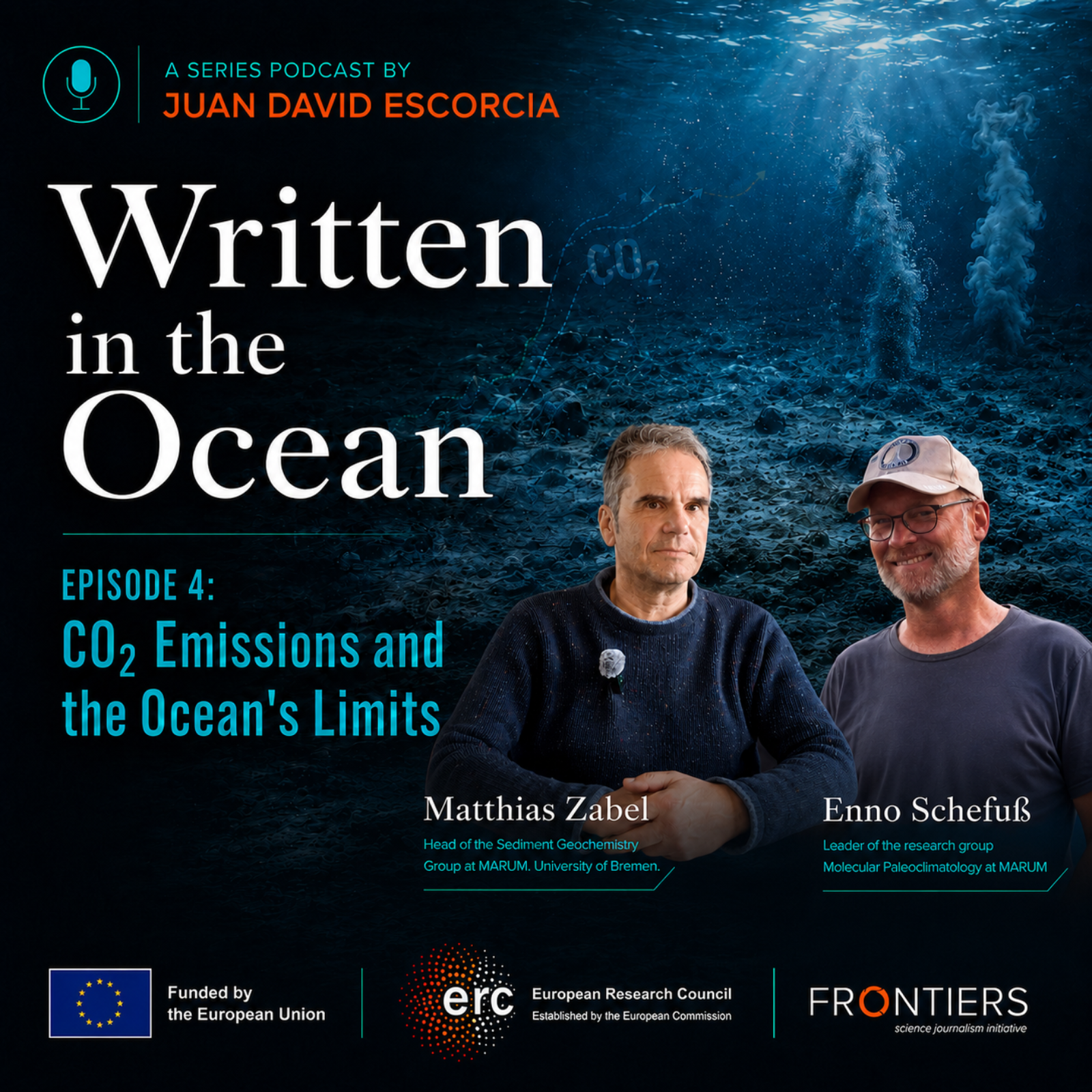
What happens to the CO₂ we release into the atmosphere every day, from our cars, our factories, and even from wars? A significant part of it ends up in the ocean. But how does the ocean absorb it, store it, and process it? And how long can it keep doing that? In this episode, we speak with two scientists at MARUM, the Center for Marine Environmental Sciences at the University of Bremen, who are trying to answer those questions, each from a very different angle. Doctor Matthias Zabel, head of the Sediment Geochemistry Group, studies the ocean as the largest carbon reservoir on Earth and reads the climate history of our planet through sediment archives that go back 300,000 years. Doctor Enno Schefuß, group leader in Molecular Paleoclimatology, works like a forensic detective, isolating individual carbon molecules from sediment cores to trace where carbon comes from, where it goes, and how old it is. Together, they reveal something unsettling: the speed at which CO₂ is increasing in the atmosphere today has no precedent in the geological record. And a natural experiment preserved in the sediments of the Mediterranean — the cold case of the Nile — suggests that the models we use to project our climate future may be underestimating what happens to carbon when the planet warms. Written in the Ocean was produced as part of the FRONTIERS Science Journalism Fellowship, funded by the European Research Council under the European Union's Horizon Europe research and innovation programme. The residency was carried out at MARUM, Center for MArine ENvironmental Sciences at the University of Bremen.
Embed this episode
Ready to play
CO₂ Emissions and the ocean's limits
No transcript for this episode yet
Similar Episodes
No similar episodes found.
Similar Podcasts
No similar podcasts found.