
EPISODE · Jun 13, 2026 · 14 MIN
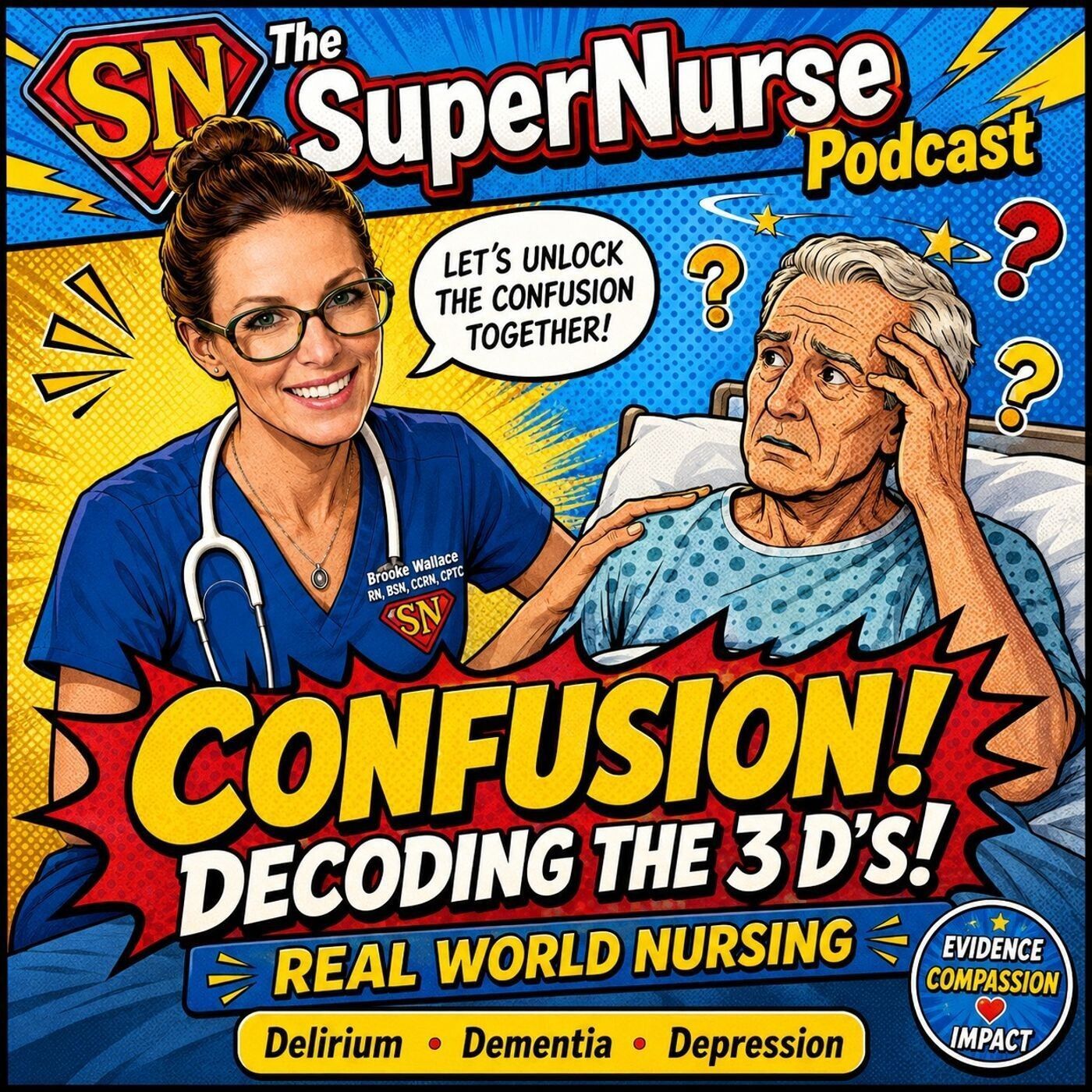
Confused Patient? How Nurses Decode the 3 Ds at the Bedside.
from Healthy Skin Life · host Brooke Wallace
👉 Watch the video @SuperNurseAI This episode focuses on one of the most important bedside questions nurses face: is this patient’s confusion baseline, or is something new and dangerous happening? When a patient suddenly becomes frantic, combative, hallucinating, drowsy, or unsafe, nurses have to think beyond “they’re just confused” and start decoding the clinical clues. The episode breaks down the 3 Ds: delirium, dementia, and depression. Delirium is sudden, acute, often reversible, and usually caused by an underlying physical problem such as a urinary tract infection, electrolyte imbalance, medication toxicity, hypoxia, dehydration, or infection. Dementia is chronic, progressive, and usually irreversible. Depression can mimic dementia in older adults and is sometimes referred to as pseudodementia. A major NCLEX point is that delirium changes level of consciousness, while dementia usually does not until very late stages. If a patient with dementia suddenly becomes more confused, hallucinating, sleepy, combative, or rapidly fluctuating, nurses should suspect delirium on top of dementia and look for a medical cause. The episode also explains how sudden confusion can be related to an unwitnessed seizure. If the patient is confused, drowsy, incontinent, injured, or has a tongue laceration, nurses should think about the postictal phase. Postictal nursing priorities include airway, breathing, oxygen saturation, neuro checks, injury assessment, aspiration risk, fall prevention, and accurate seizure documentation. We also review Alzheimer’s disease as the most common type of dementia. The episode explains beta amyloid plaques, tau tangles, brain atrophy, and the three A’s: apraxia, aphasia, and agnosia. These brain changes explain why logic, reasoning, sequencing, speech, object recognition, and impulse control may fail. A key communication takeaway is: connection regulates behavior; correction escalates it. Arguing with a dementia patient, correcting their reality, or saying “calm down” can increase fear, shame, defensiveness, and agitation. Nurses should validate emotion, offer simple binary choices, reduce stimulation, and step into the patient’s reality when safe. The episode also covers practical bedside interventions: remove scatter rugs, reduce clutter, improve lighting, prevent wandering, limit noise, offer finger foods, reduce distractions during meals, and watch for sundowning. These interventions are not random tasks — they are adaptations to a brain that can no longer process the environment normally. Finally, the episode discusses advanced dementia, dysphagia, aspiration pneumonia, hospice, palliative care, and family education. Families may feel guilt when a loved one stops eating, but nurses help explain that loss of appetite and swallowing ability can be part of the natural neurologic shutdown. Comfort care may include mouth care, hand-holding, pain relief, thirst management, calm presence, and protecting dignity. The key takeaway: when a patient is suddenly confused, nurses do not guess. They compare to baseline, assess for delirium, consider postictal seizure clues, protect safety, communicate calmly, and use clinical judgment to decide what the patient needs next. Want to reach out? Send an email to [email protected] or visit SuperNurse.ai The content presented in The Super Nurse Podcast is for educational purposes only and should not be considered medical advice. The host and creators are not responsible for any clinical decisions made based on this content. Always adhere to your institution’s policies and consult appropriate healthcare professionals when making patient care decisions. The content presented in The Super Nurse Podcast is for educational purposes only and should not be considered medical advice. The host and creators are not responsible for any clinical decisions made based on this content. Always adhere to your institution’s policies and consult appropriate healthcare professionals when making patient care decisions.
Embed this episode
What this episode covers
👉 Watch the video @ SuperNurseAI This episode focuses on one of the most important bedside questions nurses face: is this patient’s confusion baseline, or is something new and dangerous happening? When a patient suddenly becomes frantic, combative, hal...
NOW PLAYING
Confused Patient? How Nurses Decode the 3 Ds at the Bedside.
No transcript for this episode yet
Similar Episodes
No similar episodes found.
Similar Podcasts
No similar podcasts found.