
EPISODE · Mar 30, 2026 · 2 MIN
"CONTRACTS WRITTEN IN LEGALESE " MUST BE ABOLISHED
from CRITICAL's Substack Podcast · host CRITICAL THINKING FREE COURSE
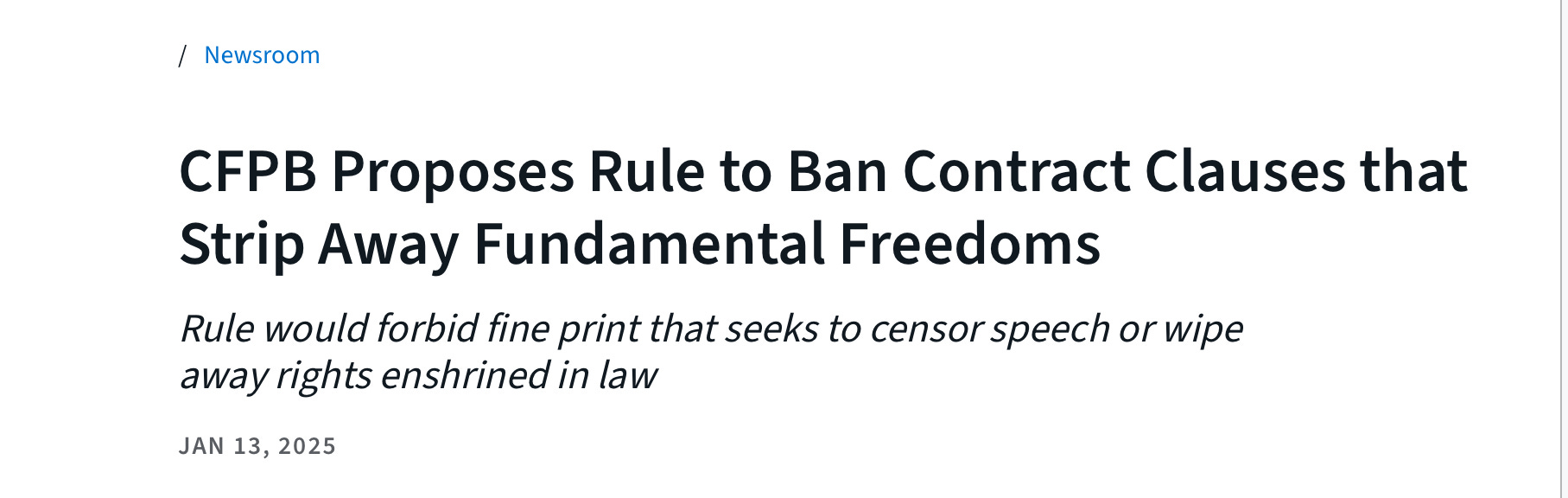
On January 13, the CFPB proposed a new rule to ban large banks and consumer finance companies from using certain contractual provisions in agreements with consumers under Regulation AA. The CFPB’s proposal warns against the use of contracts of adhesion—which it qualifies as standard-form contracts offered on a “take it or leave it” basis — that often include coercive terms limiting consumer rights. The Bureau argues that such contracts can undermine fundamental consumer freedoms and the rule of law by allowing companies to unilaterally amend material terms or restrict consumers’ free speech.Deceptive contracts are more prevalent than one might think; numerous agreements employ intentional misrepresentation, concealment of significant facts, or coercive strategies to deceive buyers into entering unfavorable arrangements. This is particularly evident in financial aid contracts, which may seem legitimate but often harbor concealed, unreasonable, or unenforceable provisions aimed at misleading consumers about their rights or the actual cost of a product or service.Such actions violate federal and state consumer protection statutes, including Section 5 of the Federal Trade Commission (FTC) Act, which forbids “unfair or deceptive acts or practices.” Financial aid contracts and tuition payment plans frequently incorporate deceptive, hidden, or unenforceable clauses intended to mislead consumers about their legal rights and the genuine cost of education. The Consumer Financial Protection Bureau (CFPB) cautions that the inclusion of such terms—even if they lack legal enforceability—constitutes a deceptive practice, as it misleads consumers into thinking they have relinquished their rights.Deceptive contracts are a form of contract to mislead buyers into unfavorable agreements through intentional misrepresentation, concealment of material facts, or coercive terms. These practices are illegal under various state and federal consumer protection laws.The employment of intricate, outdated, and frequently perplexing terminology in legal agreements—often referred to as "legalese"—has sparked considerable discussion, with numerous individuals advocating for its simplification or outright removal in favor of straightforward language, rather than the complete abolition of the contracts themselves.Students often express dissatisfaction regarding withdrawal fees, intricate procedures, and perceived inequities in refund policies, frequently highlighting exorbitant penalty charges, insufficient transparency, and delayed fund returns.Such grievances may arise from stringent deadlines, non-refundable charges, or unclear communication of policies at the time of enrollment.To address these issues, students may consider consulting school handbooks, reaching out to ombudsmen, or submitting formal complaints.All these contracts are essentially deceptive, and the notion that one can look at another person and assert that they should be held accountable for signing something written in an incomprehensible language is absurd. Furthermore, students who entered into contracts at an age where they could not fully comprehend their implications should be exempt from such obligations. If we persist in paying and complaining about this situation without taking decisive action to reject it as nonsensical and trivial—because that is precisely what it is—we will find ourselves ensnared in it. However, some individuals have chosen to cease their payments, deeming the entire matter too ridiculous for further discussion. Ultimately, the decision lies with you.Financial aid contracts and student loans, particularly theMaster Promissory Note (MPN), are written in complex legal language (”legalese”) because they are legally binding contracts that establish long-term financial obligations, interest rates, repayment schedules, and specific borrower/lender rights. These documents are designed to protect the lender’s interests—often the U.S. Department of Education or private financial institutions—and to comply with intricate state and federal laws.https://www.investopedia.com/education-department-to-notify-thousands-of-borrowers-that-they-qualify-for-automatic-forgiveness-today-11936014 This is a public episode. If you would like to discuss this with other subscribers or get access to bonus episodes, visit criticalthinkingfreecourse.substack.com
NOW PLAYING
"CONTRACTS WRITTEN IN LEGALESE " MUST BE ABOLISHED
No transcript for this episode yet
Similar Episodes
Mar 26, 2026 ·1m
Jan 2, 2026 ·47m
Dec 21, 2025 ·46m