
EPISODE · May 17, 2026 · 37 MIN
Cytokine-Induced Liver Regeneration for Alcoholic Cirrhosis Therapy
from Medical Journal Club with Dr. Takuji Shirasawa · host Takuji Shirasawa, MD
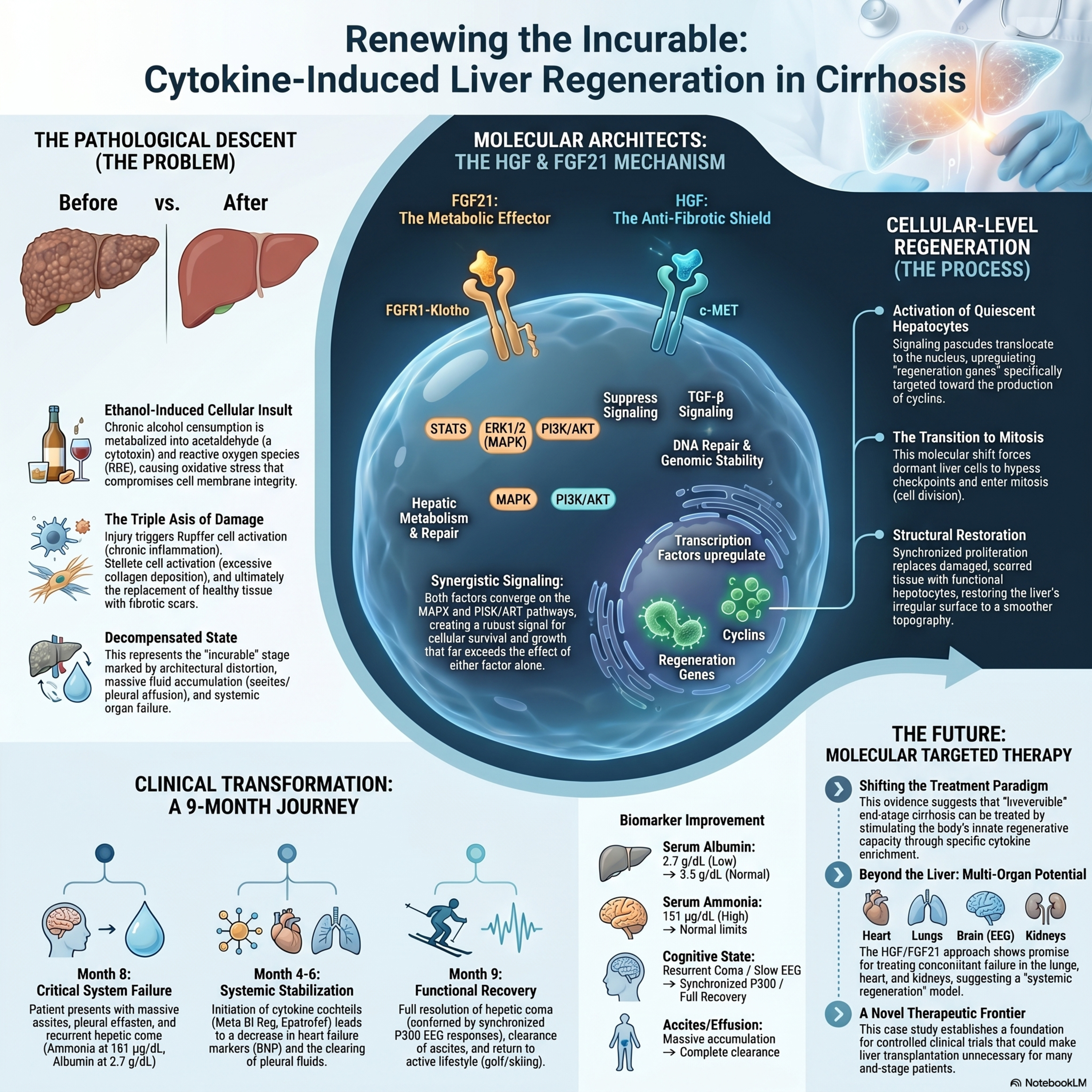
AbstractAlcoholic liver cirrhosis is a chronic, progressive liver disease characterized by the formation of scar tissue, ultimately resulting in liver failure. This condition is prevalent, affecting millions of individuals worldwide. In this case report, we present a case study of a 63-year-old male patient diagnosed with decompensated alcoholic liver cirrhosis, accompanied by significant complications such as massive ascites, massive pleural effusion, hyperammonemia, renal failure, cardiopulmonary failure, and repeated hepatic coma. The cytokine-induced liver regeneration process was achieved by means of a cytokine cocktail composed of porcine hepatocyte growth factor (HGF) and FGF21. HGF and FGF21 has been shown to stimulate hepatocyte regeneration in murine models of fatty liver disease. Following a period of nine months during which the patient received cytokine treatment, there were indications of hepatic recovery. Concurrently, there was resolution of cardiopulmonary failure, cognitive dysfunction, renal failure, and hypercoagulability. This constitutes a novel strategy for the treatment of decompensated alcoholic liver cirrhosis, an incurable liver disease. To the best of our knowledge, this is the first case report providing evidence that cytokine-induced liver regeneration can ameliorate the symptoms of decompensated alcoholic liver cirrhosis. To definitively ascertain the efficacy of cytokine therapy in promoting liver regeneration as a treatment for cirrhosis, further case studies and a controlled clinical trial are imperative.
Embed this episode
NOW PLAYING
Cytokine-Induced Liver Regeneration for Alcoholic Cirrhosis Therapy
No transcript for this episode yet
Similar Episodes
No similar episodes found.
Similar Podcasts
No similar podcasts found.