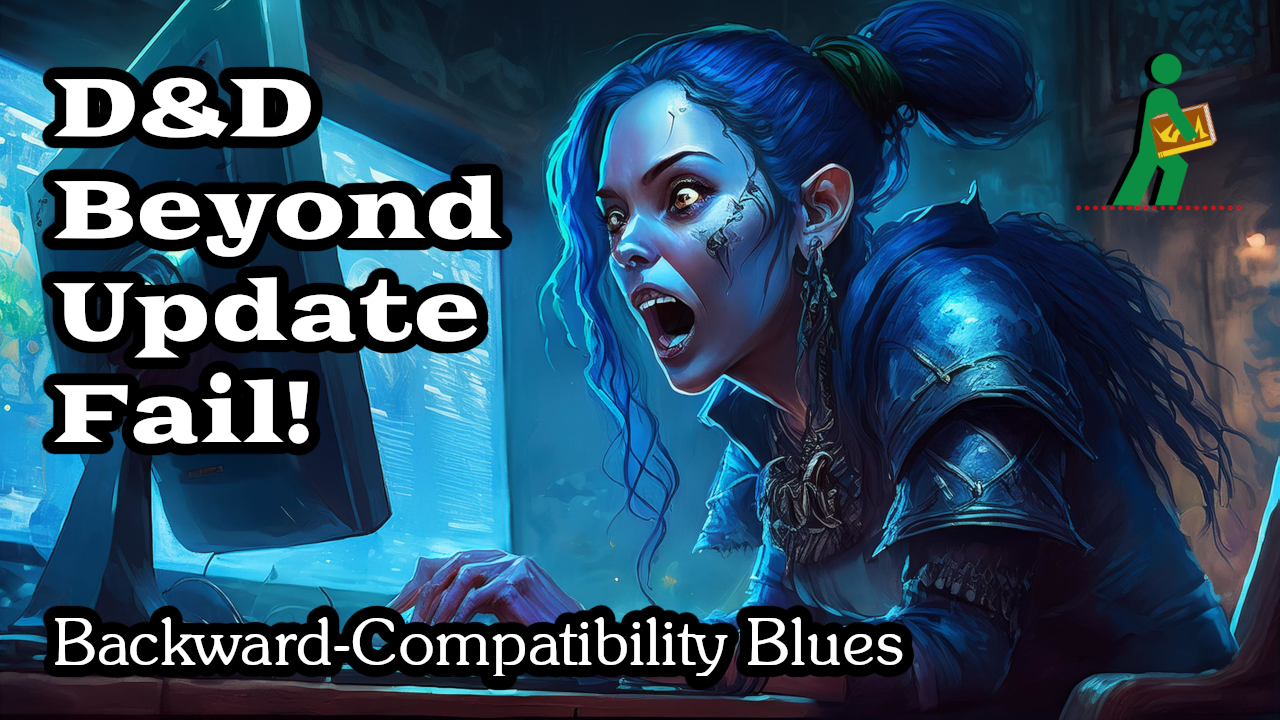
D&D Beyond Update Fail! | Backward-Compatibility Blues | Wandering DMs S06 E29 episode artwork

EPISODE · Sep 15, 2024 · 1H 1M

D&D Beyond Update Fail! | Backward-Compatibility Blues | Wandering DMs S06 E29

from Wandering DMs · host Wandering DMs

Dan and Paul wrap up the most recent Wizards D&D Beyond fumble -- a decision to retract all the items, magic, and spells from the 2014 version of D&D 5th Edition, and replace all content globally with the 2024 revised D&D content (whether players wanted it or not!). After public outcry, WOTC flip-flopped on their decision, but was it a preventable mistake? How hard is it for a game company to make old & new customers both equally happy? There are several incentives for a company to implement backward compatibility. Backward compatibility can be used to preserve older software that would have otherwise been lost when a manufacturer decides to stop supporting older hardware. Classic video games are a common example used when discussing the value of supporting older software. The cultural impact of video games is a large part of their continued success, and some believe ignoring backward compatibility would cause these titles to disappear. Backward compatibility also acts as a selling point for new hardware, as an existing player base can more affordably upgrade to subsequent generations of a console. This also helps to make up for lack of content at the launch of new systems, as users can pull from the previous console's library of games while developers transition to the new hardware. Moreover, studies in the mid-1990s found that even consumers who never play older games after purchasing a new system consider backward compatibility a highly desirable feature, valuing the mere ability to continue to play an existing collection of games even if they choose never to do so. Backward compatibility with the original PlayStation (PS) software discs and peripherals is considered to have been a key selling point for the PlayStation 2 (PS2) during its early months on the market. The monetary costs of supporting old software is considered a large drawback to the usage of backward compatibility. The associated costs of backward compatibility are a larger bill of materials if hardware is required to support the legacy systems; increased complexity of the product that may lead to longer time to market, technological hindrances, and slowing innovation; and increased expectations from users in terms of compatibility. Because of this, several console manufacturers phased out backward compatibility toward the end of the console generation in order to reduce cost and briefly reinvigorate sales before the arrival of newer hardware. Backward compatibility introduces the risk that developers will favor developing games that are compatible with both the old and new systems, since this gives them a larger base of potential buyers, resulting in a dearth of software which uses the advanced features of the new system. This description uses material from the Wikipedia article "Backward compatibility", which is released under the Creative Commons Attribution-Share-Alike License 3.0.

Dan and Paul wrap up the most recent Wizards D&D Beyond fumble -- a decision to retract all the items, magic, and spells from the 2014 version of D&D 5th Edition, and replace all content globally with the 2024 revised D&D content (whether players wanted it or not!). After public outcry, WOTC flip-flopped on their decision, but was it a preventable mistake? How hard is it for a game company to make old & new customers both equally happy? There are several incentives for a company to implement backward compatibility. Backward compatibility can be used to preserve older software that would have otherwise been lost when a manufacturer decides to stop supporting older hardware. Classic video games are a common example used when discussing the value of supporting older software. The cultural impact of video games is a large part of their continued success, and some believe ignoring backward compatibility would cause these titles to disappear. Backward compatibility also acts as a selling point for new hardware, as an existing player base can more affordably upgrade to subsequent generations of a console. This also helps to make up for lack of content at the launch of new systems, as users can pull from the previous console's library of games while developers transition to the new hardware. Moreover, studies in the mid-1990s found that even consumers who never play older games after purchasing a new system consider backward compatibility a highly desirable feature, valuing the mere ability to continue to play an existing collection of games even if they choose never to do so. Backward compatibility with the original PlayStation (PS) software discs and peripherals is considered to have been a key selling point for the PlayStation 2 (PS2) during its early months on the market. The monetary costs of supporting old software is considered a large drawback to the usage of backward compatibility. The associated costs of backward compatibility are a larger bill of materials if hardware is required to support the legacy systems; increased complexity of the product that may lead to longer time to market, technological hindrances, and slowing innovation; and increased expectations from users in terms of compatibility. Because of this, several console manufacturers phased out backward compatibility toward the end of the console generation in order to reduce cost and briefly reinvigorate sales before the arrival of newer hardware. Backward compatibility introduces the risk that developers will favor developing games that are compatible with both the old and new systems, since this gives them a larger base of potential buyers, resulting in a dearth of software which uses the advanced features of the new system. This description uses material from the Wikipedia article "Backward compatibility", which is released under the Creative Commons Attribution-Share-Alike License 3.0.

NOW PLAYING

D&D Beyond Update Fail! | Backward-Compatibility Blues | Wandering DMs S06 E29

0:00 1:01:15

No transcript for this episode yet

We transcribe on demand. Request one and we'll notify you when it's ready — usually under 10 minutes.

Shamisen Lofi Style 🕔👘 5 AM in Kyoto Asian Serenity [LoFi] 🏮 When ancient shamisen strings dance with modern beats, 5 AM in Kyoto captures that magical moment where sleeping temples meet the first rays of dawn, creating the perfect soundtrack for your soul's peaceful wandering 🎋 Novel to aid sleep shenank novels:"Boy" The Wandering Dog'Tilda Jane's OrphansThe Adventures of a Bear, and a Great Bear TooThe Adventures of a Cat, and a Fine Cat Too!The Adventures of a Dog, and a Good Dog TooThe Adventures of Bob WhiteThe Adventures of Bobby CoonThe Adventures of Buster BearThe Adventures of Danny Meadow Mouse (Dramatic Reading)The Adventures of Danny Meadow Mouse (Version 2)The Adventures of Danny Meadow Mouse (Version 3)The Adventures of Grandfather FrogThe Adventures of Jerry Muskrat (Dramatic Reading)The Adventures of Jerry Muskrat (Version 2)The Adventures of Jimmy SkunkThe Adventures of Johnny ChuckThe Adventures of Lightfoot the DeerThe Adventures of Lightfoot the Deer (Version 2)The Adventures of Maya the BeeThe Adventures of Mr. Mocker (Dramatic Reading)The Adventures of Old Man CoyoteThe Adventures of Old Mr. ToadThe Adventures of Old Mr. Toad (ve Shamisen Lofi Style 🕔👘 5 AM in Kyoto Asian Serenity 🏮 When ancient shamisen strings dance with modern beats, 5 AM in Kyoto captures that magical moment where sleeping temples meet the first rays of dawn, creating the perfect soundtrack for your soul's peaceful wandering 🎋 Barry Lewis Stonkin Foodcast Barry Lewis Stonkin Foodcast Welcome to the Barry Lewis Podcast area! Catch up on the latest episodes of the Stonkin Foodcast with Barry and co-host Alec Plowman as they discuss fun food topics & news, the latest happenings behind the scenes and wandering off into random conversation. Expect mild banter and some audience participation, so get involved!

Frequently Asked Questions

How long is this episode of Wandering DMs?

This episode is 1 hour and 1 minute long.

When was this Wandering DMs episode published?

This episode was published on September 15, 2024.

What is this episode about?

Dan and Paul wrap up the most recent Wizards D&D Beyond fumble -- a decision to retract all the items, magic, and spells from the 2014 version of D&D 5th Edition, and replace all content globally with the 2024 revised D&D content (whether players...

Can I download this Wandering DMs episode?

Yes, you can download this episode by clicking the download button on the episode player, or subscribe to the podcast in your preferred podcast app for automatic downloads.
URL copied to clipboard!