
EPISODE · Sep 30, 2024 · 1H
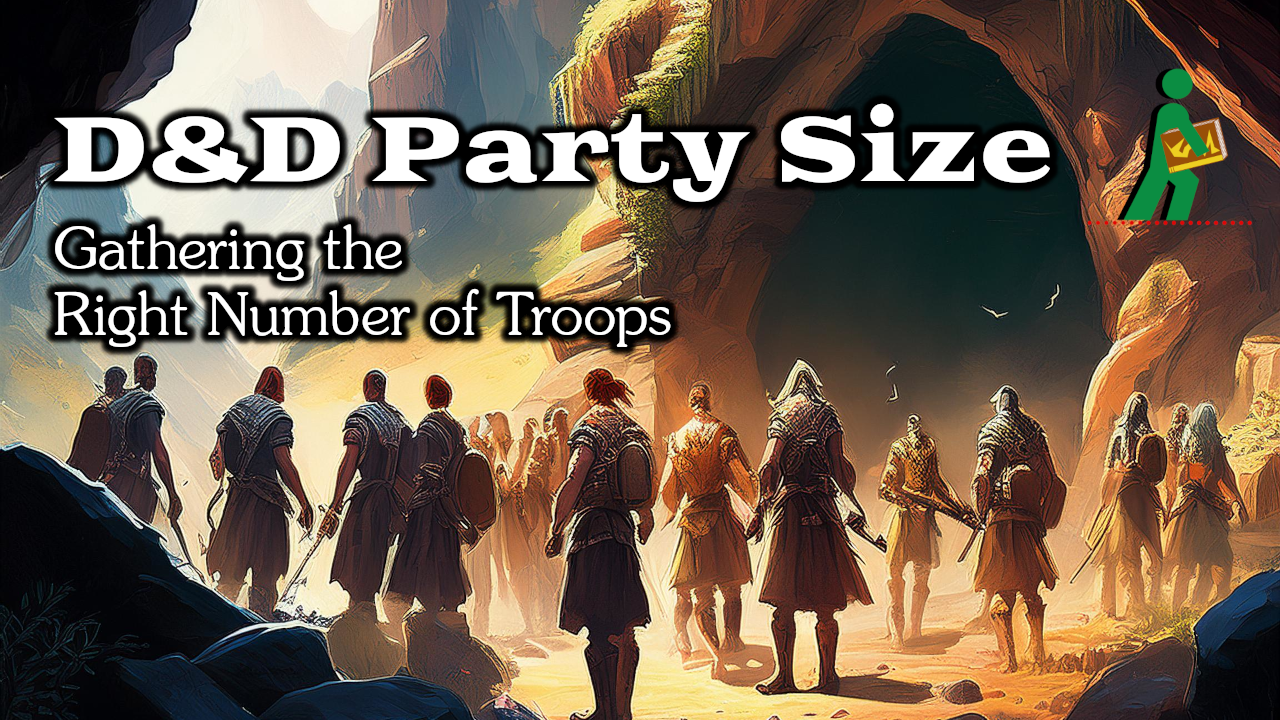
D&D Party Size | Gathering the Right Number of Troops | Wandering DMs S06 E32
from Wandering DMs · host Wandering DMs
Dan and Paul, the Wandering DMs, discuss the right number of players for D&D and other TTRPGs. How many is too many? How few is too few? What factors play into choosing the right range of party size for your adventure design? Team size and team composition affect team processes and team outcomes. The optimal size (and composition) of teams is debated and will vary depending on the task at hand. At least one study of problem-solving in groups showed an optimal size of groups at four members. Other works estimate the optimal size between 5–12 members or a number of members that can consume two pizzas. Writers such as Belbin (1981, 1993), Woodcock (1989), Margerison and McCann (1990), Davis et al. (1992), Parker (1990), and Spencer and Pruss (1992) focused on team roles and how these affected team performance. These studies suggested that team performance was a function of the number and type of roles team members played. The number of roles for optimal performance varied from 15 (Davis et al., 1992) to four (Parker, 1990). This variation has been attributed to how roles were defined. Regarding composition, all teams will have an element of homogeneity and heterogeneity. The more homogeneous the group, the more cohesive it will be. The more heterogeneous the group, the greater the differences in perspective and increased potential for creativity, but also the greater potential for conflict. This description uses material from the Wikipedia article "Team", which is released under the Creative Commons Attribution-Share-Alike License 3.0.
Embed this episode
Ready to play
D&D Party Size | Gathering the Right Number of Troops | Wandering DMs S06 E32
No transcript for this episode yet
Similar Episodes
No similar episodes found.
Similar Podcasts
No similar podcasts found.