
EPISODE · May 25, 2026 · 13 MIN
'Dansaekhwa' has taken over the modern art world. But the story of how that happened is up for debate.
from Korea JoongAng Daily - Daily News from Korea · host LIM JEONG-WON
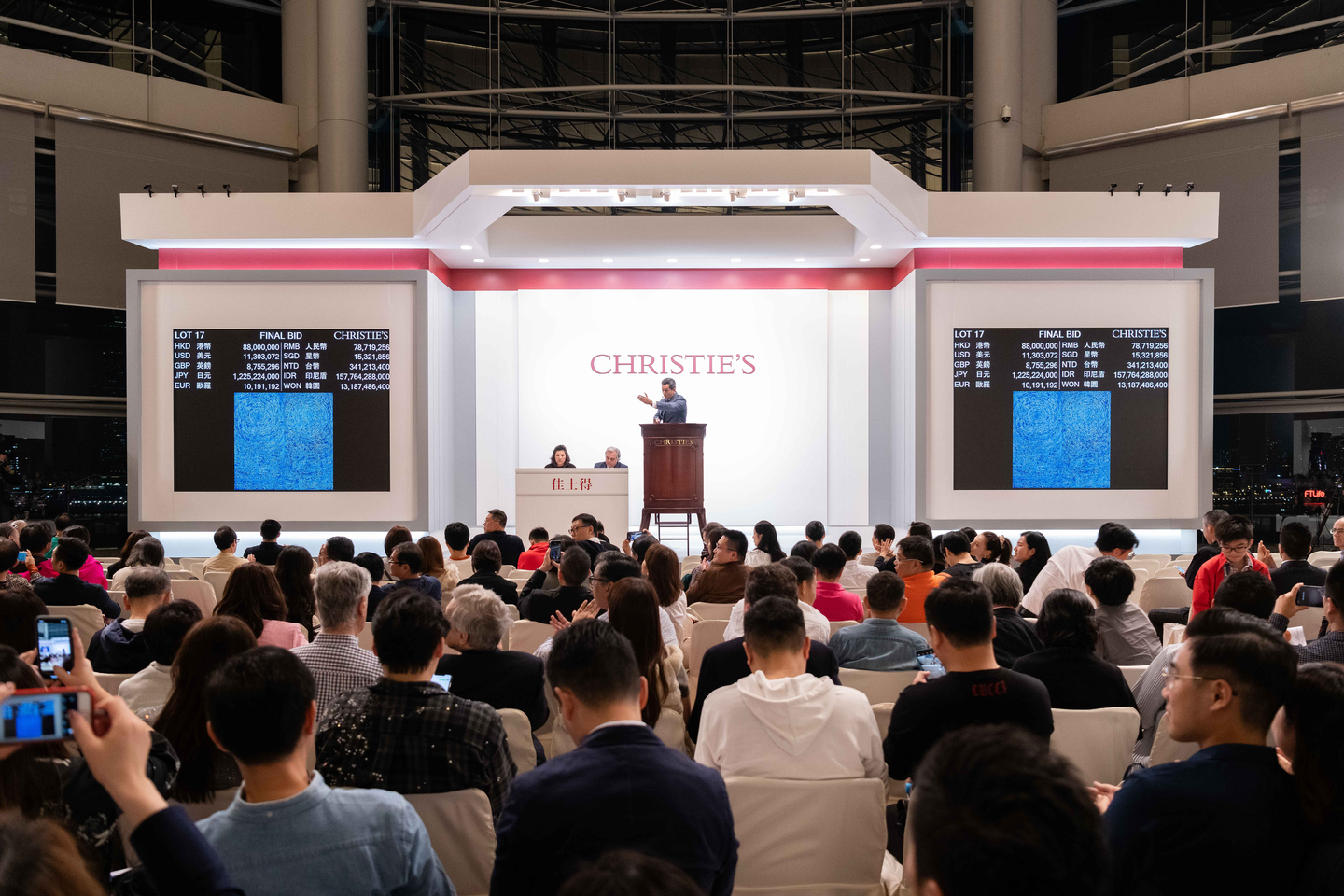
This article is by Lim Jeong-won and read by an artificial voice. By now, everyone should have heard of dansaekhwa, the Korean monochrome style of painting which has set sale records at global auctions and created a buying trend among collectors. Its muted yet intensive and meditative abstraction has mesmerized global art audiences over the past decade and come to define Korean modern art. But the global rise of dansaekhwa also raises a larger question: Why did this particular genre become the face of Korean art? And what comes next? Most of the paintings now circulating under the name dansaekhwa are more than 50 years old. Park Seo-bo's "Ecriture" series, Chung Sang-hwa's grids of cut and re-pasted paint, Ha Chong-hyun's "Conjunction" works pushed through the back of hemp canvas — these were being made in Seoul in the 1970s, by artists who would not see significant international sales for another four decades. The term itself isn't new either; art critic Lee Yil was already using the word dansaekhwa around 1980. "What changed however was not the work," said Joan Kee, art historian and director of New York University's Institute of Fine Arts. "It was who was paying attention." The shift of attention on dansaekhwa is usually dated to 2014, when two exhibitions opened on opposite sides of the world within months of each other: "Dansaekhwa" at Kukje Gallery in Seoul, in time with the Gwangju Biennale that year, and "From All Sides: Tansaekhwa on Abstraction" at Blum & Poe in Los Angeles, curated by Kee. Between 2013 and 2017, auction prices for works by Park, Chung, Ha and Lee Ufan rose dramatically at Christie's and Sotheby's sales, culminating with one particular work by Kim Whan-ki fetching $13 million at a Hong Kong auction in 2019, the highest price ever paid for a Korean artwork to date. The galleries that had been showing these artists for decades — Kukje, Hyundai, Tina Kim, Blum & Poe — suddenly found themselves at the center of a market story. How that story came together is, depending on whom you ask, either a long-overdue correction or the result of a very specific organizational strategy that began in Seoul in the 1970s. A movement, or an assembled category? Kee, author of "Contemporary Korean Art: Tansaekhwa and the Urgency of Method" (2013), the first English-language scholarly book on the subject, has pushed back on the idea that the rise of dansaekhwa in 2014 was an engineered moment. "The galleries involved weren't assembling a movement to sell — they had longstanding, artist-specific commitments," Kee told the Korea JoongAng Daily. "Kukje had been working with Lee Ufan long before 2014. Hyundai had a deep relationship with Chung going back years." What happened in 2014, in Kee's account, was convergence rather than coordination. The two exhibitions were conceived independently. The Kukje show caught international audiences traveling through Seoul on the way to Gwangju; the Blum & Poe show was seen by the adviser Allan Schwartzman, whose interest helped place a Ha work in MoMA's collection in New York. Koo Jin-kyung, a professor at Gachon University whose doctoral dissertation traced dansaekhwa as an organized project, sees the same period differently. For Koo, it was not simply a coherent aesthetic that the world eventually recognized. It was, in her phrase, the product of "choice and focus," selection and concentration — a deliberate strategy pursued by Korean art institutions and galleries beginning in the 1970s. "Dansaekhwa was not naturally chosen by the art world," Prof. Koo said. "The Korean art scene at the time consciously selected it as the representative tendency it could present on the international stage, and then repeatedly exhibited it abroad and at home." Koo points to the "Independents" and "Ecole de Seoul" exhibitions, both established under Park's leadership at the Korean Fine Arts Association, as a filtering system: Emerging artists were recruited into a stylistic mainstream and sent ab...
Embed this episode
Ready to play
'Dansaekhwa' has taken over the modern art world. But the story of how that happened is up for debate.
No transcript for this episode yet
Similar Episodes
No similar episodes found.
Similar Podcasts
No similar podcasts found.