
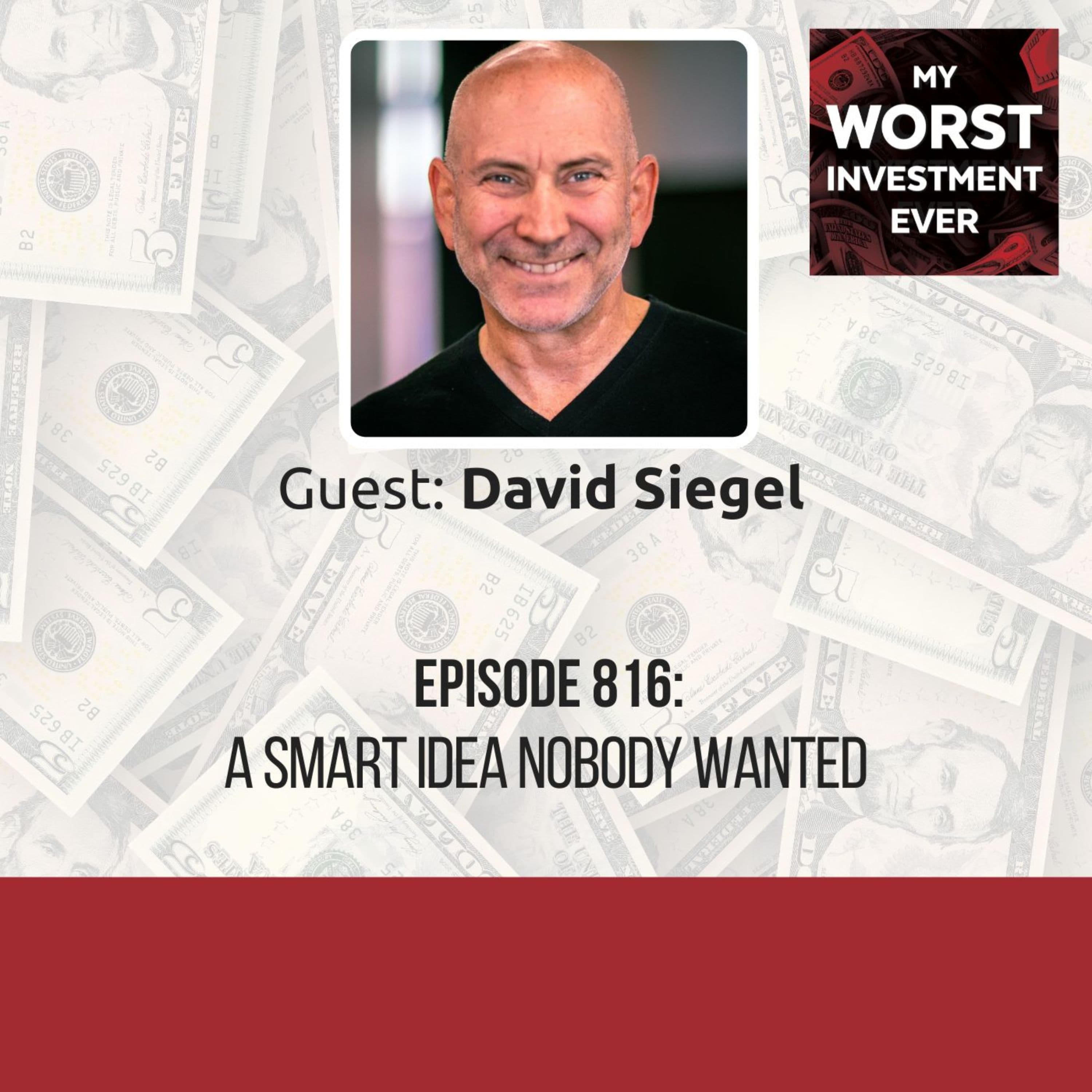
EPISODE · Jan 5, 2026 · 48 MIN
David Siegel – A Smart Idea Nobody Wanted
from My Worst Investment Ever Podcast
BIO: David Siegel is a Silicon Valley entrepreneur who has founded more than a dozen companies. He has written five books on technology and business, was once a candidate for the dean of Stanford Business School, and is now an AI thought leader leading an AI startup he hopes will pave the way for the agentic economy.STORY: David invested heavily in launching a longevity coaching business, believing people would pay to extend their lives through lifestyle change. Despite strong science, personal results, and significant marketing spend, demand proved nearly nonexistent.LEARNING: A great idea without real demand is still a bad investment. “There will be many new problems, and whenever there are new problems, there’s a new economic opportunity for many people.”David Siegel Guest profileDavid Siegel is a Silicon Valley entrepreneur who has founded more than a dozen companies. He has written five books on technology and business, was once a candidate for the dean of Stanford Business School, and is now an AI thought leader leading an AI startup he hopes will pave the way for the agentic economy.Worst investment everAfter years of building companies and studying major technological shifts, David found himself pulled deeply into the longevity movement. This wasn’t casual curiosity. He read more than 20 books, radically transformed his lifestyle, and developed a deep understanding of insulin resistance, nutrition, exercise, and long-term health.The results were personal and visible. David was fit, disciplined, and energized. The idea that science could help people live 10 to 15 years longer, with a higher quality of life, felt not only possible but urgent. Helping others do the same seemed like a natural next chapter.Turning passion into a businessConfident in both the science and his own experience, David decided to turn longevity coaching into a scalable business. His target audience was people in their 50s and 60s, individuals who were pre-diabetic or heading toward serious health issues and stood to benefit the most from early intervention.He approached the venture like a seasoned entrepreneur. He built funnels, ran Facebook ads, spoke at retirement communities, and spent months on discovery calls explaining how lifestyle changes could dramatically reduce the risk of cancer, Alzheimer’s, and diabetes.This wasn’t guesswork; it was disciplined execution.The painful reality checkThen reality set in.Despite spending over $100,000 on advertising and investing countless hours in conversations, demand was almost nonexistent. People listened. They nodded. They agreed the logic made sense. Then they walked away.Many believed the healthcare system would save them. Others hoped for a pill instead of discipline. Even those clearly facing insulin resistance weren’t willing to make sustained lifestyle changes.The most sobering realization wasn’t about marketing or pricing. It was this: most people don’t actually want to live longer if it requires consistent effort.Accepting the lossIn the end, only about one percent of the people David spoke to were already doing the work and didn’t need coaching. Everyone else opted out, fully aware of the consequences.The investment failed not because the science was wrong, but because the market wasn’t there. David ultimately gave the information away for free and walked away from the business, having learned an expensive but clarifying lesson about belief versus demand.Lessons learnedEven the most compelling solution will fail if it requires behavior that people are unwilling to change.Logic, evidence, and outcomes don’t matter if the market emotionally resists effort.A great idea without real demand is still a bad investment.Andrew’s takeawaysAndrew highlights that people consistently search for shortcuts rather than long-term solutions. Whether in health or investing, most people prefer convenience over discipline, even when the stakes are life-altering.Actionable adviceBefore scaling any idea, test for real demand, not polite interest. Ask whether people are willing to pay, change their habits, and put in effort. If behavior change is central to your offering, validate that reality early or risk learning the hard way.David’s recommendationsDavid encourages understanding your own health data, particularly insulin resistance, through proper testing, such as an oral glucose tolerance test. While the business failed, the knowledge remains powerful and freely available for those willing to act.Parting words “Keep looking for new problems that didn’t exist six months ago and jump in after them.”David Siegel [spp-transcript] Connect with David SiegelLinkedInXYouTubeWebsiteAndrew’s booksHow to Start Building Your Wealth Investing in the Stock MarketMy Worst Investment Ever9 Valuation Mistakes and How to Avoid ThemTransform Your Business with Dr.Deming’s 14 PointsAndrew’s online programsValuation Master ClassThe Become a Better Investor CommunityHow to Start Building Your Wealth Investing in the Stock MarketFinance Made Ridiculously SimpleFVMR Investing: Quantamental Investing Across the WorldBecome a Great Presenter and Increase Your InfluenceTransform Your Business with Dr. Deming’s 14 PointsAchieve Your GoalsConnect with Andrew Stotz:astotz.comLinkedInFacebook<li...
Embed this episode
Ready to play
David Siegel – A Smart Idea Nobody Wanted
No transcript for this episode yet
Similar Episodes
No similar episodes found.