
EPISODE · Oct 31, 2025 · 3 MIN
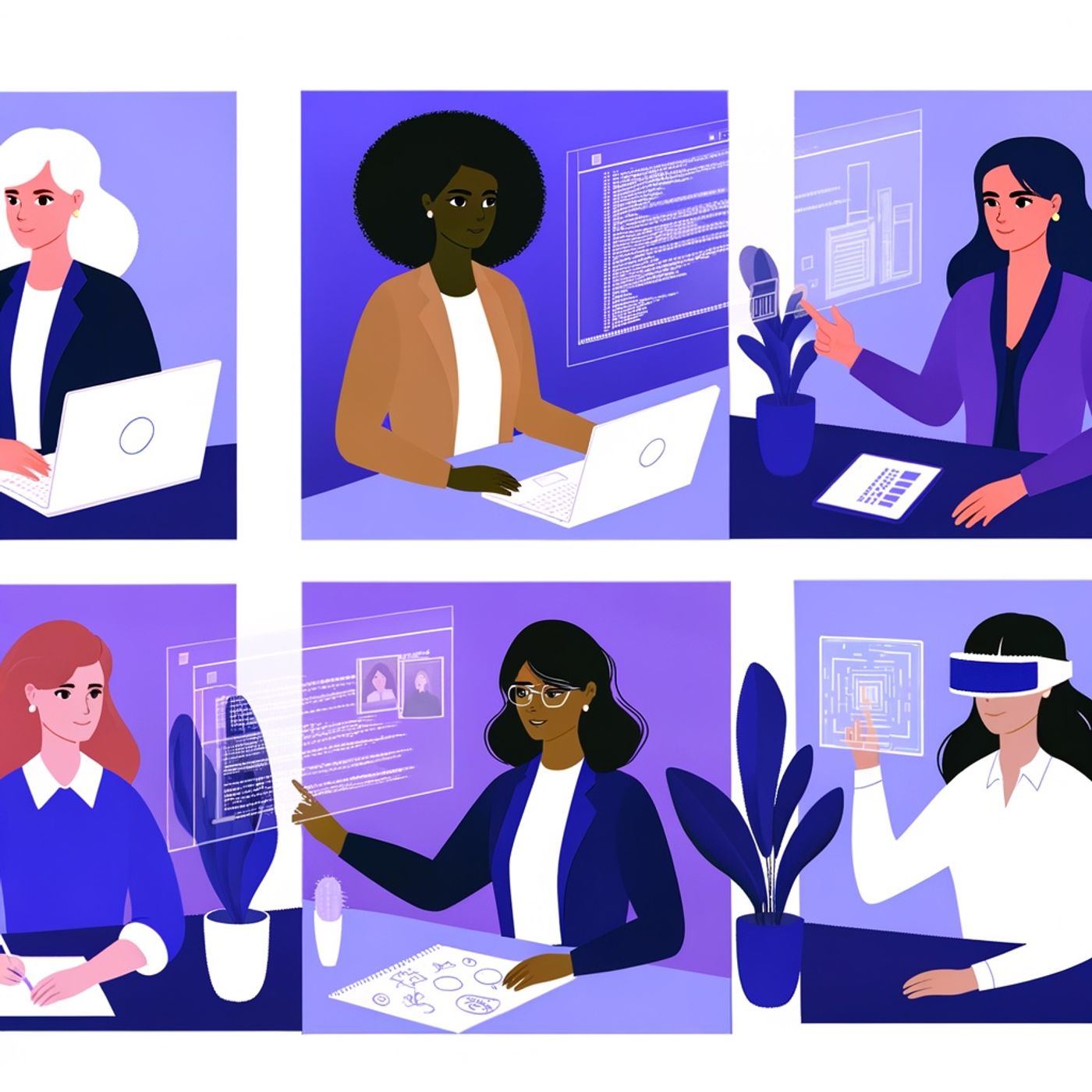
Decoding the Tech Ceiling: Women Reboot the Future
from Women in Business · host Inception Point AI
This is your Women in Business podcast. Welcome to Women in Business. Today we’re diving right into how women are navigating the current economic landscape, especially in the tech industry. Let’s get straight to it: the tech world powers so much of our daily life, but beneath the surface, women still hold less than 30% of all tech roles. In fact, recent numbers from compTIA show that just over a quarter of tech jobs in the U.S. are held by women, and globally, the rate is even lower. Yet, the winds are shifting. Cities like Little Rock in Arkansas and Columbia, South Carolina are making real progress—offering competitive salaries and becoming unexpected hubs of female representation. So, why are things still so challenging, and how are women responding? First, let’s talk about opportunities and barriers. Women now make up about 35% of the tech workforce, a leap up from just 9% in the early 2000s. But there’s a catch: advancement slows significantly around mid-career, a phenomenon that researchers in Australia, like those behind the Women in Digital Report, call the “Missing Middle.” It isn’t a lack of ambition, but rather that workplaces often don’t support the realities of caregiving and flexible work—and that stalls women’s progression at critical moments. Creating support structures like flexible policies and tailored mentorship is fundamental to changing that. The second discussion point centers on leadership and representation. While the number of women in entry-level tech positions is rising, leadership remains a tough climb. Right now, only around 14% of global tech leaders are women, and just 17% of technology companies have a woman CEO. Role models like Reshma Saujani, founder of Girls Who Code, and Kimberly Bryant, founder of Black Girls Code, are breaking new ground, but the data signals a long road ahead to true equity at the top. Next, let’s explore the role of education and upskilling. The share of undergraduate computer science degrees awarded to women has actually dropped from 37% in the mid-80s down to about 20% today. That’s why organizations and initiatives focused on STEM education for girls and women are game-changers. Learning about artificial intelligence, for instance, is becoming essential. According to Skillsoft's Women in Tech Report, 60% of women in tech aren’t yet using AI at work. Those who are, report feeling more productive and say it opens doors for advancement. This is an opportunity gap that must be closed so women are not left behind in the next wave of innovation. We can’t ignore intersectionality in this conversation. Black and Latinx women are still deeply underrepresented, holding well below 3% of all tech roles. Addressing the overlapping barriers of gender, race, and class is essential. Inclusive policies and networks, like those supported by the WomenTech Network, can play a major role in creating truly diverse workplaces. Finally, let’s focus on resilience and the future. Despite recurring waves l This content was created in partnership and with the help of Artificial Intelligence AI.
Embed this episode
NOW PLAYING
Decoding the Tech Ceiling: Women Reboot the Future
No transcript for this episode yet
Similar Episodes
No similar episodes found.
Similar Podcasts
No similar podcasts found.