
EPISODE · Oct 23, 2023 · 1H 2M
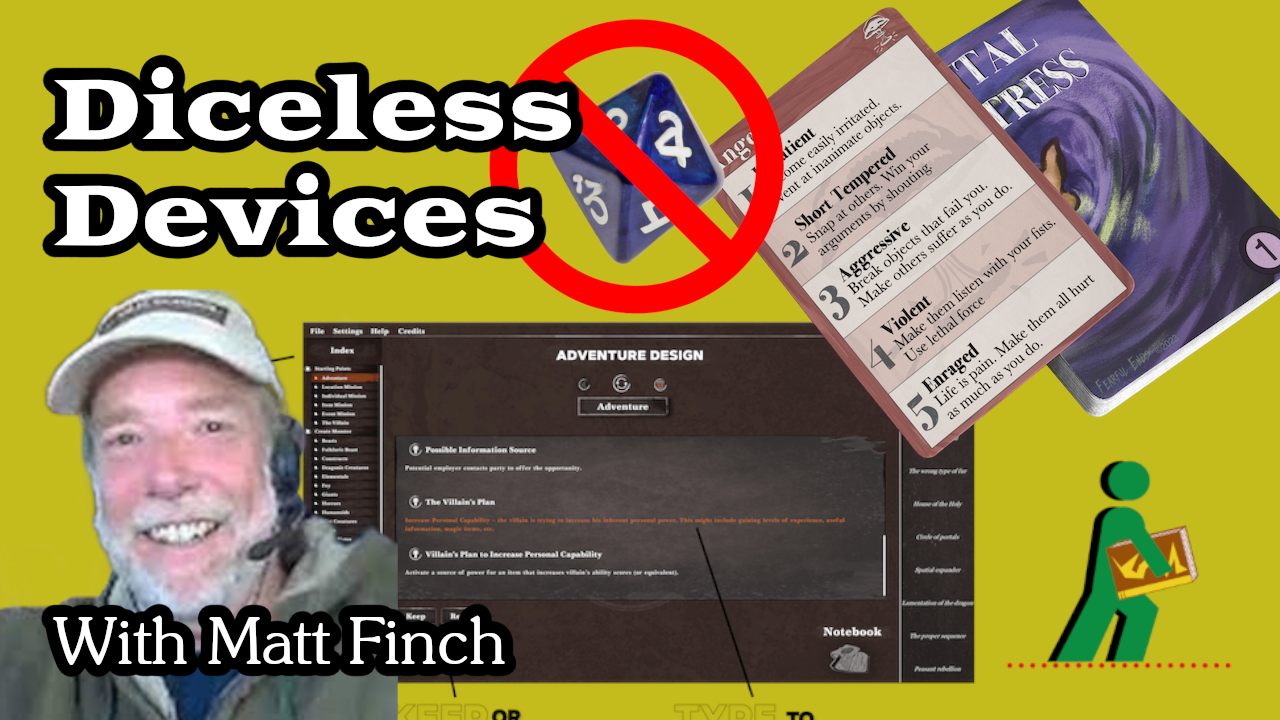
Diceless Devices | With Matt Finch | Wandering DMs S05 E33
from Wandering DMs · host Wandering DMs
Dan & Paul are joined by Matt Finch, to talk about ways it can be more efficient in your D&D game setup to get random results with dice. Consider cards, chits, spinners, toppling block towers, or Matt's new app for the Fantasy Adventure Builder, now on Kickstarter? Dice were just the start! Physical devices were used to generate random numbers for thousands of years, primarily for gambling. Dice in particular are known for more than 5000 years (found on locations in modern Iraq and Iran), flipping coin (thus producing a random bit) dates at least to the times of ancient Rome. First documented use of physical random number generator for a scientific purpose was by Francis Galton (1890). He devised a way to sample a probability distribution using a common gambling dice. In addition to the top digit, Galton also looked at the face of a dice closest to him, thus creating 6 * 4 = 24 outcomes (about 4.6 bits of randomness). Kendall and Babington-Smith (1938) used a fast-rotating 10-sector disk that was illuminated by the periodic bursts of light. The sampling was done by a human who wrote the number under the light beam onto a pad. The device was utilized to produce a 100,000-digit random number table (at the time such tables were used for statistical experiments, like PRNG nowadays). Back Matt's Kickstarter for the Fantasy Adventure Builder app here And join Paul's Kickstarter for Fearful Ends here This description uses material from the Wikipedia article "Hardware random number generator", which is released under the Creative Commons Attribution-Share-Alike License 3.0.
Embed this episode
Ready to play
Diceless Devices | With Matt Finch | Wandering DMs S05 E33
No transcript for this episode yet
Similar Episodes
No similar episodes found.
Similar Podcasts
No similar podcasts found.