Don’t Let One Outcome Define Your Work
from The Lead by Emily K Thomas Hosted by Emily K Thomas
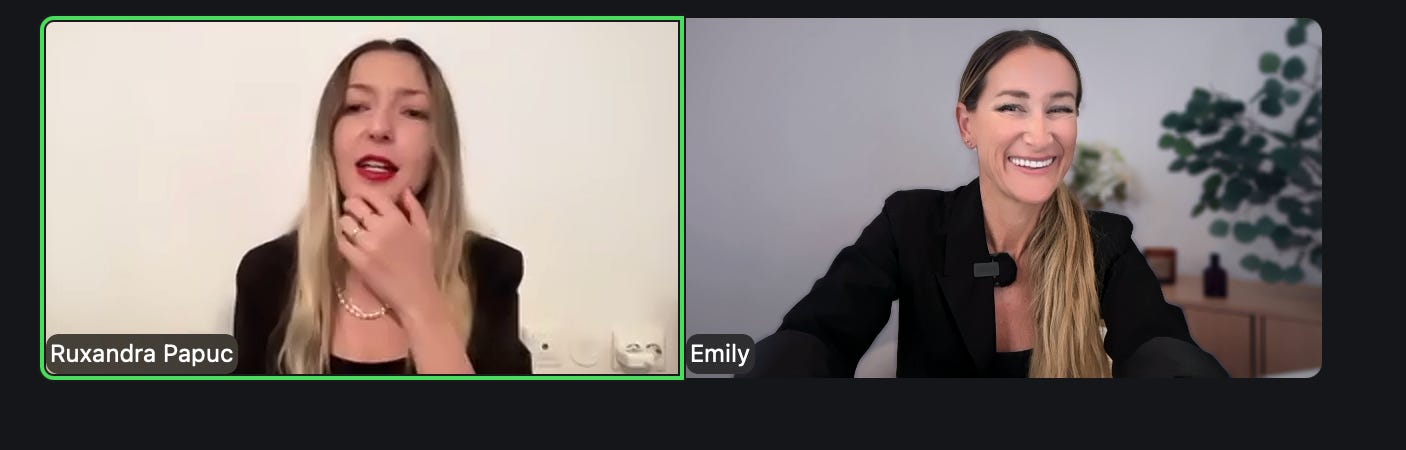
Why this conversation mattered A project is cancelled after months of work. A proposal you believed in goes nowhere. A decision changes above you, and the thing you helped build never reaches the people it was meant for. It is easy to carry the whole outcome into the next room as a judgment about your ability. Before doing that, I think we owe the work a more precise question: What actually failed? That was one of the most useful parts of my conversation with Ruxandra Papuc. Ruxandra is Global Executive Creative Director and Partner at AIN’T and a Cannes Lions Creative Commerce juror. Her Cannes biography includes work for Vodafone, Coca-Cola and Mastercard. Those credentials matter because she brings experience of developing ambitious creative work for major brands, alongside the judgment required to assess other people’s ideas. She described a campaign that had been filmed and prepared for release, then cancelled on the day of its press announcement because of internal legal and ownership issues. The disappointment was real. So was the need to understand where the breakdown had happened. Ruxandra spoke about the value of someone outside that disappointment helping you see the situation clearly: “You did your thing very well, and your thing didn’t fail.” That is the distinction I wanted to stay with. A professional setback can contain several different stories: the quality of the work, the conditions around it, and what we do after it ends. Collapsing those into one verdict makes the next decision harder. We also talked about how responsibility is earned through a succession of opportunities, and why the material for fresh thinking often comes from outside our professional bubble. Together, those ideas give us something more useful than an instruction to keep going. They give us a way to decide what to carry forward. -Emily The LEAD Signals from the conversation Momentum Signal: diagnose the loss before making it your identity Ruxandra’s cancelled campaign is a useful example because the work never reached its intended public test. Its likely performance remained unknown. The cancellation itself could not settle that question. For someone inside a company, that distinction matters. A project can stop because the budget changes, an owner leaves or an approval process breaks down. It can also stop because the idea is weak, the execution missed the brief or the team overlooked a serious constraint. The response depends on which explanation the evidence supports. My application is to separate three things: The work: what can we assess about its quality and usefulness? The conditions: what allowed or prevented it from reaching its intended test? The response: what should we now change, preserve or stop? You might need to improve the work. You might need a different decision process. You might need to close the project and make something else. The point is to reach that conclusion deliberately, rather than letting disappointment answer every question at once. Trust Signal: responsibility is built through a process I asked Ruxandra how she had converted being chosen into greater ownership, influence or freedom. She brought the answer back to trust. Her account of judging creative competitions was a progression through different responsibilities, including shortlisting and later being in the jury room. The visible invitation sat within a longer history of participation. What I take from that is a practical question about professional ambition: What is the next responsibility someone has a reason to trust me with? Inside a company, wanting greater influence might mean seeking the opportunity to own a recommendation, lead a defined phase of a project or present the reasoning behind a decision. Then make the judgment visible. Explain what you noticed, what you chose, what happened and what you would change. An invitation creates access. What you do with the responsibility helps others assess where your judgment belongs next. That process does not make access equal or recognition inevitable. It does make the next step more concrete than waiting to be discovered. Opportunity Signal: go where your usual references cannot supply the answer Ruxandra’s closing advice was to look outside the industry bubble. Ordinary life, she said, is a source of inspiration, insight and relevance. Her follow-on distinction made the advice more useful: looking needs to be active. You can walk through a street and notice almost nothing. Or you can pay attention to the people, colours, movement and behaviour around you. I would apply that to a stalled brief before opening another folder of competitor work. Observe the situation the work is supposed to serve. Where does someone hesitate? What do they explain to a friend? What workaround have they invented? Which part of the experience demands more effort than we realised? An observation becomes strategically useful when it changes a question, an assumption or a decision. Bring that change back to the brief. My favorite part Ruxandra recalled posters from Rob Reilly’s arrival at McCann. One line stayed with her: “When one dies, bring another.” What I love about that line in the context of this conversation is the reminder that one idea does not contain the whole of a person’s creative capacity. A lost project can matter deeply without becoming the only work you are able to imagine. I highlighted her reflection that creative people are there to renew, to keep bringing something out of themselves. That feels especially useful in a working culture where we are asked to attach so much of our identity to the outcome. I would add one condition: learn before repeating. Making the next thing gives us an opportunity to use what the last experience revealed. Sometimes that means a new idea. Sometimes it means a clearer agreement, a smaller test or a more realistic boundary. The next project should benefit from the last one without being made responsible for repairing your entire sense of worth. The deeper record (to make this practical for you) Here is the review I would bring into a team meeting after an important piece of work stops or disappoints. Give the team one page with three columns: Work, Conditions and Next Decision. 1. Assess the work against the brief What problem were we trying to solve? What evidence suggested the idea could help? What did the execution demonstrate? What remains untested? Which criticism is specific enough to act on? Keep praise, disappointment and evidence distinct. A team’s belief in an idea is worth understanding, but it cannot tell us how customers would have responded to work they never encountered. 2. Identify the conditions that shaped the outcome Who held the decision? Were ownership, budget, approvals and constraints clear? What changed, and when did we learn about it? Which risks could we have identified earlier? Which factors were genuinely outside the team’s control? The aim is to locate responsibility accurately. A constraint outside one person’s control may still be something the organisation needs to address. A legal or operational issue deserves attention even when the creative work was strong. 3. Make one consequential decision Choose what the evidence now supports: Improve: keep the problem, revise the approach and define the next test. Reconfigure: preserve useful work but change the ownership, process, timing or route. Close: stop this version, retain the learning and release the resources. Name an owner and a review point. The discussion should change what happens next. Let me give you an example… A team prepares a new customer-onboarding experience, but the project is halted after a budget change. The team can still assess the clarity of the proposed journey and the quality of any prototype feedback. It may not know whether the new experience would improve retention. Its next decision could be a smaller test of one step, provided the business can support it. That is a more useful conclusion than either assuming the whole idea was a failure or insisting the idea was unquestionably right. ━━━━━━━━━━━━━━━━━━━━ Turn the review into the next opportunity Ruxandra’s three ideas belong together. A more accurate account of a setback helps you see what you can still contribute. A defined responsibility gives you somewhere to demonstrate that judgment. Attention beyond your usual references gives you new material to work with. For this week, I would choose three small actions: Review one outcome you have been treating as a verdict. Name one responsibility you are ready to take, with evidence behind the request. Bring one observation from outside your professional bubble into a live decision. You may also need time to recover, a better boundary or a different environment. Renewal should be sustainable enough for you to keep doing the work. The question I am taking from this conversation is: What can I make next with a clearer understanding of what happened last time? ━━━━━━━━━━━━━━━━━━━━ Explore Ruxandra’s work AIN’T Cannes Lions Creative Commerce jury profile Who should be in the next conversation? Who has a specific story about how confidence was earned, misplaced or rebuilt? Reply with a name and the decision you think we should examine. The Lead with Emily K Thomas THE LEAD by Emily K Thomas is a reader-supported publication. To receive new posts and support my work, consider becoming a free or paid subscriber. This is a public episode. If you'd like to discuss this with other subscribers or get access to bonus episodes, visit emilykthomas.substack.com/subscribe
Embed this episode
No transcript yet.