There is no specific means. I'm so happy to keep doing all the research and progress. As we know, the world has had a very magical experience when we are there to work together, to help them in our industrial environment. Now the first is not to be encouraged.
With a very magical experience, we can now make a future like this. We are not getting the same experience, we have always been able to make a decision with the U.S. and you will be able to do it as soon as possible. For us, there were no only one who was built in the U.S., but are still open to the world.
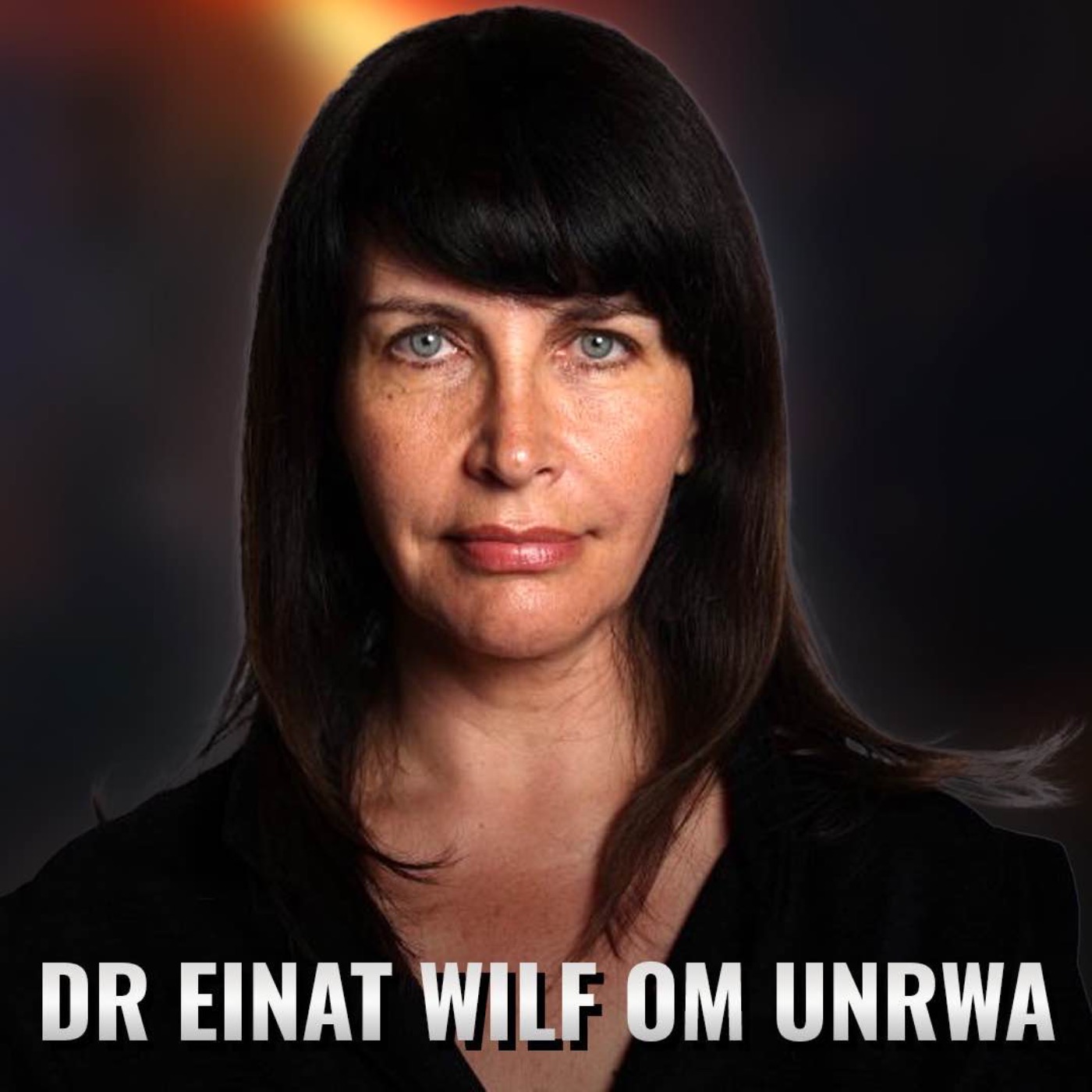
We have to make a difference. Welcome to the constructive criticism, Dr. Enath Wielf. Thank you.
We will soon dive into the neat and bones of the book I want to talk with you about a book you are one of the two authors of. But first I would like to ask you how come you became the person to write this book? So I was born and raised in Israel in Jerusalem and in the social environment that I grew up in, everyone voted for the Labour Party. That was my social, my political environment.
And as a young adult, I grew into the politics of the Labour Party that in the 80s and 90s became increasingly associated less with socialism and much more with what became known as the idea of land for peace. Basically the idea that Israel has a path to peace, peace that eluded it since much of its existence. As I think most people know, when Israel is born, none of its Arab neighbors are willing to make peace with it. None of its Arab neighbors are willing to acknowledge that they have failed to achieve their goal of defeating or preventing the existence of a Jewish day.
And there are only ceasefire and armistices that end the war. And after another major victory in the Six Day War in 1967, the idea slowly begins to develop that Israel's Arab neighbors will finally understand that there's no defeating Israel militarily and that they will sue for peace. And to somehow make the pill less bitter, the pill of making peace with the Jewish day, people now has territories that that are conquered in 1967 that it can exchange for peace. That was the land for peace formula.
It was the basis for the peace agreement with Egypt. And in the 90s, this is really the decade of the land for peace. For me, it's a decade of euphoria. I can already vote.
I vote for every Israeli Prime Minister who promises to carry out those ideas. It's ravine, but especially Barak in 2000. And I support every plan that would be based on land for peace. And especially in the year 2000, I'm very supportive of Eud Barak, an Israeli Prime Minister from the Peace Camp from the Labor Party.
He goes to Camp David. Camp David is already symbolic. That's where peace was negotiated with Egypt. And basically, he offers the Palestinians at the time, their leader is Yasser Arafat.
He puts on the table a proposal that's designed to address everything we were told the Palestinians wanted. It's a Palestinian state, fully sovereign in the West Bank and Gaza, no settlements, no occupation, capital in East Jerusalem, including holy sites. Basically from my understanding of the conflict, all the Palestinians had to do was say, yes, that's it. It was all there on the table.
But they walk away. President Clinton recently spoke to that. They walk away. Yeah, they walk away.
Sorry. Sorry. Since you have seen, I was going to ask you about that anyway, but you have obviously seen the Clinton campaigning for Harris Woltz when he mentions at I think minute 33 in the speech. This is peace negotiations with Yasser Arafat.
Can I just briefly interrupt your storytelling to comment on that? Absolutely. Yes. So what did he say and how do you interpret what he said?
What's important is that the thing is this, a lot of people tell, they try to erase any goodwill that has ever been on the side of Israel. So they will tell a story which pretty much goes like this. Israel elected Rabine. Rabine was assassinated by a right-wing religious Jewish extremist.
And Netanyahu was elected and therefore there's no Palestinian state. That's it. You have this kind of jumping over conveniently over 20 years. But Rabine on the eve of his assassination did not dream of offering Palestinians with Barack offered only five years later.
So Barack in 2000, and this is what President Clinton speaks to, offered Palestinians everything that we believe they wanted. It was all there on the table. And it is Arafat. It is the Palestinians.
On behalf of the Palestinians, he's not an individual. It's Arafat on behalf of the Palestinians who walked away from the negotiations and even when President Clinton tried to keep going, Arafat basically rejected it. And then proceeded to engage in the most murderous wave of violence before October 7th, which was misnamed the Second Intifada, basically blowing up buses, blowing up people in cafes. I have a colleague who says that nothing encapsulates more the Palestinian vision than suicide bombing.
And that was the mechanism essentially. So yeah, so basically, Palestinians walk away from this. They walk away from a similar, even improved proposal in 2008 in some aspects by all of our to Abu Mazen. Again, they walk away.
Again, there's no, there are no dissenting Palestinian voices. And again, there's a wave of violence. And as this thing is happening, I basically begin to ask a very simple question. What do the Palestinians want?
Because they clearly don't want a state or an end to the occupation or no settlement or capital in East Jerusalem because they could have had all of that. And again, and every time they walk away, so clearly something else is going on. And as I'm beginning to ask this question, I meet Palestinians. I do the research that becomes the book, the war of return.
And basically what I realized is to the credit of Palestinians, they've always told us what they wanted. We just didn't listen or when we listened, it sounded so outrageous that we didn't take it seriously. But they made it clear that their top priority, more than a state for themselves is for the Jews not to have a state known as from the river to the sea. And that's how you come to write this book because you started asking the question what the Palestinians really want.
Exactly. The book is essentially a dishwards is in mind answer to that question. It is more specifically through the lens of the Palestinian refugee issue. And maybe I'll say a few words about that because a DNI individually, both a DNI come from the political left, a D was a senior editor in Haaretz.
And we both go through a similar experience. We both were pretty much of the same age. So we lived through the same highs of the 90s, the euphoria of a new Middle East down to the massacres of the Second Intifada, the rejection of the various peace agreements. But we also both have personal experiences when we meet Palestinians.
And in our meetings with them, we realized that they are incredibly attached and serious about the notion that they are still into the fourth and fifth generation refugees. Even though they're 30, they were never alive in 1948. They're often wealthy. They were born in Ramallah.
But we see that their sense of who they are, a D actually met a woman in Sweden, a Palestinian woman who has a Swedish citizenship, one of the most coveted citizenship and passports in the world. And she presented herself as a Palestinian refugee. So we both began to realize that they are very serious about this identity, even though it has nothing to do with their reality. And we realized that they very seriously spoke about this thing called a right of return.
Now it's important to note. These after new states are established and they flee war, do not possess a right to settle in the state of which they were not citizens because this is a new state. They do not possess the right to settle in that state against the sovereign will of the state. A lot of states accepted many refugees.
Israel accepted more than its numbers. One and a half times more refugees, Jewish refugees from across the Arab world, Jewish refugees from Europe. A lot of countries accepted people, but it was their own sovereign desire. No country accepted people who were just fighting with it, who were just at war with it.
So there's no right of return. But the Palestinians believe there is, and just so we understand the numbers, the Palestinians claim that there are eight, nine, 10 million Palestinian refugees who all possess a right of return. This means that together with Israel's Arab minority, Israel becomes an Arab state. So it's the one thing that is non-negotiable from the perspective of the Israeli public and especially the Jewish public.
It's the one thing. We can negotiate the borders and the territory and security arrangements and even Jerusalem. And we can, as we've shown again and again, we can remove settlements. But the one thing that is the red line for us is to have a Jewish state, to have one state in the world, even if it's smaller, where the Jews enjoy majority and where the Jews can have their own sovereign state.
And both Adi and I understood that the Palestinians were serious about the one thing that for us was non-negotiable. You need to understand that during the 90s, during the negotiations, Israelis and people in the West who spoke about a two-state solution, they made the crazy assumption that one of those two states is the Jewish state. But in retrospect, we had to check because when the Palestinians said two states, they manned an Arab state in the West Bank and Gaza and another Arab state to replace Israel through this mechanism of refugee return, hence from the river to the sea. There was actually never in the last century an Arab-Palestinian vision of peace of two states, even when they said two states, when one of the two is the Jewish state.
So when Adi and I both independently realized that the Palestinians are hyper-serious about this, and in the 90s, we just assumed it's a bargaining chip. Like from the Israeli perspective, it was so clear that this is an outrageous demand. It was so clear that this is the one non-negotiable, that the assumption was that this is from the Palestinian perspective, a negotiating chip, right, a bargaining chip. They will, because they don't control territory, when Israel will agree to hand over territory, they will forgo this idea of a right of return.
Now in the 90s, it was a reasonable assumption. You know, sometimes people tell me things like, oh, you moved from the left to the right, you've changed your opinions. And I tell them, I didn't change anything. It's not that I liked red, and now I like blue, and I have a different opinion.
I tell them this is empirical, this is almost scientific. We had an assumption. The assumption was, call it a hypothesis. We had a hypothesis that what stands between us and peace is land.
It's Palestinian statehood, it's ending the occupation, no settlements, all the things you hear about. And I assume that's what's standing between us and peace. It was a hypothesis. And this is where it matters.
The hypothesis was tested. I talked about how people like to jump from Rabin being assassinated to Netanyahu opposing a Palestinian state because it conveniently erases the fact that three Israeli prime ministers from the left and the right tested the hypothesis. Barack and Albert tried through negotiations and Sharon threw the disengagement from Gaza. So the hypothesis was tested.
It's really, really important to say that. And it failed. It collapsed. So I'm a very logical person.
So basically when it all collapsed, I was looking for the alternative hypothesis. I was like, okay, the data doesn't fit our preliminary hypothesis, which the Palestinians just want to state that this idea of a right of return and perpetual refugeehood is merely a bargaining chip. Because if it were a bargaining chip, they would have bargained it in order to get a state. But what happened in real time is that they bargained away the state in order to keep fighting for return.
So with all this new data and understanding, I mean, the data is not new, but with the fact that the hypothesis was tested and failed, we look for an alternative explanation. And unfortunately, the alternative explanation holds very well. And the alternative explanation, I use a quote when I did the research, I came across an amazing quote, which I use now in all my talks. It's by Ernst Bevin, the British Foreign Minister after World War II, as you know, Bevin was no friend to the Jews, certainly not to those who want ex-sovereignty.
But he needs to explain why Britain failed to fulfill the terms of the mandate to the Jews. He did not fail the terms of the mandate to the Arabs. It created Jordan, it created Iraq, but it failed the Jews. So he needs to explain why, because Britain was given this unanimously by the League of Nations.
So he goes to the British Parliament in February 47, and he says the following. His Majesty's government is thus faced with an irreconcilable conflict. Now this is February 47. There are no settlements, there's no occupation, there's no blockade of Gaza, there's no refugees, there's no knock, but there's no state of Israel, there's no BB.
So all of the things that we are told are the reasons for Palestinian violence don't exist yet. And already he calls the conflict irreconcilable. And he goes on to explain. He says in the land, our Jews in Arabs, no one is yet called a Palestinian, of course.
And he says that, he says, for the Jews, the top priority is to establish a sovereign Jewish state. Fine, the Jews want to exercise the universal principle of self-determination for the Jewish people in their ancestral homeland. The principle of self-determination is how the world replaces empires throughout the 20th century, when lucky. And then he goes on to say, and for the Arabs, the top priority, and these are the Arabs that will one day take essentially hijack the name, palace, nine to themselves, these Arabs, he says, their top priority is to resist to the last the establishment of Jewish sovereignty in any part of the land.
Now it's fascinating. He's not saying the Jews want to state, the Arabs want to state, and we just need the UN to help us to set the border. He says, as a matter of top priority, the Jews want to state, the Arabs want the Jews not to have a state. By definition, kind of irreconcilable.
And this is the new hypothesis, an old one, right? Bevin already said it in February 47. But this hypothesis that the Jews want to state and the Arabs want the Jews not to have a state is the one that continues to hold and explain the data best. Let's get down to the meat and bones of this demand of a right to return.
Yes. Because when I read your book, I was fascinated to find that Count Volkibana, not the famous Swedish county in Sweden, was involved in formulating, or at least helping to formulate this right. Could you explain? Yes.
One of the things that you see quite clearly is a lot of people, you know, there's this completely wrong story that Israel was somehow established by guilty European nations after the Holocaust. I've come to call the story Zionism Denial because it essentially denies the action of Zionist Jews through at the first half of the 20th century. And it denies the fact that the state of Israel could have emerged in the 1930s if it were not for Arab violence and British betrayal. In fact, the state of Israel almost did have to merge after the Holocaust for the simple reason that there were no more Jews.
But ultimately, really through remarkable tenacity and diplomacy and resilience, the remaining Jews are able to kind of get support to have a Jewish date on a much, much smaller piece of land than was initially allocated to them because again, they don't have Jews. So the expectation, there's not a lot of support for the existence of a Jewish date, even those who supported remain quite ambivalent about it. And for example, we know that when the Jewish issue was losing against the Arabs, you know, today people think that, you know, fully armed Zionists with tanks and airplanes kind of invaded the peaceful land of Palestine and ethnically, that's it. People don't understand what the war was like.
And basically in February, March of 1948, the Jews are losing, they're losing to the Arab militias. Again, those who will later hijack the name Palestine, they are losing to them. And only in April when they changed their military position from defense to offense, are they able to secure the land and then they're able to defend those lands from the invasion of several Arab armies. Now during that time that the Jews are losing, Britain and the U.S.
are basically kind of going back on their support for partition for a Jewish date. So we can see that there is continued ambivalence about the idea of the existence of a Jewish date. And after the Jews are able to win and to defeat the Arab armies or even before, count to burn a dot begins to enter the picture on behalf of the kind of the great powers to see what can be done. And what you can see quite from the beginning is count burn a dot is actually very busy trying to diplomatically take away whatever achievements the Jewish date has militarily.
So for example, he's even trying to take away the partition plan, right? During the war Israel is able to gain more land than those that were allocated to it in partition. But count burn a dot doesn't even try to go back to partition. He tries to even take away wars.
He tries to take away the Nagas desert and he introduces ideas that are contrary to the international norm. And this is important because this is a theme that we see to the present day that Israel tends to be subjected to pressure that is not placed on any other kind of side in a war in conflict, certainly not on the side that wins. I think I even once said that Israel is the only country that has to sue for peace every time that it wins. So this notion that Israel is you invent norms that do not work for anyone else, but you invent them against the Jewish state.
Count Falco Bernadotte actually is almost the godfather of that pattern. And what he introduces as part of his effort to undo Israel's victories is to introduce the idea that again is against international norms that the Arab refugees from the war should return to their homes. That is language that does not exist in any other conflict. Just to understand international norms at the time and for quite with much of the 20th century.
As I said, much of the 20th century is basically the transition from empires to states when lucky those are self-determined nation states and when they're unlucky someone else draw their borders. But this is the transition of the 20th century. This is important to say a bloody transition. It involves two world wars, numerous regional wars and civil wars.
In the course of this transition from empires to states, new borders are drawn, new states are established and tens of millions of people become refugees. Hindus and Muslims, Ukrainians and Poles and Bulgarians and Greeks and Turks and Jews. And they all basically get the following message. The following message is it's tough, it's sad, it's tragic and it's over.
Basically you move on. Wherever you fled to, typically the refugees flee to the side that is war ethnically and linguistically and religiously similar to them. So wherever you fled to, even if you were expelled as in the case of the Germans, this is it. This is your new home.
There's no going back. Maybe you go find yourself citizenship in a third country. But the general norm is moving forward. But count for an adult when it comes to Israel actually goes against the international norm and tries to introduce the idea that the Arab refugees should return to their homes, the specific homes.
I mean, they already exist among people who are ethnically, religiously the same as theirs, right? The Arab refugees who flee to Syria, Lebanon, the West Bank, Gaza and Jordan, they're basically living among people who are the same as they, sometimes belonging to the same clans, but certainly sharing the same language, the same ethnicity, I mean, the same kind of identity as Arabs. So they're already at a place where in every other conflict, it would be understood that this is where they're staying. This is where they should be integrated and you move on.
But again, when it comes to the Jewish State, new norms get to be invented. And that's what Count Bernadotte did. He was very extreme. Ultimately, what passed in the UN was a much softer version in Resolution 194.
It's important to note that resolution, even that resolution does not give a right of return, but that's how Palestinians consider it. Can I ask you in your research? Did you come across any mention of how he got appointed as mediator for the newly formed United Nations? Yes, basically at the time, he had substantial standing.
He was considered to have been someone who helped the Jews during World War II. I understand that since a lot of other information came out that maybe not so much, but at least at the time, he was considered to be someone who would come from a country that was considered relatively neutral, that he would be able to serve the interests of the great powers, but also the Jews and Arabs will be able to view him as someone who is sympathetic to both sides. The fact that Bernadotte at the time was considered to have been a kind of righteous gentile, definitely played a role in the Jewish issue of thinking that he would be an honest broker and honest mediator. Of course, it very quickly became clear that that was not the case.
So fascinating. And then he got murdered. Yes, assassinated. Yes.
Yes. Well, in what is now Jerusalem? And I think this is still a point of contention between Israel and Sweden. I'm not aware of its point of contention that I haven't been in those issues, but he basically made himself hostile to the state of Israel.
A lot of people don't understand what a terrible, terrible role he has played in this conflict. He essentially placed a bomb underneath this entire, the foundation of the state of Israel. So it's in the context of the people just went through a brutal war, which was against a backdrop of 30 years of murderous Arab violence that led to the fact that the scale of the Holocaust was much larger than it could have been. In 1938 in the Evian conference, Hitler is still willing to let the Jews leave, but no country is willing to accept them.
But there's one country that really wanted them. Golda Meir was actually at the Evian conference. She was not allowed to speak, but there was one country that very much wanted the Jews and the Jews, many Jews were preparing to come to it. And that was the embryonic state of Israel.
And the only reason that the state of Israel did not have independence in 1938 is because of Arab violence and because the British caved to Arab violence. That the Jewish state existed in 1938 as it should have been. I like to say that Herzl did not imagine a Jewish state so that never again. He imagined the Jewish state so that never at all.
The Jewish state was supposed to be born in the 30s. Everything was ready. The Zionist Jews did very, very good work in establishing all the foundations of statehood by the 1930s. It is only Arab violence with their obsession that the Jews will not have a Jewish state even at the time it was proposed 17% of the 20% that they, you know, trans-Jordan was created, the Jews agreed to that from the 20%.
They were going to be given 17%. Even that Ben Gurion said yes because the Jews wanted sovereignty, but the Arabs were obsessed with the Jews not being sovereign and even a part of it. There's a great quote in the book Palestine 1936 by Oren Kessler in which the Arabs tell the Jews you can be salt, you know, a little bit of salt and a bread and a loaf of bread is fine. But you cannot all come together.
And I think it's whitesmen who says, but we want to be the bread. Like we're done being the salt, right? We want to be the bread. We want to have our own state.
But from the Arab point of view, no, the Jews should not be allowed to be a fully sovereign equal people. So the scale of the Holocaust is much larger because of Arab violence because the Jewish state was prevented from existing in time. So this is on the issue of kind of Zionism denial. So you need to remember that the Jews have just emerged from decades of Arab brutality, of European genocide.
And they are able to defend an embryonic country, which almost no one wanted to emerge. And then comes this guy, which we thought would be nice and favorable, or at least honest. And he proceeds step by step to try to undo everything that the Jewish people have achieved. So he gets assassinated to use your terminology.
And as a sort of a tip of the hat to him, the UN General Assembly passes resolution 194 where the right of return is enshrined in, no? No, it's very important to say. Okay, so please enlighten me. Yes.
So, Ralph Bunch is very, you know, there's a lot of negotiations going based on Bernadotte's idea. They become resolution 194. Resolution 194, first is important say, it's passed by the General Assembly. The General Assembly in the International Post World War II system does not create rights.
Rights are created by treaties to which countries ultimately agree. A UN General Assembly resolution does not create a right. So already, fundamentally, nothing that the UN General Assembly passes becomes a right. But the resolution itself also in its language doesn't give it.
It's important to say the resolution is mostly, it's a resolution about how to achieve peace. Right? We started with the fact that none of Israel's Arab neighbors were willing to make peace with it, even though they lost the war that they engaged in in order to prevent the Jewish state. They lost because the Jewish state was able to emerge.
This resolution attempts to introduce how to make peace. And one subsection of it, there are many, many elements to how to make peace. You know, the Arab countries have to engage in relationships, diplomatic recognition. They know boycotts, they have to trade, culture.
There's a lot of things. And one of the subsections says that those refugees who wish to live in peace, because it was, you know, as we know, they were, they just engaged in war. But to those refugees who want to live in peace, they, they should be allowed to go to their homes. I forget the exact term, but the exact term is important at the earliest possible time or something like this.
And every word here was negotiated in order to make it clear that ultimately, and this is also the protocols, this is Israel's choice. It's not a right. And in any case, this was a proposal for peace, which all the Arab countries proceeded to reject. And then what they did is they took one subsection, 11B, and gave it an extreme interpretation as if it constitutes a right, but it doesn't, like it doesn't on all those levels.
It doesn't because it's a UN General Assembly resolution. It doesn't because the language doesn't do it. And it doesn't also because it was made very clear that this is not above Israeli sovereign will. But the Palestinians have come to develop an entire mythology that they possess a right.
And in their view, it's a right that supersedes Israeli sovereignty, which is very clear that it's not. The UN system is ultimately built on the idea of sovereignty. But the Palestinians have interpreted this as a right that supersedes Israeli sovereignty that is collective and also individual, and that it is in perpetuity, generation after generation after generation and non-negotiable. They talk about it as a non-negotiable right, not something that an Arafat or an Abu Mazan can negotiate in any kind of agreement.
So there is about zero connection between what the Palestinian mythology has created around this idea of a right of return and the legal foundations for it, which are none. So as you might know, we Swedes pay most per capita in the world to Unra. Unra, it's kind of hard to pronounce when you're a Swedish speaker. Really?
But so how did Unra came to be at the center of this conflict and a sort of vessel for the right of return? So if I said that Bernadotte with the invention of a bizarre idea of going to the homes, return, right, if he placed a bomb under the conflict, Unra is really the vessel that constantly fuels it. A bit of the history. As I said, the 20th century empires to states, tens of millions of refugees, all of them got the memo, it's tough, it's tragic, it's sad, but it's over, and you move on.
This was the way that refugees were treated throughout Europe. And because the main refugee problem at the time in the late 40s is in Europe, there was an idea, which was not special, that for other conflicts, a temporary mechanism, not even an agency, a temporary organization mechanism will be established to settle refugees from those conflicts. And then it will close down. Why it will close down?
Because the refugees are settled. The mess, as I said, the message is you move on, it's over. So the idea is that at the end of the war, you settled the refugees, and this is how you completely end the war. So refugee settlement was synonymous in many ways with ending wars.
Now a mechanism is established to help settle the Arab, and by the way, also Jewish refugees from the war, but Israel takes care of the Jewish ones. I'm talking about the Jewish refugees directly from the war. So the ones that were ethnically cleansed from the Jewish quarter of Jerusalem, from the West Bank, some from Gaza, but Israel absorbs them. The Arab refugees are supposed to be settled by this temporary mechanism that was initially called Riwa, R-E-W-A, which was supposed to help them settle, and Riwa was going to be established for 18 months.
A year and a half, because several hundreds of thousands of refugees already sitting among people who are like them ethnically, linguistically, it was understood that a year and a half is plenty to settle all of them. But the Arab refugees refuse to settle, because they correctly understand that settling them means that the war is over. And the one thing they are not willing to do is end the war, because if they end the war, it means that they have to accept that given that their goal in the war was to prevent the establishment of a Jewish state, they lost, and they're not willing to accept it. So what they're basically willing to do is to defer their victory, right?
As far as they're concerned, one day there will be no Jewish state, the Arabs will be victorious, and they have patience, they can wait. So one of the ways that they're waiting is by refusing to settle. And what they do, and that brings us to the present day, is that they do three things. The first is they insist that rather than this mechanism be called Riwa, it's going to be called UNRWA.
They want the letters UN to be there. Already in the 50s, they understand that the letters UN are going to be very powerful. They want those letters, and they also want those letters because they want to send a message. And the message is, we're not responsible.
It's you, the world. It's you, the West, who is responsible for the fact that we are refugees, the fact that we just waged war and lost, that's not on us. It's on you. And this is very deep in the Arab and especially the Palestinian psyche, that they are never responsible, that there are no consequences to their actions, and it's always the world which is responsible.
There is a term in psychology which is called learned helplessness, which is basically, you never allow people to learn to take care of themselves, and they basically learn to be helpless. So the Palestinian send a message, we're not responsible, and we even heard it recently. After October 7th, a few weeks later, Abu Marzuk, a senior Hamas official, was asked, why don't you let the Palestinians in Gaza use the tunnels for their defense whenever there's an Israeli air raid? And he said, what?
The tunnels are for us. The people of Gaza, they're the responsibility of UNRWA. So from their perspective, they're not responsible. They have one, they have one job.
The job is to kill Jews and to ensure that there's no Jewish state. Anything that interferes with that job, that's the responsibility of the UN, of UNRWA. Okay, so the Arabs insist that re what we called UNRWA, they succeed. Then at the same time that UNRWA is in operation during those 18 months, the actual UN Agency for Refugees is established.
It's called the UN High Commissioner for Refugees. UNRWA is a temporary mechanism to finish the job in one corner of the world. The UN High Commissioner for Refugees is the UN body that deals and implements the Refugee Convention. Now remember, the Refugee Convention is the International norm.
The International norm, contrary to Bernadotte's inventions, is people and their refugee status by whichever means possible. If they can return home, that's great. But that's not the, oh, that's not a priority. If you can be integrated to where you escaped, that's great.
If you can find a home in a third country, that's great too. All three ways of ending one's refugee status are equally valid in the Refugee Convention. And of course, the Refugee Convention also wants you to stop being a refugee, which is why they try to make sure that you're settled, no matter where. So the Arabs understand that if they will be subject to the international norms, rather than to Bernadotte's inventions, there will be no refugees within a few years.
They will be settled. So they create a loophole. And the loophole basically is phrased as follows, that the UN High Commissioner for Refugees will take care of all refugees, except those that already have an agency. Okay?
That's how the loophole is created. That basically marks UNRRA almost as an X territory where UNRRA begins to create its own norms, its own rules, its own numbers, without any kind of adherence to international norms and laws. And then the third thing that the Arabs do is they ensure that UNRRA never closes, right? Because the loophole persists as long as UNRRA exists.
If UNRRA closes down, then there's no more loophole. But by international standards, almost none of the 6.1 million that UNRRA registers today as refugees. They're not refugees by any international standard. This is by the way why they're called registered refugees.
And I'm sure that the Swedish Foreign Office and legal department know it well. If any Palestinian from Gaza and about two thirds, three quarters of Gaza's inhabitants are registered as Palestine refugees, right? By UNRRA, even though they were born in Gaza and never left Gaza. If any of them, and we're talking about 1.4 million people, if any of them were to go tell Sweden, look Sweden, you're a part of the Refugee Convention.
I'm a refugee. Give me a home. Sweden will not accept that because everyone knows the lie, but everyone kind of hides it, that they are not refugees by international standards, which is why no country ever gives them protection as refugees according to the refugee convention because they're not refugees, according to the refugee convention. So this is the foundation that creates UNRRA.
Now we don't often have in history what you call alternative history or what if scenarios, right? So it's about the same time that UNRRA gets going in the 1950s. There's another temporary agency, exactly the same mechanism for Korea. It's about the same time, the early 50s.
This is 3.1 million refugees. So it's more than four times the number of the Arab refugees. Ankara settles all the Korean refugees, no one goes home. They don't have a Bernadotte to invent some rules for them.
All 3.1 million refugees are settled within three, four years with a third of the refugees. And Ankara closes down because it was established as a temporary mechanism to settle the refugees. It settles them and look at South Korea today. It could have been the Palestinians.
It could have been the Arabs. And by the way, South Korea was in worse shape than the Arab world at the same time after the war. So we actually have an alternative history of what it looks like when the agency does its job, everyone is settled, it closes down, and people move on. Our case is the opposite.
No one gets settled. They are not allowed to do it. When they get settled, they are constantly funded and indulged in the belief that they will one day undo the existence of a Jewish state until that day they are paid for by the West. And as a result, the war never ends because settling refugees ends the war and refusing to settle them keeps the war going.
So I was fascinated to read that for the first, I guess, two decades of its existence, its budget is re-approved every year. And then they move to three years. So they get a new budget every three years. And it's mostly Western countries that pay, like Sweden.
Yes. And we keep paying. And what does this money do for us? Well, it depends what you want it to do because I want it to feed them, close them, teach them.
So no, I will argue that that's not what you want your money to do. And I'll discuss why. But first, a word about that. Because UNRAD is still after 75 years a temporary agency, right?
It keeps having its mandate, not its budget. Its mandate keeps getting renewed by the General Assembly. But because it's not a UN organ, right? The UN actually has a proper refugee organ.
It needs to raise money every year. And the money mostly comes from Western countries. And UNRAD needs to get the money all the time. Because it's not part of the UN, it's not part of the UN budget.
It has to raise money independently. So in order to raise the money, maybe it's important to say, when UNRAD was started, when it still had the good intentions of settling the refugees, most of its staff were foreigners, Americans, Brits, Europeans, who came with the good intentions of investing money and settling the refugees and creating a lot of big projects. But they are attacked. And only once it is settled that UNRAD will not settle a single refugee.
But it cannot close. We're stuck, right? We reach the end of the 50s, where on the one hand, it's established that UNRAD is not going to settle a single Arab refugee. But also it cannot close because the Arab countries were able to blackmail the West because of oil, the Cold War, in order to funding UNRAD, essentially forever.
Now, this goes to what the funding buys. The West says to itself, you know what, this is peanuts. Oil in the Cold War is more important. UNRAD does no good.
Everyone knew that UNRAD does no good because remember, at the same time, Ankara already settled 3.1 million refugees, closed down. And the West is fully aware that the Arabs are using these so cold refugees as a weapon against Israel. So but they say to themselves, it's peanuts, it's not going to do any good. You know what, it's not going to do any harm.
And this is where it all goes wrong. Because as soon as it's clear that UNRAD is not going to settle a single Arab refugee, but it also cannot close and the West funds it, what is it going to do? It can't settle and it can't close. So what is it going to do?
So it starts doing busy work. It starts doing professional training because at this point, there's no need for aid anymore. Like the immediate aid of the post-war is no longer necessary. So they start doing professional training.
They're thinking, OK, they will have a job, they will integrate. Slowly, slowly, they will no longer be refugees. But this professional training places become a sprawling education system. And it actually becomes the education system that in many ways creates the Palestinian people as a people, bringing together people from Gaza, Jordan, Syria, Lebanon, and making them into a single people, which in itself is OK.
There's nothing wrong about becoming a new people in the second half of the 20th century. A lot of countries emerged in the second half of the 20th century. It's just that the people that emerge in the UNRAD schools, by the way, mostly because of UNRAD, they begin to be called Palestinians, the people that emerge in the UNRAD schools are people that do not have a positive goal of establishing a state. They have a negative and destructive goal of no Jewish state, which they, in one word, call return.
So when you're asking, what is the money fund? The money funds the Palestinians as they continue to engage in war with Israel. That's it. That's what it funds.
The only question is, does Sweden understand that this is what it's funding? If not, why is it so blind? And if yes, is it still the spirit of Bernadotte? Like, I have to share with you.
You know, when I started working on this about 20 years ago, I told you I'm a very logical person. I thought, OK, I did and I are going to do this book, and it's going to have all the data. And I have to tell you, even people who hate the recommendations in our book, which is the fund UNRAD and basically the Smantillid, none of them have ever challenged the book on its data, on its research. So that is Ironclad.
So I thought we would go to all these funders of UNRAD, and we will tell them, look at what you're funding. Look at what you're funding. You're funding a forever war. You are undermining your own goal of achieving peace.
And the Palestinians tell you that. A few months ago, someone sent me a big poster that is hanging outside a neighborhood in Beitlechm. It's misnamed a refugee camp, but no one there, it's next to Beitlechm, no one there is a refugee. It's not a camp, it's a proper neighborhood.
But at the entrance to this neighborhood, which is misnamed a refugee camp, the words are the following on the poster. UNRAD services are our right until return. Notice the language of entitlement. They're basically telling you, you, Sweden, you, the West, are going to pay for all our services, education, healthcare, the normal services of the people, not like immediate aid, like the regular services of the people.
You are going to pay for them, not until there's peace, not until there's two states, not until there's an entity occupation, until return. Nothing less than that. And over the years, and certainly after October 7th, I've been able to tell people, if you ever thought that return with some innocent idea and nostalgia for a great grandmother's home, in the Arab Palestinian text, and you can see it in the text going back to the 50s, return is always described as a violent triumph over the Jewish body. They have very graphic descriptions of what it means.
We will tear their hearts out of their bodies, their fingernails. Adi and I were also, we weren't sure if to put these descriptions inside the book because they were so brutal. But what we saw on October 7th is that October 7th was actually the realization, minute by minute, of the Palestinian vision of return. So what Sweden is funding is basically allowing Palestinians to engage in war against the Jewish state until they finally exercise their vision of return and from the river to the sea.
And when I started this whole thing, I thought that if those countries will read the book, we'll see our presentations, we'll understand how crazy it is that they are funding something that undermines their own declared policy of wanting peace based on a two-stage solution. Sweden even recognized Palestine by laterally claiming to say that Palestine exists. So just a moment, Sweden, if Palestine exists because you by laterally recognized it, what are millions of people living in Palestine doing registered as refugees from Palestine in an organization that you fund? So especially after October 7th, a part of me says, it's a dark thought, but I have to entertain it.
Could it be that it's not that the Westerners don't know what they're funding? Could it be that they actually know what they're funding? Could it be that they actually support unresable of no Jewish state from the river to the sea? And this is their way to kind of outsource their continued ambivalence about the existence of a Jewish state?
So when you ask, what does this money buy, Sweden? I wonder. Well, at least the terror army and national identity that negates the Jewish people's national identity. I only have a minute left of your time.
I want to thank you so much for coming to deconstructive criticism. It's been an absolute pleasure. Thank you. I will turn off the recording now.
If I can just get a few minutes of your time. Yes, of course, with great pleasure.