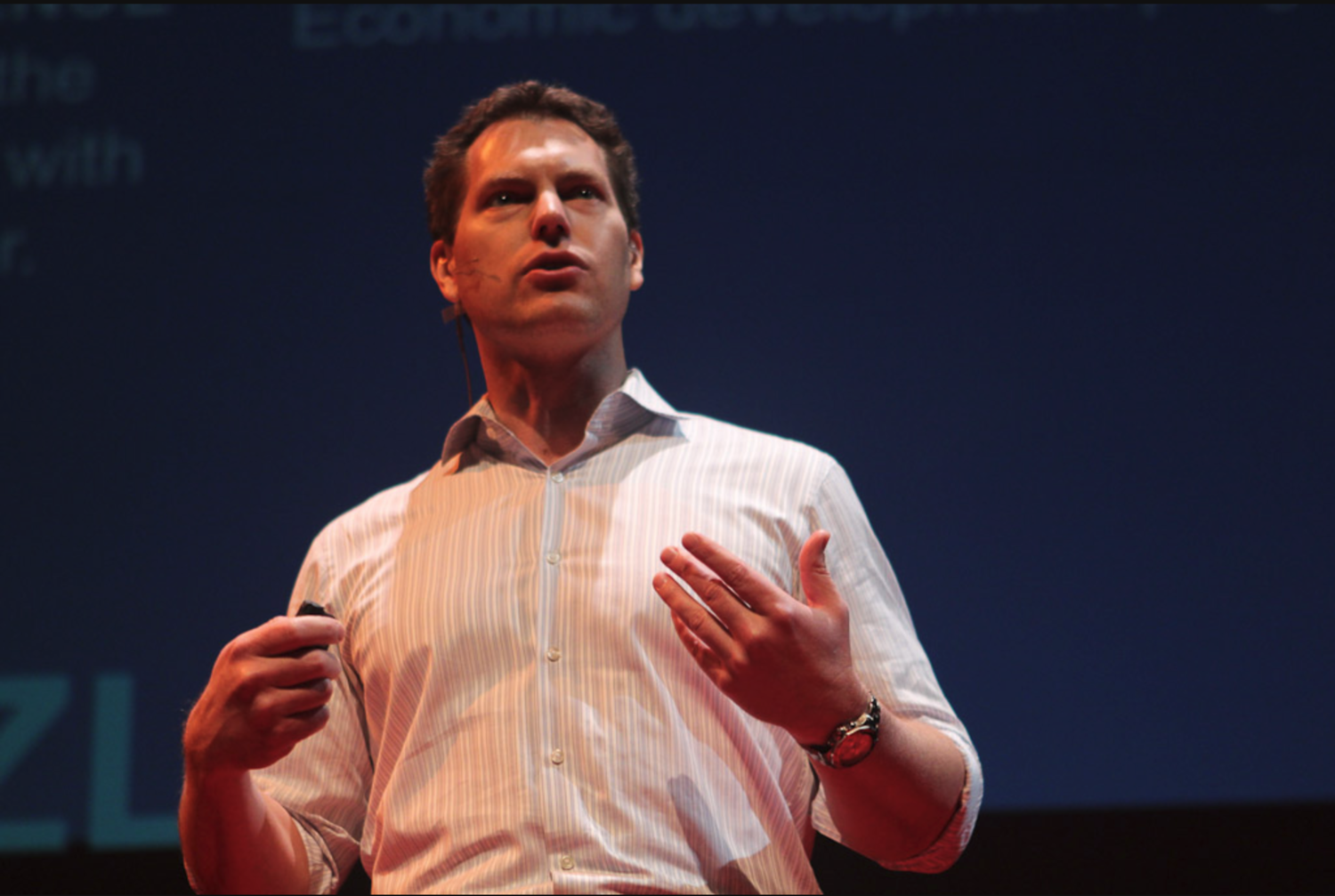
Duncan Watts - It’s A “Small World” After All episode artwork

EPISODE · Nov 30, 2021 · 2H 6M

Duncan Watts - It’s A “Small World” After All

from The Simple Heart w/ Wayne Hsiung · host Wayne Hsiung

Duncan Watts, the Stevens University Professor at the University of Pennsylvania, is a living legend. HIs paper, Collective Dynamics of Small-World Networks, is one of the most cited papers in the history of sociology. (There are Nobel Prize winners who have fewer citations in their career than that single paper by Duncan.) And while his name is not well known outside of academia, he has transformed multiple disciplines with his path breaking work in what is now known as “network science” – a blend of computer science, sociology, and mathematics that has changed the way we think about human behavior.  And by “we”, I include me.  As a young and aspiring social scientist in the early 2000s, I came across Duncan’s work and was blown away by what it seemed to show. Human beings, it seemed, operated as if they were just nodes in a network. And you could no more understand the behavior of a single human, in isolation, than you could understand the human brain by looking at a single neuron. It was the connections between us, and not our individual characteristics, that drive change.  And it turns out that, when we look at those connections, human beings are far closer to each other than you might think. Indeed, no matter how big a society gets, human beings seem to follow a rule that has been described as Six Degrees of Separation.  This insight, and Duncan’s other work on networks, led me down a strange and circuitous path, from law professor to animal rights activist. You’ll hear about this in the podcast. But the most important application of his work, in my life, was the formation of the grassroots animal rights network Direct Action Everywhere, or DxE.  You see, Duncan’s research on networks showed that it wasn’t necessarily the most connected people –the Oprah Winfreys or the Barack Obamas – who were driving change. Rather, it was networks of easy-to-activate ordinary people who were causing cascades of change. DxE was an attempt to deploy this research to build a movement for animal rights.  This conversation is particularly important right now. I am in my second day of trial, in a felony trial that could land me in prison for years. But the industry, which is attempting to cut the head off the snake, is destined to fail. The reason is simple: they simply don’t understand how social change works. It’s not the leaders, but the masses of people who form the movement that the leaders represent, who ultimately drive change. And when you take out one leader, new leaders rise up.  That is one of the many reasons why, no matter what happens in this trial, the movement will win. There are a lot of other practical tips, about living a good and productive life, that you’ll get from this podcast. For example, you’ll learn how to think about risk. And how creativity stems from unexpected social connections. And how a legendary social scientist maintains his intellectual humility.  But maybe the most important thing we can learn is to stay open. Especially when people are making efforts to hurt you – including imprisonment, in my case – it’s easy to stay closed off. But Duncan’s work shows us that it’s the connections we make, and not the ones we close off, that will ultimately create change. Small Worlds: The Dynamics of Networks between Order and Randomness Six Degrees: The Science of a Connected Age Everything Is Obvious: How Common Sense Fails Us Music by Moby: Everything That Rises

Duncan Watts, the Stevens University Professor at the University of Pennsylvania, is a living legend. HIs paper, Collective Dynamics of Small-World Networks, is one of the most cited papers in the history of sociology. (There are Nobel Prize winners who have fewer citations in their career than that single paper by Duncan.) And while his name is not well known outside of academia, he has transformed multiple disciplines with his path breaking work in what is now known as “network science” – a blend of computer science, sociology, and mathematics that has changed the way we think about human behavior.  And by “we”, I include me.  As a young and aspiring social scientist in the early 2000s, I came across Duncan’s work and was blown away by what it seemed to show. Human beings, it seemed, operated as if they were just nodes in a network. And you could no more understand the behavior of a single human, in isolation, than you could understand the human brain by looking at a single neuron. It was the connections between us, and not our individual characteristics, that drive change.  And it turns out that, when we look at those connections, human beings are far closer to each other than you might think. Indeed, no matter how big a society gets, human beings seem to follow a rule that has been described as Six Degrees of Separation.  This insight, and Duncan’s other work on networks, led me down a strange and circuitous path, from law professor to animal rights activist. You’ll hear about this in the podcast. But the most important application of his work, in my life, was the formation of the grassroots animal rights network Direct Action Everywhere, or DxE.  You see, Duncan’s research on networks showed that it wasn’t necessarily the most connected people –the Oprah Winfreys or the Barack Obamas – who were driving change. Rather, it was networks of easy-to-activate ordinary people who were causing cascades of change. DxE was an attempt to deploy this research to build a movement for animal rights.  This conversation is particularly important right now. I am in my second day of trial, in a felony trial that could land me in prison for years. But the industry, which is attempting to cut the head off the snake, is destined to fail. The reason is simple: they simply don’t understand how social change works. It’s not the leaders, but the masses of people who form the movement that the leaders represent, who ultimately drive change. And when you take out one leader, new leaders rise up.  That is one of the many reasons why, no matter what happens in this trial, the movement will win. There are a lot of other practical tips, about living a good and productive life, that you’ll get from this podcast. For example, you’ll learn how to think about risk. And how creativity stems from unexpected social connections. And how a legendary social scientist maintains his intellectual humility.  But maybe the most important thing we can learn is to stay open. Especially when people are making efforts to hurt you – including imprisonment, in my case – it’s easy to stay closed off. But Duncan’s work shows us that it’s the connections we make, and not the ones we close off, that will ultimately create change. Small Worlds: The Dynamics of Networks between Order and Randomness Six Degrees: The Science of a Connected Age Everything Is Obvious: How Common Sense Fails Us Music by Moby: Everything That Rises

NOW PLAYING

Duncan Watts - It’s A “Small World” After All

0:00 2:06:29

No transcript for this episode yet

We transcribe on demand. Request one and we'll notify you when it's ready — usually under 10 minutes.

No similar episodes found.

No similar podcasts found.

Frequently Asked Questions

How long is this episode of The Simple Heart w/ Wayne Hsiung?

This episode is 2 hours and 6 minutes long.

When was this The Simple Heart w/ Wayne Hsiung episode published?

This episode was published on November 30, 2021.

What is this episode about?

Duncan Watts, the Stevens University Professor at the University of Pennsylvania, is a living legend. HIs paper, Collective Dynamics of Small-World Networks, is one of the most cited papers in the history of sociology. (There are Nobel Prize winners...

Can I download this The Simple Heart w/ Wayne Hsiung episode?

Yes, you can download this episode by clicking the download button on the episode player, or subscribe to the podcast in your preferred podcast app for automatic downloads.
URL copied to clipboard!