
EPISODE · Mar 6, 2019 · 51 MIN
EDUCATING GIRLS - ‘Agenda 2030’ should be ‘Gender 2030’
from Friends of Europe podcasts · host Friends of Europe
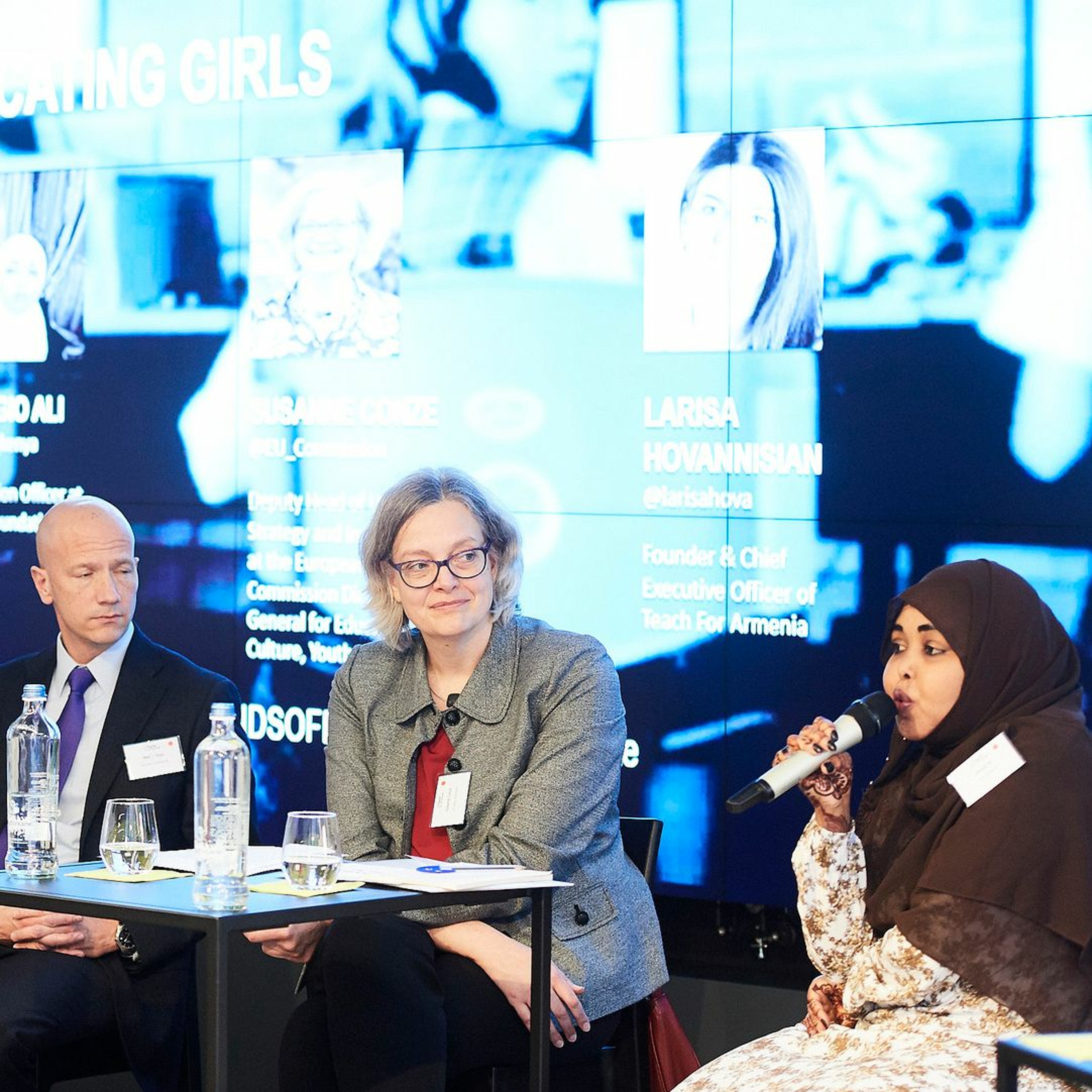
hat more can the EU do to stop girls’ education languishing as a footnote and instead be the headline to the conversation about the world’s sustainable development goals? Gender equality and access to quality education are key parts of the UN’s Agenda 2030, but should it really be called ‘Gender 2030?’, asked Friends of Europe at its Educating Girls debate in Brussels on 27 February. Every day 130m girls are not in school and, by any measure, they and the wider world are worse off for it. So why are we failing to remove the barriers in their way and how can we “change this rather nasty paradigm?” said moderator and director for Europe and Geopolitics at Friends of Europe, Shada Islam. “None of the 17 UN goals can be achieved without the active participation of women,” she said. Speakers from the UN, European Commission and specialist NGOs were asked to consider whether the EU should: use girls’ education as a key condition for countries receiving development aid; make it a specific part of accession talks, and deny aid and trade benefits to those spending more on defence than education. At ground level, as well as dealing with structural barriers to education – such as lack of access to toilets – speakers emphasised the importance of having a direct dialogue with communities, including concrete examples of positive work in Afghanistan and Armenia. Participants also heard from Bangio Ali, an Education Officer at the AVSI Foundation, in Kenya, who focuses on girls and mothers’ rights and out-of-school children. Despite the odds against it, she had the educational opportunities her mother was denied, and went on to work directly with girls and families in her own Somali community in Kenya, including in refugee camps. “I am where I am because of education,” she said. More info: https://www.friendsofeurope.org/event/educating-girls
What this episode covers
hat more can the EU do to stop girls’ education languishing as a footnote and instead be the headline to the conversation about the world’s sustainable development goals? Gender equality and access to quality education are key parts of the UN’s Agenda 2030, but should it really be called ‘Gender 2030?’, asked Friends of Europe at its Educating Girls debate in Brussels on 27 February. Every day 130m girls are not in school and, by any measure, they and the wider world are worse off for it. So why are we failing to remove the barriers in their way and how can we “change this rather nasty paradigm?” said moderator and director for Europe and Geopolitics at Friends of Europe, Shada Islam. “None of the 17 UN goals can be achieved without the active participation of women,” she said. Speakers from the UN, European Commission and specialist NGOs were asked to consider whether the EU should: use girls’ education as a key condition for countries receiving development aid; make it a specific part of accession talks, and deny aid and trade benefits to those spending more on defence than education. At ground level, as well as dealing with structural barriers to education – such as lack of access to toilets – speakers emphasised the importance of having a direct dialogue with communities, including concrete examples of positive work in Afghanistan and Armenia. Participants also heard from Bangio Ali, an Education Officer at the AVSI Foundation, in Kenya, who focuses on girls and mothers’ rights and out-of-school children. Despite the odds against it, she had the educational opportunities her mother was denied, and went on to work directly with girls and families in her own Somali community in Kenya, including in refugee camps. “I am where I am because of education,” she said. More info: https://www.friendsofeurope.org/event/educating-girls
NOW PLAYING
EDUCATING GIRLS - ‘Agenda 2030’ should be ‘Gender 2030’
No transcript for this episode yet
Similar Episodes
Mar 26, 2026 ·1m
Mar 19, 2026 ·34m
Feb 18, 2026 ·11m
Feb 11, 2026 ·45m