
EPISODE · Jul 15, 2026 · 28 MIN
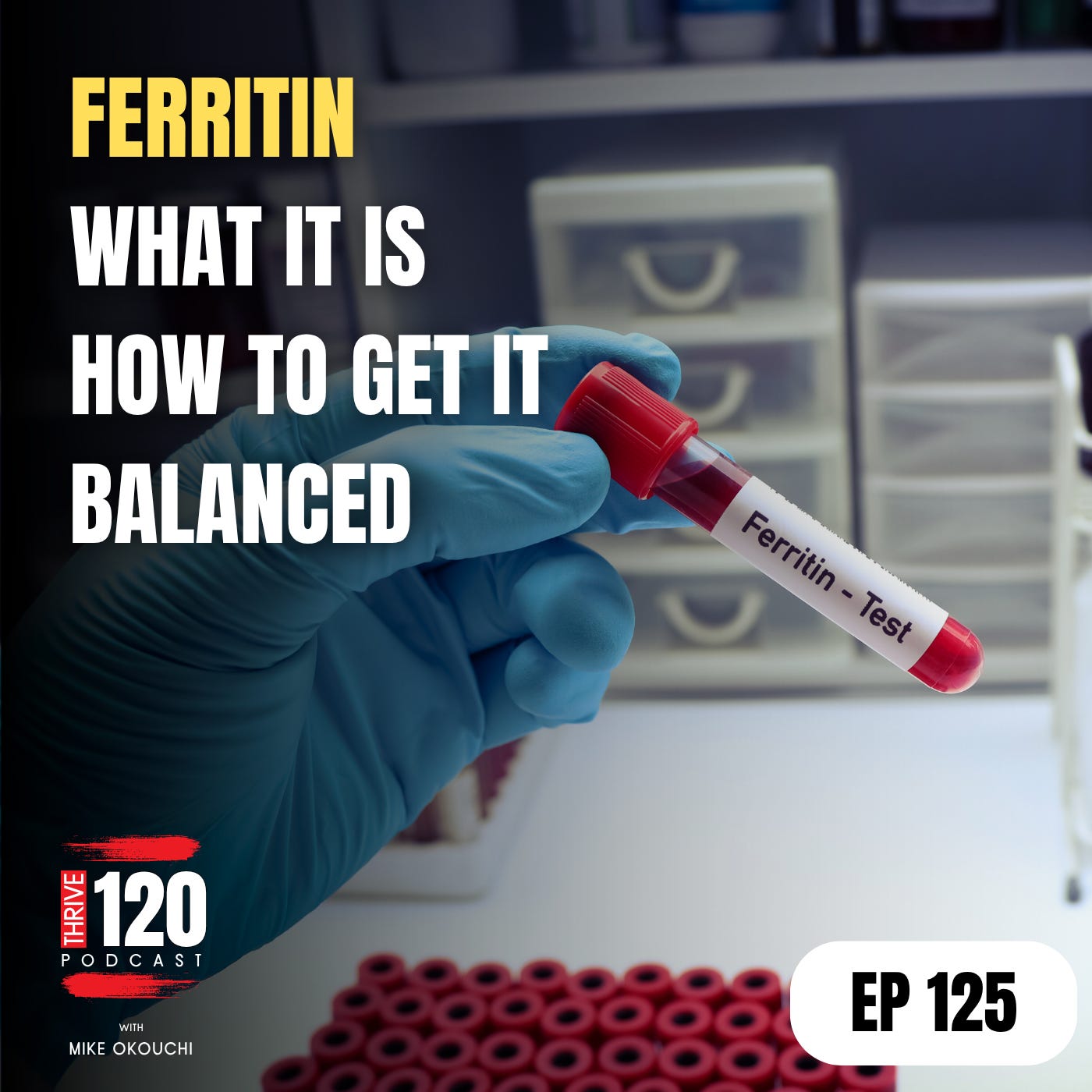
EP 125: Ferritin. What it is, how it integrates into your iron levels, lab values, a simple protocol
from THRIVE 120 Podcast · host tripleplaydoc
This article is for educational purposes only and is not a substitute for individualized medical advice. Always talk to your own healthcare provider before changing your diet, supplements, or medications.Unlocking the Secrets of Ferritin: What Your Iron Levels Are Telling YouYour “normal” bloodwork might be hiding the real reason you’re exhausted, foggy, and losing hairTL;DR: * Ferritin is your iron savings account — and most labs only flag it as “abnormal” once it’s nearly empty. * A level of 14 or 22 ng/mL might get a “you’re fine” from your doctor, but optimal energy, mood, cognition, and hair growth usually need ferritin closer to 70–100 ng/mL. * Low ferritin can come from menstrual blood loss, poor absorption (celiac disease, low stomach acid, H. pylori), or inflammation-driven hepcidin blocking iron uptake.* If you’re fatigued, foggy, cold, or shedding hair, ask for a full iron panel — not just a ferritin number — and talk through the results with your doctor.There’s an old Japanese proverb: “When the body speaks, the wise person listens. When the body whispers, the fool waits for it to scream.” In health diagnostics, one of the quietest whispers is your ferritin level. It’s often overlooked, yet it can be the missing link behind exhaustion, hair loss, brain fog, or the frustrating experience of bloodwork that comes back “normal” while you still feel terrible.What Is Ferritin?Ferritin is your body’s iron storage protein. Think of your iron levels like a financial setup: hemoglobin is your checking account, drawn on daily. Ferritin is your savings account, tapped only when things get tight. Under stress, your body will drain the savings account long before it lets the checking account — hemoglobin — run low. That’s why you can have “normal” hemoglobin and still be iron-depleted. A low ferritin level means your reserves are running out, and that shows up as fatigue, brain fog, mood changes, and thinning hair.Normal vs. OptimalMost labs flag ferritin as “normal” above roughly 10–20 ng/mL. That threshold mostly means you’re not in immediate danger — not that you’re thriving. Levels associated with feeling genuinely well tend to run from 70 to 100 ng/mL. So if you’ve been told your ferritin of 14 or 22 is fine, but you still feel wiped out, you’re not imagining it — you’re just being measured against a bar set for avoiding crisis, not for feeling good.Why Your Ferritin Might Be Low* Menstrual blood loss. For many women, the cumulative loss over months and years outpaces dietary iron intake, slowly draining reserves.* Absorption issues. Even a solid iron intake doesn’t help if it isn’t absorbed. Silent celiac disease, low stomach acid, or an H. pylori infection can quietly block uptake for years.* Inhibitors and hepcidin. Coffee, tea, and dairy consumed close to meals can inhibit iron absorption. Separately, inflammation can push your liver to produce hepcidin, a hormone that shuts down iron uptake even when you’re eating enough.Symptoms to WatchPersistent fatigue, thinning hair, feeling cold more easily than others, and brain fog are the classic signs. If two or more of these sound familiar, it’s worth getting your ferritin checked specifically — not just assumed to be fine because your CBC looked normal.The Bigger PictureIron does far more than carry oxygen. It’s involved in thyroid hormone conversion, dopamine production, mitochondrial energy synthesis, and hair follicle health. That means low ferritin can produce symptoms that look a lot like depression or hypothyroidism — even when your thyroid panel and mood screening come back clean.Taking Action* Review your bloodwork. Look specifically at ferritin. Anything under 70 ng/mL is worth a conversation with your doctor.* Ask for a full iron panel. Ferritin alone isn’t the whole story — request serum iron, total iron binding capacity (TIBC), transferrin saturation, and CRP (to rule out inflammation skewing the picture).* Adjust absorption habits. Space coffee and tea away from meals, lean into iron-rich foods, and avoid taking calcium and iron supplements together.* Choose the right supplement, if needed. Ferrous sulfate is harsh on the gut for many people. Iron bisglycinate is gentler and pairs well with vitamin C for better absorption — but check with your provider before starting, especially if high ferritin is a concern.* Loop in a professional. This is especially important before making changes if you suspect elevated ferritin, since iron overload carries its own risks.Listening to Your Body’s WhisperYour body is constantly sending signals. Ignored long enough, whispers become screams. Taking ferritin seriously — not just as a checkbox on a lab report, but as a meaningful marker — is one concrete way to catch a problem while it’s still easy to fix.Final ThoughtsMonitoring and optimizing ferritin can meaningfully change how you feel day to day. It starts with a simple ask: get the right test, read the number in context, and act on what it’s telling you. If you want a more personalized look at your own levels and symptoms, consider scheduling a comprehensive health session.Stay informed, stay healthy, and listen closely to what your body is telling you. Until next time, take care.References* Camaschella, C. (2015). Iron-deficiency anemia. New England Journal of Medicine.* WHO guidance on serum ferritin concentrations for the assessment of iron status.* Clinical literature on ferritin thresholds and symptomatic iron deficiency without anemia.* Hepcidin and inflammation’s role in iron regulation — recent reviews in Blood and Haematologica. This is a public episode. If you'd like to discuss this with other subscribers or get access to bonus episodes, visit tripleplaydoc.substack.com/subscribe
Embed this episode
NOW PLAYING
EP 125: Ferritin. What it is, how it integrates into your iron levels, lab values, a simple protocol
No transcript for this episode yet
Similar Episodes
No similar episodes found.
Similar Podcasts
No similar podcasts found.