
EPISODE · Jun 15, 2026 · 11 MIN
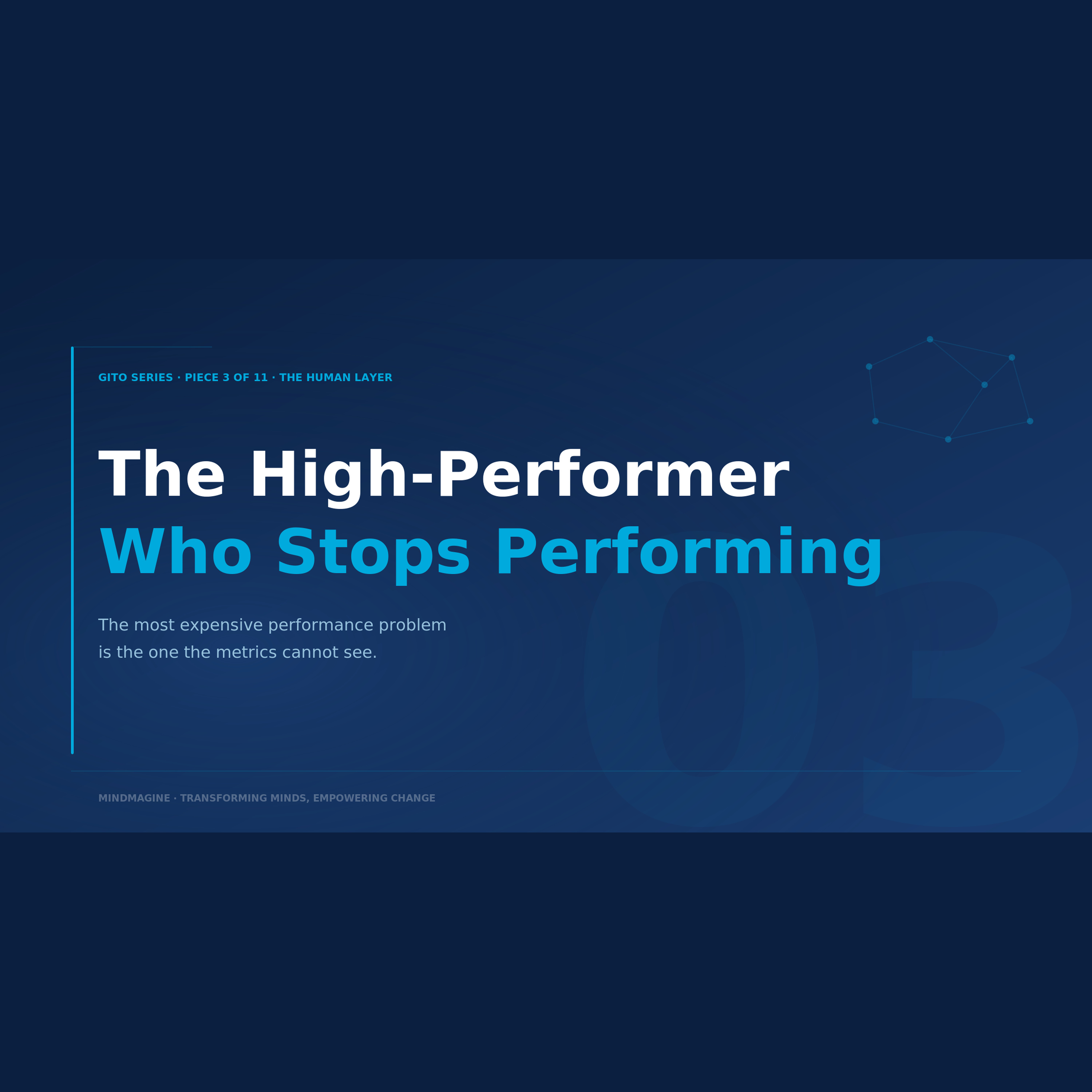
Ep. 4 — The High-Performer Who Stops Performing
from The GITO Approach · host MindMagine
The most dangerous period in a high-performer's disengagement is the window before anyone notices it has begun. Organisations tend to watch for the obvious signals - attendance, headline output, formal performance data. The real indicators are quieter: a reduction in initiative, a withdrawal from discretionary projects, a shift in how someone occupies a room.High-performer disengagement is not a personality event. It is a structural one. The conditions that sustain exceptional performance - autonomy, meaningful challenge, recognition that is specific and timely, clarity about how individual contribution connects to organisational purpose - erode gradually, often without deliberate intent, until the conditions are no longer sufficient to support the investment the person was making.In high-context professional cultures, the erosion is particularly difficult to name. Directness is moderated by hierarchy. Dissatisfaction is expressed laterally before it surfaces upward, if it surfaces at all. By the time a manager has a conversation about it, the recalibration has often been in place for months.The cost is not only the loss of the individual. It is the signal their disengagement sends to the team around them.The question worth sitting with: in this organisation, is the first indication that a high-performer has disengaged a conversation - or a consequence?Part of the GITO Podcast Series by MindMagine. New episodes every second Tuesday.
What this episode covers
The most dangerous period in a high-performer's disengagement is the window before anyone notices it has begun. Organisations tend to watch for the obvious signals - attendance, headline output, formal performance data. The real indicators are quieter: a reduction in initiative, a withdrawal from discretionary projects, a shift in how someone occupies a room.High-performer disengagement is not a personality event. It is a structural one. The conditions that sustain exceptional performance - autonomy, meaningful challenge, recognition that is specific and timely, clarity about how individual contribution connects to organisational purpose - erode gradually, often without deliberate intent, until the conditions are no longer sufficient to support the investment the person was making.In high-context professional cultures, the erosion is particularly difficult to name. Directness is moderated by hierarchy. Dissatisfaction is expressed laterally before it surfaces upward, if it surfaces at all. By the time a manager has a conversation about it, the recalibration has often been in place for months.The cost is not only the loss of the individual. It is the signal their disengagement sends to the team around them.The question worth sitting with: in this organisation, is the first indication that a high-performer has disengaged a conversation - or a consequence?Part of the GITO Podcast Series by MindMagine. New episodes every second Tuesday.
NOW PLAYING
Ep. 4 — The High-Performer Who Stops Performing
No transcript for this episode yet
Similar Episodes
Mar 26, 2026 ·1m
Mar 19, 2026 ·34m
Feb 18, 2026 ·11m
Feb 11, 2026 ·45m