
PODCAST · business
The GITO Approach
by MindMagine
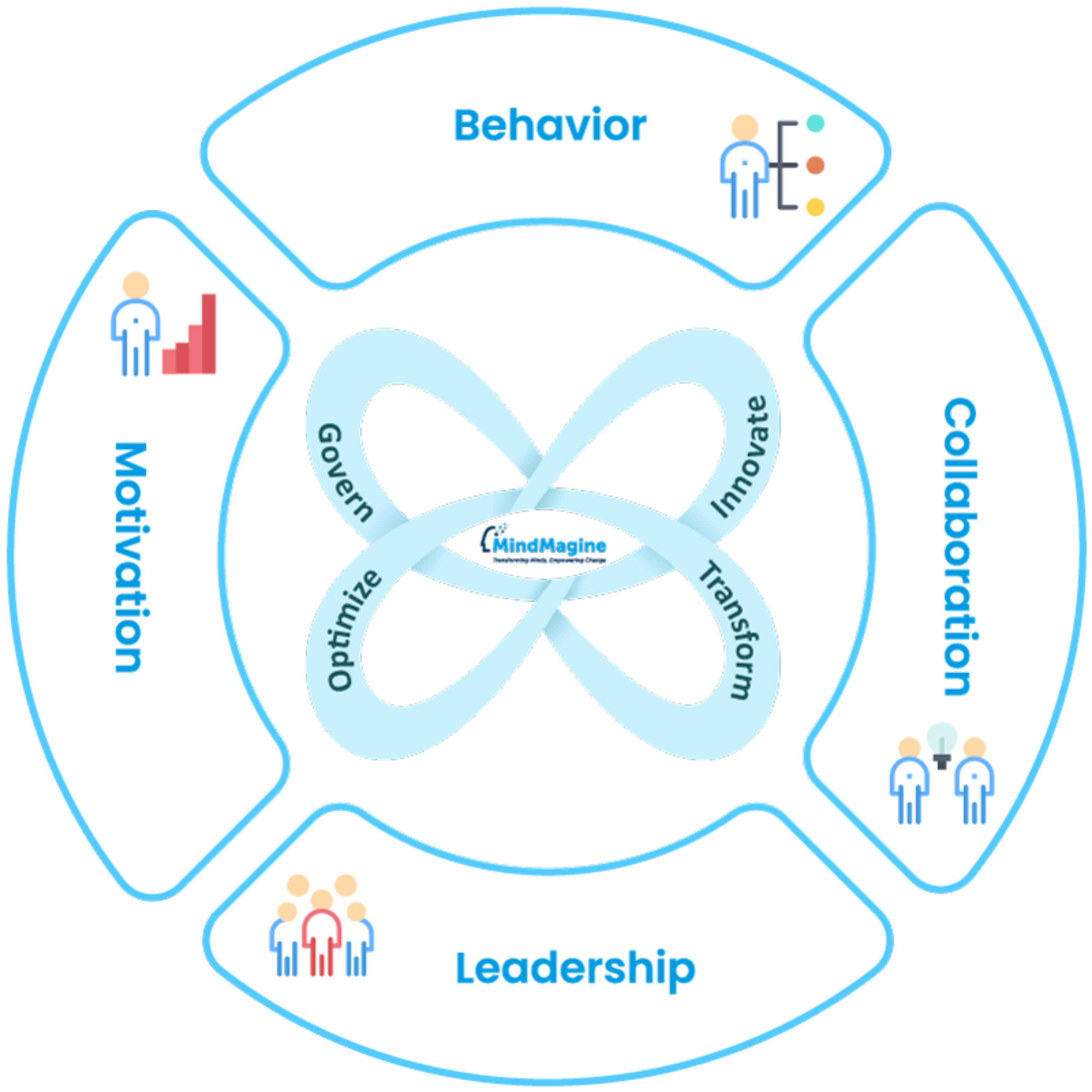
The future of work, one shift at a time. Each episode of the GITO Podcast applies the GITO Approach (Govern, Innovate, Transform, Optimize) to a specific improvement or awareness reshaping how organizations operate. #TheFutureOfWork
-
3
Ep. 5 — The Leader Who Gives Constant Feedback and Kills Initiative
There is a leadership pattern that looks like engagement and functions like control. The leader is present, responsive, and invested in the team's development. Feedback is given on everything. By most visible measures, this is exactly what good leadership is supposed to look like.And yet the team has quietly stopped thinking for itself.The paradox of over-managed talent is well documented in organisational research. When leaders intervene early, correct frequently, and provide detailed guidance on how tasks should be approached, they signal - unintentionally but consistently - that independent judgment is not trusted. The team learns to wait. Initiative becomes a risk rather than a contribution.The downstream effects are measurable: a reduction in the quality of upward information (because people learn to tell the leader what they want to hear), a narrowing of the team's collective problem-solving range, and a growing dependency that makes the leader increasingly indispensable and the team increasingly fragile.The mechanism, not the motive, is the problem. Most leaders who operate this way are genuinely trying to help.The question worth sitting with: in this team, when did someone last bring a fully-formed solution to a problem the leader had not yet named?Part of the GITO Podcast Series by MindMagine. New episodes every second Tuesday.
-
2
Ep. 4 — The High-Performer Who Stops Performing
The most dangerous period in a high-performer's disengagement is the window before anyone notices it has begun. Organisations tend to watch for the obvious signals - attendance, headline output, formal performance data. The real indicators are quieter: a reduction in initiative, a withdrawal from discretionary projects, a shift in how someone occupies a room.High-performer disengagement is not a personality event. It is a structural one. The conditions that sustain exceptional performance - autonomy, meaningful challenge, recognition that is specific and timely, clarity about how individual contribution connects to organisational purpose - erode gradually, often without deliberate intent, until the conditions are no longer sufficient to support the investment the person was making.In high-context professional cultures, the erosion is particularly difficult to name. Directness is moderated by hierarchy. Dissatisfaction is expressed laterally before it surfaces upward, if it surfaces at all. By the time a manager has a conversation about it, the recalibration has often been in place for months.The cost is not only the loss of the individual. It is the signal their disengagement sends to the team around them.The question worth sitting with: in this organisation, is the first indication that a high-performer has disengaged a conversation - or a consequence?Part of the GITO Podcast Series by MindMagine. New episodes every second Tuesday.
-
1
Ep. 3 — The New Hire Who Was Exceptional in Interview
There is a pattern that appears reliably across industries and geographies. Someone impresses every interviewer. References are strong. The offer is accepted. Six months in, the results do not match the promise - and neither the manager nor the new hire quite knows how to say so.The interview process, in most organisations, is optimised for performance in interviews. Not performance in roles. The gap between the two is real, measurable, and largely predictable.Research on selection validity consistently shows that unstructured interviews - which remain the dominant hiring method - are among the weakest predictors of job performance. What gets selected for in a conversation is often very different from what the role actually requires: the ability to navigate ambiguity, to build relationships without a script, to deliver results in an environment that looks nothing like the structured exchange that produced such a strong impression.In high-context environments, invisible barriers compound the problem. Cultural expectations around authority, directness, and initiative shape how capable people show up in their first months - often in ways that read as underperformance to a manager who does not share the same frame.The question worth sitting with: does the selection process in this organisation measure what people can do in a structured conversation, or what they will do in an ambiguous role?Part of the GITO Podcast Series by MindMagine. New episodes every second Tuesday.
-
0
Ep. 2 — The Trust Contract
There is a moment in most high-performing careers when something quietly shifts. The person still shows up. They still deliver. But the discretionary effort - the initiative, the ideas nobody asked for, the staying late because the work mattered - that stops. And they can often identify the exact moment it stopped.This is what a broken trust contract looks like. Not a resignation letter. A private recalibration.The psychological contract governs every employment relationship. It is the layer beneath the formal one: the unwritten expectations that hard work will be recognised, that stated values will actually govern decisions, that a person will be treated as a human being rather than a resource. Research by organisational scholar Denise Rousseau established decades ago that when these expectations are violated - even subtly, even unintentionally - the withdrawal of discretionary effort is immediate and often permanent.The cost is measurable. Disengaged employees cost organisations an estimated 18 percent of annual salary in lost productivity. In high-context cultures, where direct feedback is moderated by hierarchy and relationship, the pattern is particularly difficult to name before the damage compounds.The question worth sitting with: what has this organisation asked people to believe - and then quietly not believed itself?Part of the GITO Podcast Series by MindMagine. New episodes every second Tuesday.
-
-1
Introduction to the GITO Approach
Think about the last significant improvement initiative your organisation ran. Not whether it succeeded on its own terms, but whether the problem it was designed to solve has stayed solved.If the answer is yes, you are in an unusual position and I would genuinely like to know what you did.If the answer is no, or more honestly, if the answer is "we haven't checked"; then you are in the place where this series begins.The pattern is not a judgment. It is not evidence of poor leadership or bad strategy or inadequate investment. It is evidence of something more fundamental: an organisation that has been solving problems without yet learning to see the system those problems live inside.That is what we are here to change.
We're indexing this podcast's transcripts for the first time — this can take a minute or two. We'll show results as soon as they're ready.
No matches for "" in this podcast's transcripts.
No topics indexed yet for this podcast.
Loading reviews...
ABOUT THIS SHOW
The future of work, one shift at a time. Each episode of the GITO Podcast applies the GITO Approach (Govern, Innovate, Transform, Optimize) to a specific improvement or awareness reshaping how organizations operate. #TheFutureOfWork
HOSTED BY
MindMagine
CATEGORIES
Loading similar podcasts...
Frequently Asked Questions
How many episodes does The GITO Approach have?
The GITO Approach currently has 5 episodes available on PodParley. New episodes are automatically indexed when they're published to the podcast feed.
What is The GITO Approach about?
The future of work, one shift at a time. Each episode of the GITO Podcast applies the GITO Approach (Govern, Innovate, Transform, Optimize) to a specific improvement or awareness reshaping how organizations operate. #TheFutureOfWork
How often does The GITO Approach release new episodes?
The GITO Approach has 5 episodes. Check the episode list to see recent publication dates and frequency.
Where can I listen to The GITO Approach?
You can listen to The GITO Approach on PodParley by clicking any episode. We provide an embedded audio player for direct listening, and you can also subscribe via your preferred podcast app using the RSS feed.
Who hosts The GITO Approach?
The GITO Approach is created and hosted by MindMagine.
URL copied to clipboard!