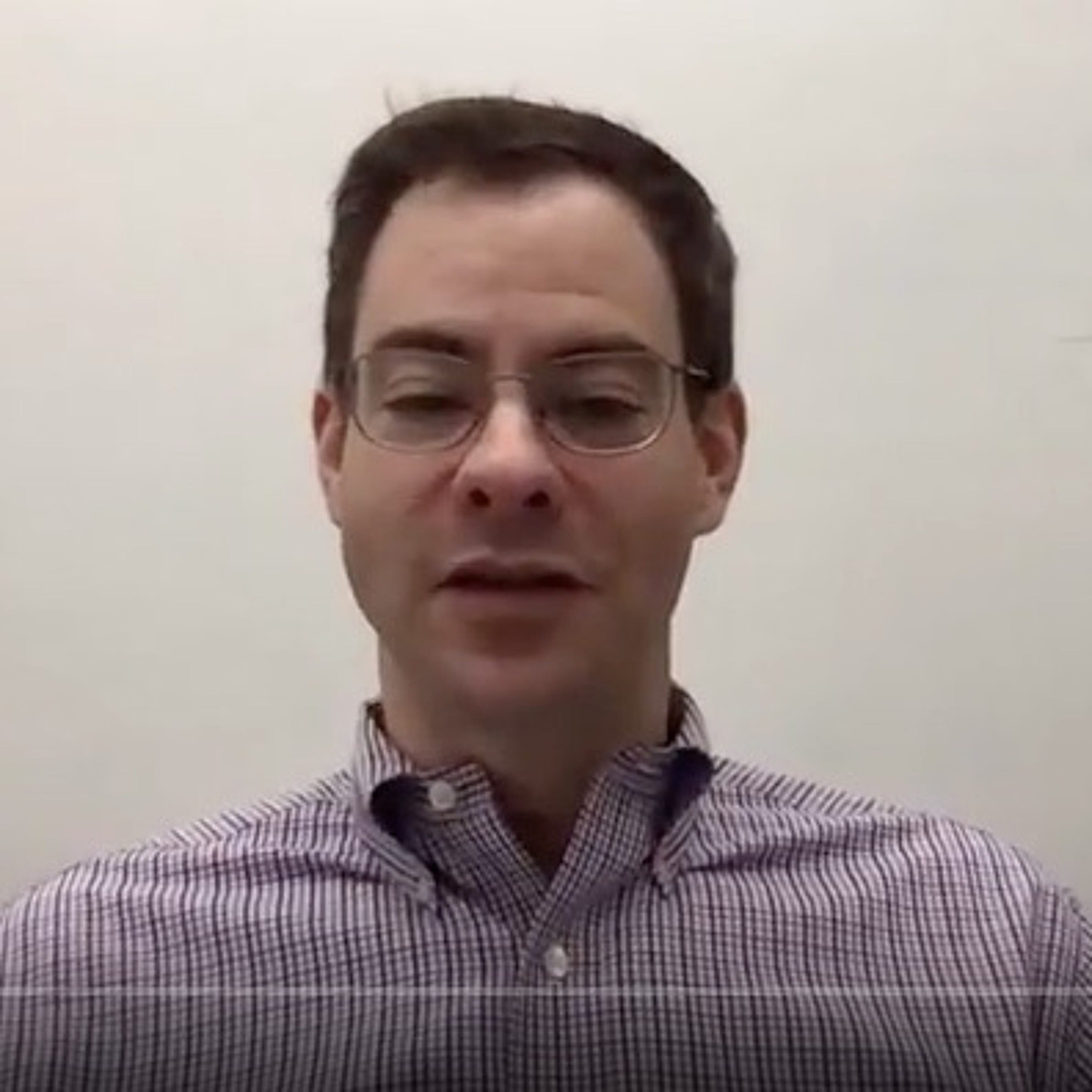
All right. Welcome, everyone. This is Nikki, a COSA Cloud Evangelist at Cisco, and we've got an awesome guest for Cloud Unfiltered today, one of our own, Kip Compton. Do you want to introduce yourself, Kip? Yeah, I'm Kip Compton. I'm in the Cloud Platform and Services Group at Cisco. So Kip is like, you know, my boss's boss's boss, so I can't mess this up.
We won't mess this up. We're going to have a good time. So we typically like to start these things, Kip, by asking you how you got into tech. And it was an interesting stat just about how long you've been at Cisco that I won't bring up. But it's been a really long time. And so take us before that. Like, what were you like as a kid? How did you launch on this cloud journey? I saw on your LinkedIn you went to MIT, which is wicked cool. But tell us about that journey. Sure. No, I was interested in technology from an early age. I was very fortunate my mother was a computer programmer.
And that was extremely unusual when I was young. You know, we're talking about in the 70s. She was a computer programmer for the U.S. Army. And then she had kids and she became a teacher. And one of my first sort of memories of tech was my mom and the rest of the family go into Radio Shack to buy a computer. And we bought a TRS-80 Model 3.
what were called lap manuals, because they sat on your lap when you were trying to learn how to program. And we hauled it all home, and my mom started programming the computer to be her gradebook. So she was teaching, and she thought it was crazy that she was filling in these grade, each student's grade, and each time in this book, and then averaging them and producing report cards. So she sat there, and over a summer, wrote her own electronic gradebook software in TRS-80 Basic. And I remember everything was great, but parents, though, complained about the report cards, because she actually printed directly onto the report cards.
And my mom's approach to that problem was to get rid of the dot matrix printer and get what's called a daisy wheel printer. I'm dating myself here, which operated like a typewriter. So the output looked like a typewriter and not a computer printer. And so everyone thought it was amazing that she was typing the report cards. And as I watched her learning how to program, I think I thought to my eight or nine-year-old self, that looks really interesting. And so I started taking the same lap manuals and learning basic and writing software.
When I was in high school, I went to a high school that was unusual. It was a magnet school, which meant it drew students from a wide area. So our friends weren't in our neighborhoods. They were far away. And in fact, back then, there was this thing called long distance, which it's hard to remember at this point. But it cost money to call our friends, because they were like several towns over. So here we are in high school, and we can't call each other. So I set up a bulletin board system, like a BBS, this is pre-internet, and got a special, I think it was called a metro line. It was a special phone number that was local to a wider area
And so all the people in my high school could dial into this thing for free and we couldn't talk to each other on the phone, but at least we could send each other messages. So I got interested in networking and computers very early on. That's wild. I can't imagine. Well, I can't because I think I got into tech by telnet chatting back in the day, back when we had pagers. Yeah. And so I learned a lot. I actually learned how to type, I think, because of that. You know, there was no text messaging, you know, like there is today. It's kind of weird to see my kid now, you know, hanging out with friends doing Minecraft. You know, I mean, he doesn't even use the phone. I think I may have been lucky in that I came along late enough that there were computers that you could have at home because like five years before the TRS-80, there wasn't anything.
But frankly, early enough, I mean, my kids play with iPads, and they're not interested in learning how to program in BASIC. You know, they're hanging out with their friends in Minecraft. So there weren't that many very good games on the TRS-80. It was pretty early. If you wanted them, you had to write your own, right? So I think I came along in terms of learning computers and computer science. I came along at the perfect time, I think. So then you went to MIT, which is way cool. What was that like? It was amazing. I mean, you know, things about MIT, I mean, it is a difficult school. But it's pretty energizing. You're surrounded by a lot of really smart people.
And one of the great things about that environment that I remember is people, just a second. Joys of live podcasting, folks. No, I'm not. No, I don't. I'm sorry, I don't. I don't know. My secretary told me that something happened. By the way, I'm live right now. Let me see.
Nikki, we've had an accident here. I'm going to have to go take care of some things. Maybe I'll be back in like five or ten minutes and we can try to restart. I apologize. Yep, no problem. So I'm going to wait because if I stop this thing, we're going to have to regenerate a bunch of links.
But we've got some cool guests coming up. Let's see. We've got Dave Lively. Been at Cisco for a long time. Really smart guy. Super involved in the OpenStack stuff. We've got Heidi Jo Chuthway from the OpenStack Foundation. We've got one of the OG Clauderati folks, Ruben Cohen, who I'm really excited to talk to because I haven't seen him or talked to him in forever. And then at the end of the month, we have Jeff Dickey, who was previously a co-host on a podcast I used to host. And look, he's back. Yay. I apologize. Unfortunately, we had an accident with an employee, and I needed to speak with the EMTs who were here.
Okay, so do you need to go or are you good? No, they are much better equipped to handle the situation. Okay. I just want to make sure that they have all the information that they needed. No problem. I just went over future guests while you were gone, so that actually worked out well. So, Kip, let's jump right into it. We talked about, you know, time at MIT. You've been at Cisco for a while, and you've held a bunch of different roles at Cisco. You've done the video stuff. You've served a GM as various businesses. What is it about you that causes you to go and lead completely different groups at Cisco?
Well, I mean, good question. I enjoy learning a lot. I enjoy the intellectual challenge and find it very satisfying to learn new businesses and new technologies. And I actually sort of seek that out. In other words, I think that not only do I enjoy it, but one of my philosophies about career is learning is an excellent leading indicator of future success.
Because if you're learning a lot now, then you're going to be able to do more in the future. And if you do more in the future, that's probably ultimately going to manifest itself in giving you more options for your career. So I seek out opportunities to learn. And I've just been fortunate. I mean, there are lots of good things about working at small companies. And there are also some good things about working at large companies like Cisco. One of them is the opportunity to move around and work on different things. And I've been fortunate enough to be able to take advantage of that.
And so you've been in this cloud role now, leading the cloud and managed services platform group now since May. What has changed since then? Well, I'll speak to what I've seen with customers in the market. You know, since May, we certainly made a lot of changes internally, but I think the market's more interesting. You know, when I first came in and you're talking to customers about cloud, they viewed cloud as an almost oil-like commodity. And what do I mean by that? I mean, the discussions revolved around how much money they were going to save by going to the cloud.
And there are lots of discussions about, like, being able to move workloads between clouds. And there's some people even talking about, like, spot prices. Like, oh, you know, if Google gives me, you know, a dollar less an hour of, you know, whatever, I'm going to move my workload there and take advantage of lower price. And the next week, you know, people were totally focused on cost savings, and they viewed the public cloud providers as commodities. If you fast forward to now, I mean, it's certainly been a change that's taken over time, but now very consistently, customers I talk to, you know, Enterprise or SP view things a lot differently. And I think it's a little bit of a maturation, which is to say that they recognize that different clouds are good for different things. So the focus is less on how do I make workloads portable and how do I position myself to catch like blue light specials, if you will, in IS pricing and much more about, well, how do I take advantage of the incredible innovation that's happening in these platforms? And how do I use this to transform my business?
how do I use this to beat my competitors and win more customers? And well, of course, I mean, I want to get the best deal I can, you know, kind of thing. And so it's really flipped pretty significantly. And I think you see that not only in the customer dialogues, but in the way the web scale public cloud providers present themselves. I thought it was at the AWS reInvent conference late last year that the top conversation kind of shifted from how many price cuts have been given in the last year to how many new features have been launched. And I think AWS talked about launching a thousand new named features last year.
and showed all of us a graph, not only showing 1,000 new features, but showing how much they were accelerating and essentially saying that they were going to do many more in 2017. And I think that people are starting to recognize that these platforms are not just platforms of efficiency or cost-saving, but are platforms of innovation. And that harnessing that innovation is key to their company's ability to deliver compelling experiences to their customers and really to their success. And kind of it's cliche, but in the digital world, in this more modern world that almost every industry is transitioning into. These platforms are absolutely key and not just from a cost savings perspective. It's interesting you bring that up. I spent some time pretty publicly as a cloud evangelist at Rackspace and then worked at Metacloud. And it seemed then that people just knew that cloud was there and existed and it was fast and easy and they were going to use it.
Then as I moved to Cisco, I realized that the customer base at Cisco is very, very different. These are not small, agile companies that don't have any technical debt or existing technology implementation, so it's very easy for them to just go to the cloud and start using it. But what I started to realize, and I think I knew it, but I didn't realize the magnitude of it, was that these enterprise customers and these service providers and these very large technology users we're not just going to scrap everything and go to the cloud. And that has created a ton of complexity for a lot of those customers, which I think dovetails well into our current strategy. I think the hot term was hybrid cloud, but you call it hybrid IT. And tell us why that is a more app description. Well, I can't take credit for hybrid IT. That's Gartner's term. But I agree with him. And I think the point with hybrid IT is that this is a bigger transition. When people talk about cloud, a lot of people are like, oh, well, it's about where the workloads are running.
So hybrid cloud is like, oh, I'll have some workloads in my data center and sell some workloads in Amazon or Azure or wherever. And that's kind of, I mean, it's a little bit limiting to some degree. And I think what Gardner said, I think it resonates very well with me, is actually, if you think about it, we're moving to a hybrid IT world. I mean, even a customer who moves all of their workloads to Amazon, which I mean, you can find a lot, you know, different customers are very different places and are taking different journeys. So you can go find CIOs that are saying, I'm going to move everything to Amazon. And even then, they'll have hybrid IT because you know what? They're still going to have, they still have like a place of business. Their employees are not inside the Amazon.
data center. So they have networks, and they have phones, and telepresence endpoints, and devices like Macs and PC on-prem as well. It just broadens the conversation and the thought process from just the data center kind of topic to realizing, look, no CIO that I'm aware of delivers anything or solves a business problem with a data center alone. A data center is part of an overall IT architecture, part of an overall IT system that together enables and ultimately delivers business results. And so the hybrid IT is an interesting craving. You know, to tag on to your point about
the breadth of Cisco's customer base. That's one of the really interesting things about Cisco. Our earnings, I've been told, correlate very highly with GDP. In fact, I think people have done analysis of earnings versus GDP and the highest correlations of all of large tech companies. And a reflection of the fact that The full spectrum of small to large companies. And what you see, in fact, we did a study with IDC to look at, well, where are these customers on their cloud journeys? And essentially, what is their level of cloud maturity, if you will? How mature are their governance processes? How sophisticated is their thought process about where they're putting workloads? How are they thinking about resiliency? Essentially, how mature are they in their adoption of cloud technologies? And that was an interesting study. We developed sort of five categories of maturity, if you will. And it was a field of velocity in this market.
In the cloud industry, I think every day you feel like you're late. There's so much happening. We're actually still really early in this transition when you look at the broad market. In fact, only 3% of the enterprises that IDC surveyed as part of this study were in that fifth or most mature category. So 97% still have some ways to go. And in fact, about half of the enterprises surveyed were in the bottom two categories. And this is reflected. I mean, I talked to a lot of customers in EVCs. And almost universally, they're looking to Cisco to help them with that journey. And perhaps in part because we're not a web-scale public cloud provider, they look to us as kind of a trusted advisor. And we, in many cases, understand their business. We have significant relationships with them.
How do we take advantage of this? I mean, what should we run in AWS? And what should we maybe do on-prem? We simplify our own data center, which in many cases is a Cisco data center solution that they have. And it's just a very interesting environment for Cisco right now.
So we were talking specifically about customers. You had mentioned a particular conversation that you had with a customer early on. When you're talking to customers, it seems like they're in, and I'm sorry, my dogs are barking because UPS just dropped off a package. It seems like when you're talking to these customers, they're all kind of in different places. How do you get them from A to D? What is your conversation strategy when you go in and you...
i don't think some of these customers even know what their clutch picture looks like as a whole so what are they thinking about like what's top of mind what are the things that they want to ask it's it's a in general i'd say look it's a consulting detail process i mean and i think personally i mean they're different sales philosophies but I think any really successful sales strategy starts with understanding the customer, and this is no different. So it's, you know, every customer, there are different journeys and different concerns. So you really got to get to understand the customer's business and what is it that they're trying to achieve with their cloud strategy. And, you know, but I can share some general trends, if you will, you know, of what we've seen. I don't want to portray this as one size fits all, but there are some macro trends. And again, what we're seeing is customers saying, okay, wait a second, I'm going to take advantage of different environments. You know, I had a customer I was talking to the other day, pretty sophisticated customer, and they're like, well, we're using AWS for Lambda because that's phenomenal.
That's their serverless or event-based computing framework. They're like, we're doing some cognitive stuff with IBM in their cloud. And we're starting to play with TensorFlow in the Google Cloud. And that's cool. And what they were looking for and what we see increasingly is they're like, look, it is a multi-cloud world. I'm going to take advantage of multiple clouds. But there's some things that I really want to have the same across these clouds. Because I don't want to have a different way, for instance, of thinking about networking.
I don't want to manage my connection to my private BPC at Amazon differently than the way I manage it at IBM or Google in that example. I want some sort of unified way of managing that that ideally plugs into how I manage connectivity across my enterprise. I already manage connectivity between the sites in my enterprise. Why isn't my BPC at Amazon just like another one of my sites as far as my network is concerned? Because if I can do that, I've already got the tools and the policy and the training and everything in place, and that's what I want to do. So networking is a key thing. Security is not surprisingly another thing. You don't really want lots of seams in your security architecture.
That usually doesn't work out well. So they're like, how do I secure workloads? And how do I secure data across these different environments? And is there a common framework that I can use? Another area actually that they express, and we've been having a lot of conversations around AppDynamics, now that they're part of Cisco, is application performance analytics.
They move workloads out to the cloud. They absolutely want to understand how those workloads are performing. What kind of experience are their employees getting from those web applications? What are the trends? Is it getting worse? Is it staying the same? Is everything OK? And they really don't want to have a totally different way of measuring that and looking at that that's dependent on where the workloads run. That just seems completely arbitrary, and it's inconsistent. They want a common way of doing that. And so analytics is another area where they want commonality. There's a lot of interest in, for example, our Cloud Center product, which came from our clicker acquisition.
I want a common way of modeling an application. I want a common way of projecting costs. And I don't want to do that a whole bunch of different ways and then try to figure out how to normalize and add it up and compare and all of this. I want a framework for doing that. So in short, a lot of customers are saying, OK, it's going to be a multi-cloud world. I'm going to have some stuff in my own private cloud on-prem. I'm going to have some stuff probably at multiple public cloud providers. How do I make sense of that? Because that's not the, you know, I think you said earlier, customers are like, oh, yeah, cloud's going to make everything easy. I'm going to move everything to AWS or wherever, and they're going to take care of it, and everything's wonderful. That's not the reality that most enterprises are experiencing.
And service providers either. I mean, another sort of eye-opening thing for me when I came to Cisco was just the complexity and how we serve service providers. I mean, you're talking about, you know, video and you're talking about, you know, pretty much anything anyone does. The Netflixes of the world that are streaming, like all that has to be powered on a network, which, you know, networking. frankly is like probably my weak spot. I just hear acronyms left, right, up and down. I'm like, okay, you know, there's another three-letter acronym, you know, VPP, VMS, you know, all of these other technologies. And it seems like some of those technologies are really oriented towards sort of the network administrators or network teams, which is interesting because I still see that Cisco can help customers in different ways. One way is to look at it from the bottom up, from the network up. And now increasingly it's run the app down, either via SaaS or, you know.
through our Cloud Center integration or clicker integration with Cloud Center, now with AppDynamics, trying to get all the analytics that are coming in. When you're talking to a CIO, do you think that they have a full sort of idea of where these things are converging? Or are teams still siloed in a lot of ways and kind of just doing their own thing? Yeah, so actually a couple things in there. I mean, on the SP side, the SP business, I mean, a number of the businesses I've run in time I've spent at Cisco has been on the SP side. And I mean, it's a really interesting business. If you think about it, you know,
With enterprise, if the network goes down, it's very detrimental to the business. Most businesses, they can't really operate without their network. But when you're working with these source providers, the network goes down like cities stop working. And you're talking about powering some of those critical infrastructure in our society at this point. And so the business we have there and the relationships we have with customers and the criticality of what we do there is just kind of inspiring to me. It's quite a market structure into more of a software-defined world.
yet they continue to have the resiliency and the robustness that they require. But we can bring them a whole new level of agility and flexibility with network function virtualization. So they can set up and turn down networks much more quickly and be much more responsive to their customer's needs. So that's a tremendous opportunity for us. And we apply to cloud technologies there every day.
Every customer is a different place in the journey and it was on a different journey So it's hard for me to say kind of where they're at what I will tell you is at Cisco We've not always done a great job of helping our customers understand all the ways we can help them And I think for a lot of Cisco folks It's kind of like when I say cloud, you say data center. And it's all about the workload. It's all about the data center. And it's all about building product clouds. And for good reason. I mean, we have an amazing data center business. We've got incredible innovations with things like ACI and Tetration and Cloud Center and Hyperflex. But there's just so much more we can do. And that's one of the things I've been spending a lot of time with, not just customers, but folks inside Cisco and our marketing groups, starting to help people realize that.
How we help our customers with cloud and how we show up on cloud in general is certainly about our cloud products. And that's certainly an anchor point. But it's also about, really, the rest of our portfolio because, in fact, our business is changing and becoming a part of cloud. One of my favorite examples is we have an offer in our collaboration portfolio called Spark Call. And it's an incredibly advanced cloud-based SaaS offer for unified communications and collaboration. And one of the things it does is if you use Spark Call, your IP phones don't register with a Cisco unified call manager inside your enterprise. They actually register directly with the cloud. And there's all kinds of benefits to that. Well, you know what? I was talking to the CIO of a large
consumer manufacturer. And he's looking to move things to the cloud. And Spark call is actually part of that conversation in that context. And he's not excited about it because of the advanced collaboration features, necessarily. But it's a way for him to move his call managers to the cloud, right? And not have his staff updating and patching call managers, which he doesn't view as really central to delivering an amazing brand experience to his customers.
So, you know, I think we've not always connected the breadth of our portfolio at Cisco to the cloud conversation with those CIOs. And we haven't always brought everything that we can to help them move to the cloud. And that's something, you know, we're starting to shift. And you saw Chuck talk about it at Partner Summit last fall, you know, really incorporating a lot of our SaaS offers and our security portfolio, some aspects of our networking portfolio and aspects of our services, you know, professional services around cloud, given the help that a lot of customers are looking for is a huge area for us. We're really bringing that all together with our...
sort of cloud solutions, if you will. The tremendous things we have with things like MetaCloud and UCS and the entire data center portfolio. But really bringing that more fuller spectrum of capabilities from Cisco into this cloud conversation is something that we're getting better at. And frankly, we haven't always done as effectively in the past as we'd like. So in terms of making those shifts, you know, it seems like, you know, I haven't been alive that long, but there's certainly been a number of technology shifts. And it seems like this one is potentially a little bit different just because of the sort of the way of thinking. It is a very, very different way of thinking. And one of the topics that I followed for a long time is culture.
And I know this is a topic near and dear to your heart. You know, you've got regular all-hands meetings. You've got, you know, different ways now for us to collaborate and provide, you know, feedback and ideas. But how do you get a large company to make the cultural shift necessary to embrace these new technologies and to get a full advantage out of them? That's a great, great question. I mean, it's something, you know, a lot of times we end up having a conversation. You know, we talk about technology, but to get the full benefit of this transition, people have to change the way they work and change the way they think.
As amazing as all of the technical innovations are that we do at Cisco, that cultural change is the harder part for most of our customers. And that's something where we start offering some advisory services from our professional services group here at Cisco. We also have partners who can help, where we start to look at the change management around what has to happen in the company. Not just what has to happen to the data center or the software systems or the network or whatever, but what kinds of changes does the company need to think about in terms of the culture, how they work, even into some things like work structure or skill sets to take advantage of this. Because phase zero, if you will, as well, we can push some workloads into the cloud. And they'll run the same way in the cloud as they did here. And maybe we freed up some staff instead of focusing on keeping servers running, they can do something that's more core to our business. It's almost like a core context discussion.
You know, like, oh, we can, like, essentially outsource our data center operations. This is great because, you know, if people who are doing something that's important but not differentiating us as a company. So that's kind of phase zero. But, you know, I mean, you're not doing CICD. You're not doing A-D testing and getting the kinds of feedback. You're not achieving the kinds of agility or the ease of integration, you know, or code reuse with microservices. You're just kind of doing what you did before.
you know, you can shift some more people to work on stuff against core. And to get beyond that is what is, it requires a cultural change. And it's a big deal. And you know what? Cisco is changing its culture too. You know, it's not, you know, I don't think Cisco has everything figured out, but some of the richer conversations with customers are actually, you know, sharing back and forth the challenges that each of us have about the cultural changes that are happening inside our own companies.
And it's just absolutely key. We spend all our time talking about the technology, which is necessary, and it's amazing stuff. But I think that the people who get the most out of this transition will be the ones who master the culture side. And so if I'm a, let's say, a network admin and I'm starting to see all these automated things happen and maybe I'm not necessarily logging into a box or I'm provisioning something, I have to go to the cloud to provision a firewall or something. What advice would you give me to help me grapple with this idea that, oh my gosh, I'm going to be automated out of a job? Well, check out DevNet. I mean, there's two things for sure. I mean, our certifications group, learning at Cisco, the people who run the CCIE program, all kinds of new certifications and bringing in all kinds of new programmability and cloud stuff into that forum. And then DevNet.
They just got tremendous materials and activities. And I know a lot more is coming from that team on that. And we're finding, like, with our own, you know, SE teams at Cisco, the energy and excitement about moving to this more programmatic, automated, virtual networking framework, you know, it's for the technologists. It's like a kid in a candy store. It's amazing what you can do. And we're finding people, you know, picking up these skills and running with them really quickly. It's really fun and exciting to watch.
So you'd say just keep on learning, basically. Well, yeah, that's got to my point earlier. I think that's a good leading indicator of future success. And again, I'm sure that there's great resources in lots of places. But I know the folks at learning at Cisco and the DevNet folks have really been focused on this area. So we're running out of time. But one more question for you. And this doesn't have to be necessarily Cisco-centric. It could be just in general. But what are you excited about? What is the thing that you're geeking out on either at work or when you get home from work, maybe on the weekends? What are you reading about? What are you excited about?
Well, I'm getting ready to go on vacation with my family. So if I'm completely transparent, I'm actually pretty excited about that. And my kids are at a great age to travel, so we're going to take them to Europe. But what I get excited about is, like I said earlier, learning new technologies and thinking about, you know, Cisco is different. I mean, at a startup, I have a number of friends who've left Cisco for startups. And I think two-thirds of the time.
The company, we don't always move. Recorded is fast. But when we move, we have the opportunity to affect so many people and so many companies in such a positive way. And so I look at some of the things we're doing, and even seemingly minor things, you think about the impact of that multiplied across an economy. And it's really exciting to think about where we'll be. And you reflect on where we come from and what's happened even just in the last few years. I find it very exciting.
So are you a Tesla guy yet? No. Not a Tesla guy. Nope. I'm eyeballing those batteries and roof tiles waiting for them to come to Texas. I'm hoping by the time it's time for me to replace my roof that they'll be ready to go.
Super neat stuff. And great opportunities, I think, especially for people that are going to be doing remote monitoring and the Internet of Things and just all the neat things that are coming our way. Well, Kip, it's been a pleasure speaking to you today. I know you are incredibly busy. So thank you for taking the time. You blog. You are on Twitter at Kip Compton. And you're going to be at a few events coming up, right? What events are you going to be attending? Red Hat Summit? Red Hat's coming up.
I think OpenStack Summit. I think there's a few things. Of course, Cisco Live coming up in June as well. You are much more, I think, approachable than most people would guess. I find you to be pretty awesome one-on-one. It's great to talk to you. If you ever see Kip out and about, definitely say hi. He's a really cool dude who loves to kick out on just about anything. That's all for today. Thanks again. As a reminder, we said it earlier, but voila.
Kip was dealing with emergency, but we've got Dave Lively this month. We've got Heidi Jo Trethewey from OpenStack Foundation. We've got Rube Cohen, an original Cloudirati member, someone who's been around for a long time as far as Cloud goes. And then my old co-host from the OpenStack podcast, Jeff Dickey, will be joining us from Redact at the end of the month. So everybody, and I say everybody, meaning you and I, Kip, say goodbye. Bye-bye. Thanks, everyone. Thank you.