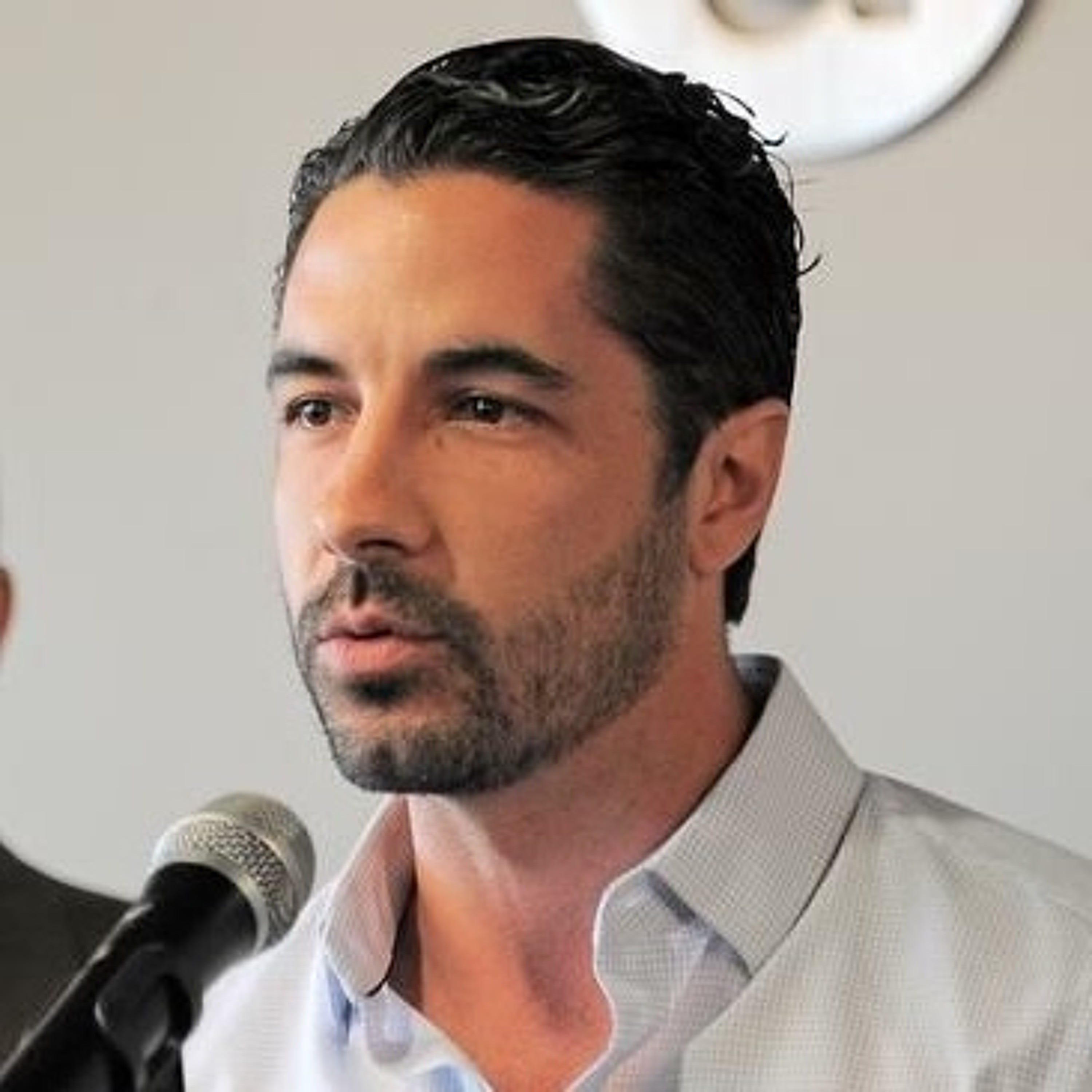
Good morning, good afternoon, good evening, good whatever it is, wherever you may be. This is Nikki Acosta. I'm your hostess with the mostest. And this is Cloud Unfiltered. We have an awesome guest with us today. Someone I've known for a minute. Someone I've partnered with at now three companies. And someone who's just buckets of fun. Sinclair, CEO and co-founder of Apprenda.
Tell us about you. Oh, man, you said big expectations already with buckets. It was fun. We'll see where this goes. Yeah, if you want, I can give you some interesting background on the history of Sinclair, but I think more importantly, how that turned into Apprenda and what we're doing today. Just personally, I'm as nerdy as I get. Since I was a kid, I was the kid that would get Christmas presents and take them apart versus use them. So you got a remote control car, and the first thing was, how does it work? How does the motor drive the wheels? And you get into that mode. And that tinkering mentality kind of drove me for most of my life through Apprenda. A lot of what you do in a startup is tinkering in some ways, and in some ways, it's clear execution. But that background led me to computer science pretty early.
From the age of eight on, I wrote a lot of code. And I learned first, as with everybody else, basic programming. But then of all things, I got into x86 and C because I love graphics programming. So I spent my life developing lots of apps and lots of interesting stuff, mostly for fun. But after I finished college, the focus was professionally getting a software development job. So I worked at Morgan Stanley for a while. I spent a lot of time writing code in large enterprises and small companies. And it was just like this native passion to want to build stuff. I felt like computer science and software lets you express that better than ever before. And that led ultimately to the creation of a friend. A lot of the experiences I had professionally early on informed what we now have as a strategy at the company and what we wanted to do as a business.
That's good stuff. So tell us what Apprent has been up to. I mean, I know we partner with you. I know that we've got lots of cool things cooking, but what has Apprent have been up to? Yeah, that's a big question. And I think part of it is to understand what we care most about as a company. When we started the business and started raising venture capital and building it into what it is today, we kind of had this focus that we wanted to pursue, which is how do we help enterprises power their apps, right? As a broad mission, when you look at how the market's changed, almost every company is becoming a software company. There's probably more demand for custom software than there's ever been before. Most enterprises are hiring developers in droves at a rate that I think is unprecedented historically. And when you look at that dynamic, the key part of it is, well, how can a vendor or a technology company participate in helping them achieve their goals? And as they go through that transformation and become more and more like a software company, they tend to need technology to make that happen.
Now, historically, we focused on equipping the IT department with technologies to run a shared service. Really, our sweet spot is working with large Fortune 1000 companies who on the IT side are saying, we need to come up with a stack that we're going to use to offer to our developers so they can start building applications in a more productive way. And what's changed in the market is how that decision process gets made. It's clear that it's a combination of IT making a decision on what they need and how they perceive the future look and what they need to offer the developers in their company, as well as what sort of tools and technologies the developers are individually choosing. So when we asked, like, what's Apprenti been up to? A lot of it has been, I think, broadening the strategy to focus on.
how we can also make sure that we provide value to those developers who are making independent decisions, which to a degree brought us to a big decision we made last year, which is to incorporate Kubernetes in our strategy and our tech stack. So as far as Kubernetes, were you already seeing demand? So who was demanding it? Was it IT? Was it developers? Was it a mix of both?
You know, we saw a lot of demand and it was a mix of both, but early on it was predominantly developer groundswell. When you look at the developer market and, I mean, being a developer by nature and by trade historically, you kind of look at what is it you need to achieve a certain goal. And it might be that you're building cloud native apps or you want to containerize and have something to orchestrate those containers. And technology started to evolve and pop up that would satisfy those needs. As a developer, I'd look at the open source community and say, well, what's going to help me out? And Kubernetes just kind of hit the market with this roll of thunder that captured everybody's attention. So we started getting some very explicit demand around Kubernetes and how we work with it in the future. And what we stepped back as an executive team and did is we said,
Does the Kubernetes vision and its evolution, as far as we can see it today, align with this mission that Apprenda has to power the world's apps? And it was pretty clear that it did. So it was demand that drove us to put focus on it, but then ultimately it was very clear alignment in what was happening in the Kubernetes community and what we as a company want to achieve over time. So on that note, who is it that you're mostly selling to? Is it developers? Is it central IT? And how do you reconcile that top-down, application-down view with the bottom-up infrastructure, the control? How do you bring those together? Are you finding that people are coming together in the same room?
They are in some cases, but not all. So it's actually a great question because it's fascinating in a variety of ways when you think about how the market's evolving. But we sell to both developers and to IT, and I'll describe to you how. On a developer front, it's pretty clear that open source is how developers are approaching building out their stacks and what they need. And when we look at that, we saw developers very explicitly going after Kubernetes as their preferred engine of choice, if you will, that's going to be powering and running their apps. The problem that developers face or the twofold problem they face is, number one, how do we start that journey, right? We need help. And we built a consulting services practice around that that engages directly with developers and development managers around specific projects.
We then started also a support subscription business so that we can help those developers when they go to production, make sure that they can get the SLAs they're guaranteeing to their customers. So from the developer side of the market, a lot of our selling and value creation has been focused on services that support that sort of journey. Now, what's interesting is that we're focused predominantly on enterprise developers or web scale developers who care about that particular aspect of Kubernetes. And they tend to work in organizations that have IT departments that are trying to figure out how they participate and drive some of that action. So we took our cloud platform technology and we incorporated Kubernetes as part of the resource pooling in a friend. So now a customer can say, I've got a friend up and running.
I'd like to attach a Kubernetes cluster to Apprenda and leverage it as part of the resource pool and the underlying stack and offer it to developers as well. The reason we did that is that it allowed for a common piece of technology DNA. We know how developers are building against Kubernetes natively, and we want to make sure their apps are portable to an IT-based stack if their IT department starts building a shared services offering to provide to the market, to their internal market. So we reconcile it by making sure that we've got the same DNA technology-wise in both the services that we're providing to developers and the IP that we're providing to IT. So what are the common sort of IT-centric challenges that you're hearing most about?
Yeah, so that's where the rub comes in, right? Large companies have a lot of sophisticated processes in place to mitigate risk, right? People like to call it bureaucracy. We don't do it that way. If you look at any sort of big company, they create a tremendous amount of value. And kind of step number one is make sure that you don't erode that value.
And risk comes into place when you have poor security practices, poor processes in place. You can't really cater to the regulatory environment you might be operating in. So in enterprise, the biggest challenge they face is how do they reconcile the things that are necessary in the organization or in their industry with forward-thinking technology practices. So what we focus on with respect to the platform that we've created over the years is how can we ensure that they get a really modern cloud outcome in their operations while making sure they can fit that within the boundaries they have to operate in. We don't think it's realistic in many cases for enterprises to just say, forget it. Everything that we've built in the past is going to go away. All the legacy we've created is going to go away, both in the application front, the IT stack, and process front. So our platform is built to kind of plug into that model in a way that they need and expect while delivering that modern outcome. And are you finding on the policy front that policy is something that...
IT departments are trying to enforce and developers are not wanting it enforced on them? Or are you finding that it's becoming easier sort of for the policy to kind of live under the hood and be off to the side? Well, it's becoming easier by definition of what we offer to customers, right? I mean, we've built this platform to be policy-driven, but it's not to use the buzzword policy, right? Policy-driven this, policy-driven that. Policy gives you a way to capture the nuances of process regulation and productivity and control while giving developers the freedom to do what they need to do within those founders.
So I think the market's evolved and the technology's evolved to the point that there's clear compromise where you can have regulation in place, you can have process control in place while giving enough freedom to be super productive on the developer front. I think it used to be the case there was a lot of tension because technologies like Apprenda didn't exist. So you either had to fully conform to policy or go around it, right? Those were your options. There's nothing in between. So we focus a lot of energy on that exact question and problem. How can we keep evolving the technology we built so that IT can get that policy in place to mitigate risk and developers can do what they need to do to be productive? And are you finding the developers are welcoming this with open arms? Is there any resistance at all?
There's always a little resistance, but we are seeing, on average, a huge kind of bear hug around this concept because most developers, if given the option, would prefer to not go around regulations or companies. There's lots of reasons why they would do that. But when faced with deadlines and having to get an amazing project out the door, they have to choose between the old way of doing things and going around IT, right? And that's always been the challenge. Now when they've got this alternative where they can log into a cloud effectively sanctioned by the company that provides them a sort of productivity gain, they're all for it because it's the best of both worlds, right? You get low cost from a friction point of view with the value you'd expect in any other scenario.
So are you seeing apprentice usage in lines of business? Is that who's bringing you in? Or is it or is it indeed central IT? It's central IT predominantly. We do have some customers that work with us directly from the line of business use case. But when you think about how we've built Apprenda, it's to offer a shared service inside your enterprise. So most of our customers license Apprenda on the IT side, and they create a shared service that they'll offer to their hundreds or thousands of developers that work at the organization. You know, the way to think about it is how email used to be, right? Before companies were going to something like Office 365 or Gmail or something like that, you'd run a hosted exchange server internally. That was a shared service, but the end user community was every employee at the company. In this case, IT stepped back and they said, well, geez, how can we make the data center more accessible to our developers?
How can we give them technology that makes it easy to write cloud-native apps or to migrate their existing applications? And can we offer that as a shared service to all of our developers? And the only way they could do that historically would be to build a full platform themselves. Instead, they look at Apprenda, and they say, all right, if we bring this in-house and run it as part of our IT stack, we can send a URL out to the developers. They can create an account, log in, and start building apps.
Good stuff. Hit the ground running. So before we started, you mentioned a recent win. And I know it's a Fortune 1000 customer. I'm not sure that we're allowed to say who it is. But can you walk us through kind of what their challenges were and kind of what their intent is as far as what they want to accomplish and why they chose Cisco at Apprendo?
Yeah, definitely. And it's actually one of the most interesting stories to me because it captures the use case that we care about most end to end. And let me start with that just in context setting. When I talk to CIOs and CTOs and leaders within IT departments and I talk to development managers, there's a pretty common theme that I see. They want to build a lot of new stuff, right? There are new applications. They have to get out the door. They're revenue facing. They're driving the strategy of the business. But many of them also look backward and they say, well, we have 3,000 apps we've built.
Some of those are going to be part of our commercial future, right? Not all of them, but some of them. We don't have the time or money to rewrite them. Rewrites are very expensive in some cases. We have a lot of existing infrastructure we'd like to utilize some way in our cloud future. And they're trying to really figure out how to reconcile those couple of things. And they get stuck because they want to make this forward-thinking decision to make investments around cloud native, but they also need to figure out what to do with all the legacy they've created over time. Some will say, just forget it, leave it all behind, or rewrite it. And again, it's a practical matter that usually doesn't apply, at least not across a large .
So in this joint win, this Fortune 1000 company you're referring to, they were solving exactly that problem. They have a set of cloud native apps that they want to build for how they're driving the business going forward, but they also have this migration effort to move a lot of the apps they have to cloud. And the idea of a rewrite across almost 4,000 applications is mind-boggling for them, right? They can't wrap their head around that. And we started engaging with them jointly with Cisco to really dig in and understand, can we help with that problem? If we can, we can not only help with that strategic view going forward where we're helping them with the apps that will drive the business in the future, but we're dealing with this very tactical problem of cost savings and driving up utilization so they can pay the bill going forward.
A lot of the future gets financed with savings that you create today. So in this particular case, it was oriented around that business case that was a combination of strategic value as well as that ROI sense of, right, we're going to drive enough savings to fund what we're doing going forward. Well, congrats on the win. Sounds like a good one. Yeah. So talk to me about how the companies that you're working with are facilitating the cultural and process-related change necessary to be able to move faster and create better outcomes for their either internal customers or external customers.
Yeah, that's actually probably the most difficult challenge that any company's going to face is that cultural change. The way we've seen it approach and that we encourage as a company participating in this is that they start with almost, I don't want to call it internal proof of concept because they take things to production, but a isolated, very discreet set of work that focuses on how they are going to deliver on a cloud-native future and how they're going to deliver on something that's going to help propel the company going forward. And they build that as a self-contained kind of unit and they focus a lot of energy on making that successful. And when they do that, they're willing to take on any cultural change necessary to make that one project work. The reason I think that's the best approach is they can then point to that as an internal case study.
It's very difficult, I think, for a company to wholesale say, we're going to change the culture, right? That's a lot of hand-weaving, and it's difficult to make happen. But when they take a small bite and they say, we can demonstrate it at a small scale, and we can replicate that over and over again, then it becomes obvious that that customer can, over time, change the culture to fit the new model. So typically, we've seen it approached that way. I think the trick is that that customer has to recognize that it could be a multi-year path before they achieve the cultural change that they want to achieve over that period of time. It's not something that happens overnight. That one project isn't going to make it successful. That one project is just a starting point to get that evidence that can be used to demonstrate the ability to change to everybody else within the organization.
I definitely sort of have the sense that there are a lot of people who've been in their roles for a really long time. They are accustomed to doing things a certain way or following processes a certain way. How do you persuade that person to radically change the way they're thinking? There has to be a lot of fear and anxiety that come with all this new technology. It can be overwhelming, even for people who have been in this cloud world for a long time. It's like you don't even get to take a breath before the next technology or the next release comes out.
Yeah, no, you're 100% right. There are people who are very fixed in their ways, but I do think that seeing it in practice is what gets them to at least look in that direction. And this is also what we've noticed. We've worked with people who have been 15 or 20 years in their career in the enterprise, doing things a very specific way around standard technology stacks that have been around for a long time. And once they see that you can accomplish a lot of what you need to accomplish to align with the business through new models, they start to change, right? Again, it's not an abrupt thing, but providing real evidence is important. And number two, and this is pretty unique to a friend that we're, I think, different than other thought providers in this way, in that...
As I mentioned earlier, we try to plug into the existing way of doing things. It's more of an embracement than it is a forceful change, saying here's black and here's white, you've got to cross the boundary. Instead, our tech plugs into the way you do things and helps it shapeshift into what it should be in the future. So that transformational aspect isn't just cultural, but by doing it through the technology, it puts that person's mind at ease, right? They can look at it and say, okay, the way I have been doing things is still relevant. I can see how it plugs into this new way of thinking. But man, I should really pay attention to this. I see that there's evidence that this is working and that it'll help my company move forward. But yeah, as long as you wrap your mind around the fact that it's not going to change that person immediately, they'll come around. And that's something that we've seen over and over again as well.
I don't think that it's one of those situations where, well, you know, this group of people have done things a certain way forever and never change. That sort of attitude isn't productive for the customer or for those around this sort of project. And are you finding that, I know you guys do a ton of training. In fact, guys and gals, we had a team at Cisco I just saw on an internal board that was really excited about attending one of your trainings recently. Tell us about the training classes that you guys provide.
Yeah, so this goes back to how we engage with the development community. One of the most important things for the market, not just for a friend, and obviously it's helpful to us in a long time, but everybody else, too, is making sure that anybody who wants to get up to speed on cloud tech, specifically Kubernetes, where we think the world is heading, we want to participate in that education process. We've learned a lot over the years. We've spent a lot of time thinking about these problems, and we just want to make sure that we've got a group of people out in the world who are educated on this topic. The more quickly that happens, the better off everybody is in this context. So we've been investing quite a bit in making sure that we can train people who ask for it.
And these are trainings that we set up all over the world. We make sure that we pack the room tight, right? Get lots of questions. And it's a pretty exciting thing for us because we can help people transition from that boundary that we talked about before, which is, hey, I'm doing things a certain way. I've been doing it this way for a long time. So all right, I get where this is going. And I see why this is vital. And to be part of that supply chain and really help the person understand why this is so important is a really cool thing for us. I know on our side, a lot of the team members like running the trainings. And we've been working with Cisco on some of these things as well. So it's been cool to see. Yeah, there's definitely a light bulb moment, I think, that goes off. You can see it happen when someone goes, oh, oh.
Okay, now I get it. What about the services that y'all provide? What are those services entail? Yeah, so there are two primary services that we focus on. One is just pure Kubernetes services and consulting. What we found is that when somebody gets over that hump and they understand why Cloud Native Future is important, why Kubernetes might be important to what they're doing, then the next thing they ask is, well, how can I get help today, right? We've got this project we want to kick off. We want to bring a bunch of apps to production on Kubernetes, but we don't know how to get from here to there, and we don't have the expertise yet, right? We haven't built that confidence. So in that case, they engage with our team, and they bring us in, and we help them with that journey, making sure they can get to production in a way that's consistent with, you know, we'll call enterprise-grade and secure and so on.
Now, for us, what's important in that equation is kind of the same thing. The more people that are in production with Kubernetes clusters, the better off everybody is because we're helping move the world forward into this new era. So that's kind of bucket number one from a service point. Bucket number two are production support subscriptions. Once somebody's up and running, they want to make sure they've got experts behind this that can answer questions that come up along the way. So in that case, we offer them support subscriptions that help with that SLA problem and with that quality problem so that they've got peace of mind that somebody's backing them that has a lot of expertise. Now, interestingly, kind of full circle back to the IT side.
We find that there are developers who will run a Kubernetes cluster stack on their own, and they may want IT to run it for them eventually. That's where our tech comes in, right? So in that context, what was something that was a self-manicure kind of run it on our own production system could become something that IT runs. And our goal with the tech that we offer to IT departments is to make sure they can absorb that readily and easily. So it kind of, like I said, goes full circle. That's how we reconcile those two sides. That's awesome. I mean, I think that in a lot of ways, y'all are kind of the bridge, you know, that helps people make that transition. And like you said, and I'm seeing this for sure, it can be a multi-year journey.
Which is terrifying considering how fast the market moves these days. I mean, you think, okay, this is going to take a couple years. It's like by the time you get there, your idea of what it was supposed to be might look a little bit different, which is I think how or why Apprenda adds a lot of value too because you all seem pretty up to date on all of the latest and greatest technology trends and are quick to adopt and bring in technologies that your customers are asking for. Yeah, I was just going to say that. One of the most interesting things about Apprenda, forget about the stuff we built and the tech. Of course, we love it and it's great. But we view ourselves as a trusted partner to the customer in the context of cloud, period. It's our job to see where the market's going. It's our job to bring the technologies they're going to need to the future and reconcile that with any initiatives they have ongoing. It's not a stagnant market, to your point. At the same time, I think we've all grown to understand and expect that technologies do take time to adopt. How long did it take for everything to get virtualized, for example? And everything still isn't virtualized. How long did it take for the client server error to really kind of hit stride? These things are always multi-year.
And I think it's good that they're multi-year because it lets you course correct along the way. You'll find that certain nuances in how you do business or how the technology changes may affect the strategy. And if it happened all at once, then you'd look back and have to uninvest and reinvest everything again. Right. So I think this multi-year approach and this bridging concept is the right way to handle it. And that's where we kind of pride. We have pride in the work that we've done is understanding that that's how the customer journey looks and that our job is to make sure that we can go from A to B with them regardless of how long it takes or what's necessary to make that happen. Bam. Well, we are almost out of time, but I typically like to ask us. Actually, let me ask you one more question before we go. What are you seeing in the way of?
hybrid, multi-cloud, whatever you want to call it. How are people responding to the Google, the Microsoft, you know, still having VMware stack, still wanting to go down the Kubernetes path? Maybe they're using OpenStack. What are you seeing on that end? Yes, it's funny because you have a couple of camps and in usual kind of fashion, we try both in some ways, but you have the, oh, well, it's a foregone conclusion. Of course everything's multi-cloud, let's not even talk about it. And we're going to focus on everything that's above that, which will be DevOps and the apps and cloud native. And that's 100% accurate. Then you have a view where it's very explicit. Let's talk about multi-cloud and what it means at a feature and function level.
That's also 100% accurate. The reason they're accurate is that if you take a step back and you look at the tech world within the enterprise, it's a combination of IT and developers. From the developer point of view, where your app runs is less interesting and less important than what your app does and what you need to do architecturally to make it work. From the IT point of view, they have to assemble all these resources to provide that engine for the developer. So they care about the low-level details of multi-cloud and hybrid. So from our perspective, both are right. It just depends on what side of the stack you're on. Are you looking from south, north, or north, south? And as soon as you take that perspective, what you think about and what you care about day-to-day changes. Now, from Apprentice's point of view, the reason we care so much about the conversation.
is that we built a tech stack that's used by both. IT runs and operates our platform, and developers consume it, right? So we have to make sure that we provide multi-cloud features and capabilities at that nitty-gritty level that can be communicated to IT in a way that makes sense. And then it's also the case that we need to abstract that notion away from the developer so they can just get on with their work, build apps, and be super productive, right? So I don't think there's a right answer. Now, is it a foregone conclusion? Yeah, we're seeing it all the time when we talk to any customer. One of the number one concerns is, how do I have a multi-cloud feature? I'm not expecting to work with a single cloud vendor. I expect to work with a lot of them. And what can I do to participate in that conversation? And that's where we help them move that forward.
Awesome. So last question, and I didn't prepare you for this, but what are you geeking out on? What are you really excited about? A few things. So my current project I've been working on for, well, it's been nine months, is nine months ago I wanted to learn Go. I've historically been, as I said before, a C and C++ developer. The way I tend to learn a stack in a language is to pick a non-web project. When I say non-web, I don't want to deal with HTTP anything. I just want to deal with compute and memory. So I decided to write something called the Linear Algebra Computing Kit.
I'll be open sourcing it eventually. But I come from a math background, and one of the things I wanted to focus on was to see how performant I can get matrix multiplication, inversion, that sort of stuff. So I've been really geeking out on that because it's been focusing on how can I really fine tune how I implement things in Go to be really high performance. So I get my geek on still, but only when I have time to do so. And you're a dad, yes? Yeah, yeah, two daughters. Are your kids just like, oh, dad, another, more math, yay. Yeah, yeah, it's funny. My oldest, she's now becoming one of us, so she got into MIT Scratch and started writing some code, yeah. And now we're learning Python together, so that's interesting.
How fun. Oh, to have kids. Mine's down the Minecraft path, and he's got to read every night, and he's not interested, unless it's Minecraft-related, and then he's all over it. Well, that's where my oldest went. She's a Minecraft nut, and now it's, how can we write mods? So this is what motivated older people. Awesome. I can't imagine what our kids are going to be like having this technology at such a young age. What an awesome world. Yeah, it's pretty crazy. Well, St. Clair, I really, really appreciate it. I know you're super busy. I really appreciate you joining us on Cisco Cloud Unfiltered, and I hope to see you soon. Are you going to be anywhere anytime soon? Any conferences?
My usual travel, Bay Area next week, Europe, kind of bounce back and forth between the two. We'll get some good sleep. Yeah, I'll try. Awesome. Thank you so much, Sinclair. Find Sinclair. Tell them your Twitter address. It's at S-Schulers. That's S-S-C-H-U-L-L-E-R. Yes. Or follow up Renda. It's a P-P, like app. Renda, R-E-N-D-A. Awesome. Say bye. Bye.
Thanks for listening to this week's episode of Cloud Unfiltered. If you liked what you heard, we encourage you to subscribe, rate, and review this podcast on iTunes. And please join us next week for another discussion about the people, technologies, and strategies that are driving the phenomenon known as Cloud. Unfiltered, of course.