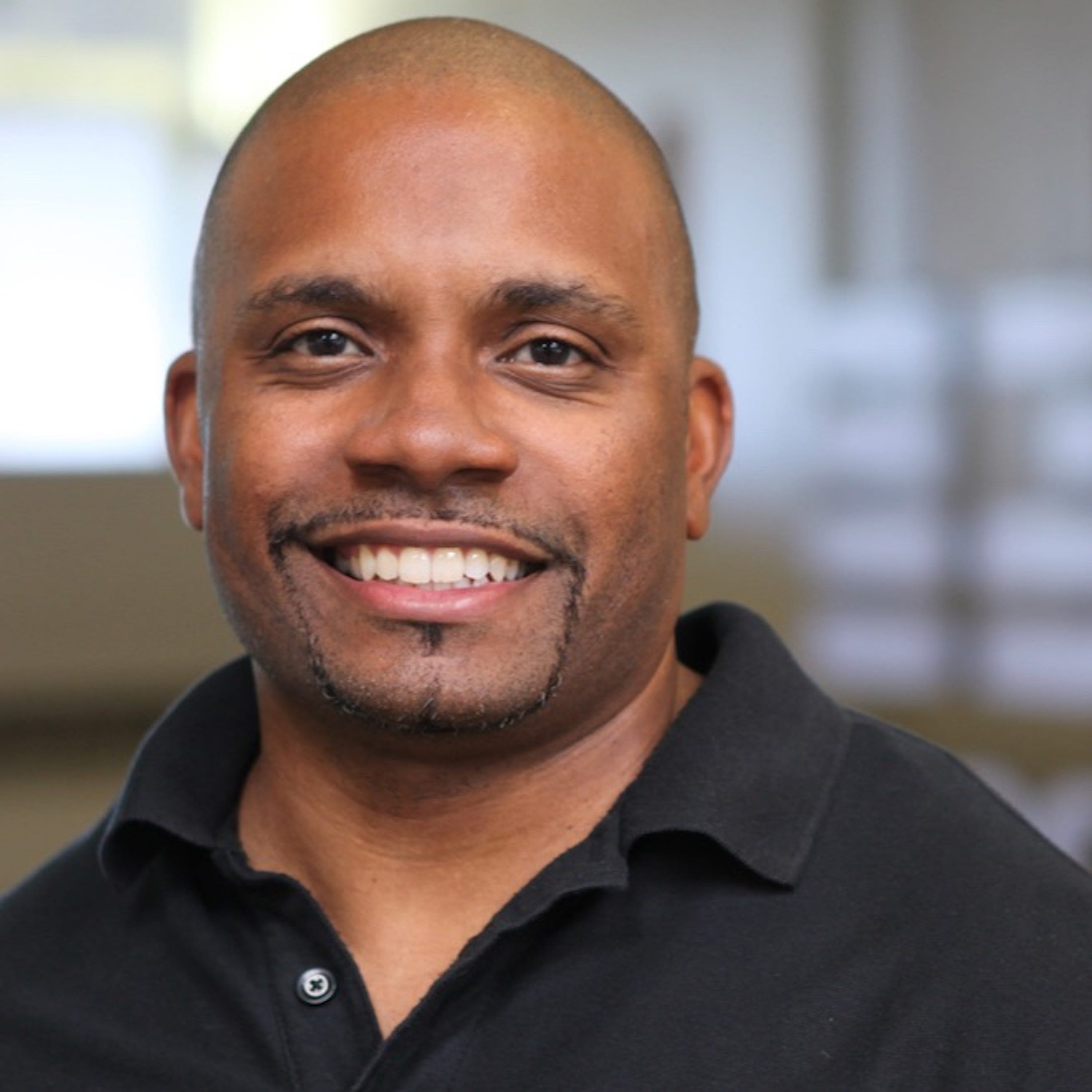
Welcome, everyone. This is Ali Amagasi on Cloud Unfiltered. Today, we are happy to have a guest that I saw several months ago, and I was so impressed with him on stage that I asked him to be on the show. It's been quite a while, and we're so excited to get together with him. His name is Tony Campbell. He's with CoreOS, and he is their Director of Field Engineering. Welcome, Tony. Hey, thank you. So glad to be here, Ali. I really appreciate the invite. It's good to hang out with you and Valor today. Great. Thank you for being on. And naturally, as always, Valor is here, or as sometimes. I shouldn't say as always. As sometimes, Valor is here to provide a technical perspective and enrich the line of questioning. So thank you, Valor, for joining.
There. Hi, Ali. Hi, Tony. Hi. Hello. So Tony, if you've heard this show before, the way we typically like to start is we want to find out what was your path to tech? Why do you work in this industry? How did you get here? Was it a passion from the time you were in diapers or did it start late? Oh, wow. My path to tech. So it all started because I wanted to be an actor.
Okay, not the typical path that we hear. Yeah, I thought I'd throw that out at you, right? But yeah, I've had a very interesting path and journey into tech. I grew up in Silicon Valley, grew up in the Bay Area, a little town called Redwood City, so all those big companies were around me. Had an opportunity to intern with those companies, but I thought I was going to be an actor, right? So I was going to theater, right? But on the side, I was doing a little work with a company out there and got to get exposed to programming. Started learning about webpages, and I was like, that's cool. That seems like a creative outlet. You know, the actor side of me, the creative side of me. I thought I could do some creative stuff with technology. So I started programming.
Started learning HTML, CSS. Then I got into this programming language called Code Fusion. I should say programming language. So I did Code Fusion way back in the day. And then turned into working for Hitachi and doing some Java development for them. Went to a startup back east and just started getting pulled more and more into the vortex of technology and software development. And before I knew it, the money was pretty good and the acting money was not. So I ended up just doing software development for a bunch of startups and eventually landed at Rackspace where I was doing work for them, software development for them.
and was there through the whole cloud journey and spent many years there, 14 years there to be exact, and then was excited about a new opportunity here at CoreOS where I could join another startup and kind of get in at the ground floor again and help them on the awesome mission that they're on today. So here I am. That's awesome. Hey, Tony, one of the questions I think everybody's going to want to know, where can we see your asking chops now today? Is there anything? Yeah, great question. So I did stage. I did theater. I worked for a professional theater company in the Silicon Valley called TheaterWorks. I did several shows for them.
But most of my stuff is on stage, which means that you can't record it. So you've got to take my word for it. That's funny. Your path to tech makes more sense than probably most people have been on the show, right? You grew up in the middle of it. It's more like, how did you avoid it? How could you have avoided it? You would have had to actively be trying to avoid it to not wind up there if you were in Redwood City, for crying out loud. I used to live on the peninsula. So I know how it is. You drive down the highway, and you're passing every big-name company there is.
It's just the way it is out there, yeah. Well, I'm a firm believer in the creativity aspects of programming, right? And so you have that in acting and then being able to take that. I mean, you still get that creative outlet inside the programming. I found that very true with musicians as well. So even though it may not seem like a natural fit, it seems like it actually goes very well. It is spot on. I've seen the same thing. So I've had the opportunity to interview and hire a lot of people in tech in my career. And some of the best folks that we bring on are those who have a music background, an art background, a theater background. Something about their ability to think creatively plays really well in the tech space.
Cool. Hey, I know you have a lot of interesting things to say about Kubernetes containers and managing them. But before we go down that path, I do want to ask you about OpenStack since I saw you at the OpenStack Summit. And you've obviously been involved in it for quite some time if you were a rapper for that long. What are your thoughts on OpenStack? You know, we've been asking that question of a few of our guests lately. You know, Ben Keeps was on not very long ago. And he said, hey, just because it didn't turn out how everybody thought it was going to turn out doesn't mean it's dead in any way. It's very much a necessary component of the way service providers are delivering their clouds and running their clouds and different industries that it's very useful. And it's just there's different players now.
Other people said it's done. It's just kind of hanging on. It's over. What's your thought on it? Yeah, so first of all, I love OpenStack. I mean, it is a part of who I am. I spent so much of my time working in that community and helping all the great folks to bring that community to where it is today. The reality is, I think one of the strengths of OpenStack is its ability to pivot. There's been so many different things that have come at that community, and they've just been able to pivot and kind of roll with the punches. And I think we're at that stage now in the OpenStack community where we're continuing to define what is our sweet spot and what should we really focus on. I do think a lot of the excitement around the community brought a lot of players on board.
doing a lot of different things where we may have lost some focus. But I think we're starting to solidify around our IaaS platform and what OpenStack is really good at. And in my new role, I find it quite interesting to see how Kubernetes and OpenStack now are being played together a lot, where there's a lot of customers trying to use those two technologies together. Love OpenStack, and I believe in their ability to figure it out and kind of roll with the punches. What about them moving away from the Big Ten? I heard that recently, that they're kind of stepping away from that. Do you think that's smart? It's interesting because I remember when the Big Ten was announced, oh, here's the Big Ten, it's a new thing. And I was like, just kidding. But yeah, I do. I do think it's smart. I do think focus is going to be key for OpenStack. And being able to define what is OpenStack and to be able to focus on those core deliverables, I think it's going to be key for the success of the company, or the project, sorry. Cool. Cool.
All right, so I appreciate you going down that path with me. So let's talk a little bit more about the technology that you're focused on, which I know is Kubernetes, right? Yeah, correct. Go ahead. I was going to say, yes, so Kubernetes, so coming from the OpenStack world to Kubernetes, it was really an eye-opener for me. Because the one thing about Kubernetes that has really amazed me is that...
probably because so much of it was developed under Google, but the way that things just kind of fit together and flow together and just work very cleanly. That was a really nice surprise when I started working with the Kubernetes technology, how far along it was as far as just usability and things just kind of working the way you expect them to work. Yeah. And what has your involvement been? So what are you doing with Kubernetes? What is your company doing with Kubernetes? Glad you asked, Ali. So as you mentioned, I work for CoreOS. And what CoreOS is, we have an enterprise Kubernetes offer. But our roots to Kubernetes go back many years, long before I was there. And so we started our company with a product called Container Linux. Back then it was called CoreOS. That was actually the name of the product. And it was an operating system that was designed for running containers. So it was a real stripped-down operating system with a kernel.
And everything else was supposed to run on top in containers. So there's no package manager. You weren't pulling down libraries. Everything was intended to run inside of containers. So that's where we started. In order to start Container Linux, we needed a way for distributed computing for all of those nodes, all those containers to be able to be orchestrated and talk to each other.
So we had a product called Fleet. This is before Kubernetes became open source. So it was very similar to what Kubernetes was, but we were trying to roll our own. And then Google said, hey, take a look at this thing we have. We're going to open source it. And we're like, ah, there it is. That's what we needed. That's what we were trying to build. We're going to pivot and go to that. But some people may know CoreOS as the creators of etcd. So there's a ton of open source products we've created. But one is etcd. And etcd is an open source key value store that powers all Kubernetes clusters. So state for every Kubernetes cluster is stored in an etcd database. And that's a piece of open source software brought to you by CoreOS.
Got it. And I can go on and on and on. Like, you know, because everybody's using it for Kubernetes. And so you guys just, it was like a swap thing, right? We said, all right, we'll take fleet out and put in Kubernetes. And then I guess give you guys that CD. But so.
Kubernetes was based on NTD, though, already, right? Yeah, the folks in Google, as far as I understand, were, I don't know if it's after it went open source or if they were using it internally in Google. That I'm not sure of. But from the very early days of Kubernetes, it's always been based upon NTD as its key value store. And that thing has grown and scaled very well. It is open source, but lead developers with CoreOS. And we're working really hard to keep that thing scaling for all these Kubernetes clusters that are using it. Yeah, just.
It's really cool technology, yeah. So, you know, I mean, you hear a lot about containers. We're hearing it all the time. I don't think you can avoid it at OpenStack or any other conference these days. It seems like half the tracks are about containers. Yes. And Kubernetes is certainly emerging as one of the most loved flavors of containers. So if containers are so great and they allow all this continuous development and continuous innovation, why do you need to do anything else to them? What are the challenges that are inherent with containers that make management platforms interesting? Yeah, so the thing about containers is they're often married with this idea of microservices.
Now, they don't have to be, right? You can have a container and take a monolithic app and plop it in that container and you'll go about your way, right? But usually they are coupled with microservices, meaning that we're taking our applications, right? And we're breaking them down into smaller components. So that means there's a lot of little containers running all over the place, right? Where I might have one nice big VM before.
Now I've got a ton of containers running all over my infrastructure. How many is a 10? Say you had a big old app. What would be a typical breakdown? Does it become 20 microservices? Does it become 100 microservices? It certainly could. It depends on the application. If you think about your application and all the distinct functions that that application serves, so if I have 20 different functions in my application or 30 different functions, each of those is going to be a container, right? And then I want HA, right? So it's not going to be just one container. It's going to be multiple containers for that function. Good point. So we grow exponentially, right? And so that's great when you have a ton of containers, but how do I...
How do I control all these things? How do I track them, orchestrate them, right? So this is where Kubernetes comes into play. I know when I first started playing with containers, I was like, cool, I'm going to write an app and put it in a container. I was like, OK, now how do I get this to production? And how do I monitor it? And how do I scale it? And all those questions come into play. And that's where Kubernetes comes to the rescue, because it has all that capability baked into it, which I think is really exciting. It becomes a platform for managing this massive fleet of containers. And I can do it the same way across all my applications, a standard API.
So this is why everybody's just so excited about Kubernetes and its ability to truly have an impact on the enterprise. Nice. So it makes it easier to scale. Does it remove any of the tedious setup requirements? Or when you're working in a container, I assume you have to do something to get it set up, ready to use, and to deploy. Does Kubernetes kind of offload any of that, or is that still something you have to do? Yeah, so containers are based upon images. So it's another shift in thinking, I believe, too, with containers. So before containers, when we were working with VMs, you would stand up your application. And after the application was up and running, it wasn't uncommon to reach into that application and make changes. The application was mutable.
It was not off limits. You could use Chef or Puppet or Ansible to go in and configure it. But even after that, you would sometimes shell into that application and change the configuration. You would actually make changes to the app. And we've moved away from this with containers where things are now more immutable. So once the app is running, you let it run. If I need to make a change, I destroy that container and bring up a new container. So to answer your question, with containers, we're using these images, which are ideally immutable. If I need to change that image, I create a new version of it, a new tag of it.
So all that's still the same. There's not a whole lot there that I'm getting from Kubernetes that allows me to manage those images. Now, I will say that CoreOS has another open source project where we have a container registry, and we offer that container registry as a SaaS and also as an enterprise product called Quay. But there's a ton of container registries out there. Quay. Quay, key. No, Ballard, are we losing you?
Oh, come back. We've almost got you back. Oh, there I am. Yeah, I've heard it pronounced key or something, but quay, that's how we're saying it. It's supposed to be key, right? It's a nautical term, I think. And I think proper pronunciation is key, but everybody calls it quay. So we're kind of stuck with it. We're kind of giving over to the colloquial kind of pronunciation. Correct. That's funny. It's like Ubuntu or...
Ubuntu? Yeah. Yeah, I was in South Africa teaching a class, and they were talking about, I'm saying Ubuntu, and they were saying, no, it's Ubuntu. So I still don't know if I say it right, but there's a way to pronounce it, right? Yeah. Sorry, please continue. That's okay. I think you did a great job of helping me understand that, kind of, what Kubernetes brings to the table versus maybe other containers and what some of the challenges are with managing them.
So if that's the case, then what does CoreOS bring on top of that? You may have touched on it at the beginning, but now that you've broken it down, what's the next thing that CoreOS is adding that's making it easier? Yes. Great question. Great question. So there is a ton of goodness in Kubernetes out of the box that is available to everyone. And so what CoreOS does is there's a few things that we do with the upstream code base to kind of make it a little more enterprise-ready. So the first thing I'll point out is that our product is based upon pure upstream Kubernetes. So we bring down Kubernetes, and we're basically wrapping our products around it. So there's a couple things we do. First thing, we have an installer.
But Kubernetes, there's multiple ways to install it. You can do it by hand, or you can use a bunch of open source installers out there. But we have an installer. And it's a part of our product called Tektonic. So it just makes things a little easier to install. So that's one.
Second is once you get this thing installed, an enterprise is going to want to make sure that their identity, meaning their users, those users' roles and permissions, all that can be tied into the cluster. So we allow for you to connect your LDAP or your OAuth and be able to connect that to your Kubernetes clusters. So those same groups that you have in your LDAP system, you can use them within your Kubernetes cluster. So that's one of the things we bring to the table for you. Also, we bring the ability to do automated updates, not automatic.
but automated updates, right? So what we find is a lot of people want to do DIY Kubernetes. So say, hey, I can do this myself. I bring down Kubernetes, and they're all happy, and everything's running great. Then they get to the point where they need to upgrade the thing, right? And that's where things can get a little sticky, right? Upgrading can be a pain, right? What we offer in Tectonic is automated updates. So our customers are literally able to go into our console, into our GUI, and when a new version of Kubernetes comes out or a new version of Tectonic comes out, our customers are able to push a button and have their cluster completely upgraded.
Now, behind that button push is a ton of technology in order to make that happen. So our whole stack is built up on the premise of being able to do these sort of updates. So we use our own operating system at the bottom, which is Container Linux. And then on top of that, we roll these operators, which is the ability to basically do operational tasks. We've actually built that into software and technology. So things like upgrades and backups, they're built into the software. And that allows us to upgrade our whole Kubernetes stack with a push of a button. We could have 16 podcasts about this, but that's the core concept of what we do.
is the automated updates. We're able to connect you to your LDAP, some monitoring that you don't get out of the box with Kubernetes, where we're using Prometheus, but we'll set up monitoring alerts for you, graphing, things like that. So it's just more enterprise, more features that enterprises want. We'll try to build those in out the box with Kubernetes. Yeah, like Kubernetes is a project. Tectonic is a product. Correct. And so it takes that product and does it. And one of the things I love about CoreOS, I think with Bootcube, you guys were like the first ones that I know of to actually run Kubernetes services as containers, at least widely publicized. And so I thought that was cool. Maybe some of this technology is made possible because you're running those services in containers. But tell me more about operators because I don't understand that very well. Sure, sure.
Is it just a tectonic or is it something that's inside of Kubernetes? Yeah, so great point. This gets back to the DNA of CoreOS. We are really about open source, right? That's real key for us. And to your point, we're one of the first companies to start doing self-hosted with what you described, running the Kubernetes control plane as containers within the actual cluster. So other people are doing that now as well. Another thing that we kind of pioneered in the community is the idea of operators. And operators are simply a design pattern in Kubernetes. So in Kubernetes, a very common pattern we have is the controller.
or the control loop. And the idea of a controller in Kubernetes is you have this desired state. This is how I want things to look. And then you have this actual state. This is how things look right now. And what a controller does is the controller looks at the desired state and the controller looks at the actual state and tries to reconcile the two. So for example, if I said, I want to make sure I'm always wearing a blue shirt, a controller would watch me and say, OK, I need to make sure Tony's always wearing a blue shirt.
So as soon as I take off the shirt and put on a red shirt, the controller will walk over to me, take off that red shirt, and put the blue shirt back on, right? This is what the controller does. It's constantly saying, you want it to look like X? I'm going to make sure it looks like X, right? So is that different than like a deployment or replication controller? Yeah, great point. So my point is, yeah, we see these in Kubernetes all the time. You're exactly right. That's how a deployment works in Kubernetes. When you tell Kubernetes, I want three replicas of my application running, right? Kubernetes has this control loop that's watching the cluster. And anytime there's not three replicas of that application, that controller takes action.
to make sure those three replicas are always there. That's the controller doing that. So yes, that's common within Kubernetes. So for operators, here's how those work. All an operator is is a custom controller and a custom resource definition.
So if I go to Kubernetes and say, let's talk about resources real quick. In Kubernetes, resources are things like pods, deployments, config maps. These are resources in Kubernetes, right? There's a bunch that come with Kubernetes. You can also bring your own resources. Ah, like networking or storage thing. Or Tony's blue t-shirt, right? Or Tony's blue t-shirt. I could do that, right? I could create a custom resource definition that was called Tony's t-shirt, and I would be able to go kubctl, get Tony's t-shirt.
And the Kubernetes API would come back and tell me about my T-shirt if I put that custom resource definition in there, right? So all an operator is is a custom resource and a custom controller that is making Kubernetes control the state of this new resource that I'm bringing in. So let's make it a little more practical and get off the T-shirts real quick. We told you that etcd is the data store that stores all the Kubernetes state. There are certain things you have to do to keep etcd healthy. You need to be able to back it up. You need to be able to add members to the etcd cluster or remove members from the etcd cluster. Traditionally, a system administrator would go in and use command line tools to add and remove those nodes to an etcd cluster.
What an operator does is it creates a custom resource, which is an etcd cluster resource, for example, and a custom controller that is watching that etcd resource. And if one of the nodes gets sick and, say, it goes away, my controller says you're supposed to have three nodes. My controller goes and corrects that node and brings in a new healthy node, right? But it does that in an etcd way. It does it the way that etcd needs you to do it.
Yeah. It has that operational knowledge in it. So that's what the operator is. Yeah, just extending these resources beyond what traditional Kubernetes, I guess, would do. And you can make it so it can basically extend into anything. Spot on. That's exactly what it is. That's exactly what it is. So, Tony, do most customers come to you knowing, going, this is a pain point. I need this resolved? Or is it more of an educational, are you still early enough in the cycle that you're educating people about, hey, look, this is how things are, but it could be so much easier and so much better if you use this tool?
Yeah, I believe that we are in the educational phase. I think, look, technologists are super smart, right? So there's always this idea that I can do this stuff myself. So what I described about recovering a failed NCD cluster, like any sysadmin can get on the command line and they can do that themselves, right? And most people are accustomed to operating that way. What we are trying to put forth is that there's a way to take all that knowledge that you have and automate it so that the software just does it so that you can move on to higher level concerns, right? So it's definitely an educational phase right now. A lot of people are like, CoreOS, I don't need you. I can do all that stuff myself. It's not a matter of ability.
It's a matter of automating it and getting you off of that stuff. Interesting. So do you go out? Are you speaking a lot at a lot of events? In fact, I think your role used to be training or something, wasn't it? I do both now. You do? Yes. So at CoreLS, I head up the teams that do field engineering. So those are our teams, but we send field engineers out to our customers. They sit side by side with our customers and help make sure they're successful in technology. So that's half of my group. And then the other half of my group is the educational services group. So this is the group that goes out and it trains customers on Kubernetes, on Quay, on Container Linux, all that good stuff. So I get to play both roles. That's really cool. That's really, really neat. Does that mean a lot of travel?
It means a ton of travel. So yeah, just hit platinum on American Airlines. Yeah, just a ton of travel for sure. I can imagine. So one of the places you've gone to was KubeCon last week or the week before. Yeah, it's all jumbled up in my head, yeah. It happens twice a year, once in the U.S., once in Europe, I believe. And so the one in the U.S. is usually in December. So you were there. Tell us about it. What are takeaways, cool stuff you saw, things that excited you? Yeah, right, right. Yeah, so that was, believe it or not, that was my first KubeCon. So never been to one before that. But as I understand it, that show was a lot bigger than the shows they've had in the past, which I think is really exciting. I heard that before they would have between 1,000 and 1,500 people.
And this was north of 4,000 people. Oh, wow, yeah. It wasn't that big. Yeah, so that's what I think I'm most excited about is that I feel like, I'm a little biased, I feel like Kubernetes has won in this space. The fact that everybody's coalescing around this technology, Kubernetes is the winner for container orchestration. We see companies getting on board all the time. The last big company to join the bandwagon is Amazon.
So they are on the bandwagon now as well. So that's what excites me is that we've coalesced around this technology that Coral West had been on years ago, way before I was there. They kind of saw it. They have this awesome ability to kind of see where the technology is going and kind of skate to where the puck is, right? Yeah. Where the puck is going. So it really excites me to see that that is all coalescing, coming together.
In some regards, it's starting to look a little bit like OpenStack. Look, there's a lot of vendors jumping into the water, right? So we just have to make sure we manage that. And I think the governance model around Kubernetes is really going to help us manage that and maybe learn from some of the lessons we saw in OpenStack. Yeah, tell me about that. I mean, why is Kubernetes not going to turn into another OpenStack? I mean, if that's a bad way of looking. I've heard people mention that before. Yeah, yeah. I think the board, the leadership around, the technical leadership around Kubernetes is the group, I think it's a smaller group, focus group, where I think in OpenStack, a lot of folks would, if you came up with a new project.
PTL, Project Technical Lead, and begin to exert some leadership influence. So if you want a leadership influence, you just create a new project, and you kind of got in there, right? Where I don't think we are incentivizing Kubernetes just to create new stuff just to get leadership roles, right? So I think just the way they have that governance model set up will help us avoid some of the project sprawl that we saw in OpenSeq. Yeah, and I don't see that inside of Kubernetes. Like, you know, there's Nova, and then there's Quantum or Neutron and what it turned into, and then, you know, I mean, it's just there's... And...
I don't know if I go about splitting that off like they did with OpenStack. Yeah, I think it's definitely set up in such a way where we don't see that happening. If there's one issue we're trying to solve around, it seems like people coalesce together and work together to solve that issue. Whereas in OpenStack, it's kind of like we would create competing projects and whichever one won just kind of won. But you have two projects doing the same thing or three projects doing the same thing. Right. Yeah. So where are we at right now with Kubernetes? Is it 1.8, 1.9? Yeah. What's new in it and stuff that's come out that's cool?
That makes me think, okay, now I got to go away from whatever other container management thing I was using before to go to Kubernetes. You know what? I think some of it is just plain peer pressure, right? You start to see all these companies that are saying, oh, we're going to Kubernetes. And I think if you're the one company that's not using Kubernetes, there's just some of that like, oh, wait a minute. Like everybody's running that way. Maybe I should be going that direction as well. But I think it's getting more and more stable. I think it just works, which is the amazing thing for me about Kubernetes. It's like you don't have to fiddle with it a bunch. You don't have to do a bunch of tweaks and hack on it.
It works as advertised, which is really exciting. And it's the same on-prem or in the cloud. It runs. You can get the hosted services on-prem, naturally. Yeah, it scales. I mean, we know it scales because Google uses it, right? So it's just real powerful in that sense. Are you guys doing anything with the federations and stuff with it? I haven't really been keeping up with that at all either. I mean, is there stuff going on there?
federated Kubernetes clusters? Yeah, so one of the things that we are working on in our roadmap, and this is CoreOS specifically, is we're working on multi-cluster, which is basically the ability to manage multiple Kubernetes clusters. It's very similar to Federation, but I think we're still trying to shake out which way we're going with Federation. But CoreOS is working on multi-cluster, so you have multiple customers. You'll be able to see them in a single pane of glass. I'll be able to take my RBAC rules.
and be able to federate that across all the clusters. So they're all working with the same permissions. That's right now. Stuff our customers are asking us for, but it's still on the roadmap, not landed yet. approaches that different people are taking then to managing multi-Gubernetes clusters and there's one blueprint that's won yet? Or has that already happened? Yeah, I don't know if there's a clear winner yet. I believe there's a blueprint out there that people are looking at. I don't think what we're doing at CoreOS, I think we're still working to figure out if that blueprint is best, if we need to tweak that blueprint. So it's still in that kind of flux. And so we're trying to code some things and try to make some prototypes so people can see what our point of view is on it. And then we'll see the best approach wins in the community, which is great.
So I'm hearing a lot of goodness here, like a lot of Kubernetes happiness, good conference, good community. What's the darkness? What's the threat to Kubernetes? Is there anything you can see out there that you're like, that looks a little dangerous, I don't know. Okay, let's see. So I think here's one thing that I think folks should be looking at and a little worried about. So everybody's getting on the Kubernetes bandwagon. Great. But as folks begin to build out the Kubernetes offer,
The question is, do they begin to build things into that offer that ties you in to their flavor of Kubernetes? And then when does their flavor of Kubernetes start to diverge from upstream Kubernetes so much that you're on this kind of island where you can't navigate away, you're kind of locked into that particular vendor's interpretation of Kubernetes? So I think that is a big concern. The whole thing about containers is portability, right? I got these containers so I can move my workloads around. If you shackle me to your Kubernetes cluster, as an end user, I'd be concerned about that. That's something I'd be worried about.
Is there really an answer for that, though? Because that would be the same with kind of every open source project, right? There's a vendor. It's always full of vendors. Like you said, the conference itself, suddenly there's a lot of vendors there. Yeah, and that's what those vendors want to do, right? The vendors, they want their product to be sticky, right? That's what they want. They want you to consume their product and to be able to kind of stay with their product and not move, right? So find a Kubernetes user. Is there a way around that? Do I have to do it homegrown?
So yeah, I think the way around is for whatever Kubernetes vendor you go with, product you go with, make sure they are as close to upstream as possible, right? And if you start to use features that are not a part of the upstream product, that's where you just need to be aware of what you're doing, right? Be aware that if you leave this vendor, you lose that feature, and are you okay with that? Right. So it's a matter of going in with your eyes wide open. But it is Kubernetes, so to the benefit here is it's predicated on being able to move those containers around, right, and to be able to do hybrid clouds.
on-premise and off-premise, right? So keeping that in mind, I think is a good answer for it. Yeah. Do you see many people doing Kubernetes on-prem or is it mostly they're doing it in the cloud or what do you see out there? Yeah, great question. We are seeing a ton of on-prem use cases. So we see primarily our customers are running on either AWS, bare metal.
or Azure, right? But the bulk of them are running AWS bare metal workloads. A ton of folks out there who are deploying this in their own data centers, even have some customers that are deploying it in like AirGap data centers where they don't even touch the internet. It's just all in their data center with no outside access. So that's happening as well. Bare metal is a big, big use case for this particular technology. So yeah, definitely seeing that. Very cool. Yeah, that's really interesting.
So having spoken quite a bit about containers and Kubernetes, we don't have a ton of time left, but is there anything else that you're excited about that's going on in the tech industry right now, other developments? We're certainly hearing people comment on AI and how that's impacting things from security to storage and all that. Is it that, or what are you excited about right now that's on the horizon, Tony? Yeah, I mean, I think those hot-button topics around AI and machine learning, all that stuff is really exciting from a futuristic perspective, right? When will the robots come and start to make our lives a little bit easier?
The amazing thing is, too, how much of this stuff is running on some of the technologies that we're creating. That's always exciting. When we're working with things like OpenStack or things like Kubernetes, and to hear that some of these companies that are working on AI and machine learning are using these technologies to push those things forward, that's always super exciting. I'm actually excited about... some of the stuff that is happening in countries where we don't really see them as technology leaders. So I was watching a TED Talk not too long ago and they were talking about in the continent of Africa how they're starting to use drones to deliver blood to hospitals throughout the continent. I saw that one. It was great. I was going to make my kids watch it. That was super pumping. I mean, I think that was awesome to see.
to see them using technology in a way that we're not even using it over here in the States. No, they said. Really creative. Yeah, they said, hey, you guys, you should be proud of yourselves. We figured this out here. And in the US, they can't figure this out. The rest of the Western world can't figure this out. But we're dropping blood right on hospitals on time. We're saving people's lives. We're not wasting blood product. They hadn't destroyed one unit of blood. Didn't they say that since they started? They had to destroy one unit of blood. Because that's the alternative, right? Is you send enough blood to be sure you're covered no matter what. And if you do that, for sure, you're going to have too much. You're going to have to destroy some. And blood is a precious commodity. But with this drone delivery service, it's on demand. How cool is that? Did you see it, Val?
I did. I can watch it now. It's cool. That sort of thing excites me. I love when technology meets humanity and I can really have an impact like that. That's what's awesome. Yeah. I think that is exciting. And they don't have that kind of legacy stuff to leapfrog over, right? They don't have to kind of move all that stuff out of the way. It's kind of big greenfield, right? Yep. Yep. Quite literally. Yeah. So that's exciting. Cool. Val, do you have any more questions for Tony before we wrap up?
No, Tony, I really appreciate the time you spent with us. Interesting insights into Kubernetes. I learned a lot about operators and stuff like that, which I hadn't known before, and I think a lot of our listeners would have got – I hope a lot of our listeners got a lot out of that as well. Yeah, thank you very much. We really appreciate it. And if any of our listeners want to follow you on Twitter, what's your Twitter handle? I'm at TonyOnTopic. It's TonyOnTopic. TonyOnTopic. We already know that they cannot find you apparently on video in any of your acting forays. What about your next event appearance? Will you be speaking anywhere we should know about in the near future?
Yeah, you know what? We did do a workshop at KubeCon, so y'all missed that already. But we'll see what's coming up. I've always got a bunch of prospects that I put out there, so if you follow me on Tony on Topic, I'll go ahead and let y'all know where I'm at. Great. If you need somebody to come talk for a little while, give me a call. I'll come speak wherever you're at if you're running an event, so let me know. Nice. Well, thanks again, Tony. We really appreciate it. Thank you, Tony. And we will do a terrific holiday. Thanks for both of you. Had a ton of fun. Thanks for having me today. All right. Bye-bye, everybody.