
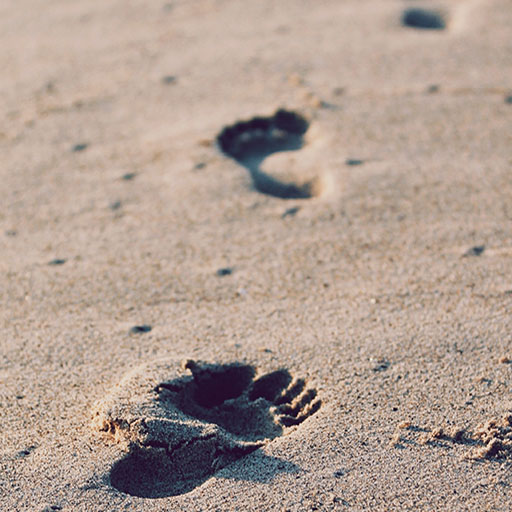
Welcome to the Movement Movement, the podcast for people who want the truth about having a healthy, happy, strong body. Remember, your body was meant to move. Now here's your host, Stephen Sashin. You may have heard that running barefoot is actually better for you than running in shoes.
Is it true? No, no, no. Let's find out. You can discover that for yourself.
Welcome to the Movement Movement, the podcast for people who love the truth about how to have a healthy, happy, strong body and let your body do what it's meant to do which is move and enjoy doing that. We're going to be cutting through the mythology and the propaganda and the advertising and marketing sometimes the outright lies that you hear. So, not what it takes to walk, to run, to hike, to do yoga, to lift weights, to do whatever your body likes to do, how you can do it better and have more fun. I'm Stephen Sashin, CEO from zeroshoes.com and I'm happy to have you as part of the Movement.
If you want to be part of our Movement, and I say it's a Movement because we are literally trying to make natural movement the obvious, better, healthy choice the way people think natural food is right now. And if you want to be part of that, go to jointhemovementmovement.com and subscribe. In fact, you can subscribe, like, share. If you're on YouTube, hit the little bell button so you can hear about upcoming podcasts.
You can whatever it takes to join this Movement and to share that with other people so that we can really make it a thing. So, let's back up to this whole idea of Bear for Run. Back in 2009, a book became, sorry to become, pretty popular called Born to Run, written by Chris McDougal and it's about the time about Indians in Mexico who are a tribe that they live very primitively. What they're known for is running super long distances, totally either, totally barefoot or in really thin sandals.
They call it la jay, which is just a Mexican or Spanish word for sandals. But they're la jays, they make, they're made with a scrap of tire, sometimes leather on top of that and leather lace that wraps it to their foot. Really, really simple sandal. A design idea has been around for almost 10,000 years and they run enjoyably for, oh gosh, 10, 20, 100 miles well into their 60s, 70s and beyond.
They have a running game where everybody in the village or a village will run for, you know, 20, 30 miles, sometimes for days at a time, which just seems unheard of. They became popular. There's a high altitude ultra marathon here in Leville, Colorado, Leville, 100 miles and they won this race. The first time in Marache is the second time they were sponsored by a shoe company.
They couldn't wear the shoes, they kicked them off and many of them finished the race barefoot. So, this whole idea that came about the title of the Indians and also in the book, there's information about the research about natural movement and bear for running. They just really started to spark a lot of interest in people. I think there was also a bit of an anti-corporate mentality that was going on around that same time and it's still going on that made people start to wonder, are we really getting the truth from big shoe companies or from any company, frankly?
And so, 2009, 2010 is when this book started to become popular and the idea of barefoot running started to take off. Now, my wife and I started zero shoes back in the end of November 2009 and what we were selling was to do it yourself sandal making kit. It was similar to the one I chased from the title, Marve, Wayfiner and actually more barefoot. It's a little bit of rubber under your foot, some lace to strap on your foot, a million different ways you can do that so you can make it either functional or fun or both and just instructions on how to run barefoot.
What happened? It was really amazing. The reason why I was surprised is in late 2009 or late 2010, the major shoe companies and shoe sellers started putting out a whole bunch of content, videos and articles including native advertising where it looked like it was an article written about this whole idea of barefoot running that was really an ad put out by the shoe companies. It was saying, whoa, whoa, whoa, you don't want to run barefoot.
If you take off your shoes and run barefoot, you're going to step on hypic dermick, eagles, and catchy bola and your kids won't get into college and your mortgage rates going to go up and you'll never be able to find pants that match that shirt. It was just unbelievable. They were, frankly, they were freaking out with the idea that suddenly people were going to realize that just like humans have been doing for thousands of years prior to the advent of modern running shoe, you don't need those things. You can run barefoot totally fine on almost any surface once you get used to it or just a little bit of protection you can cover yourself from 95% of the rest of them.
So, do you want to start running barefoot? Now, I'm not going to actually even tell you whether you should or should. It's really up to you. If you're having a great time running the shoes you're running in now, knock yourself out.
If you are having some injuries or some injuries, I don't mean just in your feet, maybe ankle, knee, hip, back injuries, maybe you want to explore this because the idea behind barefoot running isn't about being barefoot. It's not having natural form. It's not using your body the way it's supposed to be used. You have a natural spring and shock of your mechanism built into your body.
It's called everything pretty much from your nipples down, but especially your hips, your legs, you have muscles ligament and tendons, so the natural springs and shock of slivers. You have more a quarter of the bones and joints of your whole body or your feet and ankles, more nerve endings than your soles than your fingertips and your lips. That means you're supposed to use these things. They're supposed to bend and flex and move and feel.
If you don't let your feet do their job, which is not bending and moving and flexing feeling and balancing by sending information to your brain about how to balance, then that function tries to move up-screen into your ankle, your knee, hip, and your back, and that's why it can cause problems. So if you want to explore a natural movement, you eventually probably want to take off your shoes and feel the world. I know some people who call themselves barefoot runners who've never actually had their bare feet on the ground. Anyway, if that you can wear a super minimalist shoe like what we do with zero shoes, this is our pre-o, just five millimeters of rubber between the other round.
But I highly recommend that whenever you can go barefoot, in fact, I'm not here to try and sell you zero shoes. My recommendation is do whatever you can to go as barefoot as you can. As often as you can. I just want to tell you, if you want to experiment with barefoot running, here's a way to do this.
Now, there may be a time when a friend of mine, Dr. Irene Davis of Harvard, hears this podcast and argues with me. I'm going to tell you why she argues with me and you can actually do this with this, what you will. Irene has almost had 100 people go through her lab and what she does with people is she has them do specific foot strength exercises for a number of weeks first and a lot of walking barefoot first before she has anybody run.
I'm not saying that's wrong. I'm saying it's actually a great idea. In fact, if you want to find those foot strengthening exercises, you can pretty much just look up on YouTube for example, just going to search for foot strengthening exercises and you'll find a bunch. Here's one that's a really easy one.
You can probably do sitting right now. Just put your feet flat on the ground if you can and just press your big toe in the ground. Try and relax your other fore toes and just press your big toe. You're trying to engage the arch.
You're trying to do an isometric contraction with your arch. Just give it a good press. Hold it for a few seconds. Relax your foot, make cramp.
It does. It does. Slowly push into that and then it gets to be too much back off a little bit for three seconds. Just do that whenever you get a chance.
You can do it while you're sitting. You can do it while you're standing. I do this while I'm doing the dishes all the time actually. But there are other foot strengthening exercises you can do.
Walking barefoot is in fact a foot strengthening exercise. Some research came out from Sarah Ridge at BYU showing that people who just walk barefoot in a minimalist shoe, one zero shoes, got the same foot strength. I'm almost the same foot strength as people who explicitly did foot strengthening exercises. Unfortunately, this research, they didn't test people who did both walking in the most footwear and doing foot strengthening exercises.
But there's a lot of reasons to believe that that would be even better for you. I read as you do all of this before you run. Now, my argument to Irene is that you can do all the foot strengthening. That's really important.
There's nothing that really prepares you for running. Running is not the same as walking. When you start to run, it's going to be different. It's going to be easier for you to use your muscles differently than when you're walking when you're doing foot strengthening exercises.
Here's my suggestion of a different way of getting that foot strength and getting prepared to run barefoot. Goes kind of like this. Finding a nice, smooth, hard surface. Running path is really good.
If you're in a place where you can do this, the freshly painted white line on the side of the road, it makes barefoot runners just get all googled because it's super smooth and super soft but not cushiony. It's hard to describe. If you ever get to feel one of those, anyway, smooth hard surface. Take off your shoes.
You want to go barefoot if you can because you're getting the most feedback when you do that. Then run for a very short distance. I mean like 20 seconds. Literally, that's it.
20 seconds. If you're not having fun, if it doesn't feel good, do something different until you are. Now, let me break that down for you. Nice, smooth hard surface because again, that gives you the most feedback.
People like to think, well, maybe I should just go in some grass because that's going softer because that's going to be softer. You don't want to want to try to push off on a foam mattress because you don't get the right force back. Same thing about running. You want to get as much feedback as you can.
Running in grass is actually just like running in padded running shoes. You just move the padding into the world. You don't want to do that. Also, there are everything hiding in the grass that you don't want to step all on or in.
Nice, smooth hard surface. Most feedback, frankly, the safest. Very short run for 20 seconds. I don't think the same one that.
Here's the tree part. If you're not having fun, if you're not having fun, do something different until you are. After you do that 20 second run, see how you feel when it's good? Cool.
Maybe get another day and the next time you go out, add 10 seconds. If you feel good after a day or so, add another 10 seconds. Just keep adding 10 seconds at a time. That'll get you to the distance or amount of time if you want to run.
Fine. Maybe you don't feel fine. What if you feel sore? Okay.
There are two kinds of soreness. The first is just that muscle soreness, like you just used your muscles too much and that may be what you did. Because if you've been in regular bunches for a long time, it's kind of like having your foot in your pants. They don't let your foot bend and move in flex naturally.
Then like all parts of your body, you don't use it, you lose it. And so, using something crazy, there's actually research that I had to have been done to show this. If you use your feet, it can get stronger. If you don't use your feet, maybe weaker.
What a shot. So if you haven't been using your feet for a while, it may just be that you're just using the muscles a little more than you're used to, but a little extra straight on them. And so what you want to do then is relax. Take a couple days off until that soreness goes away.
Then maybe get it one extra bit. And then go out and do that 20 second run again. And just keep doing that 20 second run until you can do it where you feel good. You feel fine.
And then give it one more day and go out again and add 10 seconds. And if that 30 second run is too much, just do the 30 second run until you can do that comfortably and just build up that way. Now, there's a second kind of soreness. It may be that you feel like you hurt something.
Maybe you hurt the skin on your feet. Maybe you feel like calf or Achilles problems. Any of those mean that your form was a little out of way. Now, this is pretty common because if you're wearing a traditional running shoe, I'll get into this in another podcast episode.
The traditional running shoes almost make you run with bad form. In fact, some of them, you literally can't run with anything other than bad form where you're not using your muscles, ligaments, and tendons, and natural sprains and shock slivers, but you're sending giants, likes to force up through all of your joints. And you're actually weakening certain muscles because you're not using them when you run those shoes. So if you have pain in the skin, it means you've applied too much horizontal force.
You're scraping your foot on the ground or you're landing with your foot so far in front of you, it's like putting on braids. So instead, or you might end up still landing on your heel, which you don't want to do because that hurts when you're on your foot. So any of those can cause skin problems, basically friction, abrasion. And the way you get rid of that, actually, when I come back and how you get rid of the side.
So there's the friction issues and then there's less skill level issues. Maybe if you feel like you, again, you used your calf too much or you have some tension in that or some other part of your body. So again, the last part of the instruction is do something different until you're having fun. So what are the things that you can do that are different?
It's always really the same two basic things that go under one umbrella. And the umbrella is relax. Do less. Just use fun as your diet.
Use ease as your diet. Use comfort as your diet. Experiment to see what it takes to be using less effort. And then you're going to have a more fun.
And that literally is the touchstone that you want to work with. Now I'll give you a couple of hints that might speed up the process. One thing that people often do is they over-stride it. You're reaching out your foot in front of their body instead of landing with your foot more underneath your body.
So try to get your foot to land under your body. So it's kind of going up and down rather than out and back. Similarly, they all tend to push off out of that. Like pushing with your foot and using your calf rather than thinking about lifting your foot off the ground by flexing your hip.
When I say flexing your hip like this, this is flexing your hip. So it's not that you're literally just flexing your hip to go off the ground without using your calf or your ankle. You already use your calf or your ankle. You can't initiate the movement.
At least think about initiating that movement by lifting rather than pushing. That would be the less effortful version. And there's one other part that you might want to try is picking up your cadence. And that means how fast your legs are moving, but not how fast you're running.
So there's some research that shows that if you run with a slightly faster cadence, you actually end up applying less force in the ground. Up to a point. At a certain point you become a swinger and you apply more force in the ground. But the gist is if you try to move your feet a little faster, think French one's done.
Start getting a big circle done. If you move your feet a little faster, you actually have less time to put force in the ground, which, well, actually less time, same amount of force, or same amount of weight more force. Let's not get into the physics side. Suffice it to say, if you make your feet move a little bit faster, that can also lead to a little bit easier, less force in the ground.
There's another thought that went along with that one. Oh, it just fell right out of my brain. Oh, think about, instead of landing on your feet, you kind of want to just barely catch the ground with your feet. One image that people use is imagine that your feet are on a wheel.
And your feet are just catching the ground, barely touching the ground. It's a pass over the ground. So that's another way to think of it. So feet underneath you, lifting from the ground, and instead of catching and releasing, just let your feet kind of move across.
You want your feet moving at the same speed that you're moving across the ground. It's one way to think of it. There's a bunch of little cues. Once you watch, remember, let your body move forward and try and have your feet try to catch up with you.
So again, it's kind of Fred Flintstone, ask what his feet are behind him, what he's getting his car going. So there's a lot of little cues. They're all based on this idea. Relax more, use less effort, try and have more fun.
Don't over-stride, get your feet underneath you, and don't push off the ground, but kind of let your foot place and lift rather than push and pull. And again, with all of those, just until you can do that 20 seconds and feel really good, then rest for a little bit, try again. And once you can keep adding 10 seconds, eventually, you'll be running their foot for as long as you want, as much as you want. If you have any questions or comments about that, throw them in at various places, you can put questions or comments.
And speaking of questions or comments, if you have anything that you want to contribute to, the Movement Movement Podcast, send an email to moveat, jointhemovementmovement.com. And go to jointhemovementmovement.com where you'll find out all the ways you can engage with us on all the different social media platforms, including our website. And we would love to have you spread the movement movement. We want to make natural movement be obvious, better, healthy choices, same way natural food is, and we need you to become part of this community that does that.
So I want to thank you for joining me on this podcast. Coming up in the future, we got lies, your shoe stores tell you five ways you can strengthen your feet and how not to get fooled by footwear research and much, much more. So if you want to be part of the tribe, please subscribe. You've been listening to the Movement Movement Podcast with Host Steven Sashan.
Remember to join the tribe and subscribe at jointhemovementmovementmovement.com.