
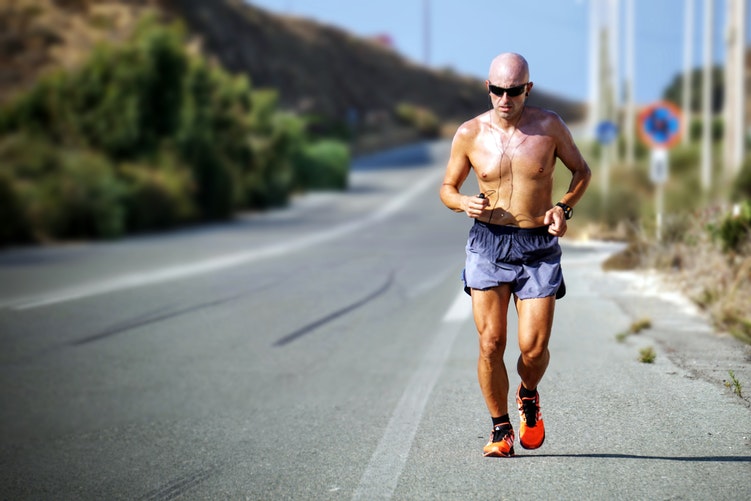
Welcome to the Movement Movement, the podcast for people who want the truth about having a healthy, happy, strong body. Remember, your body was meant to move. Now here's your host, Stephen Sashin. If you're a runner, a walker, a hiker, or even someone who stands up all day and you've got foot pain or ankle pain or knee pain or back pain, clearly you need some padding and cushioning to just alleviate all that stress, right?
Nope, I will tell you why that illusion is so popular now and what's actually true in this episode of the Movement Movement. So welcome to the Movement Movement, the podcast for people who want to know the truth about how to have healthy, happy, strong bodies where we dissect and debunk the mythology and the propaganda and the misconceptions about what it takes to walk or run or jump or swim or lift or do whatever your body likes to do because bodies like to move and we're here to help your body do that. Anyway, it's enjoyable. It's fun.
It supports you for the rest of your life. We call it the Movement Movement because we literally are trying to create a movement, trying to make people understand that natural movement is the obvious, better, healthy choice where the natural food is currently thought of. So welcome to the Movement Movement. If you want to be part of our community and help spread the word, come visit us over at join themovementmovement.com.
That'll point you to the various places you can engage with us on social media, etc. And make sure you like and subscribe and follow and friend and share and click the bell on YouTube and all those other ways that you can be part of our community. I'm Stephen Sashan, CEO from zeroshoes.com. It's a company my wife and I found it because we're committed to natural movement starting with the feet first as we like to say, and live life feet first.
But I'm not here to try to sell you on zero shoes. I will say if you want to come check out what we're doing, knock yourself out, happy to have you. Go to xeroshoes.com or frankly if you miss the moment with the CEO of shoes.com, they'll get you there anyway. But xer is the name of our company.
We'd love to have you there. You're supposed to whether you're walking, running, or doing any of those things that you might do on your feet. So let's talk about this whole idea about cushioning and what's become popular in the last few years, maximal cushioning, maximalist, running shoes. Okay, a little bit of history.
Back in 2009, the whole idea of barefoot running took off like crazy. There was a book called Born to Run written by Christm. Dooble now. If you're not a runner, still amazing book.
It's practically like an adventure murder mystery almost although there's no murder. It's an adventure scientific mystery that talks about the talking about Indians in Mexico who run for hundreds of miles, pain free and enjoy well into their 50, 60s and 70s, sometimes running for hundreds of miles of time. Amazingly wonderful book. My wife, Laina, who's not a runner, she eventually picked it up and could not put it down.
Same thing will happen for you, I'm sure. The idea of running without $150 motion called Patchews started to take off in late 2009 or over 2010, running shoe companies lost their minds. The idea that maybe you would stop buying their products and start running around barefoot or in minimally just a little bit of protection. The way that human beings have been doing that for thousands and thousands of years, prior to the quote, modern athletic shoe, which is only a 50 year old invention.
In fact, just to be clear, modern athletic shoes, that's the intervention, not the whole barefoot minimalist thing, which is the way we've been doing it for ages, really without a problem. In fact, quick story, I just heard I was told this by a podiatrist that there was a podiatrist he needed, who was sent to Kenya, I think in the 50s, might have been the 60s, to do some research on the Kenyan army who did a whole lot of training barefoot in part because they didn't have boots for everybody. And his report that he sent back was a podiatrist would go broke in this country. Because there were so many people who were just still living barefoot or very thin, sold sandals or shoes that their feet were still moving naturally, they had strong, healthy, happy feet for their whole life.
So the barefoot natural minimalist movement started to take off, shoe companies lost in minds, they did everything they could to convince people that you did not want to avoid their products, despite the fact that they, or throw away their products, despite the fact that they had no evidence that their products improve performance or reduce injury the way they've been claiming for 50 years, despite the fact that every couple years they came out with brand new magic technology and they said, hey, this one's going to be even better. I never apologized for the last one. They were like, this one's going to be better. And by the way, that last stuff we'd be doing, completely bullshit.
Sorry about that. We'll give you your money back. They never said things like that. They just said, here's the new thing.
And the new thing was really just some variation of the old thing. In fact, I was on a panel discussion at the American College of Sports Medicine, not footwear and footwear by mechanics. And there was some representative from Brooks and Adidas. Adidas said their brand new big thing is 3D printed midsole based on how you run.
And Brooks was doing some variation of that. It was something like the outsole, changing the outsole based on how you run, not you personally. And I just asked you somewhat obvious question. Well, that's really basically the same thing we've been doing.
So where's the evidence that that is going to reduce injury and improve performance and be better than what you've been doing? Now answer. By the way, if you want to see that panel discussion, go to zero shoes, xc.ro. shoes.com slash a c sm.
And you will see it. Not great quality, but very interesting. Okay. So the minimalist thing became like a really big deal.
People were certainly interested in running barefoot. The problem admittedly was that the many of the companies that were promoting barefoot and minimalist running were basically promoting the same way that other products were promoted, which is essentially the product will take care of it. You don't need to do anything different. Just put on these wacky shoes, you know, with little separate things for each one of your toes and you'll suddenly be a better runner.
Your injuries will go away. Where this minimalist shoe from, whichever company was making it and your injuries will instantly go away. You'll instantly be healthy, better. You'll never have any problems.
You'll get a mortgage. You'll like you'll win the lottery and suddenly you'll lose five times a body fat. It was it was completely missing the point that what makes natural movement valid and valuable isn't the footwear. It's it isn't even the fact that you're out of footwear.
It's that when you use your body naturally, when you use the springs and shock absorbers built into your hips, legs, ankles, feet, actually whole body, that's the thing is good for you. Letting your body do what's natural is good for you. It's not about the footwear. It's not the form.
It just so happens that out of the footwear is the easiest way to reclaim that form. But frankly, if you look at tiny little kids, they have until you start putting them in shoes. So to reclaim the form, you got to get out of the footwear. So you get the feedback that tells you what to do differently.
It's frankly doing it with your barefoot, doing it wrong hurts, doing it right, feels good. In fact, if you want a spot of barefoot runner from 50 yards away, it's really easy to tell the difference in a barefoot runner or someone in a truly minimalist shoe like what we do versus a traditional runner, the barefoot slash true minimalist runners, they tend to be smiling more. They just look happier. They're just not.
I know that sounds crazy, but I've just seen this and done this thousands of times when I'm driving on the street and I see someone running and they just have a look on their face and I just know that by the time I see them, they're either barefoot or my shoes or sandals or in one of our competitors products and also making something similar, but not in the quote minimalist shoes made by the big shoe companies. Whole different story. But anyway, the barefoot thing is taking off. There was a lawsuit that got filed against V-Brum, the company that makes those five fingers, those two shoes that was, the lawsuit was a class action lawsuit claiming that they were making unfounded medical claims that basically wearing their shoes would make your feet stronger.
A few years before that, both sketches and rebock got sued for making unfounded medical claims that wearing their big toning shoes would make your butt better and make your butt stronger and they were using one of them used Kim Kardashian to promote their shoes as if her butt had anything to do with those shoes. Well, those lawsuits got settled out of the court for hundreds of millions of dollars. The V-Rim lawsuit also set a lot of court for $3.75 million and I don't know if this is true, but because since it was settled, there's no information about what happened. But my suspicion is that the people who were doing this in the plaintiff decided that it was worth settling because there were enough dots that you could connect between the five fingers shoes and strengthening your feet.
But they really would have a hard time proving this is unfounded medical claim even though the company had never done an explicit study to see whether wearing those shoes made your feet stronger. One of the dots that they could connect was a study that was done on what was thought of as the first minimalist shoe in Nike Free, which frankly is as close to minimalist as a pair of stills. Big thick padded heel, big flared sole, more flexible and you can feel more of the ground, which was amazing. I remember when I first got a pair, but nothing close to something like this without a big heel without a bunch of padding, even more flexible, et cetera.
This, by the way, has our shoes pre-o running into the shoe. So they settled this lawsuit, but the way the lawsuit was framed in the public eye was see they just paid $3.5 million. So this bear for things clearly bullshit. Couldn't be farther from the truth.
If you do the research, I just looked on PubMed for minimalist shoes, you'll find so much research showing about the value of frankly letting your feet do what's natural. And then flex and re-unfield. And here's the spoiler. Stronger is better than weak.
Using your feet makes you strong, not using a mix of weak. Ta-da! This is so not rocket science, or as they said when they invented footwear 10,000 years ago, not rock science. So, okay.
So that was part of the history. In 2010, by like 13 or so is when the barefoot thing was starting to implode a little bit. Now that's the way they say it, by the way. Completely not true.
Here's what actually happened. The companies that were making these quote minimalist products, and I say quote minimalist because research from Irene Davis and others, Irene Harvard and others shows that the shoes that most the big companies make that they call minimalist are minimalist and maymoly but don't provide the benefits of a truly minimalist shoe, something like this one. They were pulling out on the market while their sales were still increasing. They weren't committed to the whole idea of natural movement because I have since found out some of them have literally said that if we stick with that, it's basically saying that everything we've been doing for the last 50 years is bullshit.
So we can't do that. Now many of the companies that were making these products still have a toe in the water, is that what they're looking for? They still have something in the game, dog in the fight, whatever metaphor analogy you can think of. Ironically, the minimalist shoes that they still sell have gotten less minimalist than they were back in.
Regardless, it was a conflict for them. It was a philosophical conflict for them to have a truly mened washer while still selling big padded motion to kill stuff. Okay, so they're trying to basically kill it while they're still profiting off of it. At the same time, another idea came up of maximalist shoes.
She's a ton of pad, lightweight and oh, zero drop. Let's talk about zero drop. Zero drop is the difference between the height of the heel and the height of the forefoot, the ball of the foot. So a normal shoe puts padding on the heel.
So that has a drop of some height to the forefoot. Zero drop is just like what happens if you're standing bare front of the ground. It's the same as the ball of your foot. That's more natural.
This idea of zero drop was great, but then they put a whole bunch of padding underneath your foot. So A, you can't feel anything. You're not getting the sensations that your brain needs. You know how to balance and use your body effectively.
That's why you have more nerve endings than the soles of your feet than anywhere but your fingers and your lips to hear for a reason. So lots of padding, lots of cushioning, no feedback. Zero drop seems to make sense. Like if you have your joints are hurting, wouldn't you want to put some cushioning in there?
No, amazingly and paradoxically, putting in the cushioning does the exact opposite of what you want. So there's some research from Dan Lee from Harvard and maybe a couple of others. Oh, there are actually some others as well that have recently come out. It shows that the loading forces and the forces through your joints in a natural shoe are not less than what you get in a regular shoe.
Extra cushioning does not reduce the forces going into your body. Who knew? Well, all the barefoot runners. We all knew because what happens when you're in a big padded shoe, especially one of the big heels, even if it's zero drop, is that your brain wants to get that feedback that it can't get because of all that cushioning.
So it ends up landing harder or you end up landing with your foot out in front of your body, landing on your heel with your leg basically straight, which stands a spike of force and impact transing it forces like through your body, up through your joints, like really, really fast. So we're getting into this probably offline that the impact transing is not the important part. The amount of force that happens is not the important part. But what some research is showing is it's not the amount of force.
It's the speed with which that force is applied to your body, where you just can't adapt to it quickly enough. You can't respond to it quickly enough. That may be the cause of the problem, not the force itself, but we'll save the conversation of force plate diagrams for another episode. Suffice it to say, I don't, that seems to be a phrase that I use twice in a minute episode.
That more cushioning is not better. Now think about cushioning at all, frankly. Well, I got a type of fear of bad. It feels really good.
You wouldn't want to try and jump rope on it though. You end up having to use your body more to get force back out of the cushioning. Cushioning sucks force out of your body. You know, one thing about running fast.
Let's talk about running. We know that to run faster, we need to apply what's called more mass specific force. Basically, you need to get more force into the ground faster. No one knows exactly how to do that.
We know that if you apply more force in the same amount of time, that's better. Or if you apply the same amount of force in the shorter period of time or in the smaller surface area, that could be more force as well. That could make you run faster. So that's one piece of the puzzle.
The other piece is that your muscles and ligaments and tendons are designed to be springs and shock absorbers. So we know that more mass specific force can make you run faster. We don't know exactly how to make you apply more mass specific force. But we do know what can make you apply less mass specific force.
If you spread the same force over more surface area or make it apply more slowly. And the one thing that reliably, consistently, every time makes the force spread out and go slower, it's cushioning. Padding is designed, A, to reduce the forces so that you're actually slower. So you're not using the built-in springs and shock absorbers that are in your body.
You actually have to apply more force. Think about jumping on a trampoline. Trampoline is really springy. But what makes you get all that bounce isn't the trampoline itself.
It's your legs applying the trampoline. And so that's why you can't jump on a trampoline infinitely long. You're using your muscles because the tramp is sucking some energy out of you and then you're just using the rebound along with your muscles. You time it so that you get that extra spring.
In fact, a trampoline for a professional trampoline artist, they can tune the trampoline to their weight and their speed. Cushing in, same idea. A cushion really needs to be tuned to your weight and the amount of force that you apply. How fast you run and how much you weigh.
And guess what? The shoes that you're buying, whether they're maximalists or regular shoes, not tuned to you. And the shoes that you see, some Olympic marathoner run, unless you're also 105 pounds, 5 foot 2 inch, probably not the same tuning for you. So the whole maximalist thing has come in in a way.
They said it was a reaction to the minimalist thing. It was just coincidental. But that happened. That minimalist, I was coming in.
Maximalists were sort of in there at the same time. They were killing the minimalist idea and then going, well, you know, maximalist is actually just an extension of what we're currently doing. And so that makes more sense. So you'll see it.
You look around. That hogo was the company that first started doing maximal stuff. But now like, there's so many companies doing the same thing because footwork companies, they're all just copycast. They're all fast followers.
And they can tell the story. Hey, here's the cushion that we had before. Now we're just adding more. Isn't that better?
Eh. So, you know, the research backs this up. It doesn't improve performance. It doesn't reduce injuries.
And it means that you're applying the same forces through your body. You're not using your body naturally. Now there will be some runners. In fact, I just thought of this one.
There will be some people who say, hey, it's allowed me to keep running. And maybe it will for a little while. But if you keep putting the same forces through your body without doing what natural movement lets you do, which is mitigate that force legitimately, you're setting yourself up for long-term problems. Don't listen to what some professional athlete says about wearing a maximal issue unless you're a professional athlete doing the exact same kind of training that they are.
It's one of the things that annoys me the most about running shoe marketing is that they try to do this thing of don't you want to be like that guy. And sure, it would be great to be like that guy. But you ain't that guy. And so if you're not that guy, what that guy or woman is doing is probably not right for you.
So it's just a bad version of aspirational advertising that isn't backed up by common sense and more importantly the research backs that up. Anyway, that is my rant about maximalist footwear. If you're having a great time with maximalist shoes, enjoy. If you're trying to run, walk, hike, do things better, you might want to explore this crazy thing called using your body.
The way it's been built to be used and the way people have been using it happily and healthily in other places without the benefit of all this extra technology for which there's no proof that it provides benefits. That's what we're all about here with the movement movement is helping create this idea of getting people to explore and discover that natural movement is the obvious, better, healthy choice where the natural food is currently thought of. And we hope that you want to be part of that community. And what that means is join us, share, like and subscribe and friend and follow and do whatever it takes to be part of the movement movement.
We're starting by talking a lot about feet because feet are your foundation. We like to say here at Zero Shoes live life feet first. We're going to be standing well beyond that as the podcast continues. We're going to talk about natural ways of treating plantar fasciitis, ways that you can strengthen your feet and have healthy feet for your whole life and how you might be getting fooled by the research about footwear and how to get fooled, how to get stronger by lifting lighter weights and a whole lot more.
We hope you become part of our community. We hope you become part of the tribe. So please subscribe. Take care.
You've been listening to the Movement Movement podcast with host Stephen Sashan. Remember to join the tribe and subscribe at jointhemovementmovement.com.