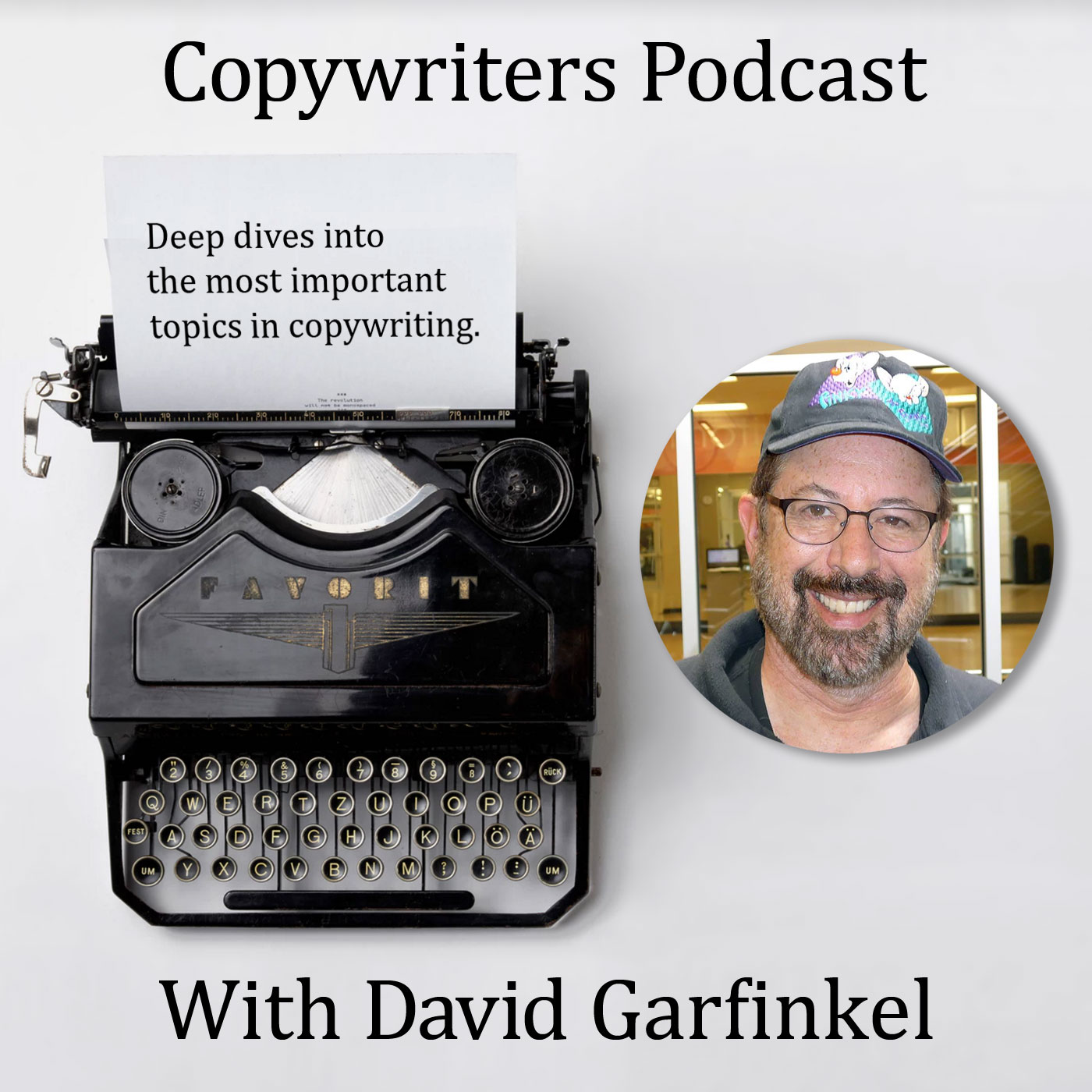
Episode 064 - The Secret To Thinking Bigger episode artwork

EPISODE · Jul 9, 2018 · 26 MIN

Episode 064 - The Secret To Thinking Bigger

from Copywriters Podcast · host David Garfinkel

A few weeks ago, we had Joe Schriefer on the podcast in a special “Reports from the Field” episode. Joe said something that changed my life, and I’ve been thinking about ever since. As you may remember, Joe heads up Agora Financial, and he was one of the key players in growing it from $25 million a year to $250 million a year. The show as about how to scale up a business dramatically the way Joe has. What Joe said that kept ringing in my mind was: To grow a business big, think like the business is small. In other words, don’t get grandiose. Just do the normal things you do, but do them increasingly better. Don’t get private jets and a yacht. You would think a quarter-billion-dollar business should have a private plane, right. But that’s not how they do things. And that’s important. So it got me to thinking. There are so many people urging others to “think big.” And so many people who have these wild-ass plans that almost always disintegrate into dust. Why is that? What are those people misinformed about? And what can we all do differently so we can think bigger and actually profit long-term from our thinking and our actions? Probably the first thing is to listen to this message: Copy is powerful. You’re responsible for how you use what you hear on this podcast. Most of the time, common sense is all you need. But if you make extreme claims… and/or if you’re writing copy for offers in highly regulated industries like health, finance, and business opportunity… you may want to get a legal review after you write and before you start using your copy. My larger clients do this all the time. 1. What “Thinking Bigger” Means In copywriting and entrepreneurship, it means expanding your vision – the scope of what’s possible. - most common example: increasing your revenue/income - other examples - increasing the number of clients at the same time - increasing the number of different products you sell 2. Why It’s Important Business only moves in one of two directions. Up – it gets larger, or down – it gets smaller. If you try to stay the same size, it’s really a series of episodes of getting larger, then smaller, then larger, then smaller. What a waste of time and energy. If you keep getting smaller, you eventually go out of business. So the only logical way to go is to get larger. To grow. And you need to think bigger to do that. But you need to think in the right way. 3. The Mistake Most People Make - Think of a road trip. You have a map, you have a destination, you think that’s enough. - The thing most people overlook, and this is the big mistake, is they don’t prepare for - what to do when you get a flat tire - how to deal with a road that’s washed out - what happens when you get lost - That is – they don’t know how to solve all the nitty-gritty problems and unexpected events that occur along the way - So, they end up doing what they call “failing,” and give up - There’s a way to avoid this common mistake, and that’s what we’ll talk about today. 4. The True Path - Foundation - You need to get good at the basics - If you’re a copywriter, there are a few skills you need to have under your belt before you venture into the “big time.” Like.. - Research - Coming up with creative hooks - Writing in a persuasive way - Negotiating and maintaining relationships with clients - Meeting deadlines - If you’re a business owner, there’s also a set of core skills you need to have at a certain level of proficiency - Don’t expect you will pick these up “later” after you start to “think bigger.” You need to have them in your toolkit wherever you are now, before you start to go for big, massive goals - You may have heard different. I’ve never seen it end well when someone’s reach exceeds their grasp. Like the old saying goes, you need to prepare, to win. - Why You Can’t Think Bigger Until You Can Sweat The Small Stuff - Large is just a multiplication of small - As hard as it is for most people to come up with good ideas, coming up with ideas is the easy part. - Many people who are good at ideas think implementing is the hard part. - But implementing is easy compared to solving problems that occur, especially problems you weren’t expecting. - Solving problems when the heat is on is really the primo skill - And the only way you’re going to do that confidently and competently in a big way is by getting repetitive practice doing it in a small way. - What I’ve Observed In Big Thinkers I Know Personally - They’re obsessed with details – the right details - They draw on their own experiences and advice they’ve gotten from others who have at least as much experience as they have. Not too much on theory or other kinds of abstract ideas - They’re great problem-solvers. Very creative in that way even if they’re not like your typical creative personality. - They’re decisive. And once they make a decision, they take action. - They’re not huge braggarts or overly humble. More like, matter-of-fact, but just in the larger picture that they see. - My Own Path - I started very “big” – as the news editor of a national magazine in New York, and, I was told, the ambassador for McGraw Hill to Asia, as San Francisco Bureau Chief - It was all a bunch of bullshit. Of course, I didn’t know that at the time. - Because: I knew how to report and write articles, and edit articles. I was really good at those things. But… I really didn’t know how to solve problems, manage teams, motivate individuals, or bring in revenue. All of which you really need to do to grow a business, even if the teams and individuals are outsourced contractors and organizations. - I started over when I was 40. I built skills from the ground up and started very small. I had to. I was broke and I didn’t know what I was doing. - These days, I focus on tiny little details my former self would have scoffed at. Not all the time. But I’ve learned to identify and focus on what’s important, and when it comes to solving a problem at the granular level, I’m right there. - To give one example: Often when I do a critique, I’ll find four or five crucial things that can keep a client out of trouble and lead to a huge increase in the conversion from the copy. Being able to identify and suggest that small number of things comes from having worked with hundreds of businesses and having reviewed thousands of sales letters over the last 25 years.Download.

A few weeks ago, we had Joe Schriefer on the podcast in a special “Reports from the Field” episode. Joe said something that changed my life, and I’ve been thinking about ever since. As you may remember, Joe heads up Agora Financial, and he was one of the key players in growing it from $25 million a year to $250 million a year. The show as about how to scale up a business dramatically the way Joe has. What Joe said that kept ringing in my mind was: To grow a business big, think like the business is small. In other words, don’t get grandiose. Just do the normal things you do, but do them increasingly better. Don’t get private jets and a yacht. You would think a quarter-billion-dollar business should have a private plane, right. But that’s not how they do things. And that’s important. So it got me to thinking. There are so many people urging others to “think big.” And so many people who have these wild-ass plans that almost always disintegrate into dust. Why is that? What are those people misinformed about? And what can we all do differently so we can think bigger and actually profit long-term from our thinking and our actions? Probably the first thing is to listen to this message: Copy is powerful. You’re responsible for how you use what you hear on this podcast. Most of the time, common sense is all you need. But if you make extreme claims… and/or if you’re writing copy for offers in highly regulated industries like health, finance, and business opportunity… you may want to get a legal review after you write and before you start using your copy. My larger clients do this all the time. 1. What “Thinking Bigger” Means In copywriting and entrepreneurship, it means expanding your vision – the scope of what’s possible. - most common example: increasing your revenue/income - other examples - increasing the number of clients at the same time - increasing the number of different products you sell 2. Why It’s Important Business only moves in one of two directions. Up – it gets larger, or down – it gets smaller. If you try to stay the same size, it’s really a series of episodes of getting larger, then smaller, then larger, then smaller. What a waste of time and energy. If you keep getting smaller, you eventually go out of business. So the only logical way to go is to get larger. To grow. And you need to think bigger to do that. But you need to think in the right way. 3. The Mistake Most People Make - Think of a road trip. You have a map, you have a destination, you think that’s enough. - The thing most people overlook, and this is the big mistake, is they don’t prepare for - what to do when you get a flat tire - how to deal with a road that’s washed out - what happens when you get lost - That is – they don’t know how to solve all the nitty-gritty problems and unexpected events that occur along the way - So, they end up doing what they call “failing,” and give up - There’s a way to avoid this common mistake, and that’s what we’ll talk about today. 4. The True Path - Foundation - You need to get good at the basics - If you’re a copywriter, there are a few skills you need to have under your belt before you venture into the “big time.” Like.. - Research - Coming up with creative hooks - Writing in a persuasive way - Negotiating and maintaining relationships with clients - Meeting deadlines - If you’re a business owner, there’s also a set of core skills you need to have at a certain level of proficiency - Don’t expect you will pick these up “later” after you start to “think bigger.” You need to have them in your toolkit wherever you are now, before you start to go for big, massive goals - You may have heard different. I’ve never seen it end well when someone’s reach exceeds their grasp. Like the old saying goes, you need to prepare, to win. - Why You Can’t Think Bigger Until You Can Sweat The Small Stuff - Large is just a multiplication of small - As hard as it is for most people to come up with good ideas, coming up with ideas is the easy part. - Many people who are good at ideas think implementing is the hard part. - But implementing is easy compared to solving problems that occur, especially problems you weren’t expecting. - Solving problems when the heat is on is really the primo skill - And the only way you’re going to do that confidently and competently in a big way is by getting repetitive practice doing it in a small way. - What I’ve Observed In Big Thinkers I Know Personally - They’re obsessed with details – the right details - They draw on their own experiences and advice they’ve gotten from others who have at least as much experience as they have. Not too much on theory or other kinds of abstract ideas - They’re great problem-solvers. Very creative in that way even if they’re not like your typical creative personality. - They’re decisive. And once they make a decision, they take action. - They’re not huge braggarts or overly humble. More like, matter-of-fact, but just in the larger picture that they see. - My Own Path - I started very “big” – as the news editor of a national magazine in New York, and, I was told, the ambassador for McGraw Hill to Asia, as San Francisco Bureau Chief - It was all a bunch of bullshit. Of course, I didn’t know that at the time. - Because: I knew how to report and write articles, and edit articles. I was really good at those things. But… I really didn’t know how to solve problems, manage teams, motivate individuals, or bring in revenue. All of which you really need to do to grow a business, even if the teams and individuals are outsourced contractors and organizations. - I started over when I was 40. I built skills from the ground up and started very small. I had to. I was broke and I didn’t know what I was doing. - These days, I focus on tiny little details my former self would have scoffed at. Not all the time. But I’ve learned to identify and focus on what’s important, and when it comes to solving a problem at the granular level, I’m right there. - To give one example: Often when I do a critique, I’ll find four or five crucial things that can keep a client out of trouble and lead to a huge increase in the conversion from the copy. Being able to identify and suggest that small number of things comes from having worked with hundreds of businesses and having reviewed thousands of sales letters over the last 25 years.Download.

NOW PLAYING

Episode 064 - The Secret To Thinking Bigger

0:00 26:52

No transcript for this episode yet

We transcribe on demand. Request one and we'll notify you when it's ready — usually under 10 minutes.

Big Old Life: Heather Blackbird interviews people on planet earth. Heather Blackbird loves asking questions. This podcast is a learning experience. Join me, Heather Blackbird, as I talk to people about their lives. Frequency of new episodes is a little all over the place and I'm learning as I go. Big Old Life is a small way of talking about the vastness of life, one person at a time. If you are reading this or found this podcast it's probably because someone you know gave you a link to it. :) Explicit The Sacred +Profane Podcast nephtaragrace The Sacred + Profane Podcast is a provocative conversation dedicated to cementing a better future for all. We specialize in unpacking the nuances of what is considered sacred and profane, particularly focusing on sex, death, and all that pertains to the circle of life. Our aim in focusing on such ”taboo” subject matter is to demystify what is unconscious, bring to light what has been known for centuries as ”the occult,” and empower the rapid transformation that is occurring on the Planet. Explicit Undeniable w/ Braxton Curtis Braxton Curtis The official Podcast of Braxton Curtis.A Father, Husband, and Business Owner just trying to figure it all out. Explicit Bitcoin Gateway Lea meakin Welcome to Bitcoin Gateway, the podcast where we dive deep into the world of Bitcoin, hosted by Lea Meakin. This show is for anyone who’s ever felt overwhelmed by the complex world of cryptocurrencies and wants a simple, straightforward explanation. Each episode, we’ll break down the basics of Bitcoin, explore its history, and discuss its potential impact on the future of finance. Whether you’re a complete beginner or just looking to expand your knowledge, Bitcoin Gateway is here to help you understand Bitcoin, one episode at a time. Explicit

Frequently Asked Questions

How long is this episode of Copywriters Podcast?

This episode is 26 minutes long.

When was this Copywriters Podcast episode published?

This episode was published on July 9, 2018.

What is this episode about?

A few weeks ago, we had Joe Schriefer on the podcast in a special “Reports from the Field” episode. Joe said something that changed my life, and I’ve been thinking about ever since. As you may remember, Joe heads up Agora Financial, and he was one...

Can I download this Copywriters Podcast episode?

Yes, you can download this episode by clicking the download button on the episode player, or subscribe to the podcast in your preferred podcast app for automatic downloads.
URL copied to clipboard!