
Welcome to the Movement Movement, the podcast for people who want the truth about having a healthy, happy, strong body. Remember, your body was meant to move. Now here's your host, Stephen Sashin. You know, Bieber and the guys who made the Five Finger Shoes, there was a lawsuit against them because it showed that what they do is not good for you, that you get hurt wearing their shoes, right?
Maybe not. You know, there's studies that show that if you run barefoot, you're going to get injured, right? Not so much. Let's take a look at that in today's episode of the Movement Movement, the podcast where people who want to know the truth about how to have a happy, healthy, strong body, we're going to cut rid of and cut through the mythology, the propaganda, and sometimes the outright lies about what it takes to have a happy, healthy, strong body and to walk, run, hike, do yoga, do crossfitter, whatever you want to do, enjoy.
That's what we're here for. My name is Stephen Sashin. I'm the host of the Movement Movement Movement, podcast. And if you want to find out more, go to jointhemovementmovement.com.
That's where you can find all the different places that you can interact with us on Facebook and on YouTube and on iTunes and on Instagram and wherever else you can think of and make sure you like, share, friend, review, hit the bell if you're on YouTube. You know what to do to get the word out about the movement movement because we are creating a movement about movement, about natural movement. Our goal is to make natural movement the obvious, better, healthy choice way that natural food currently is. That's all part of that movement.
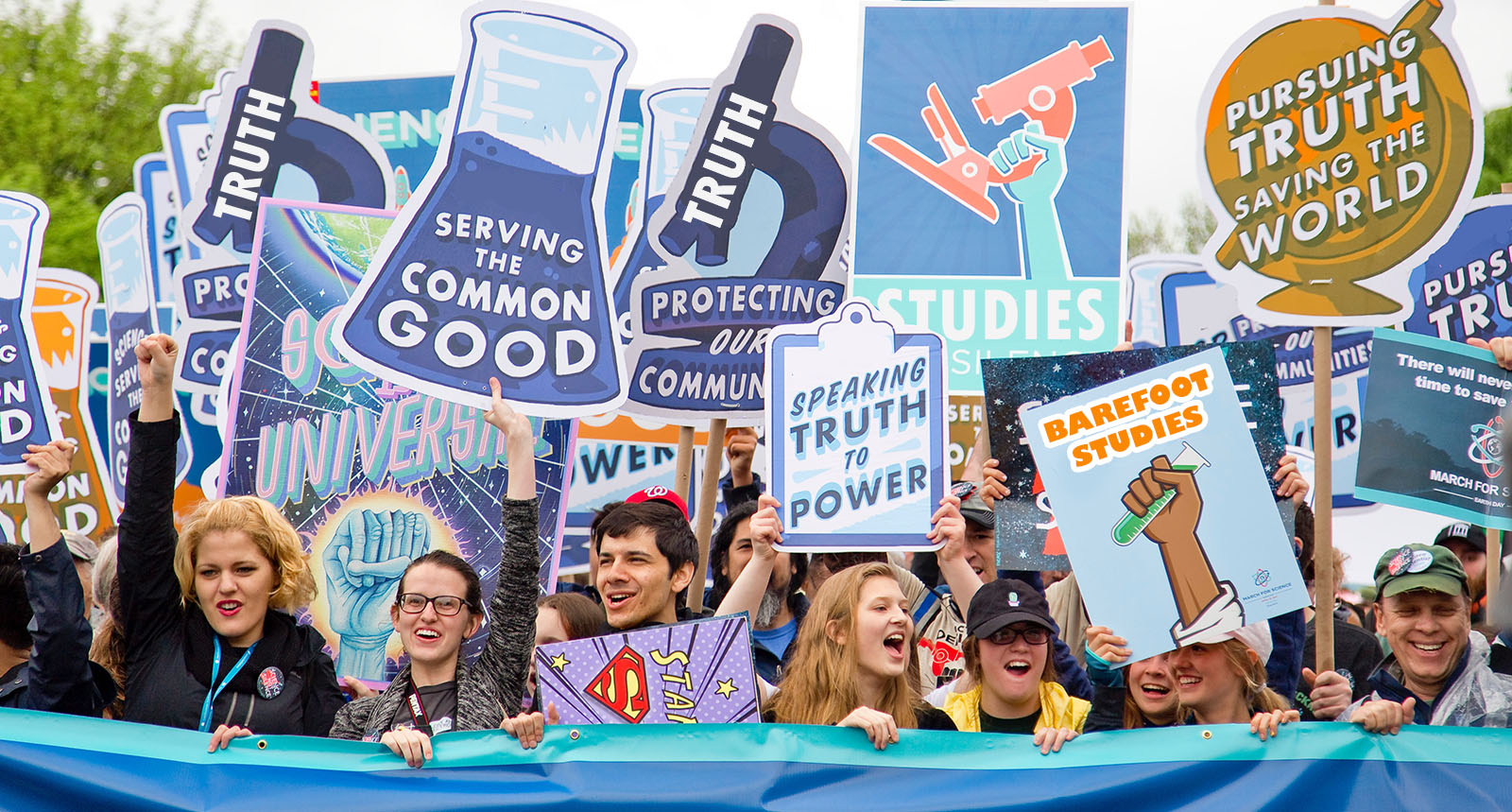
As we like to say, if you want to be part of that tribe, please subscribe. So let's jump in, shall we? That's a good knuckle crack. This is one of my favorite topics is the way that studies are done about barefoot running a natural movement and the way that information is portrayed in the press.
And let's start with a lawsuit that was filed as a class action lawsuit against a v-room, the guys that make the five finger shoes a while ago, that according to the media proved that running barefoot or even in five finger shoes was going to hurt you and is bad for you. Okay, share. So let me cut to the end of the story. That lawsuit settled for $3.75 million.
And while that sounds like a lot of money, similar lawsuits against, for example, the companies that made toning shoes, as air quotes around the word toning, claiming that if you wore those shoes, your butt would get stronger and bigger and better looking. Those cases settle for tens or hundreds of millions of dollars. Big difference between $3.75 and $50, $60, $70, $80, $20 plus, don't you think? So what's the difference?
Well, I don't know because the case settled out of court. So we don't have a lot of information. In fact, because the case settled, nothing was ever proven. Nothing pro, nothing con.
Nothing. We know nothing. But I have two thoughts about this case. One is an unabashed conspiracy theory.
And here it goes. I think that the big shoe companies or a big shoe company sponsored this whole lawsuit to begin with, they put somebody up to be the person who started, who was the head of the class, if you will, and started the suit. Do I have proof of that? Again, absolutely not.
Why do I think that? Well, because at the time that this lawsuit happened, the big shoe companies were frankly freaking out. There was all these people saying, hey, I got rid of my shoes. I'm running barefoot.
I'm having a great time. My injuries went away. Everything's awesome. And again, I'm not saying your injuries will or won't go away.
I'm not a doctor. Don't play one on TV or on a podcast. I'm just saying what was happening out in the world at that time. And the shoe companies, if you look at the articles that were coming out, there was one article that was being forwarded to me as if it was just an article written by a reporter.
But if you saw the article in the upper right hand corner, it said it was sponsored by a major shoe company. The shoe companies, even the people selling shoes were putting out all this content about how if you went barefoot and got out of big thick padded motion control shoes, it was going to kill you. You were going to step on hyperdermicals. You were going to get Ebola.
Your kids wouldn't get into college. You wouldn't get a good mortgage. You would no longer be able to use a letter E. I mean, just a whole bunch of crazy, crazy hyperbolic stuff.
A little while later, of course, they started making minimal shoes and they stopped all that argument completely. But again, for a while, they were losing their minds. And I think that part of losing their minds and the fact that Vibram was like really taking off, I have a hunch that that was the instigation, the impetus for this lawsuit. Don't know if it's true.
But let's look at this whole thing of settling for $3.75 million. Why did I do that? Well, the former CEO of Vibram is a friend of mine and he said if he were still CEO at that time, he wouldn't have settled. And he thought that Vibram settled as a company because $3.75 million, it just wasn't any money and it was a rounding error for them.
Why wouldn't he have settled? Well, it's simple. There was actually research that existed before five fingers came out showing that being in a minimal shoe, in fact, the Nike free, which frankly is as minimalist as a pair of stills, but way more flexible, way more natural movement-ish than any shoe at the time, that wearing that shoe made your foot stronger. Using your feet the way the Nike free, you let your feet made your foot stronger.
And the five finger shoes let your feet move even more naturally than Nike free. I think there were enough dots that they could connect, tell the story that while there wasn't an explicit study done showing how the Vibram five fingers definitely made your feet stronger, there were enough dots that you could connect to tell that story in a way that the plaintiff realized, you know, this is not the slam dunk that we thought it was when we started. By the way, the former CEO told me the only reason they didn't do that study was when they were doing studies, specifically about the Vibram five finger shoes. They were going to do a study on whether it made your foot stronger and the person who was doing all the other studies said, why bother?
You know it's going to happen because your feet are able to move and bend and flex and feel more. That's going to make them stronger. So they didn't spend a couple thousand dollars and that led to what ended up happening. Now again, when this lawsuit settled, it was still promoted in the media as a slam dunk against barefoot, as a slam dunk against natural movement when there was no evidence whatsoever.
I don't know how that happened, but I did say I did speak to someone who was the vice president of marketing for one of the major footwear brands and I said, did you get the results of that study and then put that out through your press contacts before it got published? And his response was, of course I did. Now, again, I wish I could have that conversation recorded and give it to you. So it is hearsay when you're hearing it from me.
All I can tell you is I did have that conversation and oh, what a shock. So let's talk about the other things I got put in the media about barefoot and natural movement, which is the results of scientific studies. And amazingly, there aren't studies that people are asking for about the claims that big shoe companies are making. Typically, it's about improved performance and reduced injury.
Actually, I take it back. There's one lately, the Nike Vaporfly. There is a study that came out of the University of Colorado saying that the Vaporfly improved people's VO2 max, how well they use oxygen that they intake by something like 4%. And that they don't know why.
They don't know why that shoe makes people run better or have better VO2 max. Let me clarify that. It really does. And they don't know why.
Now, here's the good news. In one of the comments about the study, the guy who did the study, Roger Crom, someone I'm on the track with on a regular basis here at the University of Colorado during our summer track season series, Roger admitted that even though VO2 max has improved when people wear that shoe, that doesn't mean that's going to improve your performance. It's a very interesting point. VO2 max is an interesting indicator, but not necessarily an indicator of improved performance.
Different people have VO2 max. If it was just a matter of having better VO2 max, why run the race? Just see who has the best VO2 max and give that guy a trophy. I just made the emotion of putting a metal around my neck when I said the word trophy.
But you get the idea. Just people don't just measure VO2 max and decide that's who the winner is. Clearly, better VO2 max does not mean you're going to be the winner. Now there are people who have better or worse VO2 maxes.
People with better VO2 max naturally tend to gravitate towards distance running. People with less VO2 max like me tend to gravitate more towards sprinting if they happen to be runners. And there's only so much you can improve in your VO2 max. That's a genetic thing as well.
Some people are non-responders to VO2 max training. The more they do, nothing changes. Some people respond really well to it. So there's a big genetic component in that.
But again, it doesn't really matter. Not connected to anything. And the reason I bring this up is one of the early anti-barrefoot studies showed how people running barefoot had worse VO2 max than the people who were running on some padding. Okay, again, who cares?
It doesn't matter because it's not related to anything that matters in the real world, anything where you're going to notice a difference. So why did it even come out? That's another question. When you look at studies, you might want to ask what are they studying and why are they studying it?
Because this study, this VO2 max study about how barefoot is worse for you, the idea behind it was to investigate whether you were more or less efficient as determined by VO2 max when you ran barefoot. Well, it's an interesting thing because no barefoot runner that I know ever said that barefoot running made you more efficient. So why was this study coming out? Why was it being done?
I don't know. It was kind of a red herring. It was hand waving. It was just saying something to minimize the impact of barefoot at a time when shoe companies were again worried that people were going to stop wearing their shoes.
So look at what's being studied and whether it matters at all and whether the people who it's kind of against ever made the claims that are being countered or at least investigated by the study. In this case, no. Now, there are people who suspected that running barefoot could make you faster because you had less weight on your feet. Ron Hill, who I think won the 10k in Mexico City when he ran it barefoot, someone said why do you run barefoot?
And he apparently said it was the light of shoe that I could find. And Phil Maffetone does predict that the person who's going to run a sub two-hour marathon will do it on a really nice smooth course and do it barefoot because again, they won't have heavy shoes on their feet. Don't know because the problem is that all those things trying to get someone to run a sub two-hour marathon are sponsored by major shoe companies and there aren't major barefoot companies who have the kind of cash who can do that yet. We shall see.
So another thing to look at again, what's being studied? Why is it being studied? Is it relevant for your actual life? And then there's one last thing you want to check.
Maybe it's the first thing you want to check. It's kind of like this. We know that when people look at studies on pharmaceutical drugs, if the study was sponsored by the pharmaceutical company, the study tends to show that the drug actually works better than when there's an independent study which does not tend to have such positive results for the drug in question. Do you think maybe there's something similar going on with studies about footwear and about barefoot or natural movement?
Could be. Don't know. In part, because there haven't been a lot of replications of the studies that have been done. So actually, I just realized that's not true.
A lot of the studies that are quote anti-barefoot, not replicated, haven't been done before. A lot of the studies about barefoot and natural movement have been replicated. And the relevance for the studies not having been replicated, I know that my acquaintance Roger Cromwell, like this, Roger's lab is a Nike sponsored lab. They, Nike funds that lab, they gave him the foam to use to put on the treadmill, it's very clever design, it must admit, on the treadmill to demonstrate whether people running barefoot on a treadmill versus running on some padding had better results.
Oh, speaking of the people running, take a look and see who's being studied. Now, this is a tricky one because you're never going to see a list of names of the people who are in the studies typically. And that's a problem in this case because a lot of the studies that are again anti-barefoot featured people who were claimed to be accomplished barefoot runners. Now, for the studies that were done here in Boulder, here's what I can tell you.
I know all the barefoot runners in town. I am one of the barefoot runners in town. And none of the people that I know nor I have ever been invited to be in those studies. So I'm not sure who the people are who are in those studies, but I have a suspicion because I've been on the track with a lot of the nationally ranked and internationally ranked runners around town.
And at the end of their workout, they'll often do some running barefoot on the infield, on the grass for, I don't know, a couple of laps maybe. But these are not the kind of people who I would call accomplished barefoot runners. The kind of people who run on pavement or on gravel, well, not really gravel, but every now and then on gravel, or on trails and run for miles and miles and run a 5K or a 10K or a marathon or an ultra marathon barefoot or in a super middle was product like zero shoes. If those are not the people in the study, who are the people in the study?
You may not be able to find out, but it's something you might want to investigate. All right. That's pretty much all I've got. I'm going to talk about my brain at the moment about looking at studies and looking at information and how it's presented in the media.
Oh, and let's do back up to the media thing about the studies. Every time there has been an anti barefoot study, it's being presented as, hey, barefoot is horrible for you. Even when it doesn't really say that when it says, maybe, maybe not. Oh my gosh, sorry, I just thought of another study.
So let's talk about this. Geez, my apologies. There was a study that looked at people who followed the Vibram transition program for how to switch from regular shoes and a 5 finger shoes. And it showed that a number of the people in the study ended up getting injured.
I think I don't remember if it was stress fractures or plantar fasciitis. Oh my God, people running barefoot got a stress fracture or plantar fasciitis. Okay. So let's take a look at the way we think about the cohort in the study and the controls, people who aren't in the study.
The important thing in those results was not whether or not people got injured. The question is, the percentage of people get injured, how did that relate to the percentage of people who are just in shoes or just starting running to begin with? What's the percentage of them that got injured? We know that 50% of our runners and 80% of our marathoners get injured every year.
So was the, were the people who made the transition doing better or worse? And there's also things that you won't be able to find very easily in that study. Like, did they actually follow the program? And even more importantly, is that program even good?
It was a very explicit program saying, you know, do the following things in the following schedule. I personally would never say that. Making the transition to natural movement is a very individual thing. It's going to depend on you and your body and how much you listen to your body and how familiar you are with moving differently and with running it all.
And natural movement also, there are a lot of confounding factors in that equation and they were not really explicitly picked out in that particular study. So once again, another thing to look at when you look at studies is what's happening and how does that relate to the people who aren't in the study and how is that different? Okay. That's everything I can think of about studies and how things are portrayed in the media.
I know you're going to have some comments and I want to hear them. So if you're in a place where you can comment below, comment below, if you're not and you have a question, feel free to send that to us at move at jointhemovementmovement.com. And that's kind of again, all the housekeeping stuff. Follow us, share, friend, like, review, hit the bell so you hear about when these are coming out on a weekly basis.
And I want you to be part of the movement movement that we're creating. So join us at www.jointhemovementmovement.com and tell your friends that, you know, maybe those studies they heard about, maybe those things that they believe, maybe it's not quite as simple as they thought. If you want to be part of our tribe, please subscribe. And as always, live life.