
Welcome to the Movement Movement, the podcast for people who want the truth about having a healthy, happy, strong body. Remember, your body was meant to move. Now here's your host, Stephen Sashin. Have you ever had really unpleasant heel pain and then gone to a medical professional who told you you had plantar fasciitis and then gave you an orthotic or an insole or a boot or something weird to mobilize your foot to treat that?
If so, you may have been misled twice and we're going to find out more, including a natural way to address plantar fasciitis. On today's episode of the Movement Movement, the podcast for people who want to have happy, healthy, strong bodies who want to cut through the mythology, the propaganda, sometimes the podcast, and not realize and know the truth about what it takes to walk, run, hike, do yoga, paddleboard, do zoom, but whatever it is you do, enjoyably, to enjoy your body. I'm Stephen Sashin, your host for the Movement Movement podcast and if you want to find out more, go to www.jointhemovementmovement.com where you'll find all the previous episodes and all the places that you can find this podcast, both in audio and video and transcription form. And of course, if you like us, subscribe and review and share and ring the bell on YouTube and you know how to do all those things, more importantly, welcome.
And we like to start with a movement whenever we can, whenever I remember, frankly. So let's do that and I want to do something that's the simplest movement that you can think of really and it's one that we do thousands of times a day. I think it's called breathing. We do it mostly unconsciously and a lot of us don't do it well.
And I also take a few minutes to just give you a little simple kind of tips about breathing well that you might enjoy. Many of you will know it and it's so just, you know, follow along for the fun of it. And the simple thing that I'm going to show you is that breathing involves your diaphragm which is kind of right underneath your rib cage, basically it's curved like this and when you breathe in, it pushes down and when you breathe out, it pushes out. Now when it pushes down, that should make your belly expand.
If you're not letting your belly expand, you're not letting your diaphrag go all the way down, which means you're not breathing fully. Now some people when they do belly breathing, that's why they refer to it, they don't actually breathe into the top part of their chest. So they think it's just about the belly, but it's about the entire body. So it's letting your diaphragm go down, which will make your belly expand and there's more to that.
That'll say in a second, but also getting all that air into the rest of your lungs as well. So what you want to do is put your hands on your belly button, like just, you know, clasp your fingers like this and put your hands on your belly button. And as you take a breath in, just see how far out, not pushing your belly out, but just let your belly know out as you breathe in. And as you breathe out, you may actually want to contract just a little bit to get that air out.
And you do it again, breathe in and let your belly come out and then make sure you keep breathing and get that air into the rest of your lungs. And as you breathe out, contract a little bit and let the whole thing contract. Now move your hands with your sides, just like around your, well, around your sides and make sure that when you're breathing in, your sides are expanding too. So you're basically, your entire belly should expand in all four directions, four, backward, left and right.
See if that happens, you breathe in, let the diaphragm come down, expanding in all four directions, breathe out. And now let's add just a tiny bit of movement. When you breathe in, arch your back and let your head go back just slightly. And as you breathe out, do the reverse kind of cave in a little bit.
So you're kind of pushing out a little more and just take three breaths just like that, slight arch. Breathe all the way down and then all the way up, contract on the way out. Two more all the way up, all the way out. One more, slight arch, expanding your belly in all four directions and out.
And if you were driving, I hope you were doing that with your eyes closed like I was, but try that. Play with that just a couple times a day and see how that feels. You can even do it lying down, especially with that arch and that contraction letting your whole spine get involved in the breathing is really, really pleasant. By the way, some of you who've been watching this podcast before, you may notice I'm in an unusual location and that's called my house.
This is our second bedroom where we have a couch and our TV and a picture that I took in, I actually go two pictures that I took in Katmandu and I'm here because frankly I was hoping not to work at all this weekend because it's my birthday, but I couldn't help myself. And so I just decided not to go to the office and here we are. All right, let's go back into Planner Fashavil. I want to start with a story that actually I'm going to give you two stories that really spell out the majority of what I see as the problem about Planner Fashavil.
And that's simply that it's most often misdiagnosed and then we'll talk about the mistreatment. So I met a guy a couple years ago, he was a potential investor, super, super rich guy. He said, you know, I can't invest in your company, even though I love your company because I can't wear your shoes. I said, why not?
He said, well, I've had Planner Fashavil for 21 years. I said, that's not possible. He said, what? I said, well, Planner Fashavil, I just means an inflammation.
There's no way you can have an inflammation for 20 years. And he says, well, you know, actually it went away one day and then came back about a year and a half later. I said, well, see, that's proof because you're not going to have an inflammation that just magically disappears one day and then magically comes back 20 years later. I said, let me ask you a question.
How do you feel when you're just walking around your house barefoot? He goes, oh, oh, I can't do that. I have hardwood floors. I literally almost started crying at that point.
The idea that a grown human being can't walk barefoot in his own home just struck me as incredibly sad because human beings have been walking barefoot on every surface you can imagine, hard surfaces, soft surfaces, pointy surfaces, for as long as there have been human beings. The idea that someone can't do that, that they need to put on shoes the moment they get out of bed. Oh, my gosh, as someone who's a big proponent of natural movement, I can't think of anything more sad. So I said to him, all right, look, here's what happened.
21 years ago, you went and saw a doctor because you had heel pain, right? He said, yeah, one of the best doctors in Colorado. I went, yeah, your doctor was a complete bonehead. And by bonehead, I just mean, has actually replaced his brains with bones.
Now, again, I'm not saying that all doctors are boneheads if they say you have plantar fasciitis. And I'm sure this guy is a fine guy. But here's my suspicion of what happened. And it kind of bears out.
I said he diagnosed you as having plantar fasciitis. What you really probably had was just habitually tight calves because plantar fasciitis, oh, I should have started with this maybe, is an inflammation of the plantar fasciitis, the plantar fasciitis, connect to your heel bone. And if they start to pull away or start to erode there, that's going to lead to pain when you're trying to use them under force. So plantar fasciosis, it's a degradation in eroding, if you will, of the tissue that you can treat or doesn't need a different kind of treatment.
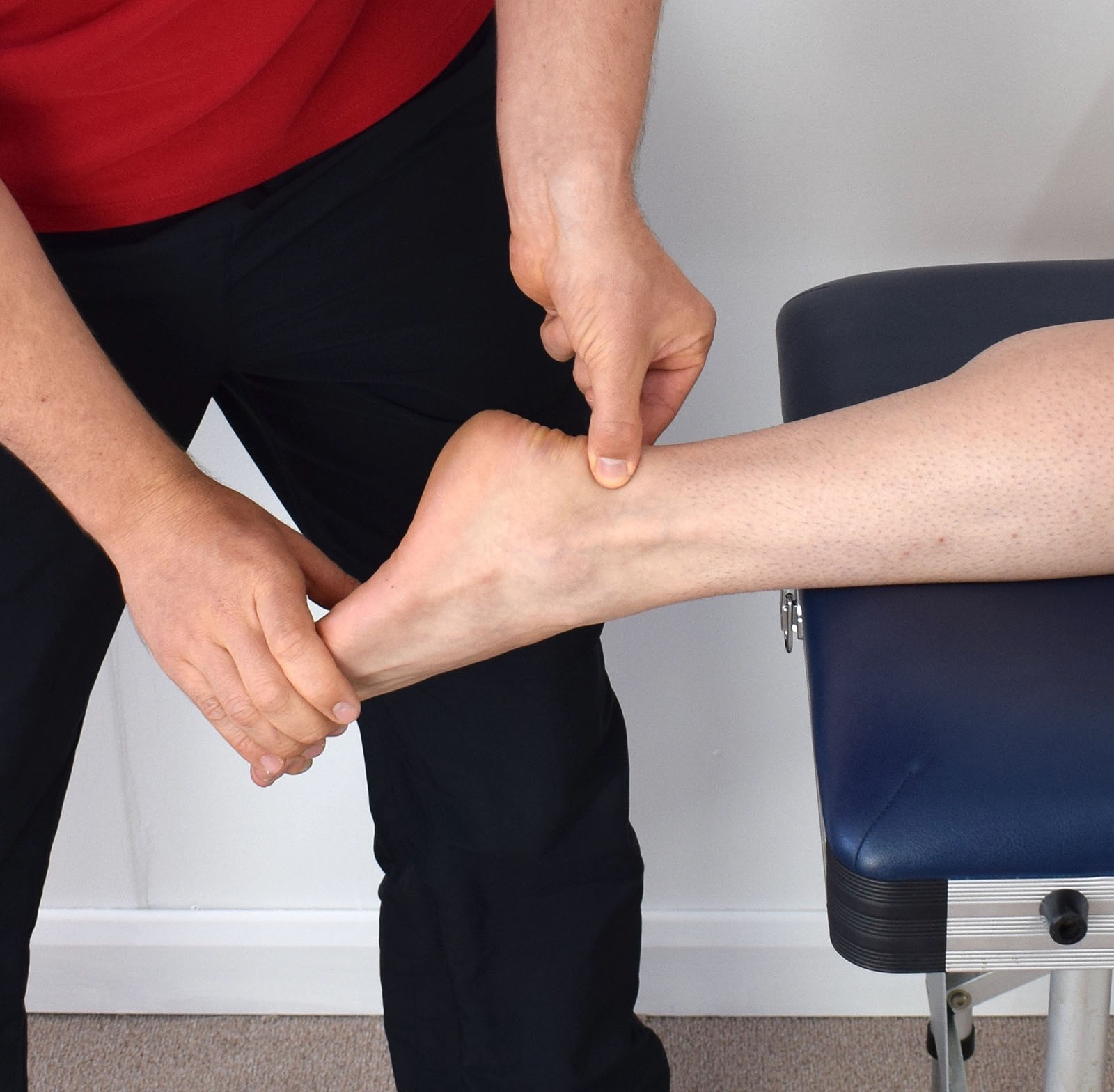
But also you can get the symptoms of plantar fasciitis if your calves are tight or your Achilles gets too tight and it's pulling on those plantar fascia basically from the other end, from the top end, if you will, the proximal end, if you want to be exact. And so it can give you the same symptoms. I said, did he feel up your calf to check out your calf? I guess it's, no, okay, here we go.
So once again, you probably had habitually tight calves. And I say that again because of the one and a half year period where it just disappeared spontaneously. For whatever reason, your calf just loosened up and took all the pressure off. But your doctor didn't know this.
And by the way, he prescribed orthotics for you. And I said, yeah, and I said, and you need them in different pairs of shoes because you have the shoes, you walk around the house and your regular shoes and your dress shoes. Yeah, I got like four or five pairs. I said, how much, how much, how much are they?
He said, does about $500 apiece because they're custom made. Oh, man. Okay. So this was now going from sad to painful.
I said, look, I can give you some exercises that you can do while you're watching TV at home. And in maybe, you know, six weeks, maybe you'll be able to walk around your house barefoot. And if you want to do some additional exercises, I could probably have you running in bare feet on the road without any pain. And the guy looked at me with a look that I see somewhat frequently actually.
And so I knew what he was thinking. And I said to him, look, dude, just because I look like this doesn't mean I'm wrong. I know how I look. In fact, one day is a tangent.
One day I'm walking into the office and I'm wearing not even a pleasant, you know, a nice zero she's t-shirt like I'm wearing right now. But one that was probably kind of ready. And I was wearing some cut off shorts and I was of course barefoot. And my hair was especially big.
And I caught my reflection in the window of the door and I just stopped in my tracks. I'm like, oh, I'm that guy. Okay. I did not realize I'm that guy.
And now that I'm turning 57, I am really that guy. And in Boulder that saying something. So the guy thought I was completely insane and so be it. He just wasn't going to take my advice.
But let me give you another story, a similar one. Met a guy who was in Special Forces and he said we've all switched to minimalist footwear because we really believe in natural movement. We know that strength can come from your feet and naturally important. A bunch of us have gotten plantar fasciitis.
This guy by the way was about 6'4", 6'5", 2", 3, 2", 40". He was not a small human being. And I looked at him and I could just spot this one from a mile away. I could see the whole tight calf thing.
And I said, can I stick my thumbs in your legs somewhere? And here's one of the things I really appreciate without missing a beat. Oh, absolutely. I'm going to get a bunch of Special Forces guys.
These guys, if it will help improve their performance, they are all in. These are my kind of guys. So he turns around and I could literally almost see this spot. And I took my thumb and just put it gently in his calf and his knees buckled and he fell to the ground.
I love doing that, especially the giant guys. It's very entertaining. So I said, I stand in the ground and I kind of dug my thumb and do his calf for a little while. And maybe he had a three or four minutes and after I did both of them.
And then I said, stand up and walk around. And he looked at me. His eyes were just saucer-like. He says, it's 90% better.
I said, yep. So go back to the base and have your physical therapist. Beep, the crap out of your calves for a while and let me know how it goes. Well, I never heard from him again until a year later.
I was at the same trade show or same event. Actually, oh, it was Paleo FX, the Paleo Living, whatever you want to call it. Not a trade show event. Let's leave it at event because I can't think of a better word because I'm turning 57 and words are not coming to my head anymore.
Anyway, here he is a year later and he walks out to me wearing zero shoes and just ecstatic. He says, yeah, after we all had our calves worked on, it all went away. Totally went away. So now, again, let me put in the caveat.
I'm not saying that that's going to be the solution for everybody. But I will tell you that more often than not when I meet people who say they have plantar fasciitis, I ask them about their calves and usually without my prompting, they go, oh, yeah, I've really tight calves. I go, so does it feel better when you massage them or foam roll them or do anything like that? And they usually say, yes.
And I go, you probably don't have plantar fasciitis. Or if you do, it may just be getting exacerbated by the calf and go work on your calves and then see how that goes. And really, really often people report tremendous results from that. Again, I'm not a doctor.
I don't play one on TV. This is just information for you to try. I need to be politically correct and legally correct about that as well because I haven't seen you. I haven't looked at you.
I can't diagnose you via email or usually by the phone. I'm just giving you this info. I'm not sure what you will. Have I made enough, whatever door it is for, you know, make sure I don't get my ass sued?
Okay, good. So let's go on. So now if you actually have plantar fasciitis, like the real deal or plantar fasciosis, undeniably, you need to heal. You need to give your body time to let the inflammation subside, to rebuild some tissue if possible, and I'll say something about that in a sec, and to let the pain go away.
And then what you want to do is start working on strength. There's an article, by the way, I'm going to post it on the website. I will try and post it and show it to everyone else too. I would tell you what it is right now, but I can't think of it and I'm too lazy to look it up.
I guess we'll be honest about that. So I'm going to find some interesting article about plantar fasciitis, including one that talks about the treatment that most people are given or the most people are prescribed, that was the word I was looking for, by their medical professionals. And that is to wear an orthotic or to get an insole or to do something that immobilizes the foot. Okay, so we talked about this often.
Emobilizing something is rarely a good idea except for healing. As soon as you can, you want to get your body moving again as often as you can, as comfortably as you can. And so an orthotic or an insole or a boot that keeps your foot from moving doesn't do that. It does the immobilizing part, but it doesn't let you do any moving.
The problem with immobilizing is it makes you weaker. Think about it when you break your arm and you put it in a cast. It never comes out stronger. You don't have one of those Catholic American moments where you're put into a little chamber and you come out a few minutes later, all jacked.
You put your arm in a cast, you come out eight weeks later, the opposite of jacked. You get atrophied and it takes time to rebuild that strength. And now interestingly, it doesn't take a lot of time because your body is wired to regain reclaim that strength that you had. And that's almost always the case.
Building additional strength takes additional work. But getting back to where you were, some people refer to that as muscle memory or one version of muscle memory. It's just being able to do some movement pattern because you're used to it. And that's less muscle memory from my perspective than that is just neurologic patterning.
But muscle memory, you obviously have bodybuilders who sometimes will get injured and they get really skinny and then they start lifting again and taking a bunch of steroids. But they get that muscle which you're back really, really fast because it's kind of built in as a former gymnast. I noticed that when I was back in gymnast mode and that was when I was, oh my, that was 40 years ago, 39 years ago. My shoulders were bigger.
And when I start doing any shoulder exercises, they very quickly get back to that. My wife would like it if I would keep doing those shoulder exercises. Maybe someday. So it's my birthday.
Maybe for her birthday I'll do that. So if you look up the article about plantar fasciitis or about, and also, just look up that. It'll talk about barefoot running and plantar fasciitis or barefoot running and insoles. You can look up orthotics as well at zero shoes.com and you'll see an article from my favorite science writer both because she's a wonderful science writer and she has my favorite name in the world, Gina Kalata.
And Gina did an evaluation, basically an investigation into orthotics and insoles and found that for most people they don't work at all. They worked about 10% of the population. No one knows which 10% or why and a $500 custom made orthotic usually isn't any better than a doctor's health until you can buy right off the shelf and you don't even need one of the fancy ones. So same idea with plantar fasciitis again.
You want to let yourself heal if possible if you have a factual tissue damage and then you want to start moving and then you want to start strengthening. So let me say one other thing about tissue damage. If you're talking about tissue damage to ligaments and tendons, that's a tricky one to regrow. There's a treatment you might want to investigate called prolotherapy, P-R-O-L-O therapy.
There's also a version of it that's what they call it, R-P-R, whatever that means. It's a version of prolotherapy where they take rich platelet, R-P-R, whatever the R is, rich platelet, something. People will tell me what that is and that's okay with me. Again, I have no problem with the fact that I can't remember worse anymore.
Anyway, look up a rich plasma therapy, whatever the hell it is. Frankly, it's a little hand-waving. They say that they're taking out some of the platelets from your body and are injecting it back in the right spot. My friend Tom Raven, who's the guy who taught prolotherapy to many of the people in the country, thinks it's really not necessary.
What prolotherapy does is they take a needle and they painfully stick it into the part that already hurts and what they're basically doing is selectively re-injuring your body. The reason why is that when you get injured, your body will try to heal itself just enough to get you functioning, basically just enough so that you can run away from the things you're lunch. After that, it doesn't really work anymore. So it's creating a localized inflammation that actually can't help lay down new tissue.
By the way, really helped my knee when I had my knee problems. I'd tornominescent had some problems after surgery. That's one way of helping grow new tissue. There's some people who do stem cell stuff.
I don't know about stem cell. I've seen, I've heard mixed results about stem cell treatment. I'm a little iffy about it, it's also not covered by insurance and very expensive. You might want to look at that.
Suffice it to say the tissue damage can be a real thing and then you want to heal and then get back to the moving part. When it comes to moving, what should you do? Well, again, if you check out Zero Shoes.com and look at Plantor, I'm going to point you to a couple of articles that you'll find about things that you can do, but the simplest thing goes like this. If you think about doing a bicep curl, your strongest when your elbow is bent about 90 degrees.
There's a little sticking point. Your strongest when your weakest is when your arm is fully extended. Well, it's the same thing with your plantar fascia. They're strongest when they're engaged.
They're weakest when they're extended. So what that means is you want to do things to engage your plantar fascia while you're trying to apply some force that will help strengthen them. So what can do that? Walking barefoot.
Especially walking barefoot on some uneven or maybe even a little unpleasant surfaces. By the way, if you're hearing the noise that's going on while you see there's more light coming in my window, there's a massive hailstorm going on out of the other window. Totally bright over here. Totally dark in hailstorm over there.
Welcome to Colorado. Okay, anyway. So I'm going to do a plantar fascia by walking on something unpleasant like, not like crazy unpleasant, but like if you have some gravel around your house, that's a really good one. And the reason that works is because the only way you can walk on that without it hurting, really, is by putting your foot directly on your body kind of pretense, pretense, preloading your foot before it touches down so that you can feel where it should go and put it in the right place.
And so you're going to be walking slowly. And if you want to add a little toe gripping in that and sand is a really good one for this too, but gravel is actually a little bit better because it's a little less pleasant than sand. That's a really good thing you can do. You can also do what's referred to as towel scrunch.
You might know to put a towel on the ground, stick a phone on the towel, scrunch it up with your toes until you've scratched the whole thing up and then set it out and do that a couple of times. You can do that while you're watching TV. And again, a really, really great thing is to work on your calves. If you've got tight calves, or even if you don't, it just feels really good.
Get a foam roller or oh, I have this device over here. Hold on. I wonder if it says what the name of it is on the device. If it's smart, it will.
And if it's not smart, it doesn't. So wow, it does not say what it's called. Oh, wait, I know it's called. Okay.
It's called the Role Flex Pro and hold this up there. So the Role Flex Pro is kind of like foam rolling except it's like, of course, everything's on steroids, foam rolling on steroids. I'm going to hold this thing up. It looks like a medieval torture device.
And if you make it too tight, it is basically this orange part here is like a foam roller. There are three different things that you can put in there, different hardnesses and different shapes. And what you do is if you're doing your calf, it would do this way. So this, these black rollers go on your shin.
This roller goes on your calf and you can just roll it back and forth until you find a tight spot and then point and flex your foot to really kind of work that out. You don't want to go too hard. You can be sore the next day if you go too hard. Anyway, Role Flex Pro.
Oh, wait, it does say it on here somewhere. But in really, really tiny, tiny letters, www.rollflexpro.com. I'm not getting paid for saying that. Elena and I have a bunch of massage and massaging devices in here.
I've got a thing that just goes around your neck and does a neck massage. We have compression things for your legs. We have rolly things. We have foam rolly things.
We have the Role Flex. We basically sit around and I watch movies or television and doing massage things to each other. It is dorky as hell, but that's why I love her and I hope she me. So all right, that's basically everything I want to say right now about plantar fasciitis.
I'm hoping that you haven't been misdiagnosed and spend a whole lot of money. If you have, I hope that you explore the natural way of doing this little difference and see what results you get again. Not a doctor. Don't even play one on the internet, but I'm hoping this information is useful.
And take a look at, again, go to zero shoes.com. Search for plantar. Look at the articles that are in there. I will post some links in the show notes here and I think that kind of covers it.
So thank you for joining me in this episode of the Movement Movement podcast. If you want to be part of the tribe, please subscribe. And what that means, part of the tribe is civil. We are trying to make, and by we, I mean mostly me, trying to make natural movement the obvious better healthy choice, the way that natural food currently is.
We want to use your feet. Let them bend and flex and move and feel the world. And we have a strong foundation. So, again, go to jointhemovementmovement.com and you can find all the places that you can interact with us.
If you have any requests or any questions or anyone who you think should be on the show, drop an email to move at jointhemovementmovement.com or you can post it in any of those other places. We'll see that too. And I think that kind of covers it. So once again, let me know what your experience is.
Enjoy and live life. Feet first. You've been listening to the movement movement podcast with host Stephen Sashan. Remember to join the tribe and subscribe at jointhemovementmovement.com.