
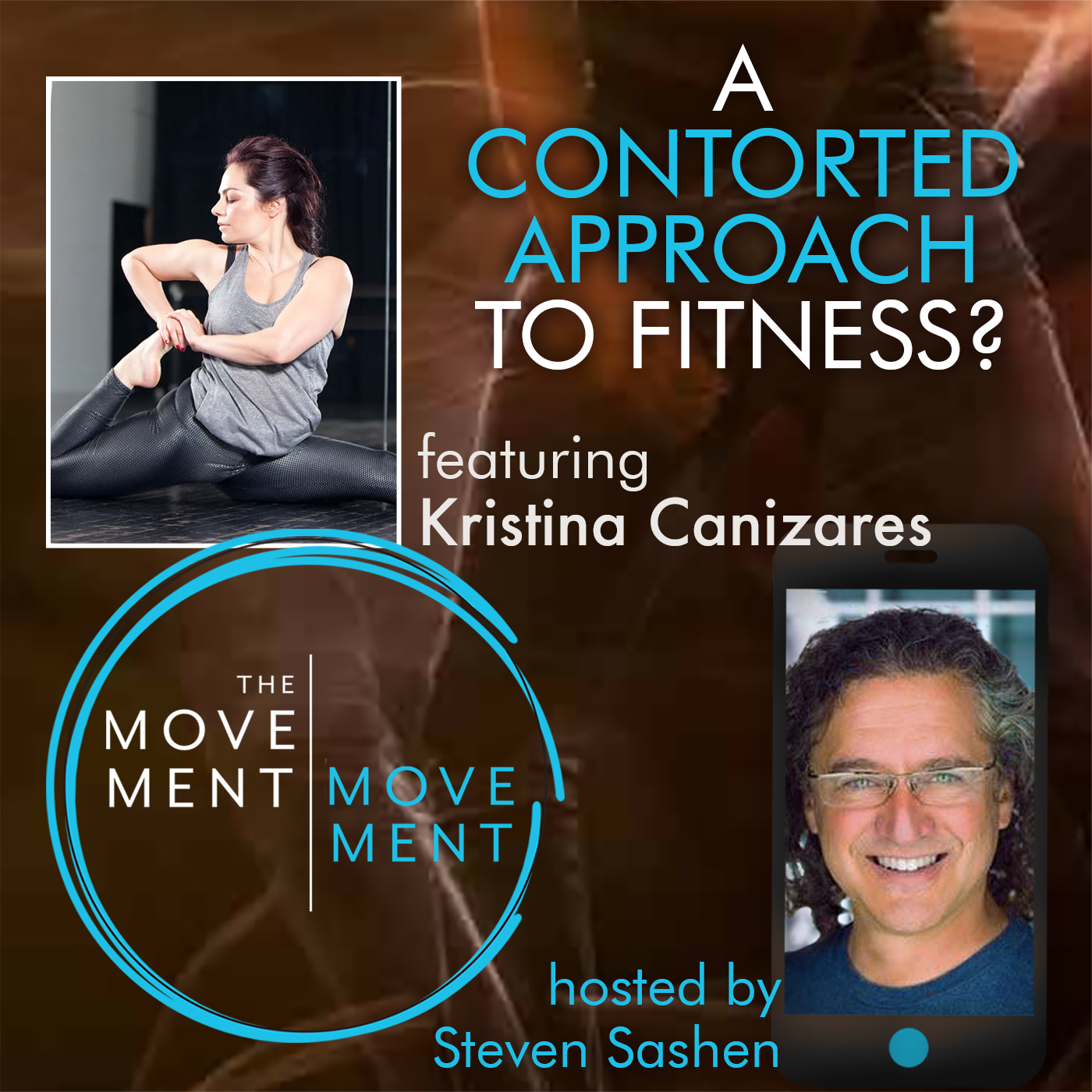
Many people think that if you are going to be fit, you really need to start as like a fitness-minded something. But what happens if that's not who you are and how do you make that transition in a way that actually works? Well, we're going to be chatting with someone today that has a very interesting story about going from not fit to, well, I'll let her feel and where it goes and where it's continuing to go. On today's episode of the movement movement, the podcast where people who want to know the truth about what it takes to have a happy, healthy, strong body starting typically feet first, but not always.
But that's, you know, where your foundation is. That's where we like to start. And we break down the propaganda, the mythology, sometimes the flat-out lies. You've been told about what it takes to run or walk or hike or play or yoga or cross-fit or any number of things.
And to do that, enjoy it efficiently, effectively. Did I say enjoy the trick question? I know I did because look, if you're not having fun, you're not going to keep it up, do something different till you are. That's my theory, at least.
And I'm Stephen Sashan from zeroshues.com. I was going to say co-host. I don't know why. I'm the co-founder of zeroshues.
I'm the host of the movement movement podcast. And we call it that because we and that involves everybody here are creating a movement about natural movement, letting your body do what it's made to do without getting in the way and having it function best when you do that. And if you want to find out how to be part of that community, it's really simple. You don't need to do anything to join.
You don't need to do anything to do anything. There's no secret handshake. We don't get up to six AM and do the same dance, whatever it is. It's just a place you can find previous episodes, all the ways to engage with us, all the social media channels we're on.
I mean, look, you know what to do. Give us a thumbs up or a like or a review or hit the bell icon on YouTube. In short, if you want to be part of the tribe, just subscribe. It's really, really simple.
So let's have some fun. Kristina, do me a favor. First of all, welcome. Tell people who you are and what you do.
Hi, everyone. My name is Kristina Fannie-Sattes. And I am the founder and coach at Fit In Bendy in Los Angeles. And I am currently calling myself a movement coach, but it's only because I haven't really thought of a good way of describing what I do.
I teach Pilates. I teach those sort of personal training, kind of strength training. And my background is primarily in flexibility, flexibility fitness. That's what I most known for.
I used to be a circus contortionist and I taught flexibility in contortion for a really long time. And I still teach some amount of that, but it is morphed more into just working with people on how to move in a way that feels good in their bodies because I feel like movement is a really important part of what we are built to do. And it's a lot of how we come to know ourselves. And as I hinted at the opening, you did not start out as a fitness minded human being.
I really didn't. As a kid, I was pretty frail and I was teensy-tiny and I had just no strength, not particularly coordinated. I remember having to do the presidential tests, which I don't know if you could do those in school. I don't know if they still do it, but that was the presidential physical fitness test was one of those interesting things like I was really good at everything, but there was a 600-yard run.
So 600 yards, I could barely make that one. But my favorite part about the 600-yard run was when we were doing this, we had some of her class. I won't mention her by name, but who was really, really not fit. She was also the girl who like matured faster than everybody else was, you know, like the tallest person in the class and ran like super, super slow with her head just looking at the ground the whole time.
So we finished the 600-yard run and everyone's like, what was your time? What was your time? And they would look at her and say, how much money did you find? Because she always found money along the path.
There are books for everything. But yeah, no, I was that person who came in and lasted everything. And I was like, you know, like when they're picking teams for sports, would be like, you take her. No, no, no, you take her.
So I never really thought of myself as being active and as kids were bad at things, do you had some trauma around fitness in sports? And I did discover dance in martial arts in high school and got really into that and did some competitive kickboxing. Oh, wow. Where'd you grow up?
I grew up in Boston, Massachusetts. You have seemingly inadvertently or intentionally dropped a lot of your Boston accent. Yeah, thank you for that. I left Boston when I was 18.
And I went there. So I got out of there. But yeah, I know that's where I grew up. And I got a pause there to go from not really fit to dances one thing, but kickboxing.
I mean, that's an extreme other side of the equation. Yeah. And that's why I liked it is that I was so tired of feeling frail and I wanted to feel strong. And I wanted to feel confident in my body and not walk around kind of hunched and scared all the time.
And, you know, hitting things seemed like I had some anger issues too. You know, I was a little golf girl. There's some rage in there. And I really liked the idea of learning to hit things.
And I, you know, they were like, wow, you're super flexible. I could just lift my leg right over my head, like, you know, incredibly flexible. And, but I had zero strength. You know, they'd put away my hand.
Be like, I got to start lifting weights. And I couldn't do it by that curl of five pounds. It was too heavy. I was like an absolute little frail little flower.
And, you know, I had also struggled with chronic pain from a very young age. I had a lot of back pain and hip pain. And at the time, you know, I go to the doctors and they were like, I mean, basically was like, ah, too bad. There's nothing wrong with you.
I'm using your quotes. And it wasn't until many, many years later that I realized that I would have hypermobility syndrome. I mean, many, many years like well into adulthood that I figured out that that was a thing because nobody was talking about that at the time. You know, I was a kid in the 70s.
And it really like, as soon as I heard that, everything clicked into place, like the whole story made sense. But at the time, it's just like, wow, she's just super frail and everything we try to do with her. She just hurts herself. So hypermobility syndrome, what are the, what's the actual thing that's happening in your body that gives you the hypermobility?
Well, it's a few, it's actually a bunch of different things. One of the things is just the composition of the connective tissue and muscles themselves. So connective tissue is the sacs around your muscles. It's your tendons, it's your ligaments.
It's kind of things that hold you together and give you a shape. And generally for most people, it's mostly collagen. So it has a little bit of stretch to it. There's some elastin, some amount of stretch, but it's pretty strong.
And you know, it's, it kind of holds your joints in place and gives you this nice sort of stringy stiffness as you move through life. If you are hypermobile, generally you have a much higher percentage of elastin in that tissue. So that tissue instead of being strong and holding you together kind of goes bleh bleh bleh. It's got, it's way too springy and stretchy.
And then the other thing is, is there's a pretty strong neurological component to it as well. So in our bodies, if our muscles stretch too far, there's this reflex, a stretch reflex that says, ah, you've stretched too far and it kind of pulls you back in. Hypermobile people don't have as much of that stretch reflex. So our bodies are often capable of moving into positions where we don't actually have the strength to hold ourselves there.
And it kind of, it goes like flop, drape, smoosh. And so you can get into all these crazy positions. And as a kid, you know, it's fun. I could, I could just like wrap my spine around my skull and like free people out with how flexible I was, you know, all these like crazy flexibility tricks.
But I was also getting hurt all the time and I couldn't curl five pounds. And there's also a real proprioceptive problem when you're hypermobile where without that stiffness in the joints, a lot of this proprioceptive feedback that we're supposed to get from our joints and muscles doesn't really compute on the same level. So we don't tend to feel things as well, which makes us wobbly or balanced can be a lot harder control, because knowing where your body is in space, we tend to prefer like big extreme movements because that's what we can feel. Right.
But that's also risky because we don't have the strength and ability to control that. Well, first of all, I appreciate that you actually know what proprioception means. It's obvious that you would, but most people think it's like it's about what you're feeling. I mean, in the barefoot running world, it's like, oh, what you're feeling in the ground, it's like, no, no, no, it's where your body is in space.
And in fact, it's something I talk about with people who are learning to run at all, but especially if they're learning to run in bare feet. There's a group of people who they don't have great proprioceptive skills and of course don't know because how would you know what you don't know. And my favorite is someone who said, hey, you know, the rubber on your shoes is faulty because I'm wearing it out on the heel. And I said, oh, well, you're overstrying and heel striking because that's putting force on the ground and that's what's causing that.
And I'm like, I'm like, I'm not going to be a person who's on a force and send me a video and you guys send me a video and this happened a few times. And I spent 20 minutes showing frame by frame. It's like, yeah, you're overstrying foot-slanting, wearing front of your body, you're heel striking, then you're pulling back, that's causing that friction, that's causing that abrasion. And literally after 20 minutes of this, the same person will say, again, yeah, but I don't do that.
Dude, it's a video of you by you. It's like, all right. So, you know, there's some people who just do need more feedback. I had a flashback like when I was a 12-year-old gymnast, the compulsory floor routine, you had to put your arms parallel to the ground.
And it took us weeks to learn what parallel to the ground was because the way your eyes see it, you want to go here instead of here. And it's fascinating how people get that. So, anyway, now I'm curious, given the stretch reflex thing and the proprioceptive thing, and this is just because I'm a geek, is it because of something that's missing in, say, or near the muscle spindle fibers or in the muscle tissue itself rather than in your brain not receiving, not getting information? Yeah, honestly, the information out there on hypermobility and how it works is still really nascent.
It's something that hasn't been studied as well as it really should have been. Not a lot of people, I'm guessing. It's more than you would think. And so, I should be clear that hypermobility is a spectrum.
Some people have just a small amount of it, and some people have a amount of hypermobility which goes into the range of Ehlers-Donglos syndrome, which basically means that you have a level of hypermobility that will affect you beyond just movement issues. It can affect digestion, cognitive abilities, emotional stuff, your ability of your body to move blood and live through the system. And I have clients with Ehlers-Donglos, and it's a whole, it can have a massive effect on people's lives, really, really damaging. So, sorry, you were going to ask something.
No, no, that's fascinating. I never occurred to me that there could be a connection between hypermobility and little things, having your blood circulate or your lymph movement, and it's wild. You have to have some amount of stiffness in your body to have enough pressure to drive the blood back towards your heart from your feet. So, like a lot of people Ehlers-Donglos have to wear, you know, constantly wear compressive socks or stockings because their lower limbs will swell up or they have to land their back to their feet up.
So, so, so when did you actually take that and turn that into doing surfacing things and being a contortionist? Well, when I was 23, I had a really, really severe medical incident that I almost killed me. And at the time I was in school for economics because that's kind of what was expected to me to get a real degree. And after that happened, I was kind of like, you know what, screw it.
I've always loved dancing. I know I'm late to the game. I'm going to be a dancer. And, you know, I did.
I became a dancer and did that for a long time and really used that as a path to healing for my body because I was pretty messed up and really throughout my 20s had some very serious health issues. And was diagnosed with chronic fatigue and fibromyalgia, which are also, you know, like neurological autoimmune issues. And dance and movement really became my way of resetting my relationship with my body and finding healing. And I loved it.
And then when I was 30, I met someone who was a circus performer and was like, Hey, you're naturally really flexible. Have you ever thought of trying contortion? And I was like, haha. And she said, actually, there's a woman.
I was living in the bay at the time. There's women in San Francisco who teaches contortion. I was like, Tisha sounds wild. I got to go try that.
And I immediately fell absolutely in love with it. It was absolutely the hardest thing I had ever done. It was so intense. And I love the woman who's a coach there named search Mabiamba.
She runs Mongolian circus contortion center. And we just like became fast friends and I trained with her for five years actually went to Mongolia with her and trained there the circus. Oh, man. At the time for someone to start contortion at 30 was absolutely unheard of.
Like everyone's like, what are you doing? It's more common now. But I just I was obsessed with it. I loved it so much.
And I was like, I know this doesn't make any sense for my life. I don't know what I'm going to do with this, but I just I need to do this. I need to find there's something in here for me that I need to find. So, you know, I never became like, you know, search to say soloist or anything like that.
But I got way better than I expected. And I did perform for a while. And, you know, really it just it was a life changing experience. It was so beautiful.
One thing I know about contortion. And this is interesting given what you're saying about not being able to do it by a profile weight. These people think it's all about flexibility. They don't realize how much of it is about strength.
So how did that change for? Well, it was the first time that I had learned was learning how to build strength through my entire range of motion. So a lot of times strength training is it's traditionally done like in a jam with weights. You don't use your full range of motion, right?
It's you tend to use and especially not for someone with a massive range of motion. That's where I was going. Yeah. Yeah.
So a lot of times you see people doing, you know, movement, we're strongest in the middle of our range. Everyone is strongest in the middle of range. So once you start to get to our end ranges where the muscles longest or the muscles shortest, you have to use a lighter weight. But I had never really trained that way.
And with contortion, you have to. You have to be strong through your entire range and you have to train your end range. And so so much of the constant pain and struggle that I've been dealing with my body, contortion really fixed it. So people think of it as being damaged and I did get injured.
I did get injured. I'll tell you that story because that changed everything too. But when I was training properly with good coaches, I felt better than I had felt in my entire life, like less pain, more strength. I actually built muscle like a real muscle and I could do a handstand and I could, you know, stand on one leg with one foot up over my head and control my body in ways that I'd never been able to do.
So there was a deep healing in that for me. I really healed so much of the relationship I had in my body. I love it. Only because this is again one of my fascinations.
How was Mongolia? Well, that's where I got injured. The perfect segue. Overall, I will say overall, I loved Mongolia.
I was there for months and I was there with my coaches from there. So I got to stay with her family and travel around the country and get to know people and attempt to speak Mongolian, which was really hard. And it was absolutely beautiful. But I did.
I did train with a coach there whose name I won't repeat who injured me. And he was not used to working with adults. And so I was there. And I was there.
And he, I don't think was really happy to have me there. And he was training me as if I was 12, which was, you know, that's oldest person who was there. And he completely dislocated my head, like a complete tear of the hip and dislocated a number of ribs and tore my shoulder. Holy moly.
This is actually really interesting point though, is finding a coach who has some experience with who you are. I'm thinking about that. When I got back and sprinting, I connected with a coach here in Boulder who was a very well known running coach. But he wasn't a sprinting coach.
And it took me, you know, two years to figure that out. We had a big screen yelling match. I said, you're the only sprinting coach in history who suggests you get faster by running slower. So this is not working for me.
Or when I was a gymnast and I went to college, I asked the coach there, I said, do me fair. So I'm going to do this particular move, just stand there in case something goes wrong. Like if I slip or something. And I didn't have it.
It wasn't as bad as you perhaps. Actually, another thing that could be worse. He decided to try to spot me on this move. And I landed in a way that may have broken my spine.
And I say, may have because I have a broken spine now. And when it was diagnosed with a doctor said, what you do 30 years ago to break your spine. I said, well, I was all American gymnast. I said, that's enough.
And later I asked this coach, I said, why did you try? Why did you try to unsuccessfully spot me on this move? And he said, well, because I knew there was only like three people on the planet doing it. And I didn't think you were one.
I thought you were trying to show off. And I was going to try and save you. And it's like, dude, you put me in bed for two weeks and I couldn't move. I was on Valley, Mancodian for two weeks.
And it was again, just, you know, the wrong guy for it was a mismatch. And so finding finding person who signing someone who understands your situation, who you are and has worked with someone. I think that's a really important thing. I don't even know how you would necessarily find out other than asking things like, how many other people like me have you worked with and see what their responses and even more, you know, find those people and see what their experience was.
Do you have any other thoughts from dealing with coaches that might be useful for humans? Yeah. I mean, I think, like you said, it's really important to find a coach who has some experience working with people like you or someone who at least listens to you. Yeah.
Takes your, what you're saying very seriously, because I think the problem is a lot of times coaches have their hammer and they want to make you into a nail. Yeah. It might not be a nail. You might be a staple.
You might be a screw. Who knows? And I think it's really important, you know, as a coach or someone who works with coaches to be like, well, you know, maybe the tools that I love and work really great for me and some other clients aren't the tools that this person needs. And maybe I have those tools too, or maybe I don't.
And I have to say, I'm sorry, like, I don't think I have the right things for you. I let me refer you to someone. I'm going to find someone who's going to be right for you. You know, but that takes a lot of humility as a coach.
And I was going to say, the fact that you can bring that up, it makes you special because most people think that they do have a tool for every whatever who shows up and it's definitely not the case. I mean, I was really lucky my gymnastics coach is one of these guys who, to this day, we're so friends. I mean, 40 something years later. And he's just one of these guys who was such a, he's so good at figuring out who you are and adapting what he does to you.
And he had people who came in really uncoordinated and he turned them into good specialist gymnast. It's like, he figured out, oh, you could do rings. You could do high bar. You could, and made, you know, we had a team that never lost a meet in six years.
And I met him. I'm going to do this one story because I think you might like it. We were hanging out just recently. And he said, one of the things that he does, if he has like a kid who's just like in a bad mood and is going to be disruptive, he's making my assistant coach for the day.
So that way he's helping me and that's all he can focus on. He's not being disruptive and gives him yet another skill. He's like the fact that he even thought that idea up is just one of those really special things. And you are in a situation where given all what led you to becoming a coach will get there.
You have a number of things obviously that led there that makes it, I imagine much more clear about who may be right or wrong for you or vice versa. Absolutely. Yeah. And I mean, I definitely had the experience of working with the wrong coaches and with the right coaches.
Search my, my contortion coach was the right coach for me. Yeah. And even though she actually had never coached him in my age before, she listened to me and we talked and we communicated clearly. And she knew when to push me when not to.
And, you know, I would never have been able to do what I did without that coaching. And then I've had other coaches who are not the right coach and who did not listen to me and did not trust what I was saying about my body and not just coaches, but you know, chiropractors, massage therapists where I'm like, hey, please don't push my upper back. I'm just going to just locate my ribs and sure enough. I had one with a chiropractor who said, well, you know, we're just going to give you some traction and that'll put your spine back in place.
I said, but there's no muscles that are holding those vertebrae in place. They're disconnected from the vertebrae. So what's going to keep it in place? And he just looked at me and was like, well, but I mean, I think you still need the traction.
Why? Well, you also need this three quarter orthotic and I said, well, I'm a sprinter. So I never actually touched the part of my foot that that orthotic would have any impact on. I mean, I'm on the ball of my foot, not everything further back.
Yeah, but I mean, like when you're walking to the track, I want to have a stretch. So I mean, to your point, he's like trying to basically trying to figure out how to fit my square peg and his round money making hole, which sounds really wrong when I say it that way, but I'm staying to it. So five years of doing contortion. What were you?
I mean, I'm desperately curious. What were you doing to support your contortion habit? I was belly dancing in the least in restaurants. I love it.
And I was as one does. I was doing a lot of belly dancing, some ballroom dancing performances and stuff like that. I was teaching dance classes and I was doing freelance writing jobs. I did a lot of grant writing for arts organizations and I did like copywriting stuff.
I was cobbling it together and I was living as cheap as I possibly could. You know, I was living in Oakland, California and with a bunch of artists in a house and, you know, we didn't live fancy. I didn't buy new clothes. I didn't, you know, I had a wonderful life, but I was definitely not wealthy.
You're giving me a stand-up comedy flashbacks. There we go. I remember in high school watching the night show and you'd see, you know, these two actors like, hey, remember when we were roommates? Like, how are all these people knowing each other?
And then, you know, it was the same thing in my 20s and early 30s when we were all not struggling, struggling, but we certainly didn't have a lot of money, but all those comics. It's, you know, now I watch TV and I'm so grateful that my wife still stays with me after every night when I'm going. Yeah, I lived with that guy. I worked with that guy.
I know, I mean, it's just you're in a community and that's the important part. Yeah. And that's how it was with dance and then really with circus. Like a lot of people who I was in circus school with are still like very close friends of mine.
And then, you know, and then I started performing and I did a lot of like corporate shows. I worked for a couple of circuses. I had my own dance and circus company for a while and moved to LA and started doing like, I did a lot of stunt double stuff. I did a lot of like music videos and did some touring.
I was a burlesque performer and incorporated the contortion into burlesque acts and tour those. Love it. So, so, so from there, I mean, we're finding our way from you being a frail hypermobile child to now really finding yourself in dancing contortion. Did you drop a, I just actually, did you drop martial arts?
I actually dropped martial arts in my early twenties just because I became more interested in dance at that time. So, then as we're, oh, no, it's a blast. I had a vicarious thing during COVID. I watched a lot of Brazilian Jiu Jitsu videos.
Oh, oh, yeah. When I have time, it's still on my to-do list. I was doing Tai Chi and I Keto, both of them. It was a really rare group of people.
We were doing both of those. Like Tai Chi was originally developed as a fighting art. I Keto, same thing, but they basically modified it so you weren't killing people because they needed to come back and practice with you the next day. So, but we were all treating these things really seriously.
And it was an unusual group of people and super, super fun. I miss it. I don't, my thing, I got off the mat because I was too dangerous to myself because I like pointing out, because the people that I hung out with, we weren't going to fake it. Like we weren't going to throw ourselves on the ground.
If you didn't make me fall on the ground, I'm not going to just jump on the ground. And then I go to other dojo's where I thought everyone was like that. And so if some big black belt and I'm just some little kid, I mean, I'm supposed to buy 525 pounds, you know, he couldn't move me. And I'd be thinking like, isn't this cool?
Like, I can learn something. He's like, Hey, I just learned I'm going to try and break your arm because I have an ego to protect. And I was too committed to poking at people and I realized I got to stop doing this. So we'll see.
So as we're progressing to when you started becoming a coach and your understanding or your deepening understanding about movement, what's our next chapter? Well, the injuries were the next chapter, especially the hip injury. It really sidelined me. I continued to try to work through it.
And I didn't have health insurance. Like I didn't know what was going on. I was like, my hip hurts. And I finally got an MRI.
And you know, the doctor was like, I was 35, 36. I was 36. And the doctor was like, well, you know, your ligaments are all torn. And as a result of continuing to work on it, you now also have like tendonitis and your hip and and it's created like your SI joint is out.
Like my hip was a mess and it was creating all sorts of problems radiating up and down the chain. And he's like, you know, we're going to have to do surgery. We're going to have to go in there and like replace those ligaments. And you know, you've had a good run.
You're too old to be doing this anyway. And you know, this is the end of your career. And I was like, Oh, I was so depressed. I just, I could not imagine stopping.
I couldn't imagine stopping. And I kind of stood on it for a while. And I was like, you know what? I'm just going to see.
I'm just going to see if I can. Fix this on my own. And I started seeing a physical therapist. I started doing a lot of Pilates.
Pilates, something I always recommend to hypermobile people because it saved me. It taught me so much about my body. It really taught me how to strengthen through my full range in a way that was different than contortion because it enabled me to actually feel the entire range instead of only feeling the ends. Interesting.
And just little by little, I was like, Oh man, you know, I'm starting to feel better. And a year later, I was back on stage actually better than I was before because I had strengthened myself and I fixed some of the things that were problematic in the first place. Through the rehab. And then at that point, I was living in LA and a circus school had just opened up down here.
And you know, they were asking if I wanted to coach some contortion flexibility. And I was like, What if I take some of these principles that I've learned through my own rehabilitation and start applying it to the way that I'm teaching people from the beginning? So changing the way that you learned it in the first place. And from there, Fit and Bendy was born.
Well, so give me an example then of what it's like to sort of turn things on his head and start there. So something I'm trying to find something to hold on to for what that would look like. If I was going to see you for the first time, what we would do. So I'll give you an example.
Let's talk about hamstring flexibility. I was like to start hamstrings flexibility because it's something everybody wants and they always talk about and it's a really easy example. So traditionally, the way that one would stretch hamstring would be to do some sort of passive stress. So there's a lot of like, you know, sitting on the floor, you got one knee bend, the other leg straight out in front of you and you try to lean over that extended leg.
And then someone may come along kind of push on you and you take a strap and use it to pull yourself deeper. Well, this is this is passive static stretching, right? This is like I'm going in here and I'm going to hang out. I'm going to breathe.
I'm going to hope that muscle relaxes and I can start to get a little deeper over time and then maybe I cry just a little bit because it sucks so much, you know. So what I would do instead is I would have people lay on their backs and lift their leg up towards their face and do a whole bunch of different exercises bending and straighten the knee flexing point, moving the legs side to side, lifting and lowering it, moving it around. And then at the very end, I used a strap to kind of start to bring that leg in a little bit closer. But what I'm trying to do is start with the muscle that's shortening the hip flexors and the ability of the hip flexors to shorten and bring that leg in.
And so I'm creating that strength in the shortened side that supports the limb through the range of motion that we're building. So that and this is what's important for adult flexibility is where if you're teaching a small child, it's okay to make massive changes in their passive range and then build a muscle around it because they weigh like 30 pounds. Right. They don't have a lot of injuries and a lot of history and a lot of trauma in their bodies already.
You take an adult body and you vastly and quickly increase the range of motion through extreme passive static stretching with someone standing on your pushing on you. All of a sudden you've created a range that the body doesn't support. Most likely you haven't created it with good alignment because the body's going to shift at five try to accommodate to get into that crazy range. And then you have this loose joint and then you try to strengthen it.
And the problem with that is like building strength in that way in adult body, especially an older adult. It just doesn't build as easily. And we have a lot more weight that we're moving around. We have all sorts of like crap that's happened to us in our lives.
So if you build the range actively, it's going to be a slower process, but it's going to be a much healthier process and it's a much more usable flexibility. It's much healthier for the body. So that's what the whole premise is built on. I love it.
I mean, you know, and this is arguably it's contortion 101. It's the important thing is being able to move into that position with control and strength rather than just the fact that you can, which is totally totally fast. So other than hamstring, give me another one because I'm loving that one. I'm playing with another one in my head.
What are you playing with? I'm curious. Well, I'm going to go for one that's problematic for a lot of people. It's just I literally had no intention of this one until you said, until you ask me that thoracic mobility is something that people lose significantly as they get older, especially with the computer.
Yeah. Yeah. Yeah. So thoracic mobility, a lot of times that's taught where you take a foam roller and you back bend over the foam roller, right?
And again, this creates a passive range. And a lot of times when you see when you have see people do that, if they don't really actually have the ability to go into that, as you'll see some kind of like the shoulders ride up and you see a lot of floppiness in the neck, the neck falls back. And maybe you get some change in thoracic mobility, maybe not. So what I'll have people do a lot of instead is work on in hands and knees, what it feels like to bring the sternum up and forward.
Oh, and and also, and I'll usually preface that with a lot of lower traps work, a lot of serious anterior work through planking through side planks through lifting the arms in a V shape over the head. And those are the muscles that you really want to get that actually are able to create that thoracic extension. But even more than that, it's like, why does the person not have that thoracic extension? A lot of times it's there's breathing patterns that you've got to look at.
Are they able to use their transverse abdominis and their oblique muscles to support their bodies? Because if not, that could be a big cause of that thoracic mobility where you're breathing mechanics in your core support are not there. So there's a lot going on that creates thoracic mobility. Yeah, there's a lot of what I was looking for, muscle insertions that impact that.
But I like the overarching theme, which is, which if I could is if you're looking to find crepe mobility somewhere, you want to think of the thing that needs to be stronger that will allow that rather than just doing some passive something that's goes into the way. I mean, boy, when you talk about this, I think about gymnast stuff. I mean, gymnast, most important motion is all just forward and really shoulders internally rotated. I've spent, how do I know I'm six years old, I spent 40 years getting the gymnast out of my body.
And it's, but the thing that was really fun, people were having to do all these kind of dopey little exercises for anything going on to get my shoulders back in place. And one day to go to me, I'm just going to do, chin up some pull ups and really just focus on that part on that initial thing of just getting that forces my shoulders to get back there rather than just using my arms and a huge difference. And it's like, how come no one ever thought to suggest that seems somewhat obvious? Doesn't it though?
It only seems obvious if you're someone who's looking to investigate this. If you think about what we did when we were kids, and I'm older than you are, but when we were kids and you're in gym class, you know, we're just, a lot of times we're just repeating what we did in gym class. And even with, and, or we'll pick up some exercise, some activity. And we just think, well, you know, sure, I can just go out and do it.
I mean, obvious example running. People think, oh, he's gone run. You better, you better respond to that one. I did.
I really, well, it's funny because like a few nights ago, my neighbor who's a friend called me and she's like, help, I need your help come over right now. And I come over there and she's like, I went to go play soccer with my pickup league tonight. And I was like out there two minutes and all of a sudden I thought someone had shot me in the back of the calf and like, I can't walk at all. And she couldn't move her leg or calf.
It was in full spasm. And so I worked on it for a while. And I was like, so like, what's your word? Like, what's your warm up like for running?
And she's like, warm up? And she's like, well, you know, I take a strap and I really just stretch at my calves really good. And then I go run. And I was like, ah, I've been doing it that way since I was a kid.
And I was like, yeah, you're 35 now. I was working for you. They, you know, so I was like, okay, you know, we've really, she's like, this is all, this is my whole team does the whole soccer team stretch their calves and they go out and start running. So yeah.
Yeah. Running is what I remember. It was an early, one of the first seasons of Shark Tank, someone came on with a device that was designed to help you learn to run better. And basically it was a, like a belt that had some elastic bands attached from the belt down to your ankles.
With the idea being that would help you learn to engage your, mostly your hamstrings properly. And I remember the sharks just saying, but everyone knows how to run. It's like, no, no, no, not quite so simple. No.
Yeah. And our bodies are these very complex, you know, amazing creations with this incredible architecture and choreography that goes with on within it. And, you know, I have so many clients who come in like, how come I don't stand right? How come I don't breathe that?
How can I just like do those things naturally? I was like, well, we don't use our bodies naturally. Yeah. No, we sit.
We are not nearly as active and mobile as we're designed to be. And we also live way longer than we originally did. So now we have the issue of longevity that we're working on. But the main thing is we're just not active enough, most of the time, you know, throughout our lives.
And, you know, I feel like we don't know how to feel our bodies. So when you're working with someone, both about just, you know, either getting them to have more or different movement or getting some awareness of what's happening below their neck, what do you do with humans to help with that? I mean, the main thing I do at the beginning is I listen to people, you know, because everyone has their own journey of how they got here. And so I think that in me listening to them, I'm hoping that they also listen to themselves.
So somebody we're coming in again, I'm pretending it's me for the fun of it. Someone coming in to meet with you for the first time. Let's do this for people who aren't meeting with you. But of course, we're going to invite people to do that.
If someone's just like imagining talking to themselves or more accurately, imagining they're talking to you, but they'll be talking to themselves, what story would you ask them to be telling and what would you ask them to listen for? I want to know about their relationship to their bodies because that is really where it starts. That's the foundation, right? I can have all sorts of ideas about exercises that I can give you, but if you can't feel them, if you can't feel your body, if you don't have the ability to just be present with what's going on, then the exercises aren't going to really make a change.
And I think this is the issue with a lot of physical therapy. You go into physical therapists office, you're like my shoulder hurts, and they're like, all right, here are these exercises. I'm like, well, what else is going on? Are you breathing?
Are you standing? And can you even feel your shoulder? Can you even feel the muscles that you're trying to access? Because without the ability to have that relationship, it's a relationship that needs to be healed and cultivated.
And the movement is the way that you heal and cultivate that relationship. I'll give you one that I literally just realized the other day. You might get a kick out of this. I, and this is a fun one because I realized this, I think psychologically first, and then I realized the movement component of it.
And I'll do the psychological part. So here's my weird little psychological thing. I realized that I have a habit of postponing enjoyment till later. So my favorite way that I think about this is for most of my life, when I would eat a piece of chocolate cake, my all-time favorite food, I would eat the cake, most of the cake part first and save just a little bit of cake attached to the icing so I could have the icing last.
And what I realized is that, and I do things like that a lot as an athlete, you know, I was working on something that was going to take years until I was able to do what I wanted to do as an entrepreneur. Same idea, it takes years until I get to a point where things are working the way I want them to work. And I know that I'm trying to describe this. So for me, it occurred to me that the way I, part of my relationship with my body, and I'm giving this as an example to kind of invite people to inquire themselves, is that I'm much more goal oriented than process oriented and finding something that's just sort of enjoyable in the moment, finding something where I don't have to like struggle or strain or put out too much effort so that sometime later I will have some benefit has been something that, again, I didn't even realize I've been doing for most of my life until very recently, and it's been fascinating to explore that.
It's just literally just beginning for me to take a look at that and see what kind of things that I would want to do that would allow that process to be potentially more compelling than the imagined end result. Well, yeah, and also to challenge the idea that struggling strain is required for. Exactly. Well, that's an interesting one that happened.
I mean, this is the advantage of getting back in the spring when I was 45. It took me a few years to realize that when I had that thought, okay, I'm going to do one more. That was the time to stop. Yes.
Oh, yeah, that's a good one. Yeah, that one took quite a while. But now, same thing. If I feel the tiniest little tweak done for the day.
And as a result, I mean, I haven't had a real injury. Geez, in 13 years. That's great. That's great.
I'm not complaining. Yeah. Yeah. I mean, I think that a lot of the way that we are taught to think about, and I'm going to air code here again, fitness, and I'm air coding fitness because I think even the definitions of fitness really need to be reexamined a lot of the time.
But the way that we're taught to think about it is like, you know, you put on your gym clothes and you go to the gym and you suffer for an hour in order to try to like, you know, get your blood pressure down and get new, maybe get your look hot naked or whatever. But there's nothing in that process that is about your relationship with your body or how you feel. Right. There's no feeling in it.
There's no communication in it. There's no checking in with yourself in it. It's just I just got to go suffer through this crap in order to check exercise off my list. And then we wonder why so many people don't want to do it.
Yeah. No, it's just like just putting in the numbers. It's just like, well, my line is we go inside to work out instead of, you know, doing something that's actually enjoyable. It's the opening line.
If you're not having fun, do something different until you are. And now granted, there's some things where the stress or the effort of it is enjoyable. We're like, you know, one of the reasons I like the competition and that's a stressful thing. But there's something about it.
And in fact, for master's track and field athletes, I joke that it's one of the things that we all have in common. We're really competitive. We're old enough to realize how stupid that is. We're old enough to realize that's not going to change.
And so we just enjoy the stupid thing where, you know, we're competing for nothing. There's no prize money. There's no, there's no nothing. Like at the beginning of race, I've had this happen a lot where someone looks at me and goes, you have a race and really intense.
And I go, look, you know, just get to the end, be healthy, have a good time. And oh, yeah, by the way, I totally want to kick your ass. So, you know, let's just do the whole story because it's fun that way. Yeah.
No, it is. And I love pushing myself. I absolutely love it. I also have come to understand that the push needs to happen in a way that is still in relationship.
Yeah. You know, the push can't be something that I use to hurt myself or because I believe that the push is the only way that I'm going to be, quote, better, you know. So how else, think about people who are listening to life watching, how else can you, can we talk about how people don't necessarily feel what's happening with their body and some suggestions for what they might want to experiment with to kind of try something new? Well, I always start almost always depending on the client, but my preferred places to go when I first start working movement, things with people are feet and breathing because like, if those two things are working, none of your other workouts are going to go great.
And very frequently, there's some really good stuff to get into there. And so, you know, how do you breathe? Can you feel yourself, breathe? Can you control your breath?
Can you hold your breath at the top and the bottom? Can you actually get ribcage movement? Can you feel your diaphragm? Can you feel your, the way that your transverse abdominis and your obliques contribute to breathing?
Can you relax your neck and shoulders while you breathe? So, so ask yourself all these questions and like, you know, maybe ask, start by asking yourself the question like, do I feel like I have a pretty good sense of how I breathe and like think about how you breathe and then actually like start to do some investigating and how you breathe and see if there's a mismatch there. And then you can do some of the same things with feet. So I actually have people start laying on their backs with their knees at 90 degrees and their feet against a wall and I knew calf raises like that.
So almost no weight. Interesting. Because as soon as you start adding weight to that calf raise, you know, it's hard to really see like, are you actually in control of it? You take the weight away and you look, you can see what the mechanics are.
You can see if you're, you know, supinating really early in the calf raise. If there's a tremor as it goes up and down. If the toes are gripping, if the ankles or knees are rotating in weird ways and you start to get a lot of honesty that way about what's actually going on with the feet and knees. That's interesting.
Something else just occurred to me, you know, especially when you put fitness and air quotes, you are, and the reason that people engage in fitness, I mean, you are living in the mecca of we're doing it to look a particular way. And feel it. And not even feel it. Just to look a particular way.
So you just look. Yeah, just looks. In fact, it's funny. I there's a trainer that I know in LA, I was having dinner with him and all of his sub trainers, if you will.
And I said, yeah, the only thing I care about, I mean, a spinner. I just want my posterior chain to be stronger, more active. I mean, want to be able to sprint better. And as a half joke, they all look at each other and said, did anyone understand where he just said we're here to make people look good from the waist up.
It was totally, totally fascinating. But how do you, I mean, boy, what's it like doing what you do in that environment? I mean, I just don't do that. And if people come to me.
No, but that's so interesting because, I mean, I imagine some people are like, but I'm not going to get watchboard abs and other people are like, Oh, thank God, this is not about watchboard abs. But it's such a diametrically opposite way of approaching this compared to most people in your world. I'm just fascinated by that. And that leaves a giant gaping hole for me to fail.
Because most trainers, you know, who think of themselves as like, you know, I mean, I'm looking at Hollywood out my window. So they're in that general direction within a mile. I'm sure I could hit like dozens of personal trainers who will advertise. Watchboard abs and like, you know, long thin legs and like, you know, like striated shoulders.
So there's no shortage of that here. There's tons of it. You know, but the people who tend to come to me are people who are like, I've tried other stuff and it's not working for me. And I'm not my body doesn't feel right.
And I can't do what I want to do in my life. And that's who I want to work with, you know, like people who are like, and I'm like, will you lose weight? Yeah, you know, you can lose weight if you feel better and you can move more than maybe lose weight. I don't know everybody's different.
Everybody's relationship with who's different. That's really not my business. I mean, even though we've been talking about this for the better part of an hour, I really just as soon as you said that for whatever reason, it hit me very differently of what would it be like. And this is kind of an invitation for people to approach fitness from the perspective of simply, I want to feel good in my body, not I want to look good, not I want to feel good be not I think if I look good, then I'll feel good, but it's like you turn, you know, turning, strengthening and stretching upside down, turning that upside down to starting with how do you find a pleasant relationship with this thing that you've been carrying around and it's carrying you around first and point.
I mean, I'm just really moved by that. I mean, this is my whole thing is like fitness should not start with how you look. Maybe you get to that at some point down the road. Maybe if that's something that's really important to you.
But you can't start with that because then you end up starting with exercises that are not necessarily right for your body and you don't have, you don't have the neurological relationship with your body to support the exercises that you're doing. So you can't feel them. You don't experience them. You're not moving healthfully through them.
You're often doing it on a shaky foundation without a deep understanding of what it is that you're doing. And there's no joy in it. There's no celebration in it. And I will say that the vast majority of us out there are never ever going to get to that six pack.
Like, I'm not built for that. Like, only time I was doing that, I was working out like all the time and and eating unhealthy. My mind is not built like that. You know, and most people out there are never going to be fitness models.
And say that the model of fitness is to look like a fitness model is it's damaging and it's crap and it's deeply exclusionary of so many people who have perfectly wonderful bodies, which is everybody. Yeah. And that body is still born to move and move is our movement is our birthright. It's our healing.
It's our relationship with ourselves. It's a key to self knowledge. Not the only one, but it is a good one. And so to say that fitness is about an aesthetic is to exclude all of those people.
Well, I'm just marveling that that I want to say it. I can't imagine you would have come to this were not for the situation that you grew up with. We're not for all the hypermobility, all the issues that you had because you know, this is what you I'm trying to think of how to describe this. You're taking you're putting people on a path that you came to talk about taking things upside down.
It's like you had to find this and now you're you're able to take people without having to walk them through all of the challenging parts. You can sort of start at the end, which ironically I wish I could find the right way to say this. It's not you know where I'm going with this weird thought that is putting itself together as I'm a product. I think so.
I mean, let me see if I can do it a little bit better. Had you not had the peculiar relationship with your body that you had as a child, you wouldn't have needed to. You wouldn't have had the opportunity or almost necessity for having a new kind of relationship with your body than what most people would otherwise have. And where that led you is to this really delightful thing that you don't need to put someone through all that challenge that you went through because that was that's how you got here but you don't need but you can start at the end of the near the finish line that's hard.
I don't want to use finish line. You can start further down. You know, you've got a rock path. You don't need to walk on every one of the rocks.
You can start way closer to wherever you know rock has never end. But you don't need to start at the very beginning. You can start somewhere else. And I'm not articulating well because I'm frankly just so moved by the idea of light start with building this relationship and then see where that goes without almost without an agenda per se.
I mean, it's almost without an agenda. I think some amount of agenda is good because I think agendas or like, you know, dreams of what you can do can be good motivators. You know, I have a client who's in her 60s and has had a lot of issues with her body and was not mobile at all for really long time. And her goal was to go to Mexico and climb the pyramids.
That's what she wanted. And when we first started, we were just standing working on being able to stand up for a chair and walk across the room. That was the level that we were at. And a few months ago, she went to Mexico and climbed the pyramids.
A lot of it. That's a very different kind of goal than the average fitness goal. That's an experiential goal. That's a life goal.
Yeah, but I think that those goals are actually way better drivers. No, that's exactly my point. No. And I think that what you were saying earlier about the past, like, you know, there's, I don't know who said it or where, but there's a common idea that like the things that are our greatest challenges are also our greatest gifts.
Yeah. And I think that when we can lean into that, my body has been my greatest challenge about my life. I've had incredible challenges with my body. And I've always leaned into that.
And in that, I've mined out what I could and that those tools are now the tools that I use to work with other people and to continue work myself because that's face it. I'm not done. Well, we never are. But what I love about what you said is unlike, let's say your average therapist therapist, where they're still trying to work it out and really miss most of them really should try to work it out more before they talk to humans.
What you've worked out and your and your continued process working out is something that's accessible to people as a process with what you're doing. It's not like it's not like, you know, you're not messed up. You just had a whole other way of having to get there that led you to these understandings that you can share with people that are universal, that do apply across the board. And that's a very, that's a special thing.
Thanks. I love what I do. I love it so much. Like every day I get up super excited to do what I do.
I love to work on myself. I try to spend a couple hours a day in the gym. And I love to work with other people and create resources and continue to think about it as an and continue to learn from other people as well. Like I'm always trying to learn new stuff.
Well, why don't we use that as a segue for if people want to get in touch with you and find out more about what you're doing and how they might be able to explore this with you. How would they do that? I'm also fitting in on Instagram, though. I will confess that social media is not my greatest gift.
Trust me. I would not apologize for that. I was driving home a little while ago, imagining turning off all my social media accounts, changing my meal address and only doing things like buying things online when I need them and having like once a week check-ins with my friends and it was the most blissful 20 minutes I've had in a long time. I was I had to stay in a hospital a couple weeks ago.
I did something that I don't think I've done in well over 30 years. I was not online for two days. Oh, it's amazing. You should do that first.
I tried to take a vacation from online at least once a year. It's not enough, but it's better than nothing. Actually, I take it back. I lied.
I realized that maybe 20 years ago I did a 10 day meditation course where I had no contact with anyone for 10 days, but certainly in the last 2025, it's been quite a while. When you run a business, you know, it's there's four hours a day. Yeah. Some day.
Well, anyway, so fitting benny.com and fitting benny on social media. I hope people do take advantage of getting in touch with you and please let me know when and if they do and want to hear what kind of experiences people have. Both yours and yours because it's actually fun. I'm really excited about zero shoes because I've never been a runner before in my life.
And I had I have arthritis in my right foot from dancing and circus and all sorts of things and I had surgery for it in November and I decided as part of my rehab that I'm going to become a runner because I'm going to run it 48 makes perfect sense to me. Absolutely. I got back in spring at 45. So I think, you know, we're in good company.
Good luck with actually. Wait, sorry. You just memory job. I correct me if I'm wrong.
You had some interaction with Chris McGoogling Eric Gordon. Yes. Yes. Yeah.
I will pause on the exiting and now say more about that. Wait, for people who don't know, Chris McGoogler about the born to run and Eric Orton is what's his running coach and now the two of them teamed up for a born to run to, which is the ultimate training guide for anyone learning to run. So wait, say more. So yeah, I had a wonderful conversation with them last week about learning to run and being a beginner runner and running a hypermobility and what it means to sort of build your running practice from the ground up as someone who doesn't have an experience with that and has injuries and all sorts of other things like what does that look like?
And it was such a wonderful conversation. And I love the fact that Chris and I actually have some similar trajectories here where he was told by a lot of people like, Oh, you're just not, you're not built to run. And, you know, then he became a runner. And so I'm really excited about continuing to be in conversation with them and work with them as I gradually, I now have three months out of surgery and just ran half an hour this morning.