
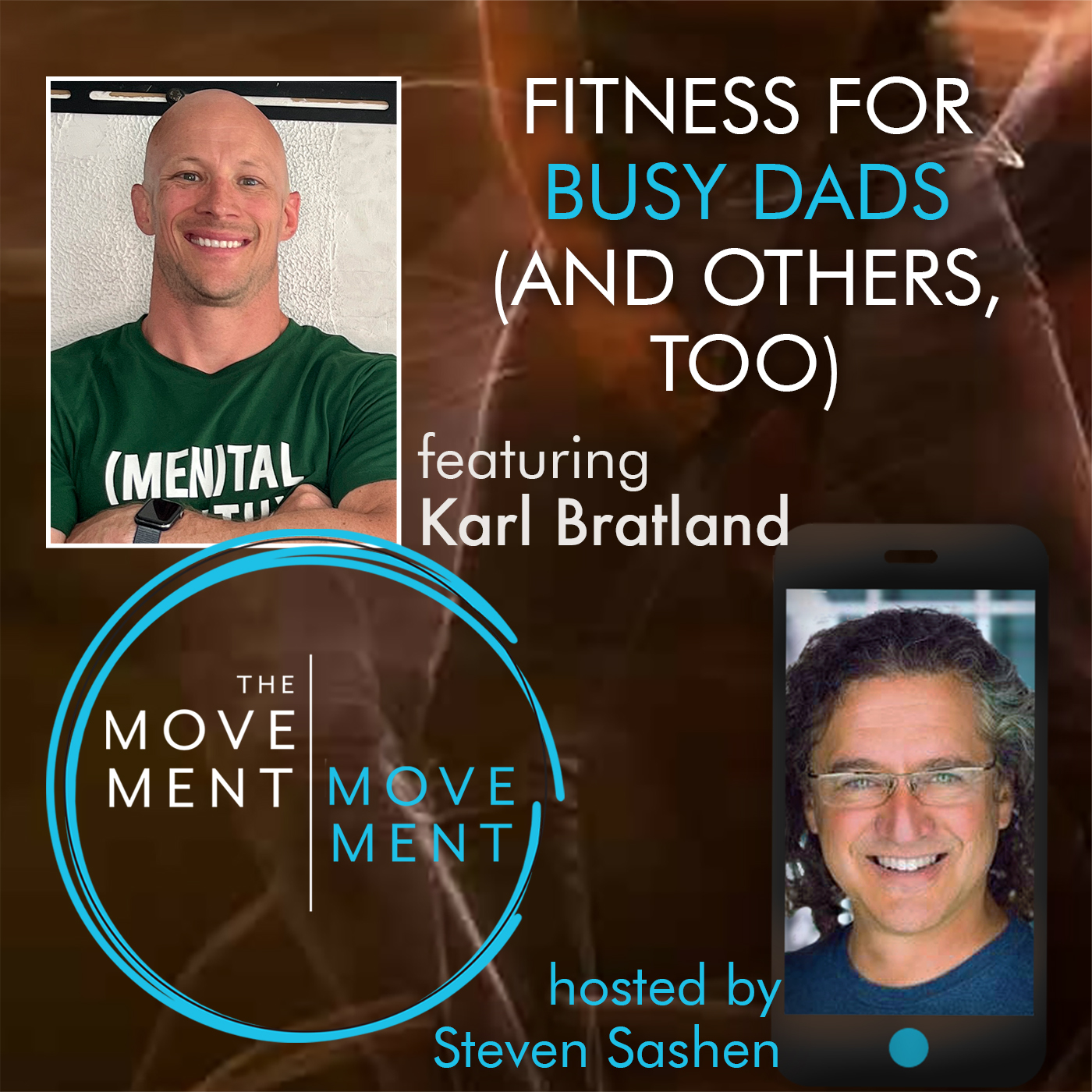
If your brain thinks you're 20 but your body is disagreeing, you're going to love this episode of the Movement Movement podcast, the podcast for people who want to know the truth about what it takes to have a happy, healthy, strong body typically starting feet first because you know those things are your foundation. And here we break down the propaganda, the mythology, and frankly sometimes out right lies you've been told about what it takes to run or walk or hike or work out or do yoga, cross it, whatever you like to do and to do that enjoyably, efficiently, effectively. Without saying, enjoyably, trick question. I know I did.
Because if you're not having fun, you're not going to keep it up anyway. So, you know, do something that's fun for you. Find one of those. I'm Stephen Sashan, co-founder, co-CEO of Zero Shoes, your host of the Movement Movement podcast, and we call it that because we, that includes you, that you're lying in a second, we're creating a movement around natural movement, letting your body do what it's made to do.
And the way you can help, it's really easy. Hey, if you like, go to www.jointhemovementmovement.com. It doesn't take anything to join. There's no secret handshake.
There's no money involved. There's no song. We sing every morning. We get up.
Just, you know, the domain that I got. You'll find the previous episodes, all the places you can find us on social media. And when you go there, you know, give us a review, give us a thumbs up, like us hit the bell icon on YouTube. You know, the drill, if you want to be part of the drive, just subscribe.
So let's get started and have some fun. Carl, do me a favor. Tell people who are going, what the hell you're doing here? All right.
My name is Carl Brantland. My Instagram handle is LibFitCarl. And basically what I do, or what I've started to do is help busy dads become fit, stay fit, healthy, and be a dad of four. And I guess sort of doing that myself.
People start asking what I was doing. So I started creating programs and helping, you know, dads do the same. And that's kind of where I've navigated to because they relate to me and can ask me questions about what's working for me. And I was working for my clients, you know, the focus more on being functional, longevity, and not obviously what I want to look by, right?
But that's just kind of a secondary result a lot of times. But so helping dads figure out if it in their lives and do what works for them and make it like on habits. So for anyone who's not a dad, I am not a dad, but this is of course interesting to me because it's the same busy thing. Let's say our wife and I, our business is our child.
So and given how much time it takes, I would put myself in the basic dad category, even without having actual biological children. And if you were not even a man for lack of better term these days, you still want to listen to this because there might be something you can pass along to the man in your life or the person who identifies as a man, a busy dad. Yeah, for sure. I mean, I have, you know, women, clients, moms, and busy men who aren't dads.
But the niche is busy dads because that's just who relates to me. And that's what I really focus on. But like I said, the human body is the human body. So the reaction exercise in pretty similar ways, make it hard this.
So I started by saying if you're a brain, think you're 20, but your body disagrees, how are you? Because you know, you don't look like I mean, I'm 61. It's all different game. How are you?
I will be 42 on September 20. So very early birthday. Yeah. So I wrote my 40s and now, yeah.
What I can tell you for people who are not into something like Master's athletics, one of the I'm a competitive sprinter and in the Master's track world was really fun is you enter a new age group every five years. So, you know, when I turned 40 as a black watch, I didn't start springing until it's 45. I went 150 total blast, 55 total, 60 couldn't be more awesome. So the, as those birthdays ending in five and zero get very entertaining when you've got something to work with.
Yeah, yeah, for sure. Yeah. I looked into something across the stuff and was really into that for a while. And so I know like the age groups and so it's like maybe when you get towards the next day of your, maybe you're like, are you like more lead then like when you turn 45 or you're like, oh, something on the best in this group and then you come up 49 or you're like the worst there's the opposite.
You know, it's an interesting question for me. I've been, so as a sprinter and track field, they have all American times that change every five years and they get slower every five years and for sprinting, they get way slower, way faster, one two over 60. So I only care about making all American times and happily, rather than winning because there's a handful of guys who are former Olympians and you know, who are never going to crush me. I mean, we're all genetic freaks, but they're the freaks and the freaks.
So I'm happy that I've said all American times at the top of the age range, like at 49 and at 59, et cetera. So that's been really nice. But when you do hit the new one like at 60, it's like, all right, here's my best chance to crush it. And so that's fun.
And if there is a major competition, you know, you do think you have a bit of an edge if you're 60 instead of 64. And sometimes that's true. Sometimes not so much. There's like a good friend of mine who, I mean, he beats guys 20 years younger than him.
He's just a complete monster. So he doesn't get it. But you know, those of us at the let's call it the far end of the top of the funnel or whatever they'll far end at the top of the whatever. So that's a we're just trying to end up in a semi final or in a finals, that's all.
Yeah, that's cool. So what were you doing? I mean, what were you talking about this to the journey that got here about your fitness journey and how that related to becoming a father of four and what you had to do to wake up to the fact that you were no longer 20. So I started out like college wise, I was always interested in fitness and, you know, strength specifically just from a young age from sports.
You know, my dad was in the lifting and bodybuilding and things like that. And once I got into sports, you know, you quickly realized that you know, strength, fitness, nutrition, all that stuff, like, you know, changes your performance. So getting stronger helped me in sports. So I kind of got hooked in, you know, the lifting and the fitness stuff from high school really.
And then my initial education was in, you know, actually science, I got a master's in that. And I don't know, for whatever reason, I was a coaching coach wrestling. So I was like helping people and coaching people and coaching different ages and kids, adults, whatever college kids. And then for every reason, like the fitness field didn't quite click with me once I got out of college.
I don't know, I didn't want to be like a personal trainer. I thought maybe I could be like a strength coach somewhere, but to get like those universities and it's too far between to be like a D one strength coach, you know, like you got to kind of know somebody and be in the right avenue. There's only a select few. But so eventually I got sort of teach, then I've been a teacher for like the last 10 years, high school and coaching a little bit there.
And then I just was doing all my fitness stuff. I got some certifications I've been working out and they start posting all on social media. I don't even know why actually just something different. See what just whatever it was the thing to do, you know, high school, people talk about TikTok and Instagram and all that.
So start posting workouts, things I was doing. And eventually kind of grew up following people started asking me stuff like what I did and they were interested in these are asking me programs. So I started kind of doing some of this up on the side like a side gig, you know, just really robust, you know, making programs for a couple of people like Excel documents and just not like a really streamlined process. And it just kind of started to grow and the more people asked the more I had to like, all right, I got to figure out like a real like snooze process here and I got into like online coaching and got connected with the company and got my own app.
And so yeah, eventually it's just kind of kept growing. And then I've narrowed down my niche and here we are with busy dads and essentially being an online coach for busy dads. And I still teach and I still have a, you know, that job. But I don't know the online side might become the job.
We'll see what happens because I like helping others and I like that I can reach anybody in the world. And it gives me a flexible schedule, obviously, so I can, you know, work and checking my clients and, you know, communicate anytime, anywhere just because the whole world's connected now. And I don't have to go like nine to five or eight to whatever job the industry is trained by that. Because we a year ago, so my identical twin girls just turned one year old on the 26th of August.
So now we have four kids, which has changed things a lot. So I've been staying at home. So I'm like, the stay home dad daycare for the last almost a year now and I'll be staying at home this whole like school year, take other twins doing also at home, but then obviously I'm able to do like my kind of coaching stuff as well. So that's sort of where I'm at right now in the process.
Stay home dad, online coach. That's, I guess that's why dads want to reach out and let me help them because they're trying to figure out how I'm doing it. So talk to me about the how you're doing part about whether you had either of those realizations that A, hey, your body and your brain are not in the same age range and B, just what you had to do to adapt to being a busy dad and how sort of, I don't know if there was a kind of Jesus moment of like, oh crap, things have fallen off the rails and I got to do something or it was just this evolution of how am I going to be able to maintain the activity level of fitness I'm looking for when holy crap, I'm barely getting any sleep, etc. Yeah.
Yeah. So the transition from the kind of like a 20 year old thinking to non 40, so that was a milestone just I didn't get any person man's life. But I was doing like I said, a lot of CrossFit, super into it and I was trying to in my mind, I thought when I got my 40s, like you were saying, I would go into trying to get the CrossFit master's games type thing. And I normally probably weigh like 170 ish and most of those guys are probably almost 200, right?
Like they're big dudes. So, you know, some of those guys that are smaller, I don't think I'm like Josh Bridges and some of them are smaller athletes. They do well in some events, but like the huge lifting events, they're just not big enough. So I was trying to get big and strong.
Oh dude, look, I'm 55, 145 and the first time I looked at my own CrossFit box, hey, this is a blast. But how come I'm having a deadlift 300 the same as those guys were twice my weight? That just doesn't add up. I mean, I can do it, but it's not the same, you know, it's a whole different game.
So I was trying to get as big as I could. I almost I was like 195. So I put a lot of weight. I was like, I was strong.
I was probably like in the best shape, you know, those CrossFit dudes like they're in a phenomenal shape, you know, men, women of my life really as far as but like I started to realize as I got closer to 40, like my body hurt, like I just hurt. I was just like how am I like the best shape of my life? But like I literally like can't move like it hurts me to like move and get out of bed. And so I was like, this is something's not not right here.
I was always just like aching. So that was sort of the realization of maybe this isn't the path for, you know, and then I was having kids, you know, and maybe this isn't the path for somebody who's just want to be fit and look better and move better and and be able to play with their kids in forever. You do whatever they want to do in life forever, like not not go to the nursing home, not be limited by it. Because I was kind of like, I'm going to be like this beast strong, huge guy and I'm gonna be the nursing home because my fricking joints are so much or whatever, you know.
So that was like the realization for me then that it just wasn't it probably wasn't sustainable forever. And I made it was doing more harm than good because some of those movements it's like, do I really need to be doing like over head snatches? Do I really need to be doing muscle ups? Do I really need to be doing hand stand walks?
Like I was kind of like hurting myself forcing these mobility like I wasn't really mobile enough to do some of the movements and then you get tired and you're just forcing yourself through that. And you know, it is. And it's like, obviously you try to keep up with the 23 year old next to you and you're hurting yourself. It's the competition's good, but it's also it can be negative.
So that was when I changed and started focusing more on myself and just trying to move better do everything correctly, finding like the smaller minor muscles and joints and such that you can only focus on and crossfit and major lifting. You're just doing the major lifts, you know. And I realized that I sort of feel like a lot better. I mean, I lost weight, I weigh like 170 pounds now.
So I lost like all that weight that muscle and I'm not like fan or anything, but I just don't lift like that anymore. So what would the thing so if we can get more specific into that, what were the things that specifically changed? So like what's what are the exercises you stop doing? What ones you started doing and how and on the dropping all that weight?
I mean, clearly you got to eat to get there. I imagine that part of dropping it was really just not eating that much. Yeah, yeah. It was not lifting like so heavy all the time.
Like I was, you know, just that heavy lifting of squats and I still do you know, squats, dead lifts, things like that and different variations. But like I was just doing it so heavy and so much volume. Right. You know, like you said, obviously eating a lot too.
And it was just like too much for my body. I think I was over training rally. But things like like I said, like the a lot of the Olympic movements like with the power cleans and the snatches, you know, the thrusters and things like that, like I I stopped doing really with the barbell. I don't do them that much with the barbell anymore.
I'll use like a dumbbell, kettlebell. It's just like that stuff was like so much wear and tear on my shoulders. You're doing overhead squats like I mean, you might be able to do like how many people can actually do an overhead squat with the barbell over their head. Like that's such a mobile movement.
And it was just like destroying like my shoulders and like spine, my knees just in my just trying to force that position that I probably wasn't mobile enough to really do. You know, like I said, the muscle up like I need to do a muscle up like, well, they're good. Why don't you do a muscle up hands? Why don't you walk on my hands?
Like that's I was just like wearing on my body so much. And then some of the workouts were it's like, all right, you're gonna do 200 burpees for time or whatever. It's just like, it's just a lot of the same movement over and over and over. It just and it just creates, you know, so much wear and tear at your body because you're not mixing it up.
So I still do like, I guess cross bit is like really anything that's across different modalities of fitness. Like if you're running and you're doing push ups, like you're supposed to do in CrossFit, they just coined the name, right? Yeah, you know, it's fitness across, you know, strength endurance, muscle endurance, cardiovascular endurance. So they just made it a thing that's competition.
And so I still do versions of it. It's just not at that into that scale. I took out some of those movements that were just too much. I was a little smarter with it.
I started dropping the weight and just really focusing on form, technique, movement, and not worrying so much about the leaderboard. That was the thing too, I would go on there during the, and then you do the the, um, whatever the the open, right? So I'm like, turning 40 and I'm like, I'm gonna do the open. There's like five or six events, you know, when you do it, it's like, I'm a frickin beast.
And then I go check the leaderboard. I'm like 1500th place in the US. And I'm like, what, how is that even possible? I'm literally the best game of my life.
How many people can be in that better, much better shape than me? Like, I probably was kind of a beast. And then sort of like, like the pressy, like, well, not making the CrossFit games with being 1500th place, you know, and that really hit home too. It's like some of these people, like you said, are like Olympians, they're like, you know, it's like, Matt Frazier is now or whatever he's not really competing.
He moved into the four year old division. Like, I'm gonna be him. Yeah. It's Friday, you know?
Yeah, that, that thing went. I think this is a really common thing for for any, anybody who was athletic when they were young or even getting back into it. I mean, I remember when I first started sprinting in my first goal was to, you know, thinking I'm gonna win races. And then I met the guys who were winning races and it's like, now my goal is like, show up at the starting line and have people wonder what the hell I'm doing there.
And then I'd be, you know, at least there's usually gonna be, well, in a national meet, there'll be a handful of guys, but in a regional meet, tops, there's gonna be one guy who beats me and usually not that. But so, you know, then I want people, when I finish the race, I go, what the hell just happened? So yeah, but yeah, that wake up call that. And I think, I don't know if women have this as much as men do, but you get back into something and you start imagining, I'm gonna be the oldest guy in the Olympics in this event.
I'm gonna be the, you know, just, you have this idea that you're gonna somehow transcend time and transcend physical limitations. And then something happens where you go, okay, that's, that was a little misleading. So, which makes me wonder. So, I mean, talk to me just about that transition in your mind from realizing, hey, you couldn't do all this stuff and getting used to, we're getting, I mean, you know, what the word is, just switching from this idea that you're gonna crush it and be the biggest, strongest, whatever, to what you're doing now.
What was that transition like, like, in terms of time, and what's going on in your brain? I mean, I try like just a lot of just random different workouts for a little bit. I was doing a lot of bodyweight stuff. I was doing some, you know, like the wicks, as I was named the guy, it was like the ropes and I was doing some of his stuff and just mixed it up and just, I was like, I gotta change something.
And then I really just kind of decided like, what I actually decided was the leaderboard was kind of like, was the problem, basically. I was comparing myself to like everyone else, like, and I was like, how come I can't do hit that fast? You know what I mean? And so I was trying, you know, I tried harder and I was like, push harder.
I must not be pushing hard enough. There's no way I can't do that. And I finally just decided like, you know what? I don't care what like my brother was doing workout too, and he would beat me a lot of stuff and like, he's a couple of years older than me.
And I'm just like, I just don't care what anyone else is doing. And I can't and I was on social media then, you know? So you look on social media and you're like, these people like, they're like, there's somebody always more fit better than you, somebody, whether it's real or not, it's on social media. So I just like, I don't care what these other people are doing.
I needed to worry about myself and how I feel and what's best for like my life and my current circumstance. So that was the mindset shift is I just like decided like, like, I would do like, I would look up a workout maybe on CrossFit and I'd be like, I'm gonna do like, the women's weights, like, I don't care. What does it matter? Or I look at the women's weights and I would do like less than that.
And I would really just focus on getting a good workout and doing it right, not like forcing the movement when I'm tired and like, hurting myself. And I just decided that was okay. Was the workout hard? Was it affected?
Did I work? Did I do my best? Was it intense enough? Yes.
That's all the matters. Like, I don't need to do 325 pound, whatever. I was talking to someone in the podcast recently, and this came up about weights. And I was realizing, you know, the annoying thing about weights is there are weights, they have numbers, you can see what the number is.
And it's just almost natural to think, Oh, I need a big number or I need a bigger number than last time. And I said, you know, there's nothing, there's nothing that's that is more, it's not even humbling, that you have to get used to when you start thinking about paying attention to form, paying attention of really using the muscles the way they are, so they're just pushing the weight of walking up to some woman who's about to finish, you know, is finishing with a barbell workout. And you grab the barbell from her and remove some of those weights. You know, once you get used to that, it's okay.
But it takes a little while. I mean, I imagine I'm curious, when you're working with clients, which is the more difficult thing to get them to make adjustments to what they're doing or adjustments to how they're thinking about what they're doing. That's a good question. I think both really, I mean, they, I think the mind probably comes first because I think specifically guys, we just have like as ego, like he said, from wherever like, oh, I can do that.
And so I think mentally, what I do actually with my clients is I'll start them on a fitness assessment and a mobility assessment is the first thing they do. I think for a lot of people that's eye opening, whether that's mentally maybe both or like physically because you know, it's just like, oh, how many pullups can you do? How many pushups can you do? Just basic stuff.
It's like, run or walk a mile. And you know, you have a lot of, even my neighbors are just people talking guys specifically because that's kind of what I work with. But they think back to when like they last ran a mile and they're like, oh, I could run a seven minute mile right now. And I was like, yeah, you've been like, you run a 15 minute mile, I'm just telling them no offense.
And then they go and they try to run the mile and they're just like, they're, you know what I mean? Like you're not the last time you ran it, you were 27 and maybe working out now you're 38 and you probably haven't really worked out or maybe you've walked, maybe you jog, but then you go really try to push a mile time. It's just like, so that ego, I think is in people's minds and they think like, oh, I've used the bench press 300 pounds. Well, you know, I think I just think they can just do it.
I'll get it back and know it's how easy I'll do it. And then they go try and they're like, holy cow, I have lost a lot in the last 20 years. There's a there's a member seeing a video or like it was in the news when Jack Lillane turned 95 way, and they're working out and most people didn't know Jack Lillane. I think it helped invent the universal gym, which used to be in every high school in America, just in a multi-station gym.
Yeah. Yeah. I mean, they show him, you know, he's still lifting. They show him bench pressing.
And he's like struggling, you know, really pushing hard. Yeah. If you look closely, though, you can see he had 20 pounds that he was pushing. So, you know, it's at a certain point, like again, back to sprinting.
When I was at the first time I went to the senior game, when I turned 50, there was a bunch of six year olds standing behind me and they were saying, you know, just wait till you turn 60, it all falls off a cliff. And there's a bunch of eight year olds standing behind them going, yeah, you have no idea what you're talking about. So all American and then it very quickly ends up in the 17s. And by the time you're old, old, like 90 plus, it's like 40 seconds, something outrageous.
And you think, well, that can't happen. I mean, that won't be me. And it's like, oh, no, you'll be lucky if that happens to you. Yeah.
I mean, they're probably like almost walking in there. You know, there, you could easily walk and beat them if you're a younger person, but they're working as hard as they can. The first time I went to the world, Master Track and Field Championships, I hung out a lot with the people who are 85 plus, because they were the most interesting because, you know, it is just not easy physically, yeah, emotionally, because you know, you're going, you remember what it was like five years ago, and so it's fascinating talking to those guys. And my favorite thing I asked them, so nature and nurture, and every one of them said the same thing.
Oh, totally genetics that I'm here, totally training that I beat that guy. And even that, I think they're being a little glib, I think, you know, any given Sunday, either one of those guys got to one unless there's always like one or two guys in any age group who are just again, such genetic freaks that, you know, stand a chance no matter what. And, and I take this, I just realized this. One of the weirdest things that happens is you have to not dwell on the thought.
That's not going to have to put it. I don't have to say it. But when you start a race, you're thinking, I just hope everybody ends up healthy at the end of the race. At the same time, you're thinking, crap, the only way I'm going to be is if you pull a hamstring, and it's this really bizarre, competitive slash one to be helpful and friendly thing that shows up.
Like people turn to me, it's happened a couple of times at the beginning of race. And they're like, you know, good luck, man. No good race. And I go, hey, just relax.
There's no bonus points. There's no money involved. No one's going to know if you want or lost. Have a good time, stay healthy.
Oh, by the way, I totally want to kick your ass. And that's where it gets fun, actually. Once you get, I think for you, maybe it'll happen earlier. But once you realize that it's kind of dumb to be this competitive, but you are anyway, then it becomes kind of silly.
And if you confess up to it with everybody else, it's like having a secret handshake. It's like, oh, you're competitive more unlike me. Let's go have some fun. And let's hope that we end up happy at the end of this, no matter what the outcome is.
Yeah, no, I definitely can relate to that. Even my kid, my oldest son is seven. And he's so competitive, I'm almost like, oh God, he's going to be like me, we got to like tone him down. But again, at the same time, it's like, that's something you can't like teach, you know, it's an age.
So I don't want to like, I want to like make him not feel that way. But it's hard when it's, you know, he's seven and he's doing soccer gymnastics. And yeah, there's some kids that are in those sports that are, they're just there for the social, like they don't, they don't care. They're chasing butterflies.
And he's like trying to win. And he gets like mad at him. And he's like, whoa, why are they paying attention? Why are they just looking around and not stopping?
Okay, buddy, like it's okay. Like, just try to get better. Have fun. You can't, you can't be that way.
Like they're going to, they're not going to like you. So it's hard to, you know, navigate that when he's maybe not at a different level than a lot of kids. And you know, there are kids like him as well. So we're you know, navigating that right now with athletics.
But again, like you said, you don't want to like turn it on too much, but you got to get some tact when you're in those rec sports. Well, you know, now you have a goal that I didn't have as a goal that happened for me. When my nephew turned like 17, 18, he was suggesting that maybe we should race. And I said, it's not a good idea.
And he said, why is it? Well, there's no way you'll win. He goes, why could be USA? No, you're missing my point.
Either you lose to a guy who's 57 or you beat a guy who's 57. Where's the upside? Yeah, you lose the matter. Yeah, we never had that race worked out.
Okay. Well, you know, it's funny though, I imagine even though this is your, you're talking about a seven year seven year old, but I imagine a handful of your clients are going through that same thing. And you're having to work with them through that again, the mental part of not only figuring out what your body can, can't do or the physical part of figuring out what your body can't do with the mental part again. And I'm just again, so curious about that.
Because like the example I give, and I've said this on the podcast a bunch, it took me two years to learn when I got back and sprinting, it took me two years to learn that when I think, let me just do one more. That's the time to leave the track. Yeah, for sure. Like they, I think like I said, the assessment definitely helps because they realize I'm not what I was was like, it's like the, whatever that song is, Toby Keith something maybe I'm as good as I was, but I was good once as I ever was or something like that.
That's essentially what it is. It's like, okay, well, but you're probably still not as good once as you ever were at that moment, because you can't lift, you know, when you did that, but at least you got to realize, okay, I can get close to that or back to that maybe eventually, but it's going to take some time and I'm not going to go into Jim tomorrow and max out. And there's different ways to get, to get intensity, I guess. So like, like you can slow down the way, you know, do like time under tension and pre-fatigue the muscles or, you know, do different accessory lifts or change the lift a little bit.
So it's not so demanding on whatever's bothering you or your back or your shoulders or your hips. So just being smarter about some of that. And again, like you said, like some of these guys, they think like back to their, you know, the last time they lifted might have been high school football, you know, it's like, all right, it's like, you probably should be doing your high school football program at 37 years old or 42 years old. Like you probably should be doing something, something else and then they think they need to do that or they don't know or they don't know, they might have volume they think they need to do like, you know, you don't need to be a body, but like you don't need to go in and do 16 sets of chest like in one day, you know, it's like, I'm gonna do a force with a bench and we force with a dumbbell fly and then I'm gonna do force with a push-up.
It's like, it's probably too much. You know, that's how much I do in like a month, maybe. So that might set, got a shift as far as like less can be more, I guess it's not be cliché. I think it's even more than that.
I think it's not only less can be more, but actually less can. Well, that really is it. Let me say this way. I remember working on this one exercise for because we're looking for spending the Nordic hamstring curl for people who don't know, you're kneeling on the ground, you're keeping your something's holding your feet down and then you try to keep your body as straight as possible and lean forward as far as you can and then come back up.
So I was working three sets of whatever three or four times a week and it just was never getting better. And then I just because this is gonna lead into what I want to talk about next, I just was doing a time, I started doing like four or five sets of five and to be clear, the first set of five was pretty good, the second set was a little worse, the third set was worse, the fourth and fifth, I'm basically practically falling on the ground, but I just did them anyway, but just doing it once a week. And within a month, I could do a Nordic hamstring curl all the way down all the way back. And so because the thing that as I've gotten older, it's something that's really hard for my brain to get wrapped around is just how much recovery I need.
I mean, we're more than when it feels like I'm not sore and I feel okay, that's just a sign that I still need three more days. Yeah. So and that was a tricky one. But which brings me to the thing that I want to talk about next to the second part of what you're doing is the busy part.
Talk about just what you're doing both for yourself and with clients who are dealing with the fact that they are busy working professionals and have limited amount of time. Yeah, again, like we keep on the mindset, a little bit comes to that where you don't need to work out for like two hours an hour and a half. You don't have the time anyways, like when you're into high school, college, whatever, not beyond that and you're just single and you don't have a real career, whatever, you've got time to go like waste for two hours in the gym and do whatever. But when you got a business or you got kids or you know, multiple jobs or whatever, you just you probably have an hour maybe.
So changing that mindset that you can get a lot done in a half hour an hour and that's okay. It's better than nothing like to be like, oh, I can't go lift for two hours. I'm not going to do anything. It's the first step.
And then just like I said, being smart or someone just don't know, but you can just be efficient in the gym where your warm up is part of includes, you know, some special movements that are maybe good for mobility or good for, you know, strengthening like your muscles on your scapula or your hips or your ankles or whatever. You could do that stuff in the warm up and it still it warms you up, but it helps you kind of like improve mobility, improve, you know, maybe some strength in some areas, you know, what maybe you're doing, you know, some modified, you know, Nordic curls or something as part of the warm up and sort of rotating and a lot of things will do like rotate through like either like super sets or you'll do like a exercise and you'll rest like 30, 60 seconds through the next exercise, rest and kind of go through those things. So if you can be smarter with how you program and your time in the gym, you can get a lot more done. And sure amount of time is just as effective as, you know, going in and doing force at the bench press and resting two minutes between each one and you're doing six reps and then it's like, well, that might take forever for one.
And all you got done was bench press. It's like you just wait to the half hour and you only did bench press. So a lot of that's again, just realizing you get a lot done an hour and it's fine. And then strategizing a little bit with how you're going through your workouts, staying on maybe more of a time cadence rotating through, you know, whether you're a super set to the same muscle or if you do like super sets of like different muscles, like if I do like chest and then I do like a back, those sort of opposing, so I'm not really fatiguing either one.
Yeah, so I was gonna say, do me favor, give me for people that don't know, give a specific example or in this case two of what a super second look like, like name the specific exercise as an example. And then also if you can go back in time a little bit and talk about some of those exercises for that will be sort of warm up slash mobility slash a little strength as well, just so people get a sense of what I might be able to do. Yeah, so I mean, super sets or compound sets or can be just a little bit of your goals, but there might be a variety of them. So like it might be a lot of you might think of as just doing like the same muscle group, like two different exercises.
So maybe you do like, I don't know, like bench press and then you rest a little bit and then you do like dumbbell flies or something. So you're still hitting chest, but it's like two different exercises and you're kind of resting in between just shortly or even doing it back to back to really like fatigue the muscle, it hits the muscle hard in a short amount of time rather than having to rest like two minutes, two minutes to another set, or it could be like, if you want to get more like strength muscle type things, specifically strength, you can do like a posing group. So where like I said, maybe you're doing like pushups or bench and then you rotate it with like bent row or pull up. So you have like the chest back or like opposite muscle groups.
So you do one, you're not really like fatigue and the other one. So you can still hit both of them like pretty hard, even though you're only resting like 30 seconds to a minute in between each of those and then rotating through, you know, whether it's two or three exercises. So that's kind of like a super set compound giant set type idea that really depends on your goal in some ways, but it saves a lot of time, obviously, because you're, you know, you're resting forever and you're not just doing one set rest as far as the warm up. So usually it'll be some sort of like cardio thing to just go to get the heart going the right, the, you know, you're breathing going and charade up, but it depends on the day to us if you're like a leg day or upper body day or a full body day.
The warm up I like to do just like activation things where you're maybe it's like an isometric, like maybe it's just like a wall squat and you're just holding the position for a little bit or like a glute bridge where you like land your back and you, you know, bridge up with your feet on the ground and you're, you're bought off the ground like in a position for people that don't really understand and just activate like the butt or the glutes or the quad or the hamstrings, then you could do things that may be focused on like range of motion. It might even be just like like a longer body weight lunge or something like you're going to lunge out a little bit further to kind of get a little bit of range of motion or maybe put your front foot up on a weight or a height so you can get a little bit of range of motion, you're just doing body weight, warm up the muscles getting through a further range of motion, helps with mobility, helps you warm up and then so like movements like that. So I might be like the three, you do a little like one minute bike, you do a 30 second wall squat and then a 30 second glute bridge and maybe like a set of 10 to 15 walking long extended lunges or something to for two or three sets and that's a warm up. So you've got some mobility, you've got a little muscle endurance, you've got a little range of motion, a little activation to get everything just ready to go.
Yeah, that's a great one and for people who haven't done it, I mean, if you haven't done it in a while, doing the wall sitter wall squat where you know back against the wall and you squat down until your thighs are parallel to the ground and your shins are perpendicular to the ground and just as long as you can, you will be humbled very quickly. Yeah, like in 20 seconds. You know, I mean, that's actually one of my favorite, let me say different, like it's one of my favorite exercises that I hate because it does kick in fast and you're going, whoa, I don't know if I can make it and it becomes as much of a mental game as a physical game and a certain point you just fall down, there's nothing you can do. But it's something, but it is one of those things that really puts into perspective what you can and can't do and you can get much better at it for sure.
But you know, when you start, if you haven't done that for a while, that one's going to put you in your place. Yeah, yeah, I mean, like you can use them for strength building or for part of your actual workout too. So that's the thing is you can take the movements you normally do and do them better for them, better techniques, slower, more range of motion. And that's, you know, going to help you with one get warmed up, but also improve your functional movement really.
So if you're doing bench press, I don't know, maybe take the bar, do like a wider grip and just go like really far down, you know, slow, three seconds down and focus on the movement and the contraction and even isometric portion. There's a lot of different ways that people don't think about as far as like how you can activate the muscle, get it warmed up or even strengthen it, build muscle, improve range of motion. I think people just have these like set concepts in their mind of like, this is how I build strength and this is how I stretch and this is how I do flexibility. And this is how I do cardio, it's like you can intermix them with CrossFit, you know, CrossFit that's not the term, the coin CrossFit just being fit across anything.
So I don't know, being like, this is gonna be a little creative and open minded to what maybe you're not used to. And you know, it's like we said, you don't have to go in and just squat as heavy as you can for five sets of whatever, and you can get stronger and better and more functional and build muscle in different ways besides those traditional. And they have a place, they've been around forever, but you can do it different ways and mix it up rather than just grinding yourself into the ground. And then, you know, like a lot of my clients, they say I'll go back to the gym, I'm good for like a month and then I get hurt and then I'm out for like two months and it's like then I can gain 30 pounds and then I try to do this as a cycle.
I'm like, well, stop going in the gym and warming up at the bar for they go in, they put the bar around, they do 10 sets of bench press and they think they're warmed up and then they throw in two plates and they try to do 225 for how many reps and then their shoulder is like, well, no wonder, stop doing that. Why would you go back every time? Just same thing. Yeah, no, I've been trying to think if I want to say this lately, it's been coming up.
It's like, if you're having some problem doing something or you're having some problem, the best thing to do is just figure out what the thing is that you were doing that led to it and then just don't do that. Yeah. And that one's a tricky one because people like, you know, I can't make do this motion anymore, whatever it is, it's like cool, then don't do it. You don't need to work to fix that one necessarily.
There's a way around that. And like, for me, you know, I have a, I got a messed up spine. I love deadly heavy and squatting heavy. I just can't do it anymore.
I mean, it's really stupid if I do. So now I just do a lot of, you know, single leg stuff where I'm putting myself in these more compromised positions that aren't putting any strain on my spine. And again, psychological challenging to do that, but way, way better. And after a while, it becomes, it becomes a new normal and you don't miss doing the crazy heavy shit.
You know, you like the benefits you're getting without getting wrecked. Yeah, no, I was talking to like squads, like, I don't know for some reason, I've just never been like that mobile in my hips and ankles. And even my dad, like, I must have his like, it just like hurts me sometimes. I'm just like to do like a back squat.
Like it's just not even like worth it. Like, why do I need to like put on all this weight and just sort of like, it just feels like it hurts. So you know, you know, like I said, Bulgarian split squats or you know, single leg squats or lunges, like it's, you can still get just as strong and you know, get the same results without people just have this mental thing of like, I want to live and it's fine if you like that, I want to lift like so much weight and I want to tell like all my buddies like how much weight I can lift. I did a post one time about people asking me like when I was a teacher and you know, even now like, oh, how much, how much can you bench?
How much can you squat? How many pullups can you do? And I did a post one time that got kind of a decent amount of like engagement and I honestly don't know, like I literally don't know. I don't even care.
Like when I would do like deadlifts, like I don't even know, I just start putting weights on and it gets hard and I do. But it's easy. Maybe sometimes I'm supposed to do six reps, I'll just do 10. You know, I've been maxed out and like my pull ups are bench press like, oh, you know, many times you're bench 225.
I'm like, I honestly don't even know the last time I put 225 on the bar for bench press like I just like who cares. I was like, who cares? I was on the post, I was like, no, if you're getting better or stronger in your weights and like, I don't know, why do I look bad? Good.
And I feel good and I feel like I'm building muscle and maybe I'm gaining weight in muscle or I'm losing weight, whatever my goal is. I don't know what does it, I guess I don't care anymore. I don't care if I like bench 225 or 240 or so. That's a mindset too, is like I just don't care.
I just don't care. I just, but wait, it's on a lift. I do work out and I'm done. No, this is brilliant though, because it goes back to the thing I said in my interest, like, you're not having fun doing something different than you are.
And what you're doing is you're gauging it based on how you feel and what feels appropriate slash enjoyable slash, you know, enjoyable. It doesn't mean that you're like whistling all day, it can be that you're putting yourself, but which is enjoyable. But you're not, you're not doing it with some arbitrary number in mind whether it sets reps or weight. And that's that to make that more of like an intrinsic motivator of just using paying attention to what feels right.
It's like, hey, today's a good day. I'm going to throw on some extra weight. Hey, today, I'm a little tired. I'm going to do a little less, you know, one set less or less weight, whatever it is.
That is so, so critical. And that one is so overlooked because humans like to have things that are paid by numbers. It just makes life easy. We think that that's going to get us to our goal.
And this idea that you need to actually pay attention to yourself in a way that will lead you to what you're going to do. It doesn't have the same metrics. That's it. I've seen that that's a tricky one for people.
Yeah. It definitely is in for me. Like I changed this too. So I normally have been working out like five days a week, you know, maybe on my off days, all you might want to do nothing but the other off day, maybe I'll do like cardio amazing stretching mobility motions going through some just range of motion yoga.
But I've had to like I dropped a there's been a couple times in the last year specifically where I've dropped it four days per week. I'm like, I just felt like over train when I went over the twins. I just didn't have time when they were first born because I was so tired and like, again, my body was like starting to like hurt. I could tell I wasn't recovering.
Like you said, I could tell I just wasn't wasn't helping me to work out that much. And for a while, I was like, oh, I feel like I'm losing my gains. I need to like, I'm not pushing hard enough in my workouts. I can tell I'm just going through the motions.
And eventually I was just like, I think I'm going through the motions because my body's not ready to go through the motion intensely. So I just, I'm like, that's okay if I can only do four days a week. So I got before and then all of a sudden I started to feel like I could work out more intensely. And I'm like, oh, I feel pretty good today.
Like that was, you know, that extra day off was by apparently what I needed. So then my workouts were better because I wasn't so just, you know, beating in the ground. So it's weak. So I didn't, that's why I just actually just I just dropped down to four days a week for the last month again to, I don't know, just like I said, anyone over train and I don't, maybe that's maybe that will be my new normal one now that I'm 42.
Like the four days is maybe my spot and the off days I do like, I'll do like some cardio, I'll do maybe some body weight stuff like I don't always do nothing on my off days, but it's definitely not going in hitting some weights hitting like a mid-block conditioning circuit and getting after it. And that's again, a mindset that a lot of guys specifically and need to really accept because once you start getting the gains or you start losing weight, it's like, oh, I just lost 10 pounds. And then now I can't drop the four days per week or three days per week because I'm going to lose all my gains, you know, and like I'm going to gain all the weight back or whatever. And it's, they start thinking that they want to do more like, oh, I lost 10 pounds.
So if I do more, I'm going to lose 30 pounds or I gained five pounds of muscle. If I do more, I'm going to gain 10 pounds of muscle. And that's not really how it is. There's a, you know, at some point of no return or you know, you're not going to get returns on your investment at some point.
Yeah. Well, you know, I've got a story that's the opposite of that in a weird way. It makes the same point from a different direction. When I was in college, there were two women on the gymnastics team who had been trained by their parents up until they went to college and had never worked out more than three days in a week.
And they were national champions, then they got to college and they were working out five days a week, never went through, never had more than three weeks till they were injured, never had an injury up until then. And you know, and they couldn't convince the coach that they needed to go back to three days a week. He's like, no, you got to work, we're through. It's like, you know, we can't tolerate that.
And for me, and this is just because of the combination of time and energy, I'm a two day week guy right now, I mean, two and a half, like two days of living one day on the track, because that's all I've got. And sometimes to be totally candid, sometimes it's a crazy busy week where I'm rolling out about at five and getting back home at eight, then that weeks off. And I don't, I mean, I don't beat myself up about it. I wish I had time to do more as the best way I can say it.
But even though it's too weak, it's valuable. It's working. It's doing things and improving in certain ways. I'm starting to consist of others.
And so again, just this whole thing of helping people figure out what works for them is something that I really, you know, appreciate your mindset about that. Because that's one that it's not as easy to sell in some ways. And it's certainly harder for people to adapt to at first. Yeah, it's definitely tough for a lot of my dads to kind of understand that what's each person's a little bit different.
So what your body's doing might not be what you need to do where you know what it's every person's body's different. You're like three days, maybe good for you, four days, maybe good for someone else. This many sets might be good for you. So it's not like there's a one, you know, size or one template that works for every single person, you know, and it's okay to like take days off and it's okay to do three days versus five days.
If that's one, if that's all you can do, then that's all you can do. And two, it might be all that you need to do. So, and then that's what I've realized to do is that I don't need to do as much like once did. And it becomes like, so sometimes like with my clients, I become a little bit of a, and I by no means like a perfect dad fitness person that's can, you know, I have it together all the time because who does it.
So it's what I mean to people think they're like, oh, this guy, he's got to get it together. Like, it's got the best life ever. It's like it's controlled chaos or sometimes just chaos, especially like in the last couple weeks with school starting, it's been like our kids are in so many sports, school starting, my wife's starting to back to school. She's a teacher.
It's been just like a mess. But anyways, like sometimes I'm a mentor to like some of my clients beyond just fitness and nutrition and such and just talking them off the ledge. So to speak, like they'll miss a couple workouts and they'll be like, Oh, I know it's all based on shit. Now I did this week's terrible.
I missed these two workouts. I ate pizza and drink beer last night and like it's over like just and they just want to like, I'm like, okay, well, maybe you enjoyed yourself. Maybe you needed that and then they beat themselves up so much that they almost like lose motivation and then they maybe they're doing well and then they kind of want to quit or they go off the rails more and then for the next five days and they like binge eating drink and don't work out. And it's like, well, now you just took what was one or two days and made it a week just because you were upset with yourself.
So I got to talk about, Hey, it's all right. You know, you had a weekend friends came over, you can enjoy it. Sure. Whatever.
You had a few beers. All right, let's get back on the horse today. Go back to work. Work out.
It's fine. It's not in the world. We're in this for like a long haul. So you're not in this for like a six week shred and now you mess it up and you're six weeks shreds over.
Well, okay, that's what we're doing. We're doing a, you know, whatever 40 years shred or whatever it is, life long shred. So a day in the whole scheme of it is irrelevant. That's another another point that I love is on our end.
We get it when someone says, well, I want to run a marathon in six weeks, kind of switched your shoes. I'm just like, well, I have no idea and be more on. And simply, you know, people get these ideas about what they want to be able to do that are often completely unmoored from reality and to get people in line with this is not like I said, it's not a six week shred. This is not a cookie cutter program where we're going to start here and here and everything's going to be final on way to get people into that.
That mind says, it's not even a longer term mindset. Again, it's just a not, I don't want to put it. It's a more in line with reality mindset and reality will include one day, some of your friends are going to come over and you're going to, you know, order two pizzas and have a great time and forget the great time. It's kind of like a friend who was going through a cancer treatment and her roommate was a, I don't remember what she called herself, basically a vegan natural foods, whatever thing was just making her drink green drinks all day every day.
And I would call her every two weeks ago is a time and she'd say, yes, and I would take her out for donuts. And I would want every donut at this place and say, have as much or as little of any of these as you want and we'll give the rest of it. And after I said, what do you think is helping you more? All the green drinks are just how much fun this is, the fun.
That doesn't mean that doesn't mean that we donuts every day. Yes. No, if you're going to enjoy it, enjoy it. And then you go back and start again, start thinking.
Yeah, no, it's it's consistently obviously matters. And you do that every day, obviously you're not going to be healthy and get what you want. I reach your goals. But I'm a big proponent, like you said, of enjoying life and fitting these things into your lifestyle.
And, you know, if you have birthdays or weddings, or, you know, it's not, I feel like it's not, I don't know, it's not it's not the way to live, I guess, to just never be able to really enjoy some of these moments because you're, you know, and some people like it. Like if that's if you like that and you're like, I don't want to do that ever. And I just feel better. And sometimes like all the birthday and I'm like, all right, today I'm just going to eat the cake, I'm going to eat the pizza, whatever, and have some drinks.
I don't care. I'm going to enjoy this. And I feel like crap the next couple days. I mean, yeah, a little bit.
Yeah, I could tell like, I'm fairly decent for the most part. But again, like I said, I'm not like perfect. I'm not eating, you know, salads and chicken for every single meal. You know, I was like, vices and I like, you know, desserts and cakes and cookies and you know, like bourbon from time to time.
So that's the thing is, once I started going on social media is people would a lot of the naysayers or whatever. I guess maybe I'm like fairly fit or fit for my age. I don't feel like I'm as fit as I was when I first started because it's like I feel like the twins have aged me like five years. Like I think I just got five years older in the last 12 months, but they would be like, Oh, yeah, it's easy when you got a garage gym and you just can work out for three hours a day and you're just home all day or whatever.
And you're just a fitness guru. And I'm like, okay, well, I am a work full time. And this is like a side thing. I got four kids.
And I literally work out an hour and most a day. You're five days a week. I'm like, yeah, I think you're making a better point than you think. And which is this in a different way.
It goes back to expectations. There's a there are a couple fitness guys who I'm friendly with who have started posting things saying, look, if you're a guy and you're at 15% body fat, you're doing fine. You really don't need to be this idea that you should be at 10, and especially if you're getting older, you're not happy but that's just not real. You're not going to live that way.
And so that's just another thing I love that you're not positioning yourself as the model to well, let me say, you're not positioning yourself as some unrealistic model. You're positioning yourself as a real person and you're helping real people do real things. That's why I wanted to have this conversation because there's so many people who are not that and either it's because I mean, my God, the number of fitness guys that I've been to online who are in their 50s, 60s, 70s, and they're so clearly taking a just boatload of steroids to do what they're doing. It's like, come on, I mean, that's just ridiculous or this one guy that I've known for years, who he's well, I'm taking testosterone replacement therapy, but I'm just at the high end of normal.
I went, yeah, but before you weren't probably, you didn't have any problems, you weren't symptomatic. So you just had a low free testosterone rate. Right now, you're jacked. You're at 10 times what you were before.
That's not normal for your body. So you will. And then, and a few lately, who have gotten the hint, especially as they've gotten into their late 60s, early 70s, there are a couple of these guys who've gone, yeah, this isn't working for me. And they've started getting off of some of those drugs and watching how their bodies have changed is dramatic.
But they've become more normal. And we have no idea what the long term effects of certain kind of horrible eyes and stuff is. So there's that component as well. But it is interesting watching, we're curious to see what happens over the next few years as some of these guys continue to age, what's going to change and what they're recommending because of what they're doing or the effects of what they've been doing.
Yeah, no, that would be, I mean, there's a lot of naysayers and haters on social media and I've had to get a little bit of a thick skin with that. It's like whatever. But that's two, they'd be like, oh, you're not T.O.G or steroids or what's it? Is it trend or something?
What's the other trend? It's trends of one of the, I mean, yeah. Yeah. So I'm just like, all right, well, first of all, if I was on steroids, I hope I would be a lot bigger and more jacked and more fit than I am.
Because otherwise, it's not worth taking them. It's like nothing against people that need TRT and all that stuff. Like you said, but for because they're asking about like TRT and if I do it and if they show it and like, you know, I'm talking about brother who's in a fitness too and coaching and I talked to a doctor who was like a intercannologist, a specialist once and his analogy or his was pretty good. So basically, like you said, if you don't need that, if you're not deficient in pretty, like if your body's not deficient in producing testosterone, he's really against like prescribing it because you get on a path that you might not be able to get off.
So like if you start prescribing someone testosterone and they don't need it, yeah, you're going to get all these benefits and whatever. There are some negative things that can happen as well, you know, like getting back like your ematocrit, your blood cells, your bone density and some other things that there's finding. But you might not really get off because your body's going to essentially like, oh, I don't need testosterone anymore because I have all this testosterone and it might shut down, proves it. So then it's like, okay, well, do you want to take it forever?
People cost wise one or two, like we don't know the negative effects that might happen from that. So it's like, you know, okay, maybe someone's a little low in testosterone, but the range of testosterone is so big that like my normal might be lower than your normal, but it doesn't mean like I'm less of a man or I'm, you know, not I'm not healthy. So people need to be careful with that and just going and doing it because and you can find all these, there's not doctors where there's like those institutes that that's what they do. They can get you TRT come in.
They're not going to say no, they give it to whoever pays for it. And you're going to get results, obviously, you know, man or woman, you're going to get physical results. But again, it's just a slippery look cause yeah, it won't cost. Yeah, I'd never get off.
This is this is a very short thing, but I got to say it for the fun of it. There's some guy who's got some new device for helping with back pain. And since I got messed up back, I was curious, they want to charge like 60 bucks for the evaluation before they decide what to do. And I said, how many what percentage of people after they have the eval do you not recommend that they come in for treatment?
We've never not recommended that. Then I'm not coming to see you guys. Everybody needs it. A little unlikely that you got 100% hit rate for turning it, you know, people from a trial and declines.
So well, Carl, I was shocked. Well, you know, I found that if you ask people enough questions long enough, they eventually tell you something they're not supposed to. So that was one. There's nothing in marketing where people call me about things.
And I'll ask them a bunch of questions and they'll finally reveal that their stuff doesn't really work. And it's very entertaining. But anyway, so Carl, it's been a total pleasure. If people want to get in touch with you and find out what a realistic path to being a healthy, happy person might be as there, whether again, whether you are an actual dad or not, and depending on regardless of really how busy you may be, even though business ads is what you like to say your niche is, how can they find you and get in touch with you and take the next step?
Yeah, so you can go to my website, which is just libfitcarle.com. And all my social media handles are libfitcarle.liv.krel. So, libfitcarle. And then, yeah, that's really it.
So you go to Instagram, tick, just find the link, or go to libfitcarle.com. And you can talk to the forum there and essentially it'll go to my team and we'll reach out to you and sometimes talk to you and see what we can do for you. Yeah, that's the easiest way. If you go online and search libfitcarle, you'll find me and...
Carl the K. Yep, Carl the K. Perfect. Again, total total pleasure.
I do hope people take advantage of that. And I just love it when I get to introduce people to someone who is not crazy. And happily, I've never had anyone on here who is because then why would I want to talk to them? Other than that, you know, say, hey, you're crazy, which usually no one has had the balls to say that to them.
So it's kind of fun to do but haven't had the chance lately. So that's a good thing. Anyway, for everyone else, first of all, thank you for being here and don't forget to go check out the website at www.jointhemovementmovement.com and find the previous episodes and ways to find us on social media. And if you have any questions or comments or requests or if there's someone you think that should...
You know, I should have a conversation with, especially if you can find someone who's willing to talk to me who might think I have cranial rectal reorientation syndrome. Just, you know, send in my way, drop an email to me at movemovietmove at jointhemovementmovement.com. And until then, most importantly, just go out, have fun and live life for you first.