
EPISODE · Jun 12, 2026 · 18 MIN
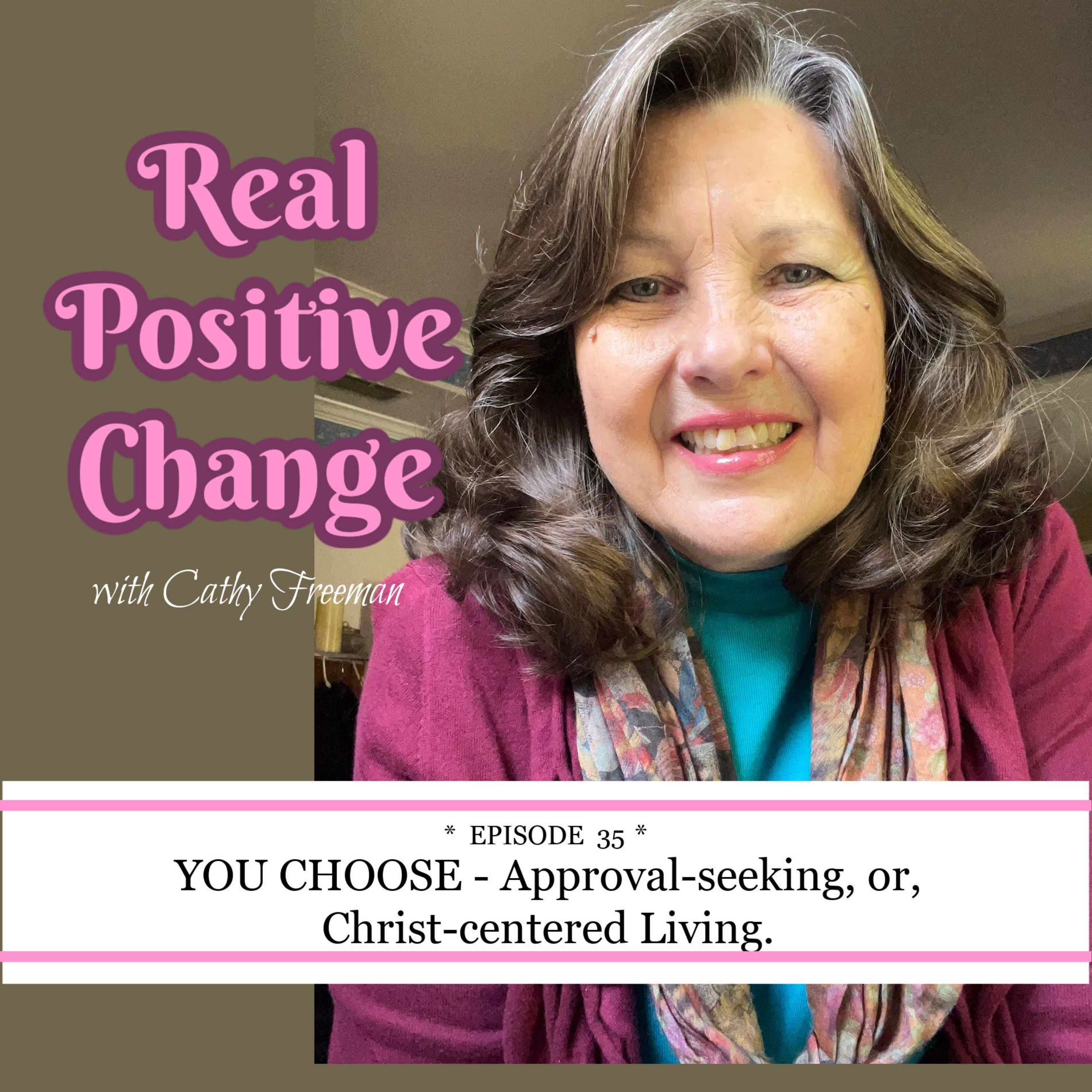
Episode 35 - Change People Pleasing to Christ Centered Living
from Real Positive Change: Creative Renewal for Women · host Cathy Freeman
You want to be creative, but you are tired of looking for ideas of what to create. Maybe you time is limited and you would love having a place that you could choose classes from painting to journal making. Take a moment and click on over to https://cathyfreemanart.com. Coming up with ideas of what to create will never be a problem again. In My Art Sisters, I provide new online classes every month. Classes are easy to access and always available for our art members. Take a moment and visit our site. One of the greatest emotional struggles many people quietly carry is the fear of disappointing others. We do not always call it people-pleasing. Sometimes we call it: being nice , being helpful being easygoing being loving being selfless But underneath it can often be something much deeper: a fear of rejection a fear of conflict a fear of being misunderstood a fear of losing connection a fear of not being loved And what makes this difficult is that many people who struggle with people-pleasing are genuinely kind-hearted people. They care deeply. They are compassionate. Empathetic. Sensitive. Helpful. But somewhere along the way, the nervous system began associating approval with safety. “If everyone is happy with me… then I’m okay.” “If no one is upset with me… then I’m safe.” “If I keep the peace… then I will feel secure.” And because of that, boundaries can feel terrifying. Honesty can feel dangerous. Even simple words like: “No.” “I can’t.” “That doesn’t work for me.” “I need rest.” can create anxiety inside the body. Tightness in the chest. Guilt. Panic. Overexplaining. Fear. Second-guessing. Why? Because the nervous system interprets disapproval as emotional danger. And this is important to understand: People-pleasing is often not simply a personality trait. It is a learned survival strategy. Many people learned early in life to stay emotionally useful. And what I mean by emotionally useful is this: You became highly aware of other people’s emotions. You learned how to: keep the peace avoid conflict comfort others manage tension make life easier for everyone else Maybe being helpful earned approval. Maybe staying quiet avoided criticism. Maybe caretaking created connection. Maybe keeping everyone emotionally comfortable helped you feel secure. So your nervous system slowly built an internal equation: “If people are pleased with me, then I am safe.” But eventually this creates exhaustion. Because you begin carrying everyone else emotionally while quietly abandoning yourself. And this is where resentment often appears. Not because you are selfish. But because the soul can only override its own truth for so long before it becomes emotionally exhausted. And this is where Christ-centered living changes everything. Because healing people-pleasing is not about becoming harsh, selfish, or uncaring. It is about shifting whose approval defines you. When our identity becomes rooted primarily in other people’s reactions, emotions, or opinions, we become emotionally unstable because human approval constantly changes. People are inconsistent. Emotional. Imperfect. Distracted. Sometimes wounded themselves. One day they approve of you. The next day they may misunderstand you. If your peace depends on constant approval, your nervous system will remain trapped in emotional hypervigilance. Always scanning: “Are they upset?” “Did I disappoint them?” “Do they still love me?” “Should I fix this?” “What do they think about me?” That is exhausting. But Christ-centered living slowly teaches the nervous system a different truth: My worth is not determined by human approval. When your heart becomes anchored in Christ instead of approval, something powerful begins happening internally. You stop needing every person to validate you in order to feel okay. Not because you stop caring about people. But because your identity becomes steadier. You begin realizing: I can disappoint someone and still be loved by God. I can set boundaries and still be kind. I can say no without becoming selfish. I can be honest without being cruel. I do not have to abandon myself to maintain temporary peace. That is emotional freedom. And honestly, this work is deeply spiritual because so much of people-pleasing is rooted in fear. Fear of rejection. Fear of conflict. Fear of abandonment. Fear of losing connection. Fear of being “bad.” But scripture repeatedly reminds us: God did not create us to live enslaved to fear. Christ-centered living helps calm the nervous system because it moves us from: “What will everyone think of me?” to: “Am I walking in truth, wisdom, honesty, and love?” That shift changes everything. Now this does not mean boundaries suddenly feel easy. Your nervous system may still react. You may still feel guilt when saying no. You may still feel anxiety when disappointing someone. You may still feel uncomfortable when someone misunderstands you. But now you begin learning how to sit with that discomfort instead of immediately abandoning yourself to remove it. That is growth. Because emotionally mature boundaries often feel uncomfortable before they feel peaceful. Especially for those who spent years overfunctioning emotionally. And this is where we must learn to calm the nervous system spiritually and physically. When you feel the urge to people-please: pause. Breathe slowly. Pray before reacting. Sit quietly with God before immediately fixing everything. Allow the nervous system to settle before responding emotionally. Ask yourself: “Am I acting from love… or from fear?” “Am I helping because I genuinely want to… or because I’m afraid of disappointing someone?” “Am I seeking peace… or am I avoiding discomfort?” Those questions create awareness. And awareness interrupts automatic patterns. This is also where creativity can become deeply healing. Instead of spiraling mentally: paint journal collage stitch write prayers sit with color and quietness Creativity helps regulate the nervous system because it slows the mind and reconnects the body to the present moment. And often when the nervous system calms, clarity returns. One of the healthiest truths a recovering people-pleaser can learn is this: Someone else’s disappointment is not always an emergency. That sentence can feel shocking at first. Especially if your nervous system has spent years trying to keep everyone emotionally comfortable. But Christ never called us to live controlled by fear of human reaction. He called us to live rooted in truth, wisdom, love, peace, and obedience to God. And sometimes obedience requires honesty. Sometimes it requires boundaries. Sometimes it requires disappointing people. Even Jesus disappointed people. Not because He lacked love… but because truth and love are not the same thing as constant approval. That realization is incredibly freeing. Because Christ-centered living is not about becoming emotionally hard. It is about becoming emotionally steady. Gentle without collapsing. Kind without self-erasure. Loving without losing yourself. Honest without guilt controlling you. And perhaps one of the most healing things your nervous system can slowly learn is this: I do not need everyone’s approval to be secure. I am already loved by God. And when that truth becomes deeply rooted inside the heart, people-pleasing slowly begins losing its power. Not overnight. But one honest boundary… one truthful conversation… one peaceful no… one surrendered fear at a time. And maybe that is what true freedom really looks like. Not becoming less loving. But finally becoming free enough to love others without abandoning yourself in the process.
NOW PLAYING
Episode 35 - Change People Pleasing to Christ Centered Living
No transcript for this episode yet
Similar Episodes
Mar 26, 2026 ·1m
Mar 19, 2026 ·34m
Feb 18, 2026 ·11m
Feb 11, 2026 ·45m