
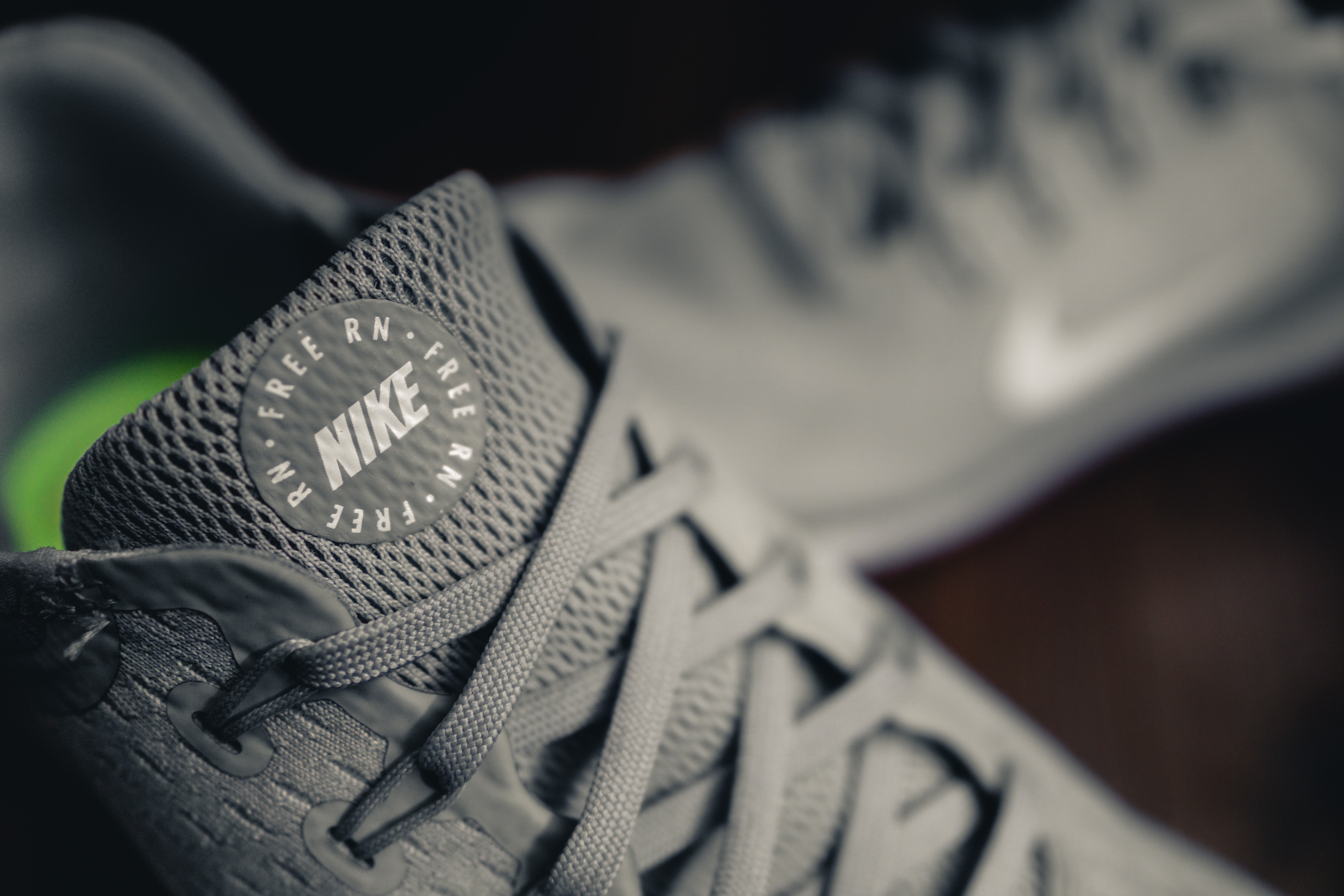
Welcome to the Movement Movement, the podcast for people who want the truth about having a healthy, happy, strong body. Remember, your body was meant to move. Now here's your host, Stephen Sashin. The new Nike React Infinity Run can reduce injuries by 52%.
Who wouldn't want that? I don't know, but we're gonna take a look and find out more in this episode of the Movement Movement Podcast, the podcast where people who wanna know the truth about what it takes to have a happy, healthy, strong body starting feet first, because those things are your foundation, where we debunk the propaganda, the mythology, sometimes the lies that people tell you. I want it takes to run to walk, to hike, to dance, to do yoga, to cross it, whatever it is you like to do, the way you like to move, and to do that enjoyably and efficiently and effectively for the rest of your life. I'm Stephen Sashin, your host of the Movement Movement Podcast.
I'm from Zero Shoes. That's X-E-R-O-Shoes.com and we call it the Movement Movement, because we're trying to create a movement about natural movement using your feet the way they're supposed to be used, bending, flexing, moving, feeling, and the rest of your body that can follow that. Go to www.jointhemovementmovement to find out more, to get paid for these episodes, to find all the different ways you can enjoy the podcast on YouTube and on Facebook and all the places the podcast or podcasts, and where you can share and review and like and thumbs up and all those things. You know what to do, basically.
If you want to be part of the tribe, please subscribe. So let's jump in, shall we? Alright, I'm going to do a fun thing I haven't done before and that is some screen sharing, so let's click right over here to the new Nike React Infinity Run. It keeps you running because it says on here it's talking about how, you know, hey, we want to reduce injuries and improve performance and we mastered cushioning, whatever the hell that means, and it scrolls down and eventually, where did I put it?
Oh, here we go. Where it says, here we go. It's an ideal shoe for the kind of runs that don't fall into the silo of interval or tempo, long runner race. I don't even know what that means.
The shoe matches best to base run days. There's a middle mileage, moderate efforts, etc. And it says, in fact, an external study done by the British Columbia Sports Medicine Research Foundation on 226 runners in the Nike React Infinity Run and the Nike Structure 22 traditional motion control shoe showed that the runners in the react had a 52% lower injury rate than the motion control shoe with wares confirming they felt less pain in their knees and feet. Alright, let's start to break this down.
First of all, I just want to let you know I have tried to reach out or I've actually tried, not tried. I've actually reached out to the BCSMRF multiple times and asked them where this study was published or they could send me a copy of the study. And unfortunately, I have not gotten any response to either of those things. Maybe they exist.
I haven't found them. If you find them, I want to hear more. Secondly, let me just kind of jump back and say something about this. This is kind of a rant admittedly.
And it's not even necessarily the most well thought out rant that I've had because frankly, this has me so somewhat infuriated that I just needed to get it out of my system and share it with you. If you find out more information about this, let me know. If it turns out that I'm completely full of it and what I say here, I'm totally cool with that. But part of what we're going to be doing is not trying to tear down this shoe, but taking a look at how some products are marketed in a way that sounds great that may not be the way it seems.
So let's just jump back to what this says right here where it says, 50% lower injury rate than motion control shoe with wares confirming they felt less pain in their knees and feet. Well, I'm not quite sure what the less pain in their knees and feet has to do with injury rates because it's not clear. Are they just saying that there are people who felt less pain in their knees and feet compared to the Nike structure 22 or to their normal shoe and is less pain in your knees and feet? Actually, what you want?
I mean, is that the solution or do you want no pain in your knees and feet? Do you want to have no injury rate? I mean, what's going on? This, by the way, this, what we're seeing right here on the screen, just saying, 220%, 26% injury rate, this has been republished in a bunch of places.
It's been republished here in sneaker news where they talk about it here in gear control. They talk about the same thing here and whatever this is well and good. So it's a bunch of people who've been saying the same basic thing that Nike has been putting out in their press release about what this incredible shoe does or seemingly incredible shoe does is kind of the operative phrase. Let's see if I can get back to the screen.
Oh, now things are slightly out of place. You're seeing all the tabs that I've opened. I'm going to move some of my tabs out of the way. Let's actually, I want to show you these tabs and let's go.
Oh, here. This is just a let's run. They talk about it. But let's take a look at the Nike site itself where it talks about this shoe that by the way is going to be $160 for a shoe.
And let me pause there. There's a lot of cushioning in the shoe. There's a big wide flare in the soles on the shoe. These two things alone are really, really interesting to me.
Let's say by interesting. I mean, not really interesting at all that wide flare means that if you land on edge, it makes your foot move in a way that shouldn't necessarily the extra cushioning cushioning starts to break down the moment you start to wear it. So that's something to be aware of. But let's just jump into the details that are the part that really, really got me going about this scrolling down the page scrolling down the page scrolling down the page designed to help reduce injury.
Let's just start there. That doesn't even mean that it does. It just says that's what their intention was. And that's a fine thing to say.
I'm all for having good intentions. But when you say something like design to reduce injury or like, you know, design for heart health, which is on, I think, Jerry Hosebox's, you know, the implication is that it actually does that. And maybe it doesn't. But it's an interesting phrase.
You can use that phrase to get around making an actual claim. It's designed for it. But that doesn't mean that it does it. So let's go back.
It's an audacious shoe with an even more audacious goal. We designed the reactivity run to help reduce the risk of running related injuries. This is another qualification, not reducing running related injuries, reducing the risk of getting them. So, I'm not saying that's an interesting phrase.
Larging independent study. I don't know if it's an independent study or not, because I don't know who funded the study from the BC, BC, SMR, F, F, M, or whatever the hell it was. You get the idea, but let's keep scrolling down. Runner approved is what it says.
So we commissioned a study. That's an interesting thing. So we commissioned a study. Let's back up.
So in one of our largest independent studies, we commissioned the study. Now, I'm not saying that's not independent, but we do know that in pharmaceutical research that if someone, if the pharmaceutical company commissions the study results tend to air in the favor of the pharmaceutical company, well, much higher than if the study is literally independent. So I don't know if it's independent or not. I'm not saying here they admit that they commissioned the study because look, if we commissioned a study, I will confess that.
Some people will definitely say, but you paid for it. So of course it showed up in your favor. Important thing to recognize. So what they did runners followed a 12 week variable training program ending in a half marathon.
But based on the results, we think we're on the right track in testing and it qualifies testing. The Nike reactivity run should have a 50% lower injury rate compared to the Nike structure. Our leading motion control shoe. Okay, let's just keep that in mind as I read this next part.
So here we go. The Nike react reduced injuries by 50% compared to the air zoom structure. Blah, blah, blah, blah. They defined an injury as missing three or more consecutive runs due to running related pain.
So not necessarily an injury, but something where it's painful enough that you want to take some time off. So that's an intriguing thing. Here's where things get fun. Our study found, I like that.
Now it's our study, not independent study, our study found that 30.3% of Nike air zoom structure 22 runners experienced injury, but only 14.5% of react infinity runs people did. So, okay, 14% is 52% lower compared to 30.3, but pause there in their best selling most popular motion controlled shoe designed to help runners run better with less injury because it's controlling motion. 30% got injured over a 12 week period. I'm going to say that again with me on the screen and not just the text on the screen.
One third of the people in a 12 week study got injured wearing their best selling most popular motion controlled shoe. Wow, is the only thing that I can say. The way they're spinning this is it's totally cool. We had the shoe that's doing better, but they're admitting that their other shoe practically creates injuries.
One third of the people almost 30% got injured in 12 weeks. Now, this has been a common thing that people have said in the last 50 years roughly since they have the modern motion control running shoe that injuries haven't changed. 50% of runners get injured every year and 70-80% of marathoners get injured every year. Here, like he's admitting, you have almost a one in three chance of getting injured in as little as 12 weeks by wearing their most popular shoe.
The same thing that's kind of amazing is now we have a shoe that's got a lower injury. Again, we're not even sure what that means given the way they've ill defined it, but that's still one out of seven people who in 12 weeks got injured enough to take time off and chill out. Well, the first question is if this shoe is so good, then why are they even going to sell any other shoe that's got a higher injury rate than the one that's got the 14 point something percent injury rate. Wouldn't that be a signal that they're basically admitting that what they've been doing for all these years just really doesn't work and now that they think they have something that does work, it should just take over?
I mean, that's the way I would do it if I found something that was that much better. I shut down operation and just say, we're not going to do anything else until we crack the code on this because look at what a big difference it made. But I want to go back to one of these articles was from Nike saying, wait, it's not there. It's not here.
It was Nike. I think it was in a thing from Nike where they were saying what they think caused the changes and it's, let's see, let's see, let's see. Oh, man. I can't remember where basically they were describing what they thought was happening.
Here we go. Here we go. Here we go. This inspired combination of the Infinity Run provides a soft responsive platform and delivers it with a wide and midsole similar to the geometry of their 4% shoe.
It's got a rocker bottom that yields a more fluid transition from foot strike to toe off. So they're encouraging that you land on your heel with your foot outstretched in front of you, which is problematic. Then there's a bunch of foam that, of course, foam wears out and the research on foam shows from like Christine Pollard looking at maximal issues that foam does not decrease impact loading forces. So that's an interesting thing.
She hasn't tested tissue, but regardless. So the Infinity's rocker geometry encourages a slight lean forward. Okay. Well, let's see the evidence for that moving the runners foot strike from heel to mid foot or even forefoot.
Well, so hold this thought. So moving the runners foot strike from heel to mid foot or even forefoot. But wait, hold on. Doesn't it say it had a rocker like bottom to yield a fluid transition from foot strike to toe off?
Okay. So if you're landing forefoot, there is no transition. If you're landing mid foot, there may be, but I'm not seeing how the rocker like construction, especially for mid foot or forefoot actually encourages for propulsion. All right.
Interesting. The wider platform is supportive foam. They're coming to provide a reassuring feel. Okay.
So reassuring feel is an interesting thing. Again, is this while someone's running? Is it while someone's standing on it? Comfortable shoes are not necessarily good shoes like lying on a temper, or memory foam mattress feels great.
But do you want to do push ups or squat jumps on it? No. Same thing when you try on shoes. They might feel comfy.
They might feel cushiony. They might feel like they're holding your foot in place nicely, but that doesn't mean they're good for you. How things feel and what they do in performance can be two very different things. So again, it's just this is Nike being very vague here from my opinion.
The shoe gently guides the foot in a smooth straight line, reducing side to side wobbling and movement. Okay. So this would imply that they have come to the conclusion that side to side movement and wobbling. I don't know what that means are in fact the causes of injuries.
And I don't know that that's actually been shown anywhere. But if it has been shown somewhere, if they have demonstrated that, then again, they would know that that side to side motion and wobbling is going on in all of their shoes. It's again, almost a confession about the problem with not just their shoes. I don't want to be picking on Nike.
Basically every modern running shoe with a elevated heel, flared sole, hold on. A design that doesn't let you do things like roll it into a ball, which shows that your feet can totally move naturally. It isn't super lightweight. All those things that modern run shoes have, they're all basically the same.
This is Nike confessing that the entire design of modern athletic shoes is arguably fundamentally wrong. Oh, my oh my oh my. Now again, I am totally happy for people to tell me that I've had my butt about this and then I'm seeing it all wrong, but I'm just seemingly missing where I'm missing it. So again, a wide flared sole creates problems.
Phone breaks down and is always tuned. Phone I've talked about before is essentially tuned to a particular frequency, a particular force actually, the speed with which you hit the amount of force, the amount of mass that you're using at that speed. And if you're not the right speed, the right mass, I can't talk the right force, the right amount of mass at the right speed, then that phone might not be affected for you. They love you talking about how this phone delivers more energy return.
There's no such thing as energy return. There's energy suck. All phones sucks energy. You don't get more energy out than you got in.
So energy return is just marketing nonsense for how much does it suck at a certain speed, at a certain mass, basically a certain amount of force. And what happens over time? How quickly does that change? And they don't talk about that either.
These are all things that don't get discussed. So let's see if there's anything else in here that yeah, yeah, yeah, yeah, yeah, external study, et cetera, et cetera, et cetera. No, that really kind of covers it, to be honest. I'm obviously almost at the point of speechlessness about this.
But frankly, the biggest thing that I want to come back to is the very beginning. No one's seeing the study as far as I know. I reached out to about a dozen researchers and none of them have seen the study, the independent study that they commissioned. And again, I'm not saying it's not a good study.
I just don't know. They're using this information totally to make it sound great. The flip side of the spin is look how bad everything has been up until now. And I'm happy in a way that they're confessing this.
It also just pains me because as a company that is also trying to make footwear that is helpful for people that can be useful, that can help make your body work better and more naturally. Hopefully that leads to a reduction in injuries, you know, to see information used in this way. It just obviously gets my goat, if you will. I mean, what does that phrase mean?
Get your goat. I've never had a goat. So if you've had a goat, let me know what that means. And look, people will say, well, where's your study?
Where's your evidence? Where's your information? And all I can say is the companies that are making natural movement products and they're very few of us. We are not big companies.
We are not multi-billion dollar companies. We are in the, you know, $10 to $30 million company range. And some even smaller. We don't have the kind of cash to commission a long-term study, even a 12-week study that Nike does, or even better to find a way to commission this where it's totally anonymous and completely independent.
But what we can tell you is there's a bunch of great research that we've talked about on previous episodes of this podcast, Research from Sarah Ridge from BYU, showing that just walking in a truly minimal issue builds foot strength just like doing a specific foot strengthening program. Research from Isabel Sacco in Brazil showing how just being in a minimal issue can help reduce or eliminate neosterior arthritis in the population that she had in that study. There's so much interesting information about what it takes or what's involved in using your feet naturally and how having padding and elevated heels and motion control and our support don't help. That I don't know why people are asking us for our studies, especially because, well, because we don't have a specific one.
That's why. But especially because up until the late 60s, early 70s, all footwear was like ours, basically thin-soled, flexible, some of it actually foot-shaped, some of it not foot-shaped for various reasons, mostly to keep it on your foot. But for the first 9,950 years of the 10,000 years that we know human beings have been wearing footwear, it all looked like stuff that we do, something to protect your foot, something to hold that protection on your foot. And anything beyond that, we just haven't seen any real research that shows that this is actually the most important part.
I should have brought this up earlier. Congratulations that they showed that shoe, the new shoe, had a 14-inch change percent injury rate in 12 weeks. The real question is how does that compare to a bigger population? And of course, how does that compare to people who've acclimated to running a natural movement footwear?
That would be a really fun one. Or even getting people to acclimate to natural movement footwear. Let's see what the injury rates are there, especially if we know how we're defining injuries. And we put people on a program that's as structured as the one that Nike was using.
So all that said, I can't wait to hear the conversation about this. I'm looking, oh, and did I mention 160 bucks? I did mention that. $160 for a shoe where they're going to mostly say that you're going to want to replace it every 300-500 miles instead of having something like, you know, 5,000 miles of warranty on our shoes.
Put it all together. And again, my head is spinning. I just wanted to get this out and see what you guys all thought. I can't wait to hear what happens.
Go to www.jointhemovementmovement.com. You can comment on this episode there. You can also do it on Facebook or on YouTube or all the other places that you will find us when you go to join the movement. You can find us in a related note.
If you have any questions that you want to ask, any specific comments you want to go directly to me, anybody that you want to recommend to be on the show, just drop me an email. Just move at www.jointhemovementmovement.com. I can't wait to hear what your thoughts are. I said that 50 times.
My apologies. But more importantly, I can't wait to hear what happens when you get out, feel the freedom, feel the fun and feel the world of natural movement and as always live life-feet first. You've been listening to the Movement Movement podcast with host Stephen Sashan. Remember to join the tribe and subscribe at www.jointhemovementmovement.com.