
EPISODE · Oct 18, 2025 · 9 MIN
Episode 5 — Glossary of common cybersecurity terms
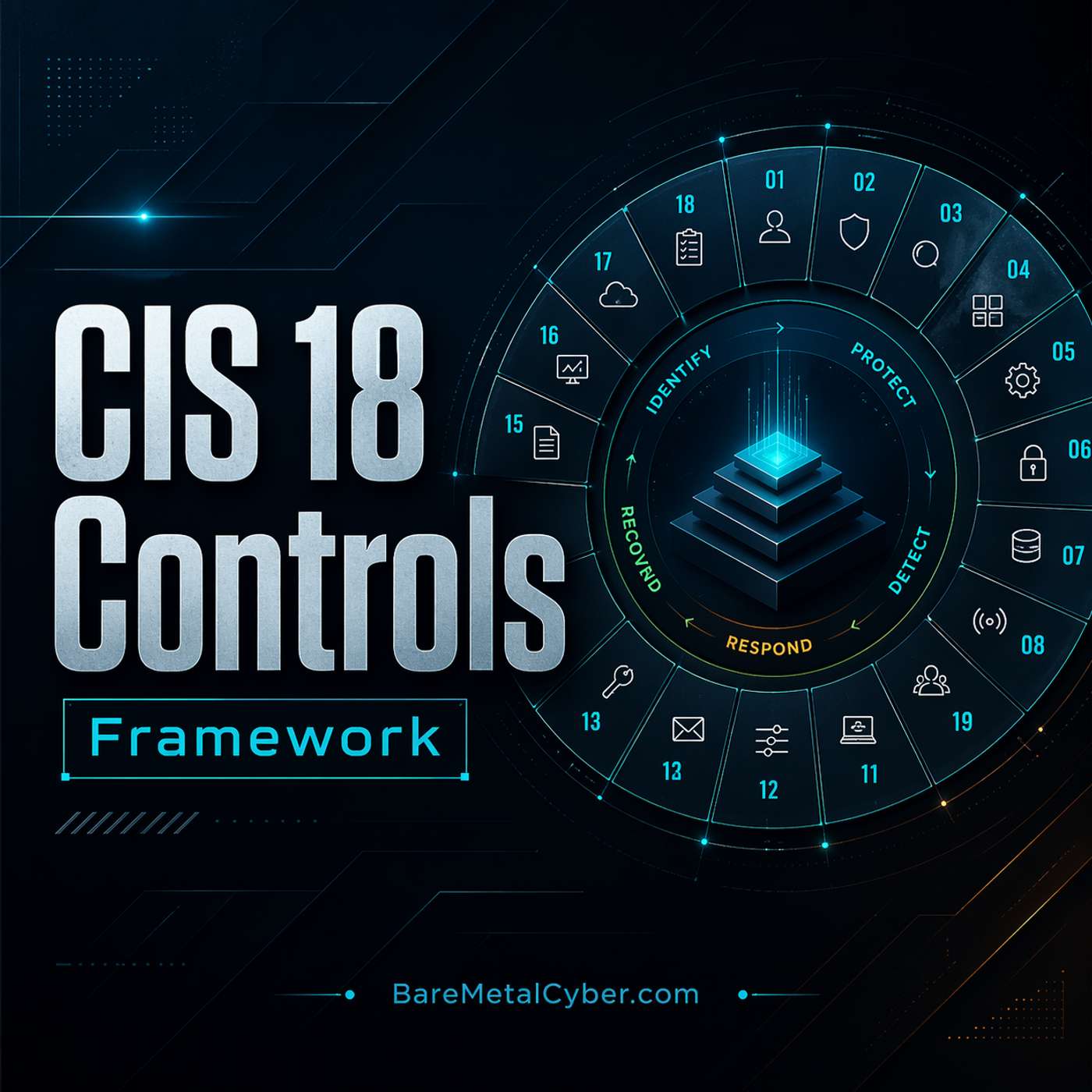
from Framework: The Center for Internet Security (CIS) Top 18 Controls · host Jason Edwards
As cybersecurity practices mature, professionals encounter more specialized terminology that connects operational tactics to governance and technical architecture. Multi-Factor Authentication (MFA) enhances login security by requiring two or more proofs of identity—something you know, have, or are. Encryption transforms readable data into a coded form to protect its confidentiality both in transit and at rest. Patch management refers to the continuous process of applying vendor updates to eliminate known vulnerabilities, while configuration management ensures that systems maintain secure, documented baselines. Endpoint Detection and Response (EDR) describes technology that monitors devices for malicious behavior, supplementing traditional anti-malware defenses. In network contexts, terms like Intrusion Detection System (IDS) and Intrusion Prevention System (IPS) denote mechanisms that identify and stop unauthorized activity. Meanwhile, SIEM—Security Information and Event Management—aggregates and correlates logs from across the enterprise to detect anomalies and support investigations.Beyond technology, the CIS Controls frequently reference governance-related terms. Implementation Group (IG) defines which safeguards apply based on organizational maturity, while risk assessment quantifies exposure and prioritizes remediation. Data classification determines how information is labeled and protected according to sensitivity, whereas data loss prevention (DLP) solutions automatically monitor and restrict unauthorized transfers. Incident response plan (IRP) outlines roles, responsibilities, and communication procedures during cyber events. Zero trust represents a modern design principle assuming no implicit trust between users or systems, enforcing continuous verification at every layer. Together, these advanced concepts give depth and precision to operational cybersecurity, bridging the gap between compliance and active defense. Mastery of this language allows professionals to interpret frameworks, communicate findings, and implement controls confidently across technical and managerial domains. Produced by BareMetalCyber.com, where you’ll find more cyber audio courses, books, and information to strengthen your educational path. Also, if you want to stay up to date with the latest news, visit DailyCyber.News for a newsletter you can use, and a daily podcast you can commute with.
Embed this episode
Ready to play
Episode 5 — Glossary of common cybersecurity terms
No transcript for this episode yet
Similar Episodes
No similar episodes found.
Similar Podcasts
No similar podcasts found.