
EPISODE · Mar 5, 2026 · 4 MIN
Episode 596 - Cosmic Conundrums
from Kevin McFarlane's podcast · host Kevin McFarlane
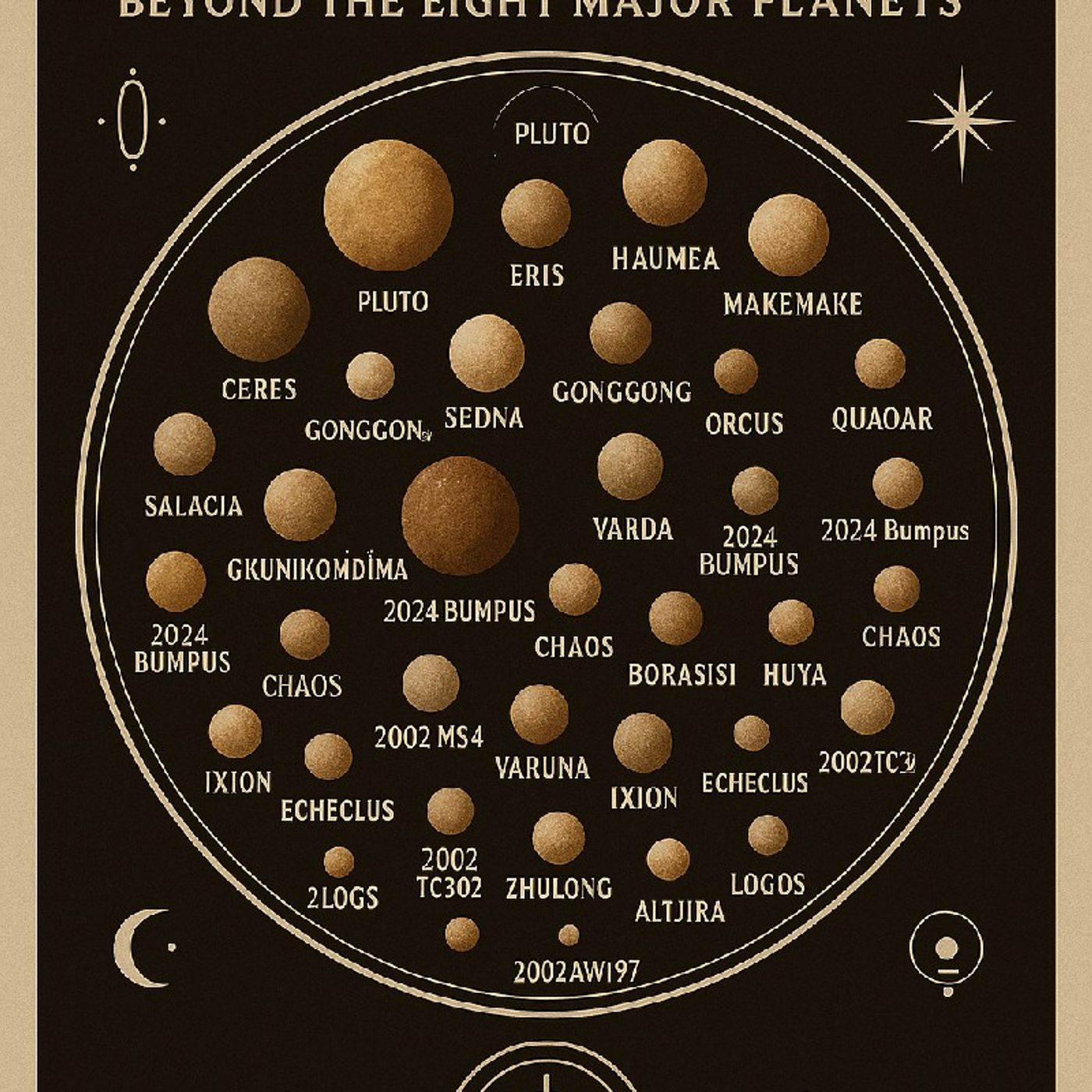
The architectural framework of the solar system is traditionally defined by its eight primary planets, yet a sophisticated "cosmic census" reveals a much denser population of significant celestial bodies that govern the dynamics and historical record of our local neighborhood. While the terrestrial planets and gas giants represent the majority of the system's observable mass—excluding the Sun—the secondary census focuses on 29 additional bodies that meet critical thresholds of size, mass, and geological complexity. These objects, which include major natural satellites, recognized dwarf planets, and significant Trans-Neptunian Objects (TNOs), offer a window into the primordial solar nebula and the chaotic migratory history of the outer planets. The identification of these 29 bodies is not merely an exercise in cataloging; it reflects an evolving scientific understanding of what constitutes a "planetary-mass object". Under the geophysical definition, many of these 29 bodies exhibit the characteristics of planets, such as hydrostatic equilibrium and internal differentiation, despite their failure to clear their orbital paths as required by the 2006 International Astronomical Union (IAU) nomenclature. This report investigates the physiological and orbital profiles of these 29 significant bodies, their roles in the broader solar system ecosystem, and the theoretical candidates that may yet expand this census.
Embed this episode
NOW PLAYING
Episode 596 - Cosmic Conundrums
No transcript for this episode yet
Similar Episodes
No similar episodes found.
Similar Podcasts
No similar podcasts found.