
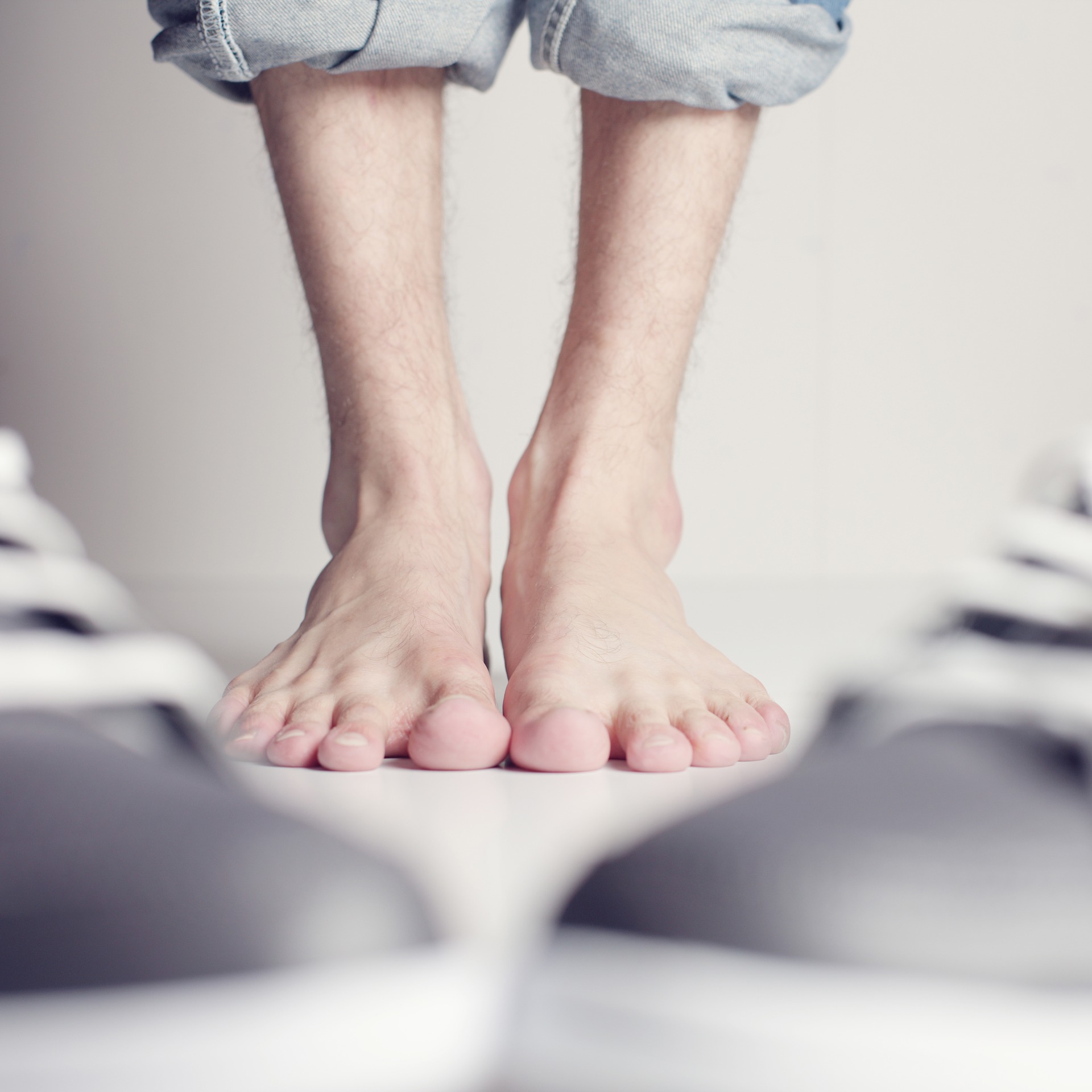
Welcome to the Movement Movement, the podcast for people who want the truth about having a healthy, happy, strong body. Remember, your body was meant to move. Now here's your host, Stephen Sashin. You've taken a long run or a long walk or a long hike, your feet are beat up and now you need recovery shoes.
Or do you? Do you even need to recover at all? Let's take a look at that in today's episode of the Movement Movement, the podcast for people who want to know the truth about what it takes to have a happy, healthy, strong body starting with the feet first because you know those things are your foundation. We break down the propaganda mythology, sometimes the outright lies you've been told, about what it takes to run to walk the hike to dance to play, to lift, to do yoga, to cross it, whatever it is you like to do to do it enjoyably, efficiently, healthily, but best importantly, enjoyably, for not having fun, do something differently.
You are. I'm Stephen Sashin, CEO of Zeroshues.com, your host of the Movement Movement podcast and we call it that because we are creating a movement about movement. More accurately, we are trying to remind people, help them rediscover that natural movement is the obvious, better, healthy choice the way we currently think natural food is. And it's a movement that means it involves you spreading the message, sharing the word about natural movement.
If you want to spread the word, share the word, spread the word, whatever it is you're doing, be part of our community. It's really simple. Just share and like and review and do all those things you know how to do. Go to www.jointhemovement.com and that's where you can find all the previous episodes, as well as all the places that you can interact with us on Facebook, on YouTube, on Instagram, etc., etc., etc., of course, all the places you can get.
This podcast, we're all podcasts are found in all those different places you know where to find them. This simple thing, of course, if you want to be part of the tribe, please subscribe. Okay, let's jump in. Now, I'm going to talk about whether you need to recover at all or why you would need to recover in a few minutes, but let's just assume for the fun of it that you've done along walk along, along, ride along, hike your feet or beat and you've told you need to recover your shoes or sandals.
So there's two important things that you need to know about that. The first is, if you're really beat up bad, you obviously need to rest. I know that goes without saying. I know that seems somewhat self-evident, but a lot of people just kind of forget that.
Then there's a whole lot of questions about, you know, do you take some antioxidants or aspirin or ibuprofen? Do you ice things or not? The debate goes basically like this. There's things that you can do to reduce inflammation, but inflammation is your body's natural reaction to things.
If you reduce inflammation, you may be actually reducing your body's ability to heal properly or to get stronger moving forward. I'm not going to weigh in on that one either way. You're going to have to do a little research inside which idea you like. I will tell you personally, I've stopped doing things like antioxidants or excessive antioxidants with this idea.
I do take cold showers and cold baths and I do jump in cold water if I'm racing near Boulder Creek here in Colorado, for example. But mostly because it just feels really good. I don't know that it helps with recovery so much, but I really just enjoy doing it. So that's kind of why I do it.
But I don't do it with the idea that I need to and that's part of my recovery, even though a lot of professional athletes will swear by this. The research is currently saying that it's not quite so simple and usually not exactly what people think. Often the opposite of what people think. So take a look.
But anyway, that's idea number one is resting. But here's the more important one, idea number two. And it's called active recovery. An active recovery is really a simple concept.
The gist is you want to move as much as you can. And that's the key phrase as much as you can because you want to be stimulating blood flow and keeping those muscles going. You don't want things locking up and tightening up. You want to just move as much as you're able to do comfortably.
You know, push it a little bit. You're not trying to run another marathon after you run a marathon just as active recovery or just to be active. So you want to walk as much as you're able to. You want to bend and flex your feet as much as you're able to.
If you want to do towel scrunches where you have a towel on the floor, put your feet on it and scrunch up your toes so you can follow up the towel. You know, that's an idea as well. The idea is that movement is good. What a shock.
This is one of these things. It's actually funny. We did a previous episode. We talked to my dear friend Dr.
Irene Davis from Harvard who used to teach people how to make orthotics and essentially stop using their feet naturally. She taught physical therapists how to do their job and asked her, you know, what was the big wake up call for you? And she said, when we get people into a physical therapy clinic with almost any problem, our goal is to get them moving as much as we can as often as we can. And then I realized that that was true except for feet where we were immobilizing their feet.
And it seemed that maybe that didn't make sense. That was her sort of opening the door to discovering natural movement. Now Irene is one of the top researchers in natural movement in the world and has taught more people about this than almost anybody that I can think of. So again, the idea of active recovery.
So you want to let your body continue to move as much as you're able to without creating extra problems. So way back when our one of our first sports sandals, this is our Z Trek sandal, this was promoted in runners world as a great recovery sandal because it lets your foot move naturally. There's nothing getting the way of natural movement and it gives you a little bit of protection as well. So that's one idea.
You're going to find other recovery products that are a whole bunch of foam, a whole bunch of cushioning. And I'm not a huge fan of those because typically they actually do. While they encourage certain kinds of movement, they don't really let your feet bend and flex and move and they certainly don't let your feet feel the ground. And I think part of the value of active recovery or one of the things that contributes to active recovery is letting your brain know what your feet are doing.
So we can tell you this is too much. This is too little. You know, basically what's okay. If you want a little more protection than the Z trail, this is our Z Trek, this is our Z trail sandal.
So you can see saying, you know, really, really flexible, but a little more protection. So either of these will let you get that natural movement thing happening while still getting your little protection while you get your feet going. Our shoes do the same thing. So let me grab a let's see.
Here's our speed force. This is our closest to barefoot shoe. So also great for active recovery. Nice wide toe box.
So it lets your toes spread and play and move and of course, you know, like all zero shoes, really, really, really flexible, really lightweight. So these are just ideas for things you can do while you're recovering because you want to recover to just keep as much motion going as you can to keep those muscles working, get those that blood flow and that lymph flow and all those other things that need to move to basically help you recover. But now let's get on to the magic question. Why do you need to recover in the first place?
So this is where things get interesting because for many people, there's two major things, two or three major things that I see. One is people end up, they finish a race and their toenails are all like destroyed. They're black, they're falling off and this is coming from something really pretty obvious. Their toes are just jamming into the front of their shoe as they're running.
Now that can happen in a number of ways. But one way that happens is if you have a shoe with a midsole and I don't have one here to use as a demo, but just any shoe with foam in the midsole, when it bends, we'd imagine a phone book if you remember what a phone book is. And when you bend a phone book, you try to roll it up, the inside is going to roll faster than the outside. Well, when you have a shoe with a midsole, the same thing can happen as it bends as your foot is kind of going through natural motions.
It's effectively getting shorter as you're walking or running. And so whatever length you're in, that length can change as you move. So your toes can end up jamming into the front end of the way it is really unpleasant. With zero shoes where there is no midsole, that doesn't change.
So the shoe doesn't effectively get shorter as you're walking, running, etc. When I wear these, and this is a personal preference, my toes are right up against the edge. I can feel the edge. And I really like that because it gives me a little bit of extra feedback and it never gets in the way.
And in fact, if I wear a super thin pair of racing socks, it makes things a little more slippery than if I'm barefoot. So totally not a problem that my toes right against the edge because they never, the shoe never gets effectively shorter. So that's one issue that can happen. Another issue that can happen is simply when you're in a shoe that doesn't let your foot bend and flex and move and feel, you're basically just slamming your foot into the ground.
Even more, if you overstride, if you land with your foot out in front of your body, especially if you then land under heel, which is what you're going to do. If you overstride and point your toes, land on the ball of your foot, that's going to cause even more problems because that's putting excessive strain on the metatarsals or bones in your feet. You don't want to do that. You want to land with your feet underneath your body, midfoot or forefoot, forefoot's ideal, midfoot, that'll work as well if you're in a pinch, if you will.
But if you're reaching out with your foot and you're landing on your heel, what happens is by the time your foot comes down, it's basically as flat as it can be, given that there's probably arch support and support, of course, means that you're not letting your foot move. So you're making it weaker. But let's just talk about how it got flat. Let me do a weird analogy of doing this.
Think about doing a bicep curl. When you start the curling motion, that's when you're the weakest. When you're in about halfway, that's when you're the strongest. It's not quite halfway.
It's actually a little bit past that. But the point is, this is a strong position. This is a weak position. Well, with your foot, this is a strong position using the arch, engaging the arch is a strong position.
Having your foot flat or not being able to engage your arch is a weak position. So if you are landing on your heel, rolling on your foot and it can't move, it can't engage the arch, you're putting strain on that foot in a weak position. So you're stronger again, bicep curl, you're stronger here. If you took the weight that you could curl from the halfway point all the way and tried to use that at the extent point, you're putting excessive strain on the bicep and the bicep tendons.
It can really mess up badly as the gist of it. So same thing with your foot. If you're not engaging your arch, which you do naturally when you are a foot or foot or midfoot lander, you're putting excessive strain on your foot in your planar fascia where it wants to be strong, but you've made it weak. So the point is, you need recovery because you've compromised the function of your foot to begin with.
Get it? So you, recovery shoes are the solution for crappy shoes to begin with or shoes that don't let your feet do what's natural to begin with. It's an interesting thing. One of my favorite stories about this, there's a couple who did a very long, like a seven day, not like a seven day stage race across Madagascar wearing, I should have just brought one of our regular sandals.
So like our Genesis sandal or our Z or our cloud sandal or our Jesse sandal or our Barakus, any of our sandals really work for recovery. I don't know why I just brought up these two only. But anyway, they did the 256 K stage race across Madagascar in a pair of essentially our Genesis sandals. And when they got to the race, people were saying, why, where are your shoes?
They went, well, you know, we're wearing them. You know, like, you know, your shoes. I said, well, we're running in these. It's like, don't you have like backup shoes?
They said, well, we have extra laces. If that's what you mean, it's like, no, don't you have like shoes? And they said, no. So during this race, they're running through water and then on to dirt or sand or gravel or grass or whatever it was in and out of liquid is the point.
What that did is when their feet got wet, the soul of the foot absorbed some moisture and for the people in sandals, our runners, that was John and Mel, wasn't a problem because their feet dried off really quickly. But if you're in a shoe that held onto that water, you're putting all this horizontal force on your soul, you're putting all this friction and torsion on your soul when it's got edema, when it's filled with water. So a lot of people at the end of this race, they had skin peeling off their feet, they barely could walk, they had black and toenails, all those things that I described as, oh, and if you have shoes that have pointy toes, two pointy toes, that can cause other problems. At the end of this race, John and Mel are ready to keep running the next day while everybody else is in the first day of tent.
So they didn't need to recover because they didn't compromise their feet to begin with. And we hear stories like this all the time, people who, maybe you're just standing up all day and it used to be that you, at the end of the day, you could barely move and now at the end of the day, you're going, huh, I'm feeling okay because you're using your feet naturally. So your feet, their design, their job is to help you move. They're designed to bend and flex and move and feel things.
So your brain knows what's going on with the rest of your body. Try unsuccessfully to move in your ankle, your knee, your hip and your back. Let your feet do their job, the rest of your body can do its job. Let your feet do things where it doesn't cause problems that need recovery and you don't need recovery.
So I'm really curious to hear what your experience is with moving to natural movement and how much you do or don't need to recover compared to what you were doing when you were in big, thick motion control and padded shoes. And that's the gist of the recovery story. If you do things that let your feet work naturally, you may not need to do as much to recover. Like I'm not going to say your feet aren't going to get tired.
Even at the end of the day just standing like when we're doing a trade show, end of the day, my feet are a little toasted. But they're not something that needs recovery, just needs a nap or a good night's sleep and I'm fine the next day. Sometimes it doesn't even need that much. Point is regular muscular activity, you're going to feel that sort of normal and needs just normal recovery.
A little bit of rest and you're totally fine. The kind of thing where you feel like you need to quote recovery shoes, maybe you just need to think about the way you're moving instead so you don't cause the problems that you need to recover from. All right, again, can't wait here what you think. And again, if you have any questions or comments, any recommendations, people that you think should be on the show, anyway, you want to get in touch, just drop me an email.
Move at jointhemovementmovement.com or go to www.jointhemovementmovement.com. You'll find previous episodes, you'll find other ways you can engage, you'll find our contact form, et cetera, et cetera. Again, we're trying to make natural movement the obvious better choice the way natural food is. We're not trying to make it that way.
It is that way. We're trying to help people rediscover that. And we are looking forward to your help in doing that. You are part of the tribe.
If you want to be part of the tribe, please subscribe and then share and like and comment and thumbs up and hit the bell if you're on YouTube. You know how to do all those things. More importantly, go out, have fun and live life. Be first.
You've been listening to the Movement Movement podcast with host Stephen Sashan. Remember to join the tribe and subscribe at jointhemovementmovement.com.