
EPISODE · Apr 1, 2026 · 5 MIN
Episode 649 - Cosmic Conundrums
from Kevin McFarlane's podcast · host Kevin McFarlane
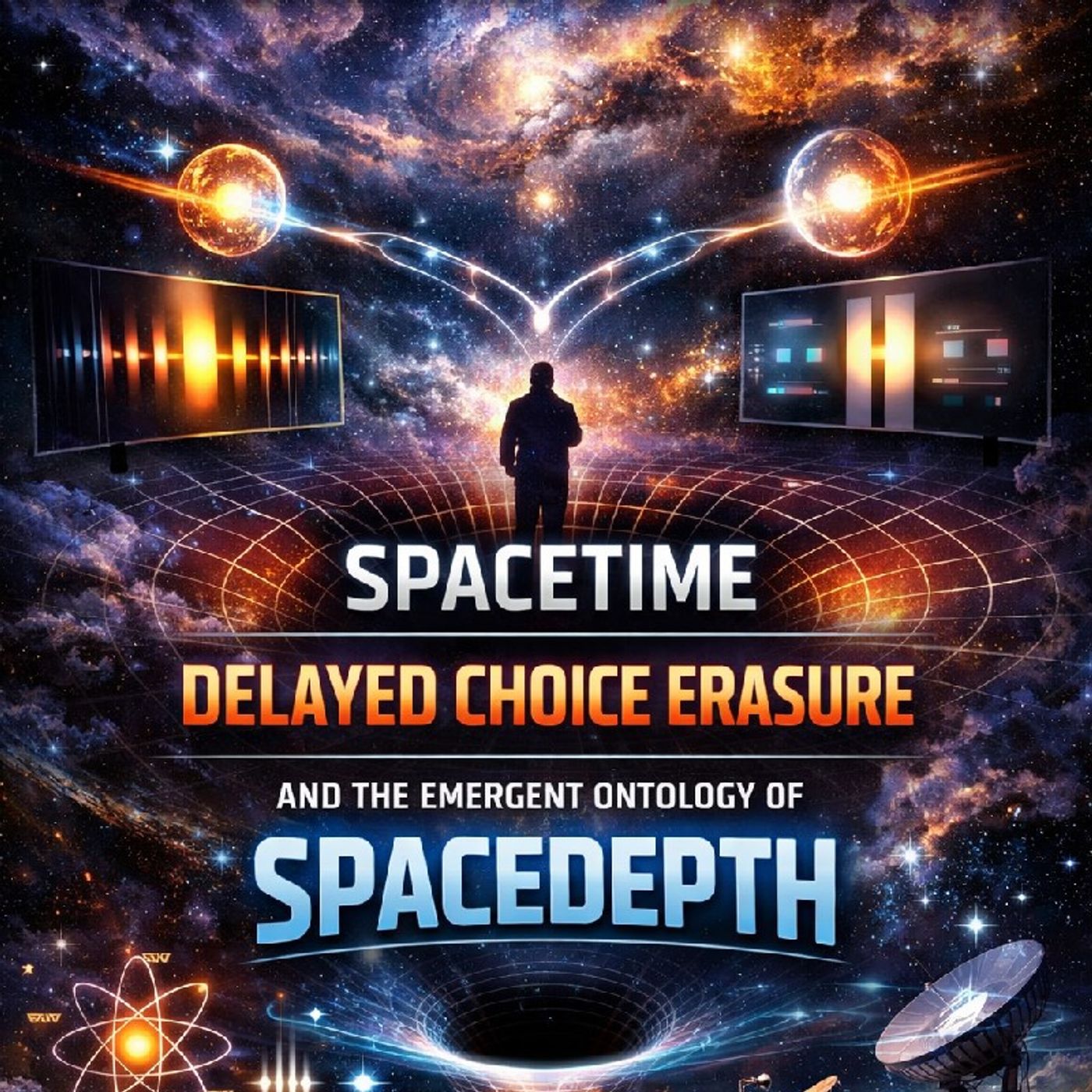
The reconciliation of quantum mechanics and general relativity remains the most formidable barrier to achieving a complete unified theory of physics. While both theories have passed rigorous experimental tests within their respective domains, their foundational assumptions regarding the nature of time and space are mutually incompatible. In the standard paradigm of quantum mechanics, time is treated as an external, absolute background parameter, whereas general relativity dictates that time is a dynamic, coordinate dimension interwoven with the geometry of space. This tension is pushed to its absolute limit by quantum foundational experiments that investigate the nature of causality and measurement. Central among these is the delayed choice quantum eraser experiment, which has fueled extensive debates regarding whether the present can retroactively influence the past or whether classical causality holds at the quantum scale. Modern reinterpretations, however, seek to resolve these paradoxes by moving away from classical temporal coordinates entirely. By introducing the concept of spacedepth—a scalar of dimensional saturation describing the fillability of the vacuum—and formalizing it through frameworks like the Lyridon Protocol, a non-temporal, depth-driven model of physical emergence begins to take form. This report analyzes the operational mechanics of the delayed choice quantum eraser, details the conceptual foundations of spacedepth and emergent gravity, and outlines the philosophical pivot suggested by the Lyridon Protocol in the pursuit of a unified post-classical cosmology.
Embed this episode
NOW PLAYING
Episode 649 - Cosmic Conundrums
No transcript for this episode yet
Similar Episodes
No similar episodes found.
Similar Podcasts
No similar podcasts found.