
EPISODE · Apr 3, 2026 · 5 MIN
Episode 651 - Cosmic Conundrums
from Kevin McFarlane's podcast · host Kevin McFarlane
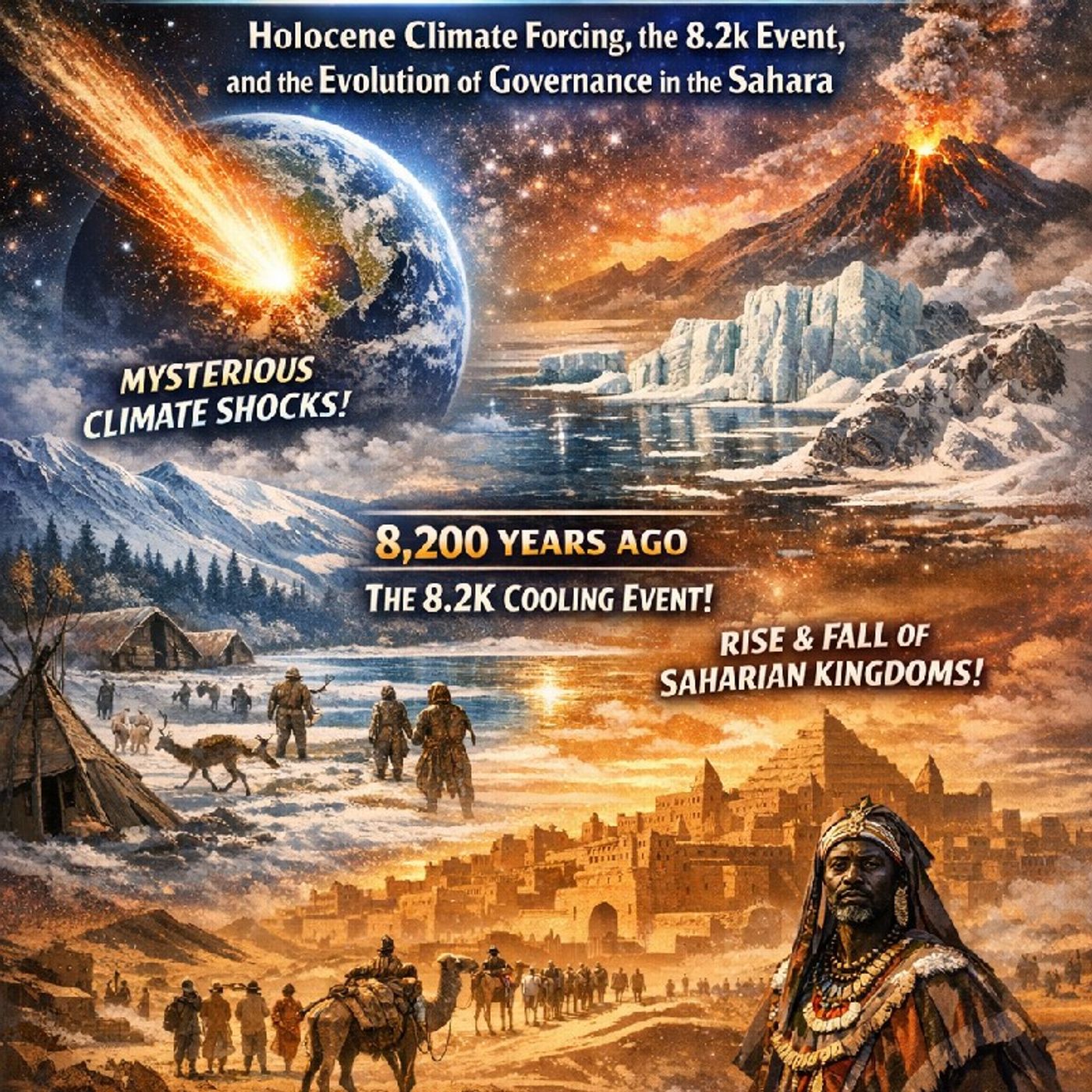
The transition from the last glacial period to the Holocene is marked by substantial climatic and environmental transformations, including rising temperatures, ice-sheet melting, and the reorganization of atmospheric and oceanic circulation patterns. Within the context of African prehistory, these global mechanisms resulted in the onset of the African Humid Period approximately 14,500 to 14,600 years ago. Driven by orbital variations—specifically the precession cycle that governs seasonal insolation contrast—the African monsoon system intensified, shifting the tropical rainbelt northward. Consequently, what is today the hyper-arid Sahara Desert was transformed into a vast steppe and savanna ecosystem characterized by extensive grasslands, shrubs, trees, and massive paleolakes such as Lake Mega-Chad. This fertile environment provided the crucible for early human settlements across Northern Africa. For several millennia, groups lived as hunter-gatherers, pursued aquatic resources in sprawling wadi systems, and eventually pioneered the domestication of cattle, sheep, and goats. During this period of relative resource abundance, human societies maintained a highly flexible, decentralized framework of social organization. Governance was predominantly consensus-based, managed through kinship networks and directed by ritual elders whose authority was closely linked to ecological and astronomical cycles. However, this period of adaptation was violently interrupted by a series of abrupt climate fluctuations, the most severe of which occurred approximately 8,200 years before present.
Embed this episode
NOW PLAYING
Episode 651 - Cosmic Conundrums
No transcript for this episode yet
Similar Episodes
No similar episodes found.
Similar Podcasts
No similar podcasts found.