
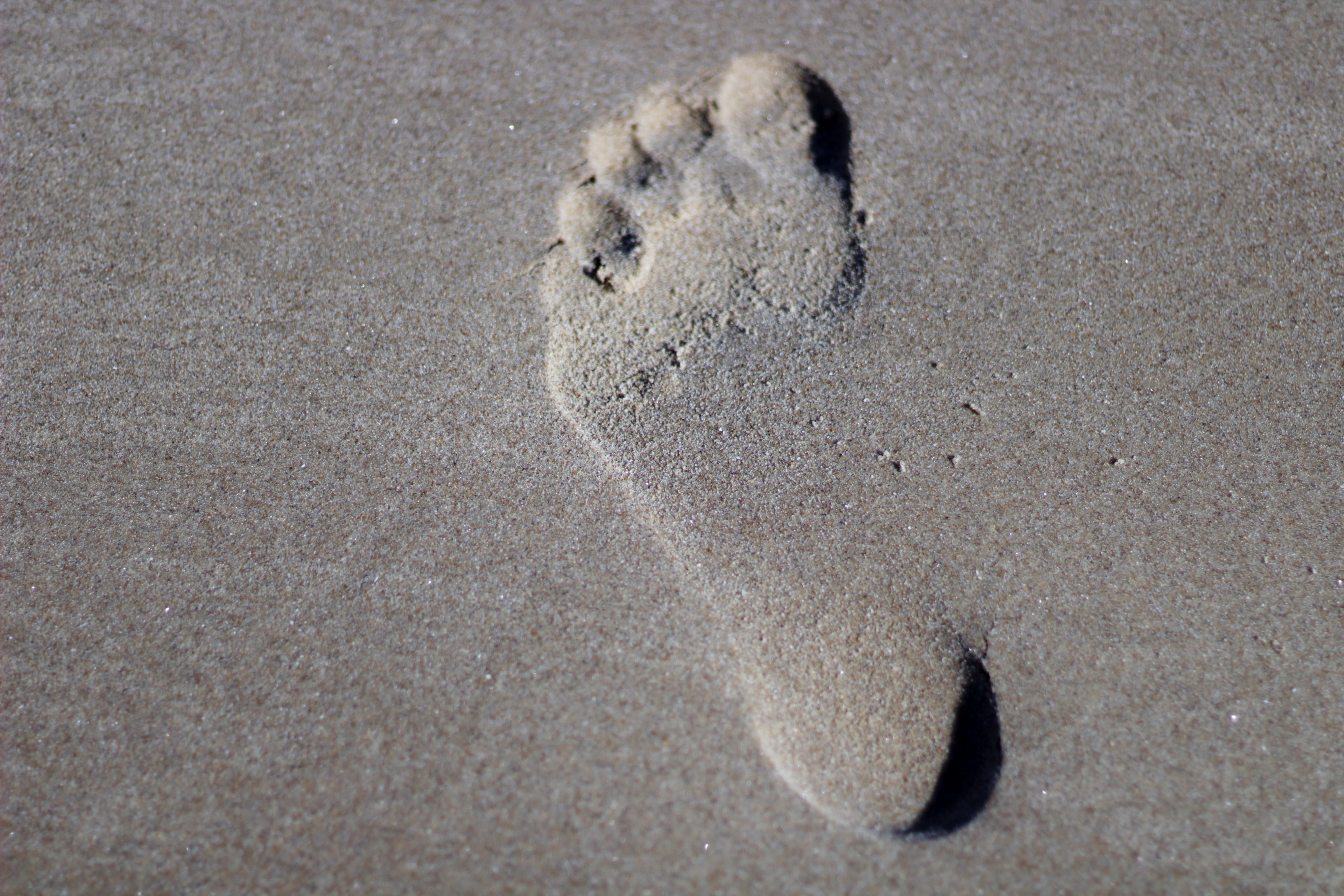
Welcome to the Movement Movement, the podcast for people who want the truth about having a healthy, happy, strong body. Remember, your body was meant to move. Now here's your host, Stephen Sashin. Here in the Movement Movement podcast, we talk about natural movement.
Well, is what we're talking about actually even natural? Did we evolve to do the things that we talk about doing? Let's take a look at that. In today's episode of the Movement Movement podcast, the podcast for people who want to know the truth about what it takes to have a healthy, strong body, struggling with the feet first as those things are at your foundation.
We're going to break down the propaganda, the mythology, sometimes the outright lies that you've been told about what it takes to run, to walk, to hike, to play, to yoga, or cross the crossfiters, chill out and hang out with your friends, and do that enjoyably and efficiently and effectively and enjoyably because look, if you're not having fun, do something different till you are. I'm Stephen Sashin from ZeroShoes.com, your host of Movement Movement podcast. We call it the Movement Movement because we're creating a movement about natural movement. Here at ZeroShoes, we're trying to help people rediscover the natural movement is the obvious better, healthy choice where natural food is.
And it's a movement because that involves you. It's spreading the word, it's sharing the benefits that you discovered or you might want to discover about natural movement. And what that means is, well, you know, the simple thing, like and subscribe and share and hit the thumbs up and, you know, if you're on YouTube, hit the bell, go to jointhemovementmovement.com. To get free to set up, jointhemovementmovement.com to get previous episodes to find out how you can share this with your friends.
And if you have any questions, it shows you how to contact me too. Just simple, drop an email to move at jointhemovementmovement.com. Okay, in short, actually, if you want to be part of the tribe, please subscribe. You get the hint, you know how to do this.
All right, now let's have this chat. I get an email maybe once a week or a comment on YouTube video once or twice a week that says what I'm talking about, this whole idea of using footwear like ours that doesn't have a bunch of cushioning and padding and motion control and art support, or even, you know, walking and running barefoot, that's not good. It's not what you're supposed to do. It's really amazingly wonderfully talented, gifted, genetic-freak people can actually do it because we didn't evolve on hard surfaces.
We didn't evolve to be able to run on pavement. We didn't evolve to be able to stand on, you know, cement floors all day. So let me give you the shortest version of today's podcast. Okay, that's complete nonsense, that argument.
And for if you're someone who's made that argument, my apologies for now having offended your sensibilities and, of course, raising your hackles and you will no doubt try and argue with me. So I should have probably done that a little differently, but I'm recording this on a Friday afternoon. I don't know when I'm actually going to drop this, but recording on a Friday afternoon when I have no filter and what's in my head just comes straight out of my mouth. I'm going to talk about three things here in the podcast.
The first is whether we evolved on anything or not and what that means for moving, what we actually did evolve on and what I recommend for you moving forward, whether you are new to this whole idea of natural movement and perhaps barefoot walking and running. I'm not suggesting that you have to walk barefoot or I mean, I do it a lot. Hold on, here we are. If you're watching video, there's my barefoot.
I'm barefoot most of the time, but when I'm not, I'm a force in zero shoes, which gives you a barefoot-like experience of letting your foot do what's natural, bend, flex, move, and feel with a layer of protection and style that you don't get when you're in barefoot. So let's talk with the thing of we evolved to do fill in the blank. Now, the simple thing is it doesn't make a difference what we evolve to do. The question is, are we capable of doing things other than the way humans started out however many years ago you think humans started out.
As best as I know, there has not been one archaeological dig that has found the prehistoric version of an iPhone or an automobile or most of the stuff that we interact with on a daily basis. Nobody would argue that because we didn't evolve with television, we don't have the ability to watch television. Now, one thing that people love to say is something about how much stimulus we get right now and we didn't evolve to handle that much stimulus. And what's so interesting to me about that is if you look at tribal cultures, we're amazed at some of the things that they understood and knew and did about the seasons and about planting and about celestial movements and not that they got it all perfectly.
But there's a lot of information that they had that we think is incredible, tracking skills, hunting skills. And so this idea that we're getting bombarded with information, I'm going to toss out the possibility that that's irrelevant and that when we have less information, we're actually when there's less sort of what's called artificial stimulus, computers, telephones, cars, etc. We're still using our brain the same way and paying attention exquisitely to just things that we have around us and learning and discovering things that when we are let's call it distracted by things like computers and phones and television, we just don't notice anymore. I mean, it may be that there's a whole rash of skills, rash of skills, large swath of skills, collection of skills, bag of skills, whatever thing you collect skills in that we no longer have the ability to do simply because we're no longer paying attention because we're distracted.
Now, that doesn't mean we're getting more information now than we were then. It means that the information we were getting then, it was let's just say same amount of information, different kind of information processed in a slightly different way, maybe just throwing that out. But more importantly, just because we may have evolved, let's just pretend we evolved in a place where we spent half of our time swimming. That doesn't mean that we need to be swimming half of the time that we're live right now.
I'm not saying this is about optimal health or what's being perfect. It may be that we'd have slightly better health if we were doing some things more akin to the way we did them thousands and thousands of years ago. I don't know. Now, the thing that's corresponding with that thought is that we assume that if we're doing some of these healthier things or these things that we quote and quote evolve to do, what it would mean is that we would live longer happier lives, which is of course kind of funny because in the era that we talk about evolution, maybe he would be as in live nearly as long as we do right now.
And more importantly, again, we're in a very different world. I was hanging out with a bunch of healers one day, therapists and mostly therapists, frankly, and they were all discussing the different diets they were on. And of course, you know, Paleo was part of it because that's the way we all grew up. Of course, no one can really agree on what Paleo is and all the archaeological research shows that most of what Paleo people say isn't true.
A lot of Paleo people say we didn't eat grains during the Paleo-Litha era. A lot of evidence that we did. People say, well, anyway, that's all this story. Pointing being, all these healers were talking about the diets they were on.
And during a little break in the conversation, I said, yeah, I'm on the, I don't know when I'm going to get hit by a bus diet. There's a long pause. A couple of people went, yeah, that sounds a lot better than what I'm on. I said, yeah, mine includes chocolate cake.
Yours does not. It's called the naturalistic fallacy. They have the idea that we grew up in some sort of Edenic, try that adjective out, this Eden-like environment where all surfaces were soft and mossy and warm and wonderful and there was, you know, nothing that was really going to be an offense to our body. Far from the truth, you go to parts in Africa where they've done a lot of archaeological digging or in pretty much anywhere.
And what you find is things like hard-packed mud. And that stuff is as hard as cement. And even more, it's not smooth like the roads that we can run on. It's full of prickly things and pokey things and things that actually hurt like a lot.
So the first part is that we evolve first in places where there was stuff as hard and often more hard than what we deal with on a daily basis. And again, with many more things that could be really unpleasant. Now, not saying that we would spend 26 miles running on hard-packed mud, although you go to the Copper Canyon of Mexico where the Tatarama are, who are, of course, well-known from the book Born to Run and run for hundreds of miles at a time sometimes, either barefoot or in sandals they make out of scraps of tire. And what you'll find is many times they are running on things that even if they're not necessarily hard-packed, they're certainly not conducive to running full of lots of rocks and twigs and gravel and things that are really, really challenging.
And so we evolve to be able to handle that, it seems. So my argument would be that A, where we evolved was not all wonderful hearts and rainbows and unicorn farts, but it was as challenging if not more challenging than what we're on right now. I mean, you go out for a road run, you're pretty well guaranteed that you're not going to have snakes coming out of you. You're pretty well guaranteed that you're not going to have lots of prickly jagged things that are poking up.
You've got a nice smooth surface. In fact, I was joked if you want to get a barefoot runner to get all misty-eyed, just mention the freshly painted white line on the side of a road because, man, those things are just smooth and there's just almost like a fraction of a millimeter of cushioning is what it feels like. It's just dreamy and it's white so it's cooler because white is better just because it reflects the sun. You get what I'm going.
You know, physics, light beams, temperature. So I hope that kind of put, and now actually there's one other thing and I kind of hinted to do it. The thing is that we evolved on, we're varied and variegated. Like I mentioned, we weren't just running on one thing.
We were running and walking on surfaces that change dynamically whether we're going on a long hunt or a long trek. It's just, you know, it's certainly not uniform the way that a 26-mile road run is. But again, that doesn't mean we're not adaptable. We're not able to do a 26-mile road run on pavement or stand on a concrete floor all day because our bodies are adaptable.
They're not fixed in rigid, which brings me to the next and final point. What's my recommendation for you? If you're new to this whole natural movement thing, I'm going to give a recommendation that pretty much every accomplished barefooter that I know gives and everyone who's doing research on natural movement in minimalist footwear like our friend Dr. Irene Davis at Harvard, for example, she gives as well, which is you want to start on a smooth, hard surface, the harder, the better.
Why? Because it gives you the most feedback. It's going to tell you what you're doing right and wrong because doing it wrong hurts, doing it right feels effortless and nice. Also, some people like to say, well, you have to start learning to run barefoot on natural surfaces like grass.
Well, the problem with grass, there's a couple of them. One is that you don't know what's in the grass. There's things you could step on or in that you don't want to step on or in and all of us have a story of doing that. Secondly, grassy surfaces, which can a be slippery, are also kind of like taking the padding from your shoes and just sticking it all over the planet.
And the reason you don't want to do that is the research is very clear. Padding doesn't help. It makes you unstable and it actually increases. Loading forces are actually makes either equal or sometimes increases loading forces because your body's trying to get you some feedback from the ground and if you can't feel things, it'll sometimes land harder as a way of getting some sort of feedback.
So you want to do a nice, smooth, hard surface to get that feedback that you need that can lead to those gate changes to a more natural form of running, which basically means you're not over striding, you're not reaching out with your foot and putting it way in front of your body, which puts breaking forces that slows you down when your foot lands, then you have to re-accelerate every time you're trying to take your foot off the ground. Instead, you land with your foot more underneath your body and you sort of place it and lift it rather than trying to grab and pull the ground underneath you. That's sort of the most important part of that. The second thing I'm going to recommend is that you vary the surfaces you're running on.
I mean, you know, do go back to nature a little bit. Have some fun at the very least, even if you're running on a road, just don't run on a straight line sometimes. When I teach people how to run naturally, one of the fun things we do, and we do this, do do this on grass because we're not running, we're just having a fun time, is think about kids, like tiny little kids where their heads are still way bigger than their bodies are. When they move, they kind of lean their head forward and then try to catch up to the way their head tries to make them fall over.
Do that. Like literally, let your head lead the way and just, you know, follow it around and go in different directions and make figure it's a go forward and then backward and then right and just do different things. And don't use your arms. Let your arms just going to hang and flop by your side.
In other words, you want to pretend you're a kid and goof off. Have fun. If you're worried that people are going to look at you and think you're crazy, good. Do that and get over it because it's no big deal.
Most of those people don't know who you are. They won't remember. They'll have a fun story when they go home with that crazy person who looked like they were drunk and just following their head around a park. Have a good time.
And so you can do something similar. And by the way, the way that exercise works is after you get used to just following your head and using your feet just to keep you from falling on your face. Then I have you try to stand up a little bit and be a little more vertical but keep that same feeling of just using your feet to just keep you from falling down and letting you, you know, move in whatever direction you want to go rather than again, grabbing the ground in front of you and pulling it underneath you. So even if you're running on a road, you can still vary in different ways.
You can take a little detour up a hill and come back down. You can go up and off the sidewalk. You can find innumerable ways to do something other than just running in a straight line for as long as you want to run. Again, I'm not saying don't run in a straight line for as long as you want to run.
I'm just saying if you want to have some fun, get a little varied. And again, if you want to go back to something quote a little more natural, you know, mix it up a little bit. Maybe do a trail run one day. Even if you don't have a trail around you, find some way of just goofing off and making it fun.
Again, if you're not having fun, do something different until you are because I'm going to talk about this in another episode because if it isn't fun, you're not going to continue it anyway. So why even bother starting? That's why I see. All right.
Well, I hope we have at least given you some food for thought if maybe not debunked the naturalistic fallacy and now you can feel confident that you can make a transition to barefoot walking or running when that's appropriate or zero shoes when you need a little protection in some style and not worry that you're doing something that's going to violate the laws of evolution and physics and you're somehow going to, you know, your mortgage rate will go up and your kids won't get into college because you're not doing things quote unquote the way we evolved to do them. I want to hear your comments. Drop them in the comment section for wherever you're following this podcast or watching this video or listening to the audio or on our website at jointhemovementmovement.com. Go there again to find previous episodes, to find different places you can interact with this to get the podcast or to get the videos or et cetera.
And again, if you have any questions or comments, any recommendations, anybody you think should be on the show, whatever you can think of, drop me an email, move at jointhemovementmovement.com. Again, if you want to be part of the tribe, please do subscribe and like and share and give a thumbs up and ring the bell on YouTube so you hear about when we have new episodes, which happened pretty much every week except for when I get crazy busy and don't have time. Anyway, once again, thank you so much for being part of this. I'm Stephen Sashan.
I'm grateful that you're here. And as always, go out, have fun, and live life feet first.