
EPISODE · May 28, 2026 · 5 MIN
Episode 723 - Cosmic Conundrums
from Kevin McFarlane's podcast · host Kevin McFarlane
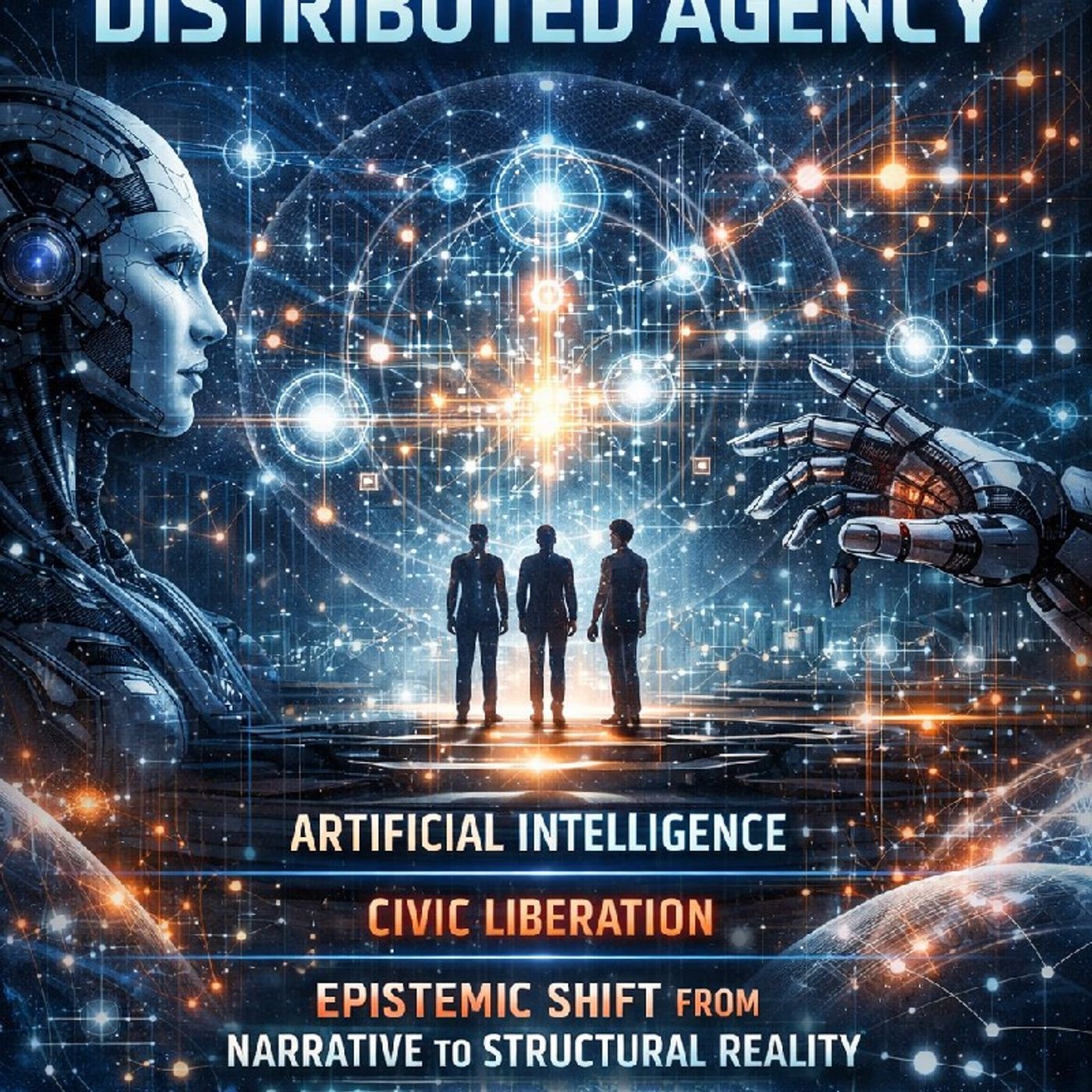
The rapid advancement of artificial intelligence has triggered a profound cognitive crisis across human society. This crisis manifests as a widespread fear of human obsolescence, rooted in a historical conditioning that equates individual worth with market labor hours. For centuries, the division of labor has funneled human capability into rigid, routinized job slots, effectively converting human creativity from a primary source of value into an institutional cost center. Within this paradigm, the advent of automation is perceived as a threat to survival. Yet, a structural analysis of this transition reveals an alternate reality: artificial intelligence does not replace the human being, but rather dissolves the institutional architecture—the corporate, bureaucratic, and compliance-driven cage—in which human agency has been systematically trapped. This historical conditioning has led many to mistake the routine for the self and the grind for purpose. The transition from centralized managerial capitalism to decentralized digital organization marks a major shift in how human value is defined. If an individual's value is framed as a function of exchangeable labor hours, then automation represents an existential threat; if value is framed as a function of imagination, strategic agency, systemic architecture, and narrative creation, then automation represents structural liberation. This transition bypasses the historical gatekeepers that have constrained human initiative, specifically eliminating administrative bottlenecks, specialized credentials, corporate permissions, and the requirement to trade life-hours for a paycheck. This reorganization is the next chapter in the long-term history of human coordination. Over millennia, human groups have transitioned from egalitarian, kinship-based hunter-gatherer tribes to rigid, land-based feudal hierarchies, and subsequently to centralized, corporate structures optimized for industrial efficiency. Each evolutionary step solved immediate logistical challenges at the cost of distributing power and ownership unequally. The modern emergence of decentralized autonomous organizations (DAOs), automated peer-to-peer coordination tools, and agentic networks represents a technological revival of distributed decision-making. Rather than subordinating human agency to a corporate hierarchy, these technologies serve as force multipliers that allow individuals to reclaim their capacity for systemic design, collaborative assembly, and localized development.
Embed this episode
NOW PLAYING
Episode 723 - Cosmic Conundrums
No transcript for this episode yet
Similar Episodes
No similar episodes found.
Similar Podcasts
No similar podcasts found.