
EPISODE · May 21, 2026 · 18 MIN
Eschatology: Why Humans Reflect on the End of the World
from Still Alchemy · host Still Alchemy
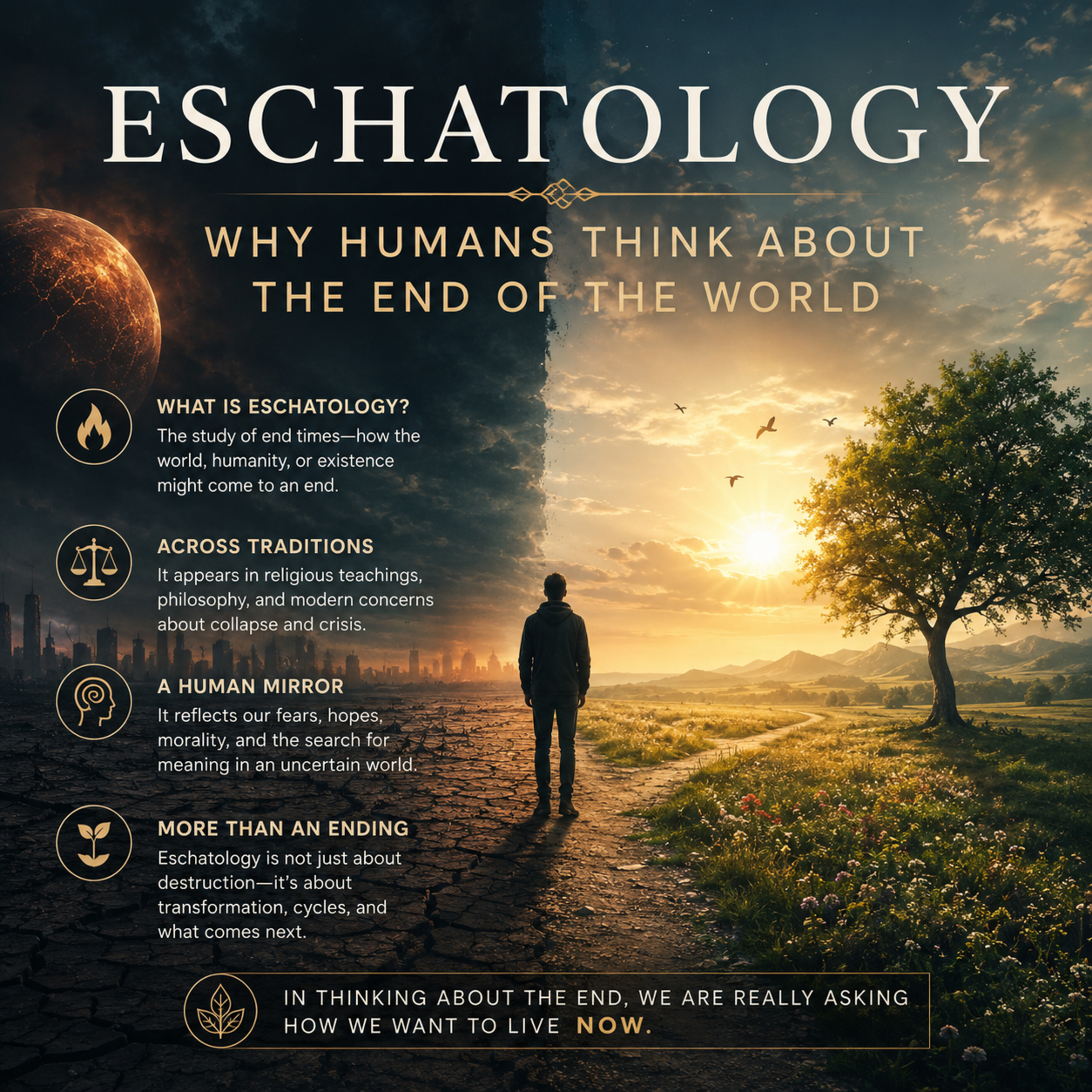
Eschatology is the study of end times—how the world, humanity, or existence itself may come to an end. Found in religion, philosophy, and modern thought, it is less about predicting destruction and more about understanding how humans relate to uncertainty, change, and finality.Throughout history, people have imagined the end as a way to process fear and give meaning to life. Religious traditions often frame it as a moment of judgment or renewal, যেখানে actions matter and transformation follows. Philosophical perspectives, on the other hand, frequently see endings as part of ongoing cycles, where dissolution leads to new beginnings rather than absolute finality.In modern contexts, eschatology appears through concerns about global crises like climate change or societal collapse. Unlike traditional views, these are often tied to human responsibility, creating both anxiety and a sense of control over the future.Psychologically, thinking about the end helps people confront limits and make sense of the unknown. It provides a narrative for fear while also encouraging reflection on what truly matters. Culturally, apocalyptic themes allow us to explore survival, values, and resilience.From a Still Alchemy perspective, eschatology is also internal. Personal endings—shifts in identity, belief, and life phases—mirror larger cycles of transformation. Rather than fearing endings, they can be seen as necessary transitions.Ultimately, eschatology is not just about the end of the world. It is about how we live with awareness of endings, using that perspective to find clarity, meaning, and presence in the moment.
Embed this episode
NOW PLAYING
Eschatology: Why Humans Reflect on the End of the World
No transcript for this episode yet
Similar Episodes
No similar episodes found.
Similar Podcasts
No similar podcasts found.