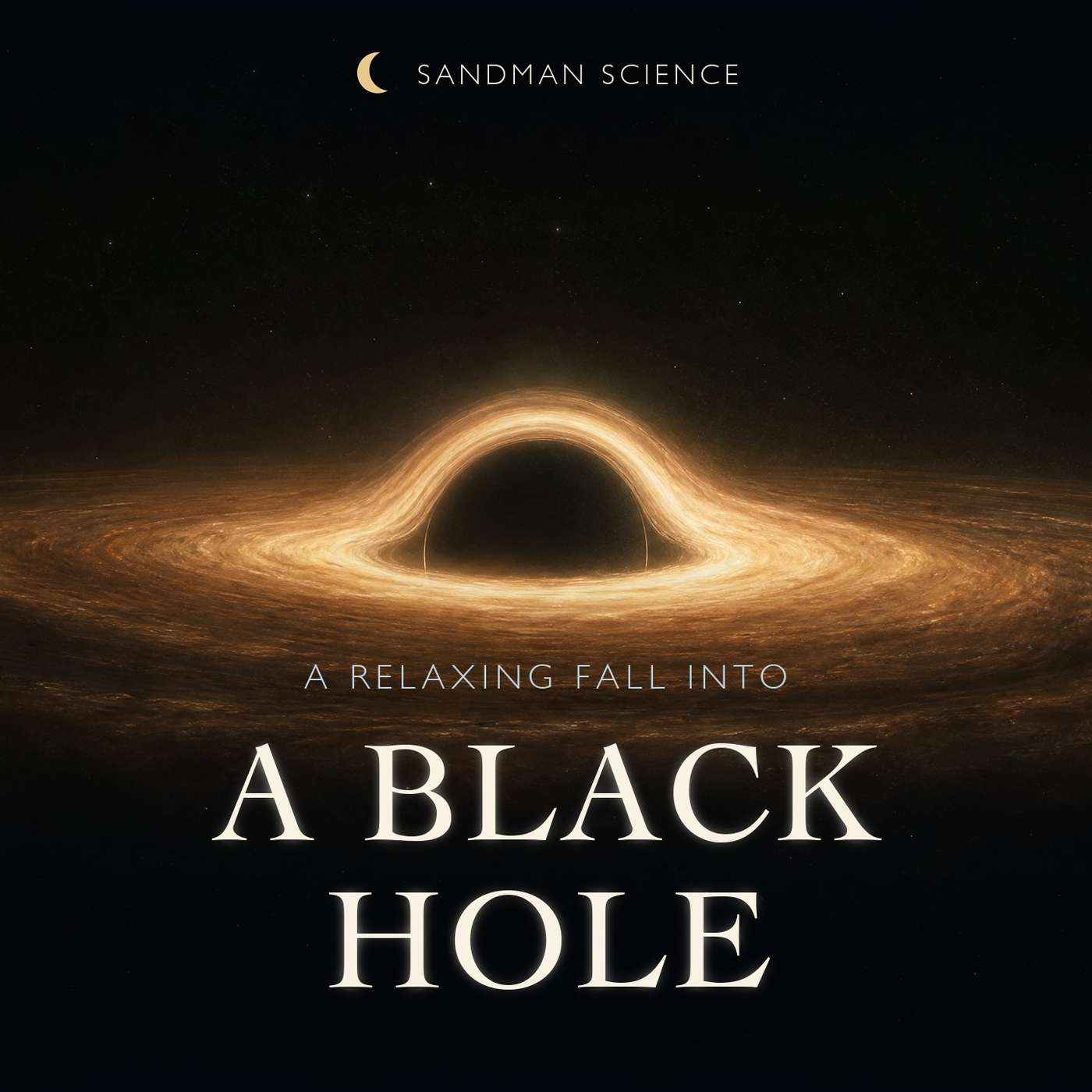
Falling Into a Black Hole, Slowly Explained for Sleep
from Sandman Science Hosted by Sandman Science
Tonight, fall slowly into a black hole: from the country vicar who imagined dark stars in 1783, the letter Schwarzschild sent from the front and the young Chandrasekhar working it out on a ship, out to the heart of our galaxy, where a star loops an invisible giant every sixteen years. Then down, gently, past the glowing disc, the ring where light travels in circles, the shadow and the slowing of time, across the edge and inside, and on to the far future, when even black holes fade. Narrated slowly over soft music, to help you fall asleep. Dim the lights, lower the volume, and let yourself drift. Chapters 0:00 Where We Begin 1:39 The Dark Star 3:13 A Letter From the Front 4:58 The Young Man on the Ship 6:25 The Collapse Nobody Believed 8:02 How a Black Hole Is Born 9:47 The Name 11:09 How Small They Are 12:29 The First One Found 14:08 The Hidden Partner 15:50 A Hundred Million in the Dark 17:28 Leaving Home 19:06 The Heart of the Galaxy 20:35 The Stars That Gave It Away 22:00 The Quiet Eater 23:21 Choosing Where to Fall 24:52 The Glowing Disc 26:22 The Jets 28:02 The Brightest Lights in the Universe 29:42 Light That Bends 31:17 The Ring of Light 32:46 The Shadow 34:08 Time Slows Down 35:43 The Last Safe Orbit 37:27 The Spinning Ones 38:58 The Dragging of Space 40:36 The Star Drawn Into a Thread 42:22 The Tides 43:54 What a Friend Would See 45:39 The Edge 47:25 Inside 49:02 The Centre 50:56 Bridges and White Holes 52:36 The Surface That Remembers 54:17 The Faint Glow 56:05 A Black Hole in a Laboratory 57:37 The Smallest Black Holes 59:12 When Black Holes Meet 1:00:45 The Runaway 1:02:19 The Black Hole Era 1:03:55 Even Black Holes Fade 1:05:15 Rest 1:07:20 Ambient Tail (Music Only) About Sandman Science Slow, gentle journeys through the universe and the natural world, narrated calmly over soft original music, made for falling asleep and quiet minds. New journeys added regularly. Watch the video version on YouTube: https://youtu.be/027Zpa-KdLc Best experienced at a low volume, as you fall asleep. Sources for the science in this episode: the science here follows published, widely reported work: John Michell's dark stars (1783), Karl Schwarzschild's solution (1915-16), Subrahmanyan Chandrasekhar's limit (1930), Oppenheimer and Snyder (1939), John Wheeler, Cygnus X-1, Gaia BH1 and BH3 (ESA Gaia), the lone black hole OGLE-2011-BLG-0462 (Hubble), Sagittarius A star and the star S2 (Ghez, Genzel; Nobel Prize 2020), X-ray light echoes at the galactic centre, Messier 87's jet, quasar 3C 273 (Maarten Schmidt), the 1919 eclipse (Eddington), the photon sphere and black hole shadow (Event Horizon Telescope), gravitational time dilation and GPS, Roy Kerr's spinning black holes and Roger Penrose, Gravity Probe B, tidal disruption events (AT2019qiz), Jacob Bekenstein and Stephen Hawking, analogue black holes (Jeff Steinhauer, Technion), primordial black holes, GW231123 (LIGO, Virgo, KAGRA), the runaway black hole candidate (van Dokkum et al.) and the far future of the universe (Adams and Laughlin). Open questions are presented as open. These videos are for relaxation and sleep. They are not medical advice or a treatment for insomnia or any health condition. Music and scripts are original to Sandman Science. Narration is an AI voice.
Embed this episode
What this episode covers
Tonight, fall slowly into a black hole: from the country vicar who imagined dark stars in 1783, the letter Schwarzschild sent from the front and the young Chandrasekhar working it out on a ship, out to the heart of our galaxy, where a star loops an invisible giant every sixteen years. Then down, gently, past the glowing disc, the ring where light travels in circles, the shadow and the slowing of time, across the edge and inside, and on to the far future, when even black holes fade. Narrated slowly over soft music, to help you fall asleep.
Chapters
- 0:00 Where We Begin
- 1:39 The Dark Star
- 3:13 A Letter From the Front
- 4:58 The Young Man on the Ship
- 6:25 The Collapse Nobody Believed
- 8:02 How a Black Hole Is Born
- 9:47 The Name
- 11:09 How Small They Are
- 12:29 The First One Found
- 14:08 The Hidden Partner
- 15:50 A Hundred Million in the Dark
- 17:28 Leaving Home
- 19:06 The Heart of the Galaxy
- 20:35 The Stars That Gave It Away
- 22:00 The Quiet Eater
- 23:21 Choosing Where to Fall
- 24:52 The Glowing Disc
- 26:22 The Jets
- 28:02 The Brightest Lights in the Universe
- 29:42 Light That Bends
- 31:17 The Ring of Light
- 32:46 The Shadow
- 34:08 Time Slows Down
- 35:43 The Last Safe Orbit
- 37:27 The Spinning Ones
- 38:58 The Dragging of Space
- 40:36 The Star Drawn Into a Thread
- 42:22 The Tides
- 43:54 What a Friend Would See
- 45:39 The Edge
- 47:25 Inside
- 49:02 The Centre
- 50:56 Bridges and White Holes
- 52:36 The Surface That Remembers
- 54:17 The Faint Glow
- 56:05 A Black Hole in a Laboratory
- 57:37 The Smallest Black Holes
- 59:12 When Black Holes Meet
- 1:00:45 The Runaway
- 1:02:19 The Black Hole Era
- 1:03:55 Even Black Holes Fade
- 1:05:15 Rest
- 1:07:20 Ambient Tail (Music Only)
No transcript yet.