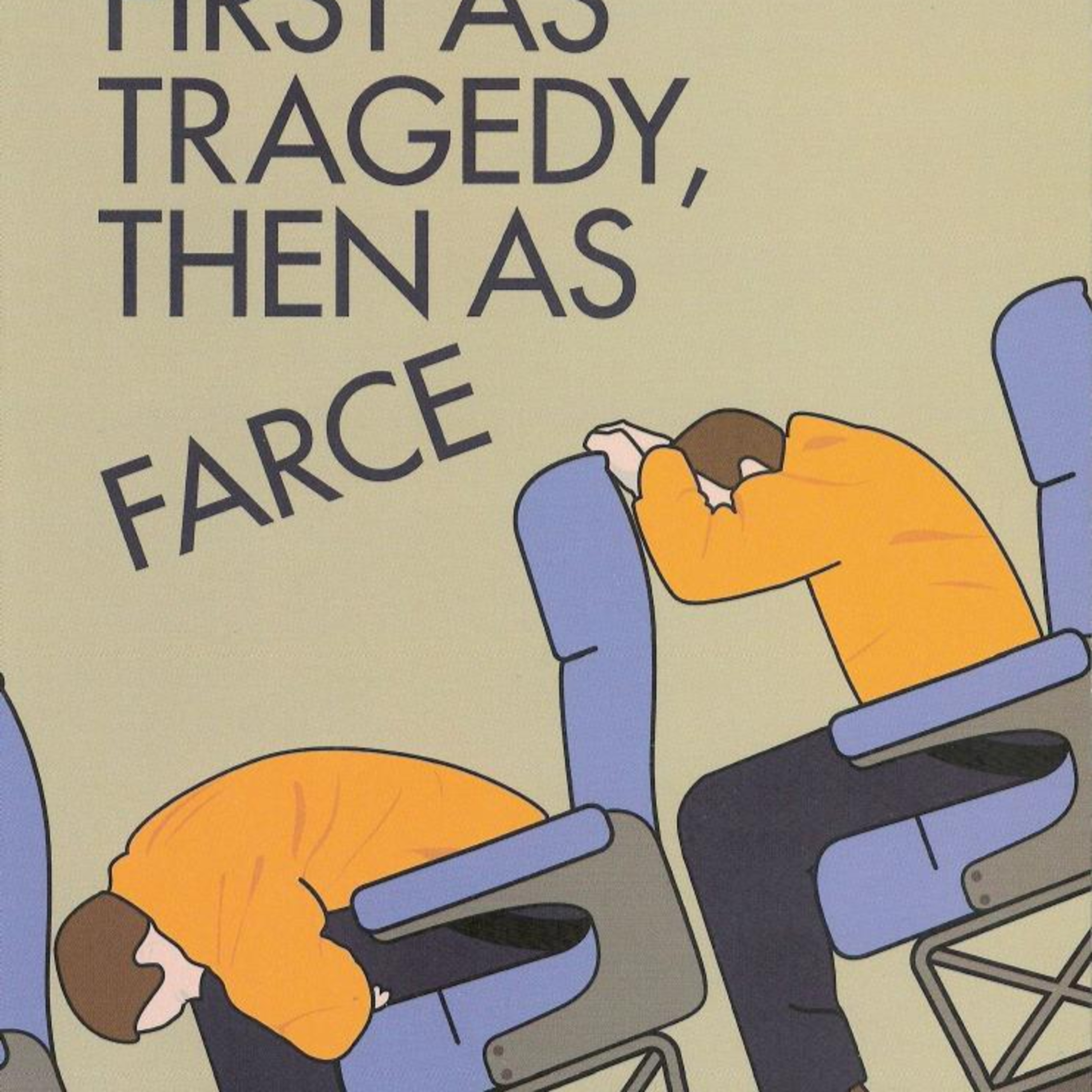
First as Tragedy, Then as Farce — How Systems Absorb Their Critics
from Crisis in Perception Hosted by Crisis in Perception
What if the ability to survive criticism is itself one of a system's most important forms of power? Welcome to Crisis in Perception, where we examine the systems shaping our world. Using First as Tragedy, Then as Farce by Slavoj Žižek as our lens, this episode investigates ideology not simply as propaganda or false belief, but as a mechanism through which political and economic structures can remain stable even when their contradictions become visible. Beginning with the financial collapse of 2008, the investigation examines the relationship between markets and state intervention, Wall Street and Main Street, risk and protection, and the political choices hidden beneath apparently technical economic decisions. Žižek then turns toward capitalism's capacity to absorb criticism. The anti-hierarchical, authentic, socially conscious language associated with the upheavals of 1968 increasingly became part of workplace organization, branding, ethical consumption, and lifestyle culture. Resistance could become something incorporated into the system rather than something outside it. The episode follows that pattern into the enclosure of shared resources, intellectual property, rent extraction, and Žižek's warning that capitalism does not necessarily require liberal democracy. Central systems include ideological adaptation, institutional legitimacy, political intervention, commodification, enclosure, and the feedback loop through which criticism can produce adaptation without necessarily redistributing power. 📺 Watch on YouTube: https://youtu.be/7-YgCzA1FT4 ❤️ Support / Episode Post on Patreon: https://www.patreon.com/CrisisinPerception/posts/first-as-tragedy-171192631?utm_medium=clipboard_copy&utm_source=copyLink&utm_campaign=postshare_creator&utm_content=join_link If these ideas resonate, consider reading the work yourself or borrowing it from your local library. Supporting authors and libraries helps keep critical inquiry accessible. If you value systems-level analysis like this, please follow, rate, and share the project. This content was created using AI-assisted tools for research synthesis, structuring, and narration support. All analysis, framing, and editorial decisions are guided by human judgment as part of the Crisis in Perception project.
Embed this episode
No transcript yet.