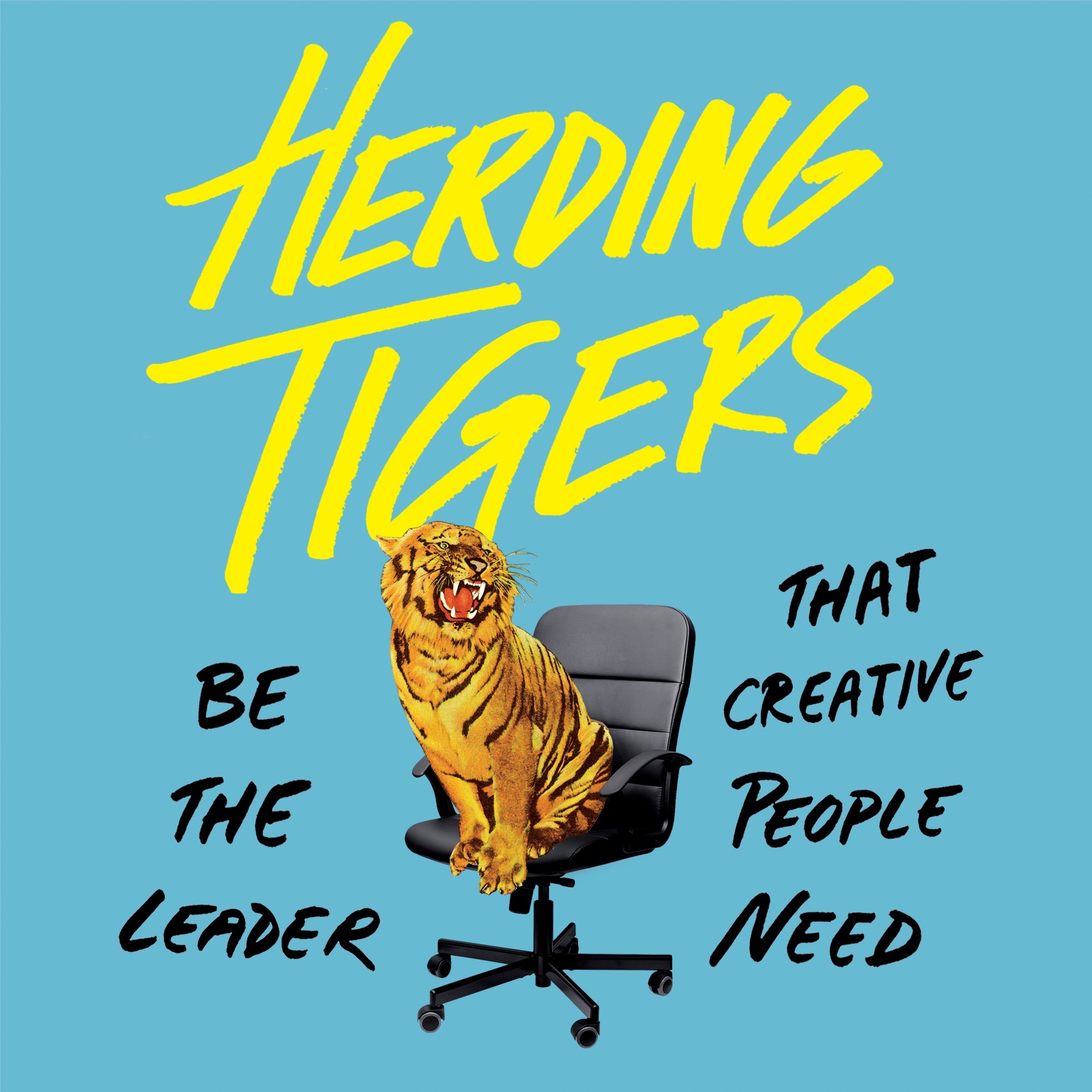
The Herding Tigers podcast is brought to you by the Herding Tigers Workshop, a live event for you and leaders just like you. Check it out at herdingtigarsworkshop.com. Herding Tigers podcast, my name is Todd Henry. I am founder, back single creative and author of the book Herding Tigers, be the leader that creative people need.
And here on the show we talk about some of the practical, tactical things that we can do as leaders of creative teams to make us more effective and to help our teams be what I call prolific, brilliant and healthy, prolific meaning. We're doing a lot of work, brilliant meaning, we're doing good work and healthy meaning that we're doing it sustainably. On today's show we're going to talk about four mindset mistakes, fatal mistakes that creative leaders can make that can forfeit our team's trust and forfeit our effectiveness and ultimately make our job more difficult. We may not even know we're making these mistakes, but when we do, our team takes signals from us and it changes the way that they behave as well.
And as goes the leader, so goes the team we've heard this over and over again. Let's say leadership is hard, it's a lonely role and you face crushing uncertainty with elevated stakes and you're expected to deliver not only on your own work that's in front of you that you're accountable for, but also to corral the creative minds of others and parade them to the promised land. And oh, by the way, I often mentioned that it's thankless, right? It's a thankless job.
It's kind of like being an NFL kicker, right? If you do your job, well, of course you did your job. And if you don't do your job and everybody notices, and this is a problem. However, leadership is also tremendous opportunity.
Listen, you get the privilege of helping other people unleash their best work and you get to have a level of influence on decisions that will often determine the success or failure of the organization. So this is a huge opportunity for you and it's also a huge gift to you. But when the pressure is on and uncertainty is rearing its ugly head, there are traps that even the most experienced leaders can fall into. You have to be very careful.
When you fall into one or more of these traps, you put an impediment in your team's path and you introduce dissonance into the organization, which is a gap between what we're doing and why we're doing it. And when that dissonance exists, and I see this inside of organization, so I work with, when that dissonance exists, it robs your team of its own. It's capacity to take creative risks, to try new things and to bring its best work to the table every day. So here are a few mistakes that I've seen leaders succumb to in a moment of weakness.
And I wrote about some of these in herding tigers and give some very tactical things that you can do to help you work around them or avoid them, ideally. The first mistake is what I call deferring. Deferring means that you're pushing important decisions into the future until you're more certain about the right direction. While this initially seems wise, right?
Well, I don't want to make a decision until I have all the information. It has a ripple effect throughout the organization as others on your team wait for you to act so that they can determine their own course of action. You will never be certain about any decision that you make as a leader, but you must be crystal clear about what you expect from your team. When you defer, when you push decisions into the future, you're training your team to wait for you to tell them what to do.
To decide means to cut off. It means that you're cutting off other options and it's important that your team sees that you're willing to make decisions so that they can in turn plant their own flags and take their own risks. So the question I have for you is, is there a decision that you're deferring right now? Is there something you're not willing to make a decision on that is affecting your team?
It's clouding their judgment, it's creating dissonance, and it's causing your team to basically sit and wait for you to make a decision. In the meantime, that pressure is building because they know that there's more and more work coming down the pipeline and they're waiting for you to make a decision. You're not serving your team if you do that. Okay, so that's the first mistake that leaders make is deferring.
The second is blaming. Now this sounds obvious on the surface, right? But we do it sometimes in ways we don't even know we're doing it. When things go awry and your team comes to you for answers, it's easy to shoot arrows at the people above you.
After all, it's not really your fault, right? It's a natural instinct and it feels like a way to maintain the trust of your team. Well, those people won't let us do what we aren't we so great as a team. You know, I would love to help you do this, but those people won't let us.
However, while temporarily maintaining your team's trust in you as a leader, this tactic erodes their trust for the organization, which ultimately works against you and what you're trying to accomplish. Therefore, when the organization makes promises to your team in the future, the promises will be met with skepticism. Your team won't believe them and it'll be difficult for you to garner trust in the future. You have to hold the line as a leader and you have to do your best to build trust on both sides.
You have to be an advocate. You have to stand in the gap. This is one of the core things we talk about at the Herding Tiger's Workshop is the importance of standing in the gap and fighting, not just for the freedom of your team, but fighting for your organization. You are in the middle as a leader.
That's where you are and you have to fight for your team. You have to advocate for your team, but you also have to advocate for your organization. Fight actively and fiercely for the needs of your team, but also fight the urge that you feel to protect yourself by disparaging the people above you, even if they're incompetent, by the way. This is not always fair.
It's always fair that you have to deal with the incompetence of your manager's manager's manager, but that's kind of your job as a leader. You're in the middle and you have to deal with it and you have to protect your team and protect the organization at the same time. You have to fight actively on both sides. It's unfair, but leadership isn't about fairness.
In the end, you will earn trust on both sides and you will be better positioned to accomplish your objective. As George McDonald said, to be trusted is a greater compliment than being loved. I think that's true. The third mistake that leaders make is what I call bending.
Creative work is highly qualitative. This is one of the challenges of leading creative work is very subjective. It's difficult to determine whether the product fits the original objectives, because sometimes it's a matter of opinion of your client or your organization. It's really difficult.
As such, metrics for creative work can be tricky to establish and even trickier to implement and track. However, when and where there are metrics in place, when and where there are clear and solidified objectives, you cannot bend on them. You have to make your expectations clear to the team and you must be diligent in demanding that they hit those metrics. You cannot bend.
We've heard this called painting the target around the arrow. You shoot an arrow and then you paint the target around it. You backward rationalize. This can be extremely detrimental to your team's trust and also to their ability to stretch, to push, to take creative risks.
Why is this important? Because there's more than enough uncertainty in the work itself without your team having to constantly deal with shifting objectives and metrics. Did we hit our objectives? Did we not hit our objectives?
Help your team by defining objectives and standing by your metrics. Critically important. As Steve Jobs once said, be a yardstick of quality. Some people aren't used to an environment where excellence is expected.
You want to be a yardstick of quality, you want to set metrics, and you want to hold your team to your expectations you cannot bend and backward rationalize your team will not trust you. Then the final mistake, and I wrote about this extensively in Hurting Tigers, is hovering. You hire great people, right? Then don't smother them by constantly hovering over their work.
It communicates a lack of trust and may ultimately lead to dependence on your feedback or worse to underperforming or underthinking. If you've hired great people, do not do the work for them. Your job as a leader is not to do the work, it's to lead the work. If you enjoy being a part of the process, that's great.
It's fantastic, but you need to establish some parameters so that your team feels permission to experiment, to take risks, and to grow into their own capacity to make decisions and to try new things. You will never get the best work out of the people on your team if they feel like you're constantly looking over their shoulders. As Rosalind Carter said, a leader takes people where they want to go, a great leader takes people where they don't necessarily want to go, but ought to be. I love that quote.
These are just a few of the many traps I've seen leaders fall into. Leadership is about establishing the playing field, it's about setting the rules, defining success, and unleashing your team to do what they're wired to do. Avoid these common traps. Don't defer.
Don't blame. Don't don't hover so that you don't stand in the way of your team's purpose. Hey, I would love to hear your thoughts, your feedback, your comments about this. Feel free to send them to me at interact at accident.com.
Also, check out the Herding Tiger's Workshop. It's a live event designed for leaders just like you. In the meantime, be a leader who makes it goes. We'll see you next time.