
PODCAST · business
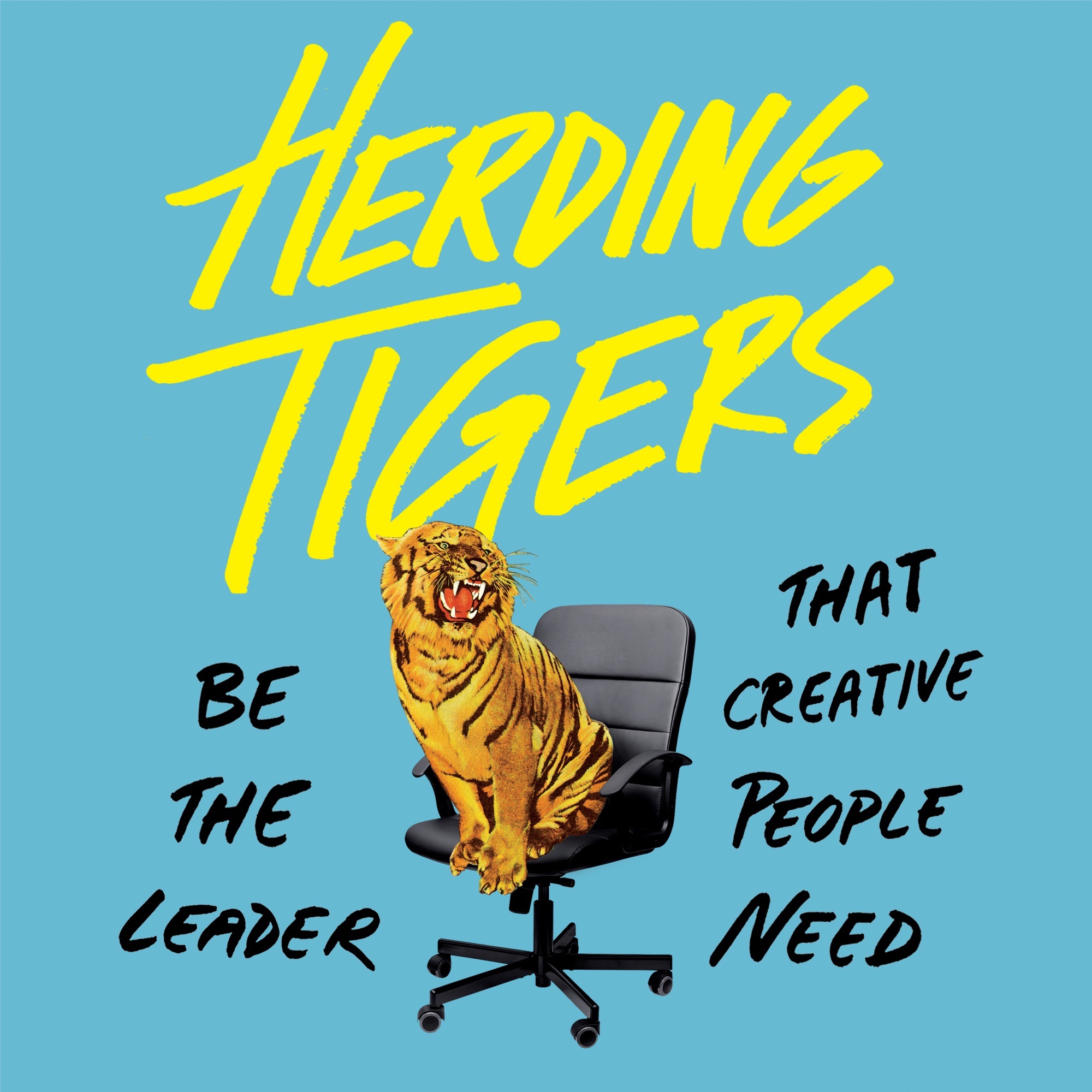
Herding Tigers
by Todd Henry
How do great leaders unleash their team to do its best and most creative work? Join Todd Henry (author of Herding Tigers and The Accidental Creative) and guests as they discuss what the talented, creative people on your team need from you, and how you can help them to be prolific, brilliant, and healthy.
-
21
Agency and Optimistic Vision: Leading Creative Work In the Age of AI
AI is now embedded in the daily workflow of nearly every creative team, and with it has come a quiet crisis. The pressure from the top is for speed and scale, but the question your most talented people are silently asking is far more personal: Does my judgment still matter here? When a creative pro starts to feel like a prompt operator instead of a creator, you rarely get a dramatic exit. You get safe work, quiet disengagement, and tigers who stop hunting.In this episode, Todd opens with the story of the 2023 Writers Guild of America strike — 148 days that shut down Hollywood — and the AI provisions the writers won in their contract. Their fight was never about banning the technology. It was about agency: who gets to decide how the work gets made. That same fight, in quieter form, is happening on your team right now.In this episodeSpeed is not the same as progress. AI removes friction, but friction is where thinking happens. Leaders must protect the difference between faster output and better work — and decide explicitly where recovered time goes, rather than letting every velocity gain become a higher quota.Brave teams need an Optimistic Vision. Drawing on the framework from Todd's book The Brave Habit, the first ingredient of brave decisions is a believable picture of a better possible future. In a world flooded with generic output, taste, judgment, and point of view become more valuable — not less. Your team needs to hear you paint that future specifically.Brave teams need Perceived Agency. The second ingredient is the belief that what you do actually matters. Give your team genuine authority over how AI shows up in their work — where it's a welcome tool, and where human judgment is non-negotiable. Agency granted on paper but overridden in practice breeds cynicism faster than no agency at all.When optimistic vision and perceived agency are both present, people make brave choices: they take creative risks, push back on weak ideas, and put their fingerprints on the work.Try this weekHold a "tool, not author" conversation with your team. Draw the lines together: where AI helps, and where the human hand is sacred.Change what you celebrate. Praise judgment, taste, and bold calls — not just volume shipped.Ask each person privately: "Where do you feel least in control of your work right now?" Then act on what you hear.Mentioned in this episodeThe 2023 Writers Guild of America strike and the AI provisions of the resulting Minimum Basic AgreementThe Brave Habit by Todd Henry — the two factors that lead to brave decisions: Optimistic Vision and Perceived AgencyHerding Tigers by Todd HenryYour team doesn't need you to predict the future of AI. They need you to protect the conditions that make brave work possible.
-
20
Alone With Your Thoughts: Why Self-Awareness Is a Leadership Superpower
In 1995, Bill Gates disappeared into a cedar cabin in the Pacific Northwest for a week — no meetings, no family, no distractions. What emerged from that silence was a memo called "The Internet Tidal Wave" that repositioned Microsoft for the internet age. He called it Think Week. And it changed everything.Most of us can't take a week off-grid. But the principle behind what Gates did is available to every leader, every single day. In this episode, Todd explores why knowing what's on your mind is one of the most underleveraged skills in leadership — and what you're missing when you never slow down long enough to find out.In This EpisodeThree things that only surface when you make time to be alone with your thoughts:1. Patterns you're missing. In the noise of daily operations, patterns accumulate quietly — in your team, your work, your own behavior. You can't connect the dots when you're always running.2. Tensions you're carrying. Leadership isn't about eliminating tension — it's about identifying and managing it. Unnamed tension leaks into your decisions and relationships. Solitude gives you the chance to finally name it.3. Your feelings, instincts, and intuition. Your gut is data. But you can only access it when you get quiet enough to listen.Three Ways to Start This WeekMorning solitude — 15–20 minutes before your phone, before the news, before anyone else's agendaA walk at lunch — no headphones, no podcast, just movement and an open mind25 minutes before bed with a blank notepad and one question: What's actually on my mind?Quote of the Episode"The leaders who know themselves best don't just work hard. They also know what's going on inside them. That self-knowledge is a competitive advantage — and it only comes from one place: silence."Mentioned in This EpisodeBill Gates' Think Week — a twice-yearly solo retreat Gates began in the 1980s, documented by The Wall Street Journal"The Internet Tidal Wave" — Gates' 1995 internal memo, written during a Think Week, that redirected Microsoft's strategy toward the internetAbout Herding TigersHerding Tigers is the podcast for creative leaders hosted by Todd Henry, author of Herding Tigers, Die Empty, and The Accidental Creative. Each episode delivers practical insights to help you lead well, do your best work, and bring out the best in your team.Connect with Todd toddhenry.com | @toddhenry
-
19
The 3 Things You Own as a Leader
In this episode of the Herding Tigers podcast, we take a deep dive into the real heart of leadership: people. We discuss the complex, often unpredictable nature of leading teams and explore how leadership is less about administrating tasks and more about owning responsibility in three crucial areas—culture, talent, and work.We outline the difference between merely managing these areas and fundamentally owning them. Culture is revealed as the invisible operating system underlying our teams—defined by what we model, reward, and tolerate. We also highlight why talent management goes beyond HR processes, emphasizing the development and real conversations necessary to help team members reach their full potential. Lastly, we dig into why connecting people to the meaning behind their work fuels true engagement, creativity, and ownership.The episode closes with a powerful reminder that thriving organizations succeed when leaders embrace the complexity of people and fully own culture, talent, and work—not just in words, but in action.Five Key LearningsPeople are at the core of leadership: Effective leadership is grounded in understanding and embracing the complexity of people, not wishing for it to be simpler.Culture is built through action, not aspiration: We get the culture we model and reward—it's a continual process, either being built or eroded each day.Talent must be developed, not just managed: Real leadership is about helping team members grow into their potential through candid, growth-focused relationships, not just formal reviews.The meaning behind work matters: Connecting people to the "why" behind their tasks leads to greater ownership, engagement, and creativity.Success is a virtuous cycle: Healthy culture attracts great talent, which produces excellent work—reinforcing trust and strengthening culture in return.Find your community of creative leaders. Check out Creative Leader Roundtable at CreativeLeader.net
-
18
Optimizing: You're Probably Playing Different Games at the Same Table
In this surprise revival of the Herding Tigers Podcast, we kick off a new direction with an exploration of what it means to "optimize" as leaders. We discuss the invisible drivers that cause organizational tension, challenging the idea that conflict always comes from personality clashes or miscommunication. Instead, we unpack the reality that everyone—ourselves included—is optimizing for something different, whether it’s stability, recognition, autonomy, craft, efficiency, or meaning.We share real-world examples from recent events and provide a practical framework for understanding and talking about these optimization goals with our teams. The episode highlights why acknowledging these differences is essential for effective leadership, how to surface hidden motivations, and why conscious tension leads to better outcomes than underground misalignment.Five Key LearningsEveryone on your team is optimizing for something—stability, recognition, autonomy, craft, efficiency, income, comfort, or meaning—and not always the same thing.The unseen tension in organizations often stems from people “playing different games at the same table,” keeping score in different ways.None of the motivations or optimization goals are wrong; diverse goals can create necessary, creative tension when acknowledged openly.As leaders, it’s vital to name our own optimization drivers, get curious about those of others, and foster team conversations about what each person is optimizing for.The goal isn’t to demand uniformity, but to make tensions conscious and productive—this balanced diversity ultimately improves the team’s performance.Find your tribe! Check out Creative Leader Roundtable at creativeleader.net
We're indexing this podcast's transcripts for the first time — this can take a minute or two. We'll show results as soon as they're ready.
No matches for "" in this podcast's transcripts.
Loading reviews...
ABOUT THIS SHOW
How do great leaders unleash their team to do its best and most creative work? Join Todd Henry (author of Herding Tigers and The Accidental Creative) and guests as they discuss what the talented, creative people on your team need from you, and how you can help them to be prolific, brilliant, and healthy.
HOSTED BY
Todd Henry
CATEGORIES
Loading similar podcasts...
Frequently Asked Questions
How many episodes does Herding Tigers have?
Herding Tigers currently has 4 episodes available on PodParley. New episodes are automatically indexed when they're published to the podcast feed.
What is Herding Tigers about?
How do great leaders unleash their team to do its best and most creative work? Join Todd Henry (author of Herding Tigers and The Accidental Creative) and guests as they discuss what the talented, creative people on your team need from you, and how you can help them to be prolific, brilliant, and...
How often does Herding Tigers release new episodes?
Herding Tigers has 4 episodes. Check the episode list to see recent publication dates and frequency.
Where can I listen to Herding Tigers?
You can listen to Herding Tigers on PodParley by clicking any episode. We provide an embedded audio player for direct listening, and you can also subscribe via your preferred podcast app using the RSS feed.
Who hosts Herding Tigers?
Herding Tigers is created and hosted by Todd Henry.
URL copied to clipboard!